There are 1489 results
A Methodology for Sensor Positioning Based on Eigenmode data

The importance of sensor location is crucial for a correct assessment of the dynamic response of structures and, if early structural damage detection is a concern, for increasing the POD-Probability of Detection of Structural Health Monitoring (SHM) vibration-based methods. Also, the high cost of sensoring equipment (accelerometers, strain-gauges, fibre-optic sensors, etc...) implies the use of a minimum number of sensors that must be judiciously positioned in order to extract adequate and relevant information from the monitored structure. Critical Materials S.A. is developing algorithms for sensor positioning procedures, as an auxiliary tool for the deployment of vibration-based SHM techniques, based on Eigenmode and Eigenfrequency data retrieved from natural frequency extraction analysis procedures.

Customer Papers
A Methodology for Sensor Positioning Based on Eigenmode data
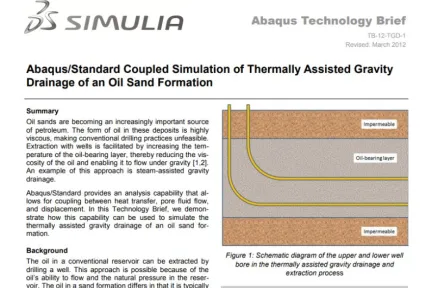
Abaqus/Standard Coupled Simulation of Thermally Assisted Gravity Drainage of an Oil Sand Formation

Oil sands are becoming an increasingly important source of petroleum. The form of oil in these deposits is highly viscous, making conventional drilling practices unfeasible. Extraction with wells is facilitated by increasing the temperature of the oil-bearing layer, thereby reducing the viscosity of the oil and enabling it to flow under gravity [1,2]. An example of this approach is steam-assisted gravity drainage. Abaqus/Standard provides an analysis capability that allows for coupling between heat transfer, pore fluid flow, and displacement. In this Technology Brief, we demonstrate how this capability can be used to simulate the thermally assisted gravity drainage of an oil sand formation.

Tech Notes

Abaqus/Standard Coupled Simulation of Thermally Assisted Gravity Drainage of an Oil Sand Formation
Combining Detailed Experiments, PolyUMod, Kornucopia, and Abaqus to Create Accurate FE Scratch Simulations

Creating a viable simulation approach capable of representing key fundamental aspects of scratch of polymers is an extremely challenging task. The simulation must include complicated material response, such as nonlinear viscoelastic/viscoplastic behavior of the polymeric material at large strains. In addition, the model must include a sufficiently detailed representation of the scratching event using frictional contact between the indenter and the sample, and the model must take into account the indenter loading history. This paper discusses how Abaqus/Explicit models using the PolyUMod advanced Parallel Network Material models were used in conjunction with detail experiments processed by Kornucopia to create scratch simulations that correlated well to several physical scratch tests.

Customer Papers

Combining Detailed Experiments, PolyUMod, Kornucopia, and Abaqus to Create Accurate FE Scratch Simulations
Numerical simulations of quasi-static and rockfall impact tests of ultra-high strength steel wire-ring nets using Abaqus/Explicit

Flexible, light-weight wire ring-net barriers are used to stop falling rocks serving as protection for villages and roadways in mountainous regions. The steel wire-ring nets are difficult to model because of their complex geometry. The rings consist of a single steel wire strand wrapped together multiple times, and are connected to one another in a chainmail fashion to form the net. Their geometry and behavior represent a challenge to finite element modeling. This paper presents quasi-static and impact explicit FE simulation results of wire-ring net tests using an approach which relies on the general contact algorithm available in the FE code Abaqus. This approach allows a better description of the physics involved in impact problems related to rock falls.

Customer Papers

Numerical simulations of quasi-static and rockfall impact tests of ultra-high strength steel wire-ring nets using Abaqus/Explicit
Design and Finite Element evaluation using Abaqus of a tri-axle suspension frame for a passenger bus.

The usage of modern suspension systems in passenger buses increases the performance of the vehicle, to include a new kind of suspension in a passenger bus requires a careful examination of the packaging needs, load transfer and structure characteristics which leads to a safe design to be manufactured. The main objective of this paper is to provide a design proposal for a passenger bus frame to incorporate a commercial tri-axle pneumatic suspension, a system level CAE evaluation is presented to validate and optimize the proposed design.

Customer Papers

Design and Finite Element evaluation using Abaqus of a tri-axle suspension frame for a passenger bus.
The latest Application of Abaqus for the Expansion of Simulation Ability in TMC Chassis CAE

TMC Chassis CAE has used Abaqus successfully for many years. This paper presents three recent examples of Abaqus analyses performed by TMC Chassis CAE. 1. Shape Optimization of Suspension Arm comprehending material and geometric nonlinearities. 2. A new method to identify material coefficients of static and dynamic characteristics of rubber using Abaqus. (Reproduce stress relaxing behavior, strain rate dependency, frequency dependency and amplitude dependency using one set of material coefficients) 3. FE Analysis Method to simulate the Static Stiffness Characteristic of Air Suspension Stiffness.

Customer Papers

The latest Application of Abaqus for the Expansion of Simulation Ability in TMC Chassis CAE
A study of Vehicle – Road Interaction Using Abaqus CoSimulation Approach

Early prediction of road loads is vital in vehicle development program to allow maximum flexibility for optimum design of structure. In this paper, Abaqus co-simulation based approach is explored and successfully applied to study vehicle-road interaction. The co-simulation approach provides user with tremendous flexibility in modeling vehicle system. The power of explicit and implicit codes can be unleashed to extract maximum benefits out of them. This combination allows user to simulate complex elements of system without putting over burden on system requirements. The ease with which highly nonlinear elements like tires and bump stoppers can be represented, free use of substructures, selective subcycling are the vital features of this study.

Customer Papers

A study of Vehicle – Road Interaction Using Abaqus CoSimulation Approach
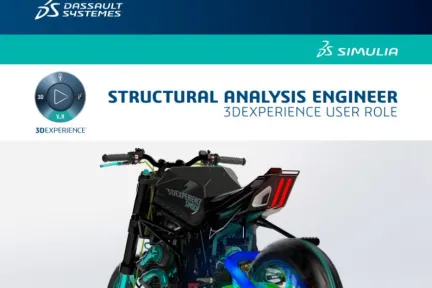
STRUCTURAL ANALYSIS ENGINEER 3DEXPERIENCE USER ROLE

Structural Analysis Engineer provides a broad environment to conduct structural static, frequency, buckling, modal dynamic response, and structural thermal simulation of parts and assemblies within the 3DEXPERIENCE platform. It boosts innovation in product engineering and fosters collaboration in an intuitive environment using state-of-the art Abaqus simulation technology.

Brochures

STRUCTURAL ANALYSIS ENGINEER 3DEXPERIENCE USER ROLE
PowerDELTA 3DS Branded

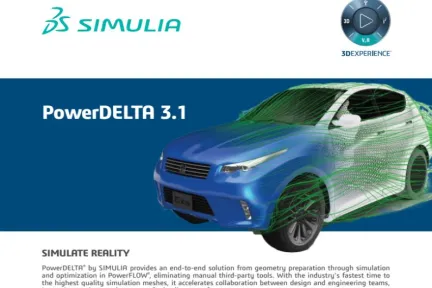
PowerDELTA by SIMULIA provides an end-to-end solution from geometry preparation through simulation and optimization in PowerFLOW , eliminating manual third-party tools. With the industry’s fastest time to the highest quality simulation meshes, it accelerates collaboration between design and engineering teams, improving products and processes for leading manufacturers.

Brochures

PowerDELTA 3DS Branded
Implementing a gradient dependent plasticity model in ABAQUS

A strain gradient dependent plasticity model is implemented using the user element subroutine interface in ABAQUS. Based on the implementation, a simple shear case is studied as well as a more complex crack tip problem. Large influence of the incorporated material length scale is observed in the two cases.

Customer Papers

Implementing a gradient dependent plasticity model in ABAQUS
3DEXPERIENCE ABAQUSCAE - 3DEXPERIENCE USER ROLE

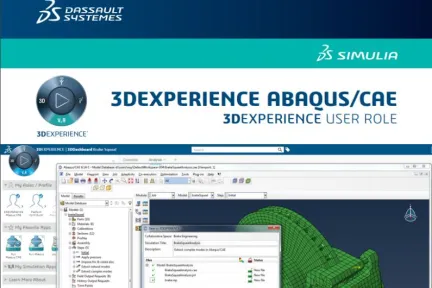
3DEXPERIENCE Abaqus/CAE allows the existing Abaqus/CAE user to build, capture, and run simulation processes and methods that use Abaqus/CAE. Abaqus/CAE may be opened directly from 3DEXPERIENCE, models may be imported and defined, then run, executed, and postprocessed all from the platform. This allows simulation methods to be captured, shared, exposed, and leveraged by other users and stored for future re-use.

Brochures

3DEXPERIENCE ABAQUSCAE - 3DEXPERIENCE USER ROLE
There are 245 results

Customer stories

There are 129 results

From the communities

There are 6 results

SIMULIA Self Learning

We provide hundreds of self-learning modules so you can continue to learn at your convenience

Blogs

Read the SIMULIA blog on the latest news and innovations from our experts.

There are 694 results

Learn What SIMULIA Can Do for You

Speak with a SIMULIA expert to learn how our solutions enable seamless collaboration and sustainable innovation at organizations of every size.

Get Started

Courses and classes are available for students, academia, professionals and companies. Find the right SIMULIA training for you. 

Get Help

Find information on software & hardware certification, software downloads, user documentation, support contact and services offering