
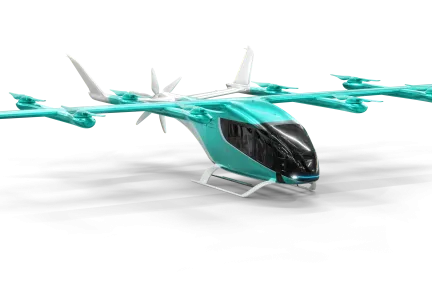
Embraer Selects Dassault Systèmes’ Simulation Technology to Support Quieter eVTOL Aircraft Development for Eve Air Mobility
Press Release
March 14, 2024
Find everything that you need on SIMULIA
Press Release
March 14, 2024
Correct hot forming design relies on accurate prediction of forming loads, material deformation, and material properties. This is particularly true for coupled thermomechanical analyses, where die/workpiece contact will change local deformations and temperatures. These strains and thermal histories can change the material microstructures and resulting product properties. This presentation examines the influence of different material and contact models within a hot forging simulation and discusses the consequences on ultimate product performance. We use rate-independent plasticity and compare the results with the Anand internal variable, viscoplastic model available within Abaqus. We also use different contact conditions with varying pressure sensitivity for heat transfer. The simulations demonstrate that constitutive model selection has a strong effect on the final predicted properties of the forging.
Customer Papers
Over the past decade, hydraulic fracturing has become an industry-changing technology that enables commercial production of hydrocarbons from previously non-productive lowpermeability shale formations. R&D efforts focus on the development of economically efficient production protocols, where the selection of engineering solutions is guided by numerical simulations. Typically, the simulations are based on phenomenological fracture models that are adapted for the prediction of fluid-driven fracture processes at depth. These models rely on a longterm trial-and-error approach and offer reliable material response at conditions that have previously been experimentally investigated. For this reason, an extrapolation of such phenomenological models into untested regimes is not always successful.
Customer Papers
The current work pertains to a re-closeable annular flow valve oil completion tool (XAFV) with high gas flow passing through the valve, causing pressure oscillation due to flow separation and high turbulence energy. The objective is to assess the vibration level to protect the tool from damage. The first step was to perform CFD simulation by using Fluent on The valve port region. The power spectral density (PSD) of pressure fluctuations at the high turbulence region was obtained. The next step of the work was to extract natural frequencies of the tool by using Abaqus. The last step was to utilize random vibration analysis (RVA) to obtain the PSD and root mean square of stresses to assess the random vibration effect by using CFD predicted PSD of excitation pressure.
Customer Papers
PLASTIC TECHNOLOGIES, INC. CONSUMER PACKEGED GOODS
Customer Stories
An analytical process was developed to study the root cause of the exhaust valve guide wear in the gasoline engine from a high mileage accumulation vehicle test. A thermo-structural model was created to determine maximum cam bore misalignment based on engine thermal structural analysis. Then a valve train dynamic model was developed as a submodel based on cylinder head thermal deformation, the cam axis was adjusted based on the maximum cam bore misalignment in this dynamic model and valve tip side load from cam and rocker arm was calculated. Normal and reversed spin of cam was performed to study its effect on rocker motion between left and right bank cylinder heads. Valve and guide contact was monitored during the dynamic analysis and the resulting valve and guide deformation from this dynamic analysis was input to a tribology model to calculate the guide wear rate. Abaqus/Standard was used in thermo-structural analysis, and Abaqus/Explicit was used for valve train dynamic analysis. Based on this study, the root cause of the guide wear was verified.
Customer Papers
Simulation of the manufacture of composite materials, commonly known as composites process modelling, has been gaining acceptance in industry since the mid-1990s. Starting from the early simple 1D and 2D representations of composite parts, process modelling of complex, fully configured 3D composite parts is now performed on a regular basis. Until recently, creating and running such simulations has required a high level of expertise not only in the manufacture of composite materials, but also in 3D finite element analysis.
Customer Papers
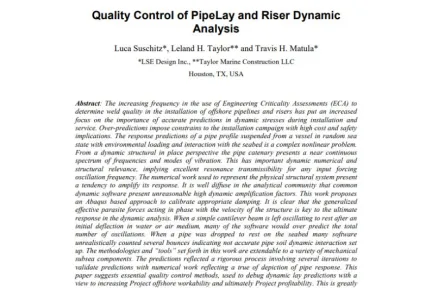
The increasing frequency in the use of Engineering Criticality Assessments (ECA) to determine weld quality in the installation of offshore pipelines and risers has put an increased focus on the importance of accurate predictions in dynamic stresses during installation and service. Over-predictions impose constrains to the installation campaign with high cost and safety implications. The response predictions of a pipe profile suspended from a vessel in random sea state with environmental loading and interaction with the seabed is a complex nonlinear problem. From a dynamic structural in place perspective the pipe catenary presents a near continuous spectrum of frequencies and modes of vibration. This has important dynamic numerical and structural relevance, implying excellent resonance transmissibility for any input forcing oscillation frequency.
Customer Papers
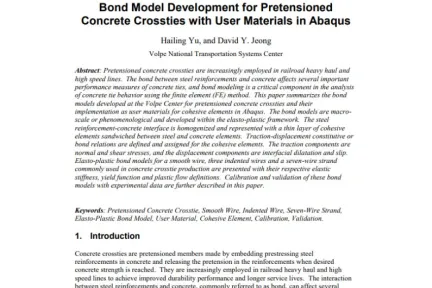
Pretensioned concrete crossties are increasingly employed in railroad heavy haul and high speed lines. The bond between steel reinforcements and concrete affects several important performance measures of concrete ties, and bond modeling is a critical component in the analysis of concrete tie behavior using the finite element (FE) method. This paper summarizes the bond models developed at the Volpe Center for pretensioned concrete crossties and their implementation as user materials for cohesive elements in Abaqus. The bond models are macroscale or phenomenological and developed within the elasto-plastic framework. The steel reinforcement-concrete interface is homogenized and represented with a thin layer of cohesive elements sandwiched between steel and concrete elements.
Customer Papers
MUNICH UNIVERSITY OF APPLIED SCIENCES LIFE SCIENCES
Tech Notes

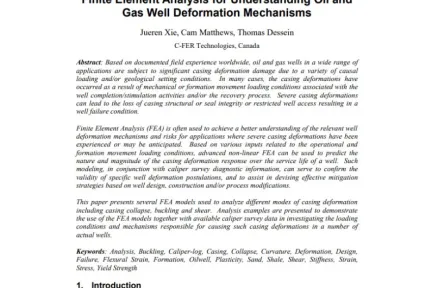
This paper presents several FEA models used to analyze different modes of casing deformation including casing collapse, buckling and shear. Analysis examples are presented to demonstrate the use of the FEA models together with available caliper survey data in investigating the loading conditions and mechanisms responsible for causing such casing deformations in a number of actual wells.
Customer Papers
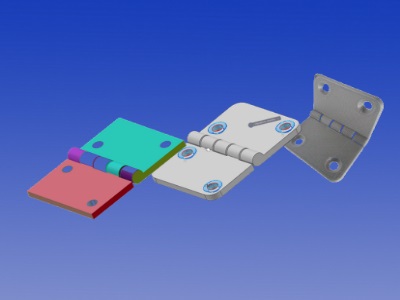
Have you ever run out of time to replace a missing part, which was quite a standard part? CATIA offers you a simple solution.
E-seminar
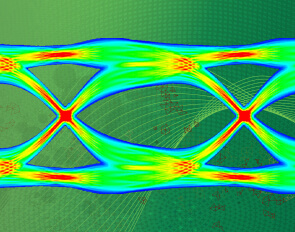
Learn how to simulate complicated SerDes channels in 3D and perform jitter analysis with the Eye Diagram Tool in CST Studio Suite.
E-seminar
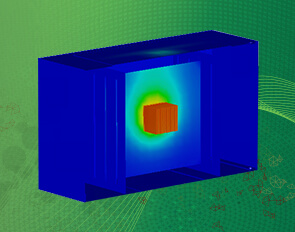
Learn how a holistic simulation approach can allow Print Circuit Board (PCB) designers to identify potential issues early, conduct virtual testing and ensure the PCB’s functionality.
E-seminar
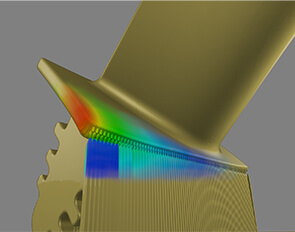
Additive manufacturing still presents many challenges, including part distortions, residual stress and microstructural defects.
E-seminar

In this e-seminar you will learn: How to design intelligent support structures
E-seminar
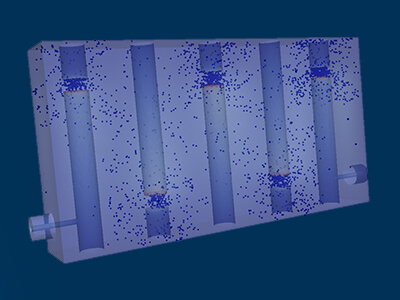
In this e-seminar, we will review the main aspects of the high power radio frequency (RF) breakdown effects that occur in space hardware, namely multipactor discharge and ionization breakdown.
E-seminar
In this seminar, we introduce some of the areas in which Modeling and Simulation is being used in the Life Sciences industry, particularly in the Pharma/Biotech segment wherein both manufacturing processes and medical devices are of critical importance for companies looking to enhance innovation.
E-seminar

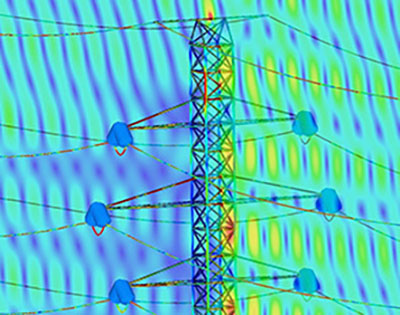
In this e-seminar, we will explore what an EMP is and how it can be modeled in SIMULIA CST Studio Suite to study the effects of an EMP event.
E-seminar
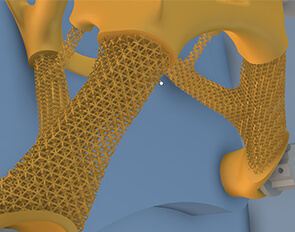
Additive manufacturing offers the ability to build lightweight components designed through topology optimization, incorporating lattice structures to provide conformal cooling.
E-seminar
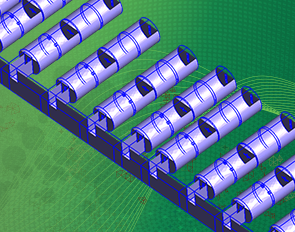
Learn how the design of multiplexers (and filters) can be aided with the use of simulation, with a focus on achieving the complete electromagnetic design of complex multiplexers.
E-seminar
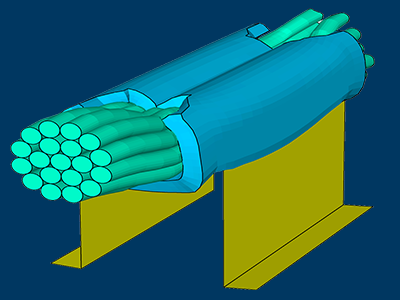
This e-seminar will focus on contact modeling with Abaqus.
E-seminar
In this e-seminar, we will show how PowerFLOW helps with design decision making related to soiling and water management.
E-seminar
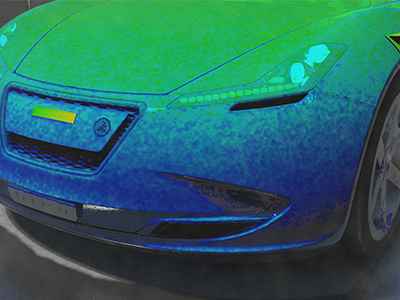
We provide hundreds of self-learning modules so you can continue to learn at your convenience
Read the SIMULIA blog on the latest news and innovations from our experts.
The design of vehicles is a challenging, time-consuming, and expensive process. Increased...
Article

This post is a continuation in a series about simulation on the 3DEXPERIENCE...
Article

Want to learn more about conceptual structural optimization for urban air mobility?...
Article

Want to learn how to simulate X-ray tubes in SIMULIA Opera? Don’t...
Article

This post is a continuation in a series about simulation on the 3DEXPERIENCE...
Article
SIMULIA is proud to work with a variety of women in the...
Article

This post is a continuation in a series about simulation on the 3DEXPERIENCE...
Article
Introduction There is no doubt that we are living in increasingly precarious...
Article

Magnets are ubiquitous in modern life, used in motors, generators, wind turbines,...
Article
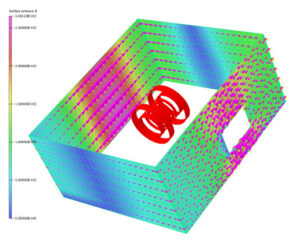
SIMULIA is proud to work with a variety of women in the...
Article

This post is a continuation in a series about simulation on the 3DEXPERIENCE...
Article
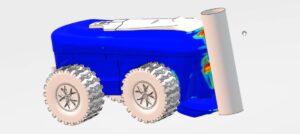
This post is a continuation in a series about simulation on the 3DEXPERIENCE...
Article
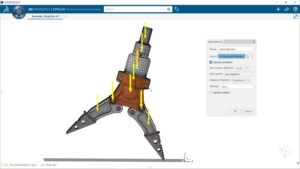
Speak with a SIMULIA expert to learn how our solutions enable seamless collaboration and sustainable innovation at organizations of every size.
Courses and classes are available for students, academia, professionals and companies. Find the right SIMULIA training for you.
Find information on software & hardware certification, software downloads, user documentation, support contact and services offering