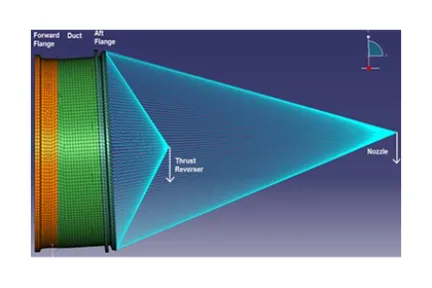
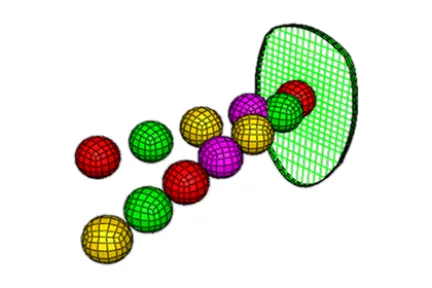
This course includes lessons and workshops covering advanced capabilities and techniques that can be included in a flow simulation using the Fluid Model Creation and Fluid Scenario Creation apps on the 3DEXPERIENCE platform.
Course Catalog

Find everything that you need on SIMULIA
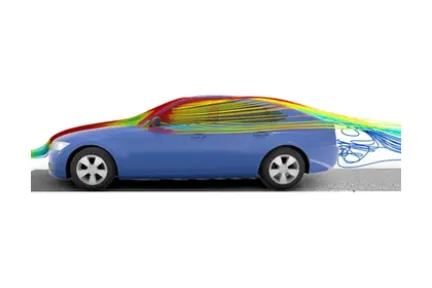
This course includes lessons and workshops covering advanced capabilities and techniques that can be included in a flow simulation using the Fluid Model Creation and Fluid Scenario Creation apps on the 3DEXPERIENCE platform.
Course Catalog

This course is an introduction to solving fluid flow and conjugate heat transfer problems in the 3DEXPERIENCE platform. In this course, you will learn workflows for steady state internal and external flow as well as Conjugate Heat Transfer (CHT) problems through the Fluid Model Creation and Fluid Scenario Creation apps.
Course Catalog

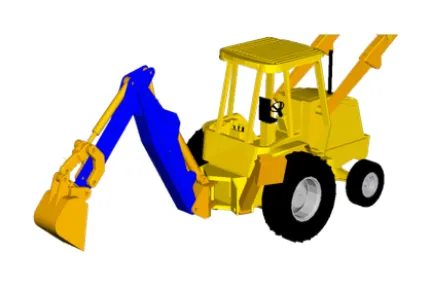
The combination of mechanisms, rigid bodies, and finite elements in Abaqus makes a powerful simulation tool. The mechanism capability expands the ability of Abaqus to model connections among individual bodies in a variety of ways. Connections can be as simple as pins and rigid links or as complicated as nonlinear frictional joints with elasticity and failure. In this course you will explore the variety of connection types available in Abaqus and learn how to define connections that suit your needs.
Course Catalog

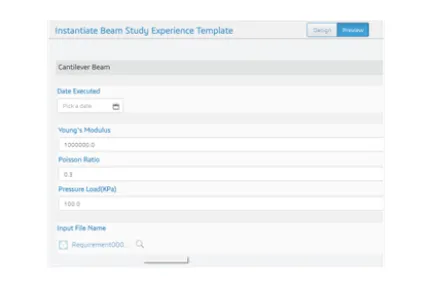
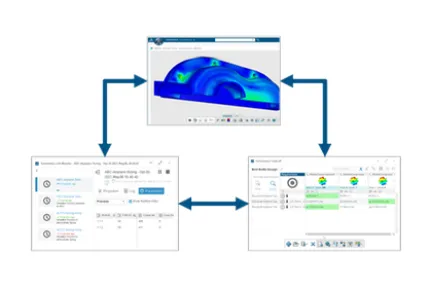
This course is an introduction to the Process Experience Studio widget on the 3DEXPERIENCE platform. Process Experience Studio allows engineers to create custom interfaces for distributing simulation processes and simulation templates throughout the organization. This widget is similar to a form builder which allows the engineer to develop a simple or complex interface of inputs and outputs to/from the process. Using the widget in a dashboard provides a way to collaborate in teams around process integration and automation.
Course Catalog

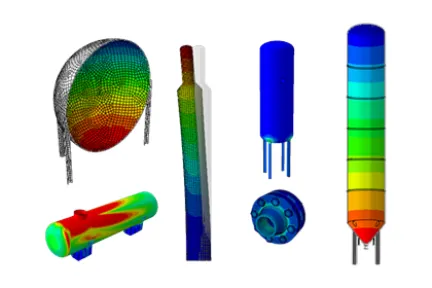
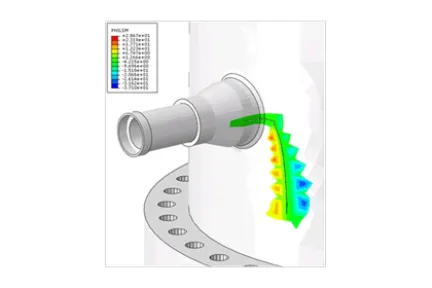
Pressure vessels and piping equipment are periodically assessed based on guidelines prescribed by documents such as ASME/API 579 Fitness for Service (FFS). Finite element based Level 3 assessments are often utilized for assessing equipment with complex geometries and loading conditions. This course discusses methods for modeling common pressure vessels such as distillation towers, storage vessels, etc. using Abaqus CAE. Methods for application and verification of loads such as weight of contents, internal pressure, etc. using Abaqus Standard, as required for Level 3 FFS assessments are also discussed. Procedures for analyzing metal loss using the finite element method by mapping thickness readings from scans are also considered. The following products are covered by this course: Abaqus CAE, Abaqus Standard. The course is divided into lectures and workshops. The course's workshops are integral to the training. They are designed to reinforce concepts presented during the lectures. They are intended to provide users with the experience of running and trouble shooting actual Abaqus analyses.
Course Catalog

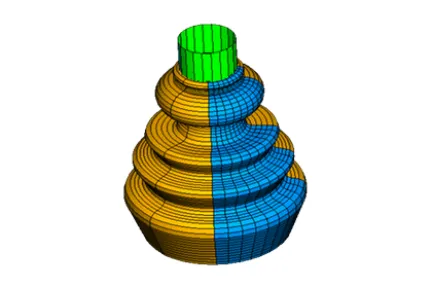
Choosing an element is one of the most fundamental questions that users must answer as they build a finite element model. Many issues should be considered when selecting an element, including: Is there contact in the model? Is the material behavior fully or nearly incompressible? Will the element bend during the analysis? Is the structure thick or thin? Will the mesh become severely distorted? What results are needed from the analysis? Is the analysis a static or dynamic simulation? This course provides an overview of the different element types available in Abaqus for stress analyses. Differences between the Abaqus Standard and Abaqus Explicit element libraries are considered. Application specific recommendations for choosing an element type are provided. The pitfalls and symptoms of choosing incorrect element types are also discussed. Examples and workshops are used to illustrate element behavior and the consequences of choosing incorrect element types for a given problem.
Course Catalog

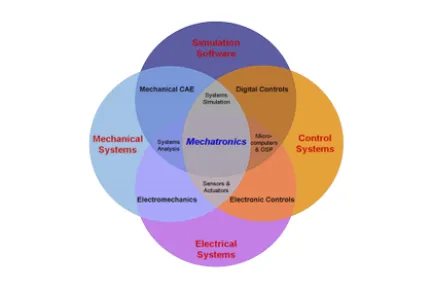
AbaqusDymola Co simulation is useful when logical modeling needs to be included in a physical system simulation; for example, it can be used to couple Anti lock Braking System (ABS) logic modeled in Dymola with an Abaqus rolling tire and brake simulation. In a typical workflow, sensor data computed in Abaqus (the physical system) are passed to Dymola (the controller), which in turn computes the needed actuation to drive the Abaqus model to a desired state. The powerful logical modeling features in Dymola cover a wide variety of engineering fields, such as electromechanics, control systems, hydraulics, penumatics, etc. This course illustrates coupling Dymola and Abaqus to develop a very versatile logical physical modeling capability.
Course Catalog

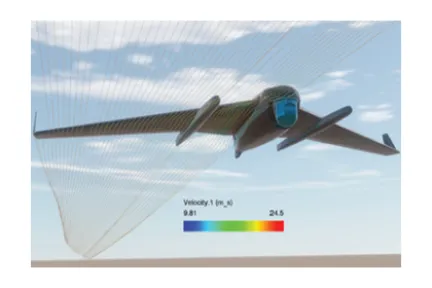
Abaqus provides computational electromagnetic capabilities for the simulation of problems involving steady state electrical conduction, piezoelectric phenomena and low frequency eddy currents. In this course, you will learn how to analyze low frequency eddy current problems in Abaqus Standard.
Course Catalog

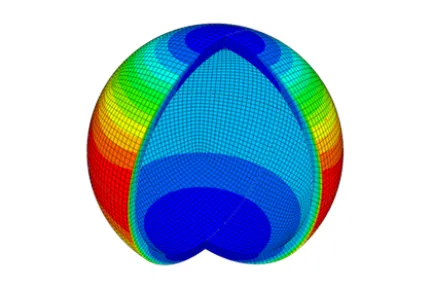
Fracture and failure modeling allows for product designs that maximize the safe operating life of structural components. Abaqus offers many capabilities that enable fracture and failure modeling. This course provides a detailed discussion of these capabilities.
Course Catalog

This course introduces Isight users to methods dealing with statistical behavior as a result of variability in the system. It motivates why uncertainty quantification (UQ) analysis is important, presents concepts and methods in Isight to do UQ analysis, and shows how to use Isight’s open architecture to integrate user developed algorithms into components as Plug ins.
Course Catalog

Abaqus makes extensive use of Python, a powerful, object oriented scripting language that is used widely by organizations throughout the world. Python has been embedded within the Abaqus software products. The language has been extended to include a rich set of commands that are well suited for the daily tasks of a finite element analyst. These extensions are referred to as the Abaqus Scripting Interface (ASI). The Abaqus Scripting Interface may be used by the finite element analyst at many different levels. Scripts can be written as stand alone utilities, or can be written to integrate the Abaqus products with other codes. At a basic level, scripts may be used to automate repetitive tasks such as the creation of results plots from a collection of output files. With some experience, users may actually extend the functionality of the Abaqus products. Advanced users may work with SIMULIA affiliates to customize the graphical user interface of the Abaqus interactive products (Abaqus CAE and Abaqus Viewer). This course covers basic usage of the Abaqus Scripting Interface and Python’s syntax. It includes numerous hands on exercises for the student to learn to automate tasks that are common to most analysts.
Course Catalog
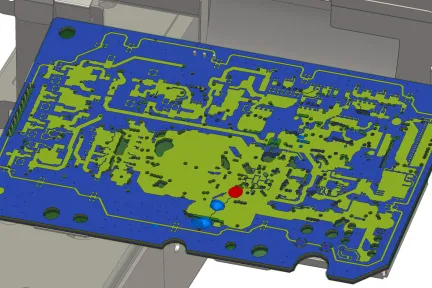
This interactive course is intended for on demand learning and is the prerequisite for many process automation and design optimization courses (if you are new to using the 3DEXPERIENCE platform). Using automation apps requires a baseline knowledge of how to log in to the platform, use 3DSearch to find and filter data, manage maturity of the data for collaboration. The 3DEXPERIENCE native (desktop) apps and web interfaces (including dashboards) will be introduced in this course.
Course Catalog
Join this Tech Talk and discover how to become a wizard.
E-seminar

Join this Tech Talk and discover convergence tips and tricks presented by an Abaqus expert.
E-seminar

Implementing virtual twins powered by data science and AI in the early phases of capital project development can be game-changing for project developers, as well as future owners and operators.
E-seminar

Discover how to optimize performance and reduce costs in rail freight with battery-powered solutions and simulations.
E-seminar

The webinar will highlight key simulation technology for virtual tests for EMC compliance and give examples of simulating various tests, including conducted emissions, and conducted susceptibility.
E-seminar

Join this engaging webinar to discover how Dassault Systèmes' 3DEXPERIENCE platform can empower your organization to achieve sustainability goals and streamline operations while reducing costs.
E-seminar

Watch this webinar to discover how electromagnetic simulation with SIMULIA CST Studio Suite is used by industry-leading companies to develop and optimize antenna systems.
E-seminar

Watch our replay to learn more about the latest enhancements in the recent Abaqus 2025x FD01 release.
E-seminar

Watch our webinar to learn how to simulate and predict performance of a linear actuator designed on the 3DEXPERIENCE platform, using the Electromagnetics Engineer role.
E-seminar

Explore how rail operations can overcome unforeseen operational challenges through the use of Multibody Dynamics.
E-seminar

Learn how Virtual Twins can help enhance aerodynamic efficiency in rail operations.
E-seminar

Explore how simulation can help enhance your antenna design capabilities
E-seminar

Leading container manufacturer Amcor Rigid Packaging is continually looking for ways to reduce the amount of material used in beverage containers while keeping them strong and cost-effective to produce.
Customer Story

By allowing some measurements to be replaced by simulation, CST Studio Suite reduced the number of physical prototypes needed, shortening the design process. With simulation, Fuji Xerox engineers were able to predict EMC problems before constructing the prototype and identify the mechanism behind any that did arise, making them easier to mitigate.
Customer Story

Simulation with CST Studio Suite, a SIMULIA simulation tool, made it possible for designs to be examined without the cost of constructing a prototype, and field visualization allows resonant components to be identified by eye
Customer Story

By using CST Studio Suite and partitioning the model, eASIC was able to achieve up to five-fold speed-up in its multi-level PCB and package simulations, when compared with simulation using the full model. This gave eASIC a significant speed advantage and helped them to shorten the design process.
Customer Story

Dassault Systèmes software has proven highly capable of accurately simulating the methods and complexities of heart-disease treatment. FEops can explore the application of their technologies to a wide range of heart-related fields, getting medical devices to market faster and helping patients everywhere.
Customer Story

By using Abaqus FEA from Dassault Systèmes's brand, SIMULIA, to simulate ground movement during earthquakes, Zonneveld was able to design a novel solution that prevents structural damage during these events, while also making the building more sound proof.
Customer Story

RETAL uses Dassault Systèmes' 3DEXPERIENCE platform, including its integrated applications CATIA for design and SIMULIA for analysis and digital simulation
Customer Story

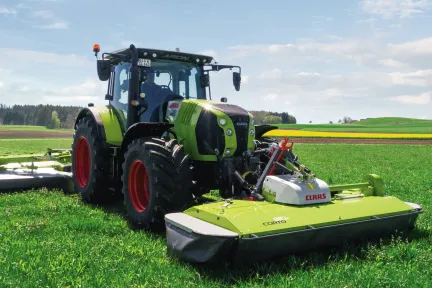
CLAAS adopted Dassault Systèmes’ 3DEXPERIENCE platform and its Single Source for Speed industry solution experience. Engineers and designers at CLAAS sites around the world have access to a unique source of product information that enables collaboration, design reuse, digital simulation before manufacture and consequently less waste and production corrections.
Customer Story

TECKDES partnered with Dassault Systèmes to better collaborate and transform its end-to-end processes through the 3DEXPERIENCE platform and its Perfect Package industry solution experience.
Customer Story

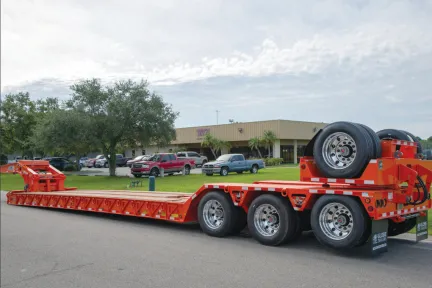
Globe Trailers chose Dassault Systèmes’ 3DEXPERIENCE platform, and its Single Source for Speed industry solution experience to provide integrated design and simulation capabilities with a single view of the truth available globally in real time
Customer Story

As the backbone for its virtual prototyping environment, the lab used the Dassault Systèmes’ Winning Program Industry Solution Experience, part of the 3DEXPERIENCE platform, including the CATIA, ENOVIA, SIMULIA and 3DVIA applications.
Customer Story

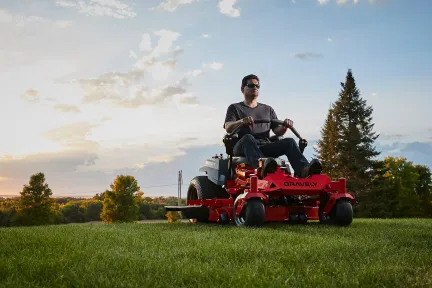
Ariens engineers used Abaqus/CAE and fe-safe from Dassault Systèmes SIMULIA, along with Wolfstar Technologies’ True-Load, to locate and accurately model strain gauges in all areas of the lawn mower, enabling weld elimination, part-count reduction, fatigue life improvement and other design enhancements.
Customer Story

We provide hundreds of self-learning modules so you can continue to learn at your convenience
Read the SIMULIA blog on the latest news and innovations from our experts.
Learn more about how you can directly influence the future of our products and applications with the SIMULIA User Experience Research Program.
Article

Modeling & Simulation (MODSIM) can lightweight packaging while optimizing for time, cost, quality and sustainability.
Article

In this blog post, we show how machine learning can be used in the design process of a centrifugal pump to optimize diffuser geometry. The AI model is trained on data from best-in-class simulation tools which produce reliable data that closely agrees with experimental validation results. Using a trained AI model based on simulation data, engineers can explore the impact of changes to diffuser parameters with instant feedback.
Article

This blog illustrates how aerodynamic data obtained from the 3DS CFD PowerFLOW software combined with data-driven methods can enable car manufacturers to obtain clean 3D contour plots of the vehicle’s surface X-force distribution, the associated integrated vehicle drag force and more within several minutes on a single GPU.
Article

This blog article presents the simulation workflow considering the partially saturated magnetic material of the inductor, which is used in the switching mode power supply (boost converter). The printed circuit board (PCB) and the 3D model of the power inductor are included in this workflow.
Article

Step-by-step instructions for a titanium dogbone example using the Calibration App.
Article

As a welded part cools down, residual stresses form within the part. The structural performance of a weld depends heavily on the parameters of the welding process, such as heat input, welding paths, and fixture designs. Simulation can model the weld process in order to calculate the residual stress distribution and deformation within welded submarine parts. This article explains how artificial intelligence (AI) and machine learning can be used to accelerate analysis and optimization of welds.
Article

Interested in learning more about SIMULIA’s Electromagnetic Simulation solutions? We’ve got all the resources you need right here to get started!
Article

SIMULIA introduces several short eLearning courses to help users adapt quickly to simulation on the 3DEXPERIENCE platform. This new format teaches today’s learners in a succinct, dynamic, interactive way and after registration these courses can be accessed without any cost!
Article
An interview with SIMULIA’s Jing Bi, a Technology Senior manager who specializes in physics-based simulation technologies using machine learning.
Article

Interested in learning more about SIMULIA’s Multibody Simulation solutions? We’ve got all the resources you need right here to get started!
Article

We talked to Mattias Robertsson, Industry Process Senior Consultant, to walk us through a soccer simulation workflow using the Structural Mechanics Engineer role and Abaqus/Explicit solver.
Article

Speak with a SIMULIA expert to learn how our solutions enable seamless collaboration and sustainable innovation at organizations of every size.
Courses and classes are available for students, academia, professionals and companies. Find the right SIMULIA training for you.
Find information on software & hardware certification, software downloads, user documentation, support contact and services offering