There are 1489 results
Introduction to Abaqus/CAE

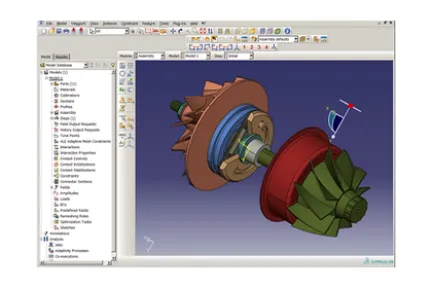
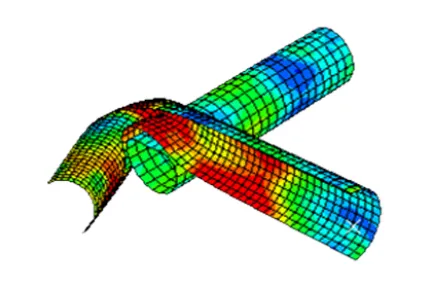
This introductory course introduces you to Abaqus CAE, the interactive interface for Abaqus products. Abaqus CAE provides a complete interactive environment for creating Abaqus models, submitting andmonitoring analysis jobs and viewing and manipulating simulation results.

Course Catalog

Introduction to Abaqus/CAE
Durability Simulation Essentials

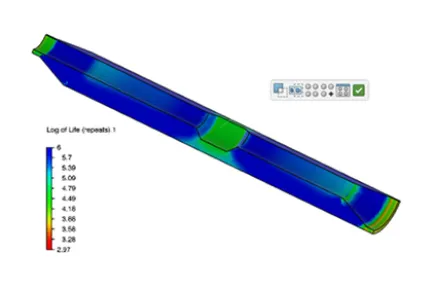
This course is an introduction to fatigue of metals on the 3DEXPERIENCE platform. Using a structural analysis that has been run in the Structural Scenario or Mechanical Scenario apps, the frames can be used to define a complex fatigue loading history. Depending on the material, the durability case can calculate either stress life or strain life damage, infinite life factors or FKM utilization along with other durability output. These can be used to redesign parts and assemblies in conjunction with the structural results.

Course Catalog

Durability Simulation Essentials
Getting Started with Physics Simulation

This interactive course is intended for on demand learning and is the prerequisite for many physics simulation courses (if you are new to using the 3DEXPERIENCE platform). Using physics simulation apps on the3DEXPERIENCE platform requires a baseline knowledge of how to log in to the platform, use 3DSearch to find and filter data, explore the data and manage maturity for the purpose of collaboration. The 3DEXPERIENCE native (desktop) apps and web interfaces (including dashboards) will be introduced in this course.

Course Catalog

Getting Started with Physics Simulation
Introduction to fe-safe/Rubber

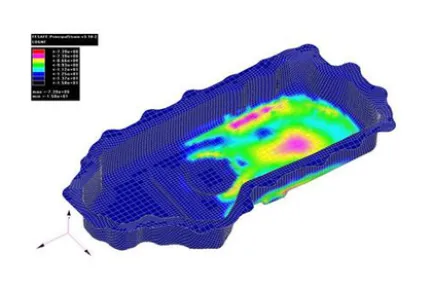
This 2 Day course provides background information and hands on experience for calculating fatigue of elastomers using Abaqus and fe safe/Rubber.

Course Catalog

Introduction to fe-safe/Rubber
Introduction to Abaqus/Standard and Abaqus/Explicit

This introductory course introduces you to the analysis capabilities of Abaqus using the Abaqus keywords interface. It is the ideal way for those who will primarily use third party preprocessors to obtain a working knowledge of both Abaqus Standard and Abaqus Explicit to solve linear and nonlinear problems. The following products are covered: Abaqus Standard, Abaqus Explicit and Abaqus Viewer. If interested in the interactive interface of Abaqus, consider the Introduction to Abaqus course instead.

Course Catalog

Introduction to Abaqus/Standard and Abaqus/Explicit
Isight Component Development

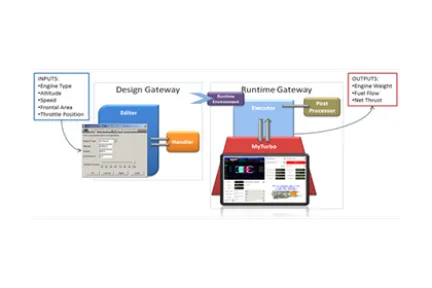
Isight is a powerful tool for creating flexible simulation workflows using an extensive library of built in components. However, it is possible to extend this library by developing custom components which can provide interfaces to third party simulation codes and/or extend existing components via custom Plug ins using the power of the Java development language. This course covers the process of designing, building, publishing, debugging and testing custom components and Plug ins, utilizing the Isight SDK. The course is highly interactive with a strong emphasis on practical workshops using a standard Integrated Development Environment (IDE).

Course Catalog

Isight Component Development
Introduction to fe-safe

Durability is a requirement for product creation in many industries, because cycling loads can cause damage much sooner than a static load. This course introduces fatigue life calculations in fe safe and gives you an understanding of how to configure a fatigue analysis based on FEA solutions. These life results can be used to iterate on a design and improve the overall durability of the design. The course is divided into lectures and workshops. The course's workshops are integral to the training. They are designed to reinforce concepts presented during the lectures. They are intended to provide users with the experience of running and trouble shooting actual fatigue analyses.

Course Catalog

Introduction to fe-safe
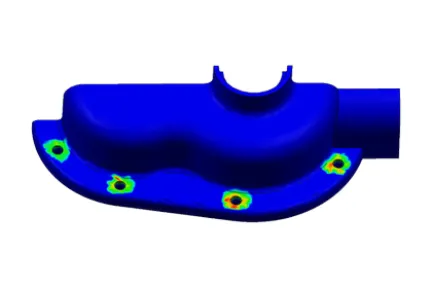
Fatigue of Welds in fe-safe

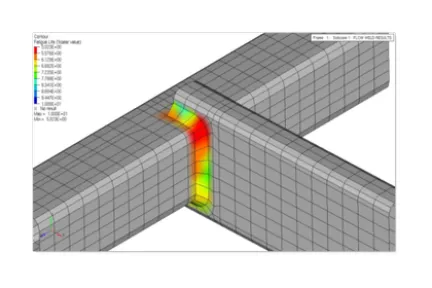
This course covers simulating the number of cycles till fatigue failures at welds in welded structures. The methods are based on predicting a crack through a certain thickness, in welded structures at the welds (toe, root, throat, etc.; failure mechanisms in welds can be included). Both classification methods (such as BS5400 and BS7608) and structural stress methods (such as the Verity TMmodule in fe safe) are included. Examples are provided using FEA output models run in Abaqus, Ansys or Nastran. Not included is temperature dependent weld fatigue, or weld processes such as friction stir welding or similar. Non structural joining such as solder is not covered, nor is nonmetallic joining such as adhesive bonding.

Course Catalog

Fatigue of Welds in fe-safe
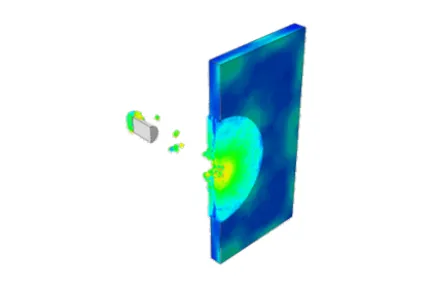
Modeling Extreme Deformation and Fluid Flow with Abaqus

Abaqus includes several advanced techniques for modeling extreme deformation and fluid flow. The pure Eulerian analysis capability in Abaqus Explicit allows for effective modeling of fluid flows and extremely large deformations in solids. Coupling the power of this capability with the traditional Lagrangian approach makes it possible to simulate complicated multiphysics phenomena such as fluid structure interactions where highly deformable materials interact with relatively stiff bodies. The need for modeling high velocity impacts, extremely violent fluid flows, and material phase changes requires the use of Smoothed Particle Hydrodynamics, a meshless Lagrangian method capable of solving these challenging problems efficiently. This course aims at providing users with a solid understanding of the Coupled Eulerian Lagrangian (CEL) and Smoothed Particle Hydrodynamic (SPH) methods and illustrating approaches to setting up and analyzing real world problems using these advanced analysis methods.

Course Catalog
Modeling Extreme Deformation and Fluid Flow with Abaqus
GUI Customization with Abaqus

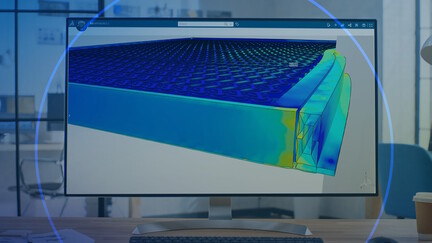
Increasingly, Abaqus is being applied to more routine, repeatable workflows and analysis procedures. These workflows can be captured using specialized Abaqus Process Automation tools. One of the more commonly used Process Automation tools is the Abaqus GUI Toolkit. The Abaqus GUI Toolkit provides programming routines that allow you to change the Abaqus graphical user interface (GUI) and build customized applications. Such applications can enable you to capture proven Abaqus centric workflows and methods for deployment to a wider range of users and generate Abaqus solutions more efficiently and reliably. This course covers basic syntax and the fundamentals of the Abaqus GUI Toolkit through a combination of lectures, examples and workshops. The hands on workshops are an integral component of learning about the Abaqus GUI Toolkit and represent a significant portion of the course experience. The workshops focus on distinct aspects of the GUI Toolkit and build upon each other in order to create a complete stand alone application.

Course Catalog
GUI Customization with Abaqus
Optimizing Engineering Methods with Isight

This course provides a brief overview of Isight and optimization before discussing nonlinear optimization theories and applications. Topics such as design space searching, multi objective optimization, optimization strategy, and multidisciplinary optimization are covered. Attendees will learn key differences between the optimization algorithms offered in Isight, how to choose the preferred method based on the problem, how to remedy issues with run time performance, and other topics relevant to improving the usage and value of Isight for real engineering optimization problems.

Course Catalog
Optimizing Engineering Methods with Isight
Structural Scenario Creation Essentials

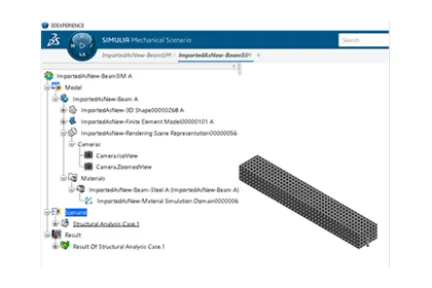
This course is an introduction to structural and thermal simulation with the Structural Scenario Creation app on the 3DEXPERIENCE platform. It teaches you how to solve both linear and nonlinear static problems and basic linear dynamics problems.

Course Catalog
Structural Scenario Creation Essentials
There are 245 results

Customer stories

There are 129 results
Kreisel Electric

Discover how Kreisel Electric uses the 3DEXPERIENCE platform for digital continuity.

Customer Story

Kreisel Electric
TAKEUCHI

Construction equipment manufacturer Takeuchi faced growing pressure to streamline its development processes. The company chose Dassault Systèmes’ to provide an integrated platform for product design, analysis and production.

Customer Story

TAKEUCHI
Imperial College of London

Researchers at London Imperial College’s department of aeronautics were seeking ways to improve the strength, fracture response and damage tolerance of composite materials and graphene through the use of engineered microstructures.

Customer Story

Imperial College of London
Trek Bicycles

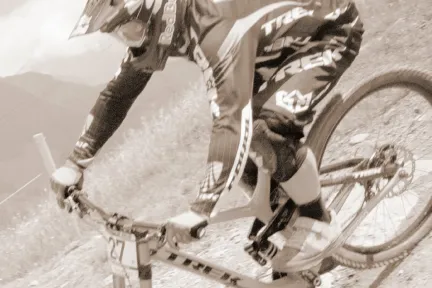
In its ongoing race to advance bike performance, Trek wanted to expand the use of realistic simulation in their design cycle across multiple bike programs. In particular, Trek engineers wanted to better understand how bikes performed under the real-world stunt rides of its professional racers.

Customer Story

Trek Bicycles
RITSUMEIKAN UNIVERSITY

Ritsumeikan University is taking steps towards a more realistic solution as a medical device.

Customer Story

RITSUMEIKAN UNIVERSITY
University Hassan First

Simulation enables restoration workers to fine-tune repair materials in advance, match the physical properties of legacy materials and avoid potential damage to important architectural structures.

Customer Story

University Hassan First
Clemson University

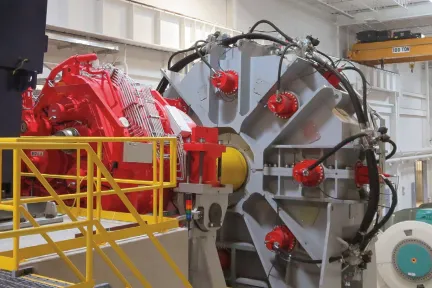
Clemson University wanted to build a real-time test bench simulation laboratory so that students or other non-experts could study the behavior of huge wind turbines in a controlled and repeatable environment.

Customer Story

Clemson University
CEA - FRENCH ATOMIC ENERGY COMMISSION

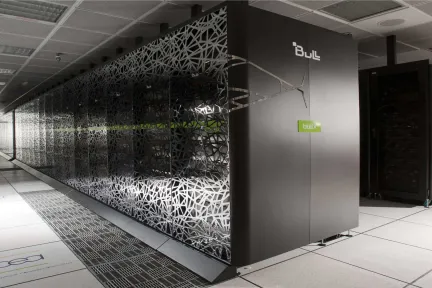
Abaqus works in tandem with proprietary codes to help safeguard the robustness of the product throughout its lifecycle, from theoretical studies to manufacturing, performance, even to dismantling. This significantly reduces simulation time and enables CEA engineers to shorten their design cycles.

Customer Story

CEA - FRENCH ATOMIC ENERGY COMMISSION
Messier-Bugatti-Dowty

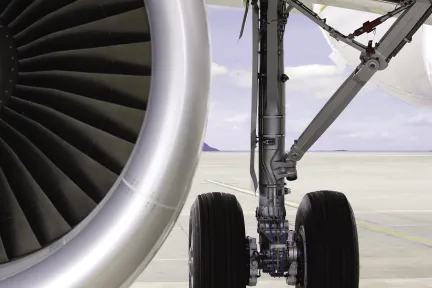
Messier-Bugatti-Dowty adopted 3DS 3DEXPERIENCE platform for design, data management, simulation and analysis, manufacturing and documentation.

Customer Story

Messier-Bugatti-Dowty
Plastic Technologies, Inc.

Realistic simulation with Abaqus has enabled PTI to reduce development costs, achieved faster time to market for its customers, and improve design and production troubleshooting and diagnoses.

Customer Story

Plastic Technologies, Inc.
Airbus

Airbus has deployed Dassault Systèmes’ (3DS) applications to drive a global collaborative solution throughout the value chain from engineering to manufacturing..

Customer Story

Airbus
Yamaha Motor Company

Yamaha Motor Company wanted to improve performance of its off-road motorcycle radiator assemblies and was looking for a way to reduce time-consuming real-world testing.

Customer Story

Yamaha Motor Company

From the communities

There are 6 results

SIMULIA Self Learning

We provide hundreds of self-learning modules so you can continue to learn at your convenience

Blogs

Read the SIMULIA blog on the latest news and innovations from our experts.

There are 694 results
Game, Set, Match! Simulation of the Magnus Effect in Tennis

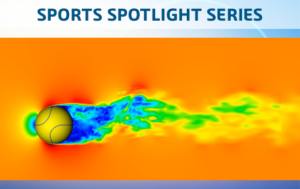
The Magnus effect is a well-known effect that impacts the motion of a spinning object through a fluid. One of the most common ways to experience the impact of this principle is through the motion of balls in sports. Indeed, this physics principal is used by amateurs and professional athletes in sports such as tennis, soccer, cricket, baseball etc. In the below example, we ask Nicolas Fougere, SIMULIA Fluids, Industry Process Consultant Manger, to walk us through a tennis ball simulation workflow.

Article

Game, Set, Match! Simulation of the Magnus Effect in Tennis
SiminSitu EU Project with 4RealSim

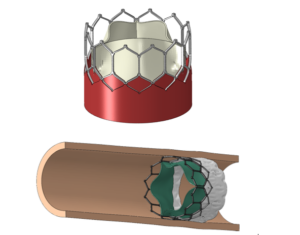
SIMULIA is delighted to work with engineering leaders and academics as they leverage simulation capabilities to help shape the future of their industry. We had the opportunity to interview 4RealSim, a company specializing in high-end numerical analysis services. During the interview, we discussed how 4RealSim uses Abaqus in the SimInSitu EU project (http://www.siminsitu.eu/). SimInSitu aims to develop sophisticated in-silico methods to predict the short- and long-term behavior of in-situ tissue-engineered heart valves (TEHV) by combining advanced tissue remodeling algorithms with a personalized virtual heart modeling approach. The method will be specifically developed to predict the complex transformation process of biodegradable heart valves from the initially synthetic scaffold into a fully remodeled and functional valve.

Article

SiminSitu EU Project with 4RealSim
Democratizing Engineering Analysis Through a Universal Material Subroutine

The recent webinar playback for Democratizing Engineering Analysis Through a Universal Material Subroutine with Dr. Ellen Kuhl from Stanford University and Dr. Mathias Peirlinck from Delft University of Technology is now available in the SIMULIA Community. Listen as they share their expertise on democratizing engineering analysis through a universal material subroutine.

Article

Democratizing Engineering Analysis Through a Universal Material Subroutine
Engineering Insights: Dr. Alison McMillan on Modeling Material Fatigue

The annual SIMULIA Regional User Meetings (RUMs) provide a forum for practicing engineers and researchers to exchange ideas and experiences in all aspects of simulation technology. Late last year, Alison McMillan, Professor in Aerospace Technology at Wrexham University, gave a presentation to RUM attendees in the UK, Fretting: Modeling mechanisms for material damage.

Article

Engineering Insights: Dr. Alison McMillan on Modeling Material Fatigue
Workflow for Patient-specific Femur Simulation

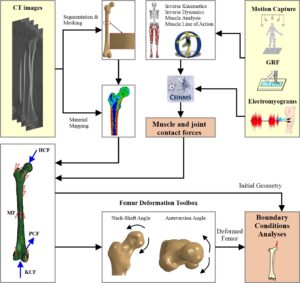
Hear from SIMULIA Champion, Professor Stefanie Feih of Griffith University, about how orthopedic surgical planning can now leverage patient-specific neuromusculoskeletal models to determine physiologically plausible muscle and joint contact forces comprising points/areas of application, magnitude, and direction. Finite element analysis (FEA) is subsequently employed to estimate stresses and strains in the implants and their host tissues throughout the complete gait cycle. These simulations, or digital twins, may facilitate validated implant designs and surgical placement, leading to improved surgical outcomes.

Article

Workflow for Patient-specific Femur Simulation
Impedance Simulation of Differential Transmission Lines Considering ESD Protection Diode Components

Transmitting high-bandwidth data between transmitter and receiver over a single twisted pair (STP) requires additional ESD (electrostatic discharge) protection components at transmitter and receiver sides. These protection components are mounted on the printed circuit board (PCB). With a data rate of 6 Gbps, the design of the PCB transmission line has to consider the ESD protection components in terms of signal integrity. In this blog article, we present the influence of the ESD protection component and the necessary layout optimization to preserve the signal integrity. Finally, we show the comparison between the simulation result and measurement.
Article

Impedance Simulation of Differential Transmission Lines Considering ESD Protection Diode Components
Simulation for Additive Manufacturing of a Marine Propeller

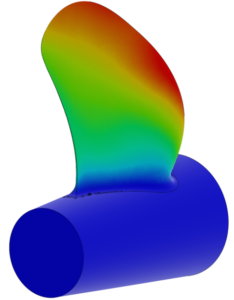
Additive manufacturing has great potential in the marine and offshore industry, helping naval engineers to build propellers that are lightweight and easy to repair. Simulation helps designers and AM process engineers to analyze residual stress in an AM component during the design phase and to optimize the printing process to improve strength.

Article

Simulation for Additive Manufacturing of a Marine Propeller
Why the High-Tech Industry Needs Multiphysics Simulation

The High-Tech industry is fast-moving and constantly reinventing itself in the face of trends such as wearables, VR/AR, private wireless networks and 5G and the coming 6G. Manufacturers face considerable challenges if they want to stay ahead of these trends and remain competitive. We spoke to several SIMULIA High-Tech industry specialists about the challenges of modern electronic design and how modeling and simulation (MODSIM) with a multiphysics approach is allowing leading manufacturers to tackle them.

Article

Why the High-Tech Industry Needs Multiphysics Simulation
Optimizing Magnet Design with Melike Abliz of Argonne National Laboratory

SIMULIA is delighted to work with engineering leaders and academics as they leverage simulation capabilities to help shape the future of their industry. We had the opportunity to interview Melike Abliz of Argonne National Laboratory at the 2023 SIMULIA Americas Users Conference to discuss how precise simulation capabilities support innovation as part of the laboratory’s Advanced Photon Source Upgrade project.

Article

Optimizing Magnet Design with Melike Abliz of Argonne National Laboratory
Hypercar vs. F1 Racing Vehicle: Peugeot Interview

We talk to French automobile company, Peugeot to learn the difference between F1 racing vehicles and the hypercar and how simulation and virtual testing will impact the future of high-speed racing.

Article

Hypercar vs. F1 Racing Vehicle: Peugeot Interview

Learn What SIMULIA Can Do for You

Speak with a SIMULIA expert to learn how our solutions enable seamless collaboration and sustainable innovation at organizations of every size.

Get Started

Courses and classes are available for students, academia, professionals and companies. Find the right SIMULIA training for you. 

Get Help

Find information on software & hardware certification, software downloads, user documentation, support contact and services offering