There are 1489 results
An Approach Towards an Optimal Design of Composite Structures Using Abaqus as FE-solver

The present paper shows the development of an efficient, fast and reliable optimizer for composite and metallic parts of lightweight structures. The algorithm aims at identifying the optimal configuration of different structural parts concerning thickness, fibre orientation, number of plies, etc. This leads to mass savings and also a decrease of the development time in the structural dimensioning phase. Due to the limited applicability of classical optimization algorithms like gradient based or evolutionary methods in case of large Finite Element models with a high number of design variables, a novel approach is presented where the optimization problem is tackled by a heuristic adaption procedure on element level.

Customer Papers
An Approach Towards an Optimal Design of Composite Structures Using Abaqus as FE-solver
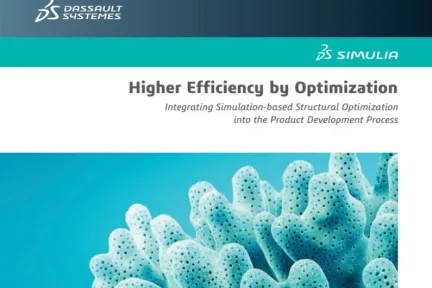
Higher Efficiency by Optimization

Higher Efficiency by Optimization - Integrating Simulation-based Structural Optimization into the Product Development Process

White Papers

Higher Efficiency by Optimization
Use of Abaqus Explicit for Composite Sandwich Damage Prediction during Bird Impact

A method development program of testing and simulations was carried out to develop bird impact NLFEA capabilities of composite sandwich damage prediction and bird dispersion after penetration of the primary layer using Abaqus Explicit. Curved composite honeycomb panels (referred to as J-Nose) representing typical composite wing Fixed Leading Edge (FLE) structure were subjected to bird strike to generate data for method validation. The test campaign was tailored to produce various levels of damage and modes of failure; from minor localized core/skin damage to panel perforation. In all tests high speed video were installed to capture the behavior of the structure during the impact.

Customer Papers

Use of Abaqus Explicit for Composite Sandwich Damage Prediction during Bird Impact
An Easy Procedure for Anisotropic Non-Linear Behavior of Short-Fiber-Reinforced Plastics

The developed procedures show how to consider the anisotropic mechanical behavior of injection molded short-fiber-reinforced plastics parts in FE analysis. It is shown how the existing information, which is provided by injection molding simulation software, can be processed and transferred into mechanical simulation models. The procedure is outlined with practical applications.

Customer Papers

An Easy Procedure for Anisotropic Non-Linear Behavior of Short-Fiber-Reinforced Plastics
Failure Analysis of CFRP Tubes with Integrated Rubber Layers Subjected to Transverse LowVelocity Impact Loading

Among the numerous advantages of CFRP laminated structures there are some drawbacks, such as the high sensitivity in terms of impact loading. Particularly low-velocity impacts result in non-visible and barely-visible impact damage respectively. The threedimensional state of stress in the impact zone leads to matrix cracking and delamination inside the composite laminate and possibly to fibre failure for higher impact energies. It can be very difficult to detect such damage by visual inspection, and additionally, in most cases a significant reduction of strength and stiffness can be expected. To improve the damage tolerance a rubber layer, named KRAIBON , is integrated in the composite layup of cylindrical carbon/epoxy tubular specimens.

Customer Papers

Failure Analysis of CFRP Tubes with Integrated Rubber Layers Subjected to Transverse LowVelocity Impact Loading
A Simulation Tool for Fatigue Analysis and Lifecycle Prediction

This paper presents an interactive web-based simulation tool for a modern fatigue analysis and lifecycle prediction methodology of smooth and notched components. Users around the globe with diverse degree of fatigue familiarity may access it via Internet by means of multiple platforms such as desk- and lap-top computers, tablets and/or smart-phones. In particular, the users with a limited fatigue analysis background would benefit from “onthe-fly” fatigue learning experience. This is accomplished by means of proper guidance through a step-by-step process and providing specific details and explanations without the need of a tutorial handbook.

Customer Papers

A Simulation Tool for Fatigue Analysis and Lifecycle Prediction
Finite Element Simulation of Thermal Barrier Coatings in Rocket Engines

Rocket engines need to withstand extreme gas temperatures. To achieve this, the engine is lined with copper and cooled with liquid hydrogen. Nevertheless, creep processes can lead to damage and failure of the component. To avoid this, rocket engines can be protected with thermal barrier coatings. Standard coating systems as used in gas turbines are problematic because of larger thermal stresses between the copper substrate and the coating due to a large thermal mismatch. In this work, we use finite element simulations to study the stress evolution in a coating material tailored for application in a rocket engine. The influence of the thermal conductivity on the resulting stress state is discussed and general conclusions for the design of thermal barrier coatings in rocket engines are drawn.

Customer Papers

Finite Element Simulation of Thermal Barrier Coatings in Rocket Engines
Shrinkage Modeling of Thermoplastic Wing Rib

During manufacture of parts made of thermoplastic composites in the process of thermoforming liquid of resin transfers to solid-state with occurrence of residual stresses in part which may lead to distortion of the shape of the product. Transition from liquid to solid is called the crystallization process, the reverse process – melting. In order to predict products distortion mathematical modeling techniques are developed. Methods are allowed to evaluate the degree of warpage of the selected design solutions and on the basis of these data to change the process parameters or product design.

Customer Papers

Shrinkage Modeling of Thermoplastic Wing Rib
Piping Flexibility Analysis and the Development of PCS – Pipe Calculation System for Abaqus

The current framework for piping stress analysis is based on a simplified calculation method directly derived from experimental research performed over 60 years ago in the 1940s and 1950s. This framework was originally intended for hand calculations and, apart from minor changes and amendments, has been successfully employed by piping engineers since its development. As computational power increases and finite element analysis (FEA) becomes accessible for piping engineers, it has become clear that this framework is not well suited for complex FEA evaluation of piping. Advanced FEA procedures enable engineers to perform in depth evaluation of piping systems that are extremely difficult or even impossible to evaluate through traditional methods.

Customer Papers

Piping Flexibility Analysis and the Development of PCS – Pipe Calculation System for Abaqus
Multiscale Modeling of High Velocity Impact Damage on Composite Structures

A multiscale damage prediction procedure has been developed which employs Abaqus/Explicit to solve the problem at the structural level of composite structures. The multiscale framework has been established applying the user material subroutine VUMAT which is coupled with the micromechanical model. The procedure is based on a computationally enhanced version of the High Fidelity Generalized Method of Cells (HFGMC) micromechanical model. The twoscale approach enables calculation of the stress field within the unit cell, based on the constitutive behavior of each subcell and the unit cell morphology. As the stress distribution is determined for the representative unit cells, calculations of failure criteria and damage effects in the composite are performed at the micro-level.

Customer Papers
Multiscale Modeling of High Velocity Impact Damage on Composite Structures
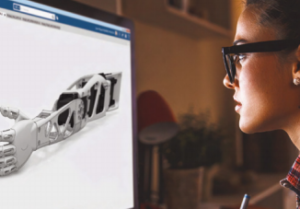
Using the existing capability in Abaqus to model the draping & consolidation of composite preforms.

The work is concerned with the development of such a predictive model using a rebar-approach in Abaqus. In this approach, the fibres are held in a “shell” by some other means – perhaps stitched loosely or held by uncured prepreg resin. Any forming deformation rearranges the fibres and needs to do this against the frictional or other restraint offered internally by the “shell”. The anisotropic properties of the preform are naturally represented by the model. The model is used to solve some verification problems from the literature, as well as performing draping/forming analysis in a particular mould using a calibrated preform kinematic/mechanical model.

Customer Papers
Using the existing capability in Abaqus to model the draping & consolidation of composite preforms.
Use of Abaqus/CAE and True-LoadTM to Determine External and Internal Loading of a Full Suspension Mountain Bicycle

Trek Bicycle Corporation has long been at the leading edge in the bicycle industry. Treks bicycles are subjected to the most rigorous testing in the industry and their frames are covered by a lifetime warranty. To maintain the highest level of safety and quality, real world loads need to be properly understood. Trek Factory Racing professional athletes are pushing that understanding; most recently attempting a front flip across a 72 foot canyon. The loads generated for such an event are certainly beyond current understanding and testing protocols.

Customer Papers
Use of Abaqus/CAE and True-LoadTM to Determine External and Internal Loading of a Full Suspension Mountain Bicycle
There are 245 results

Customer stories

There are 129 results

From the communities

There are 6 results

SIMULIA Self Learning

We provide hundreds of self-learning modules so you can continue to learn at your convenience

Blogs

Read the SIMULIA blog on the latest news and innovations from our experts.

There are 694 results
Focus On Simulation

Bringing Innovation and Industry into the Classroom 3DEXPERIENCE for Academia is an...

Article

Focus On Simulation

Learn What SIMULIA Can Do for You

Speak with a SIMULIA expert to learn how our solutions enable seamless collaboration and sustainable innovation at organizations of every size.

Get Started

Courses and classes are available for students, academia, professionals and companies. Find the right SIMULIA training for you. 

Get Help

Find information on software & hardware certification, software downloads, user documentation, support contact and services offering