There are 1489 results
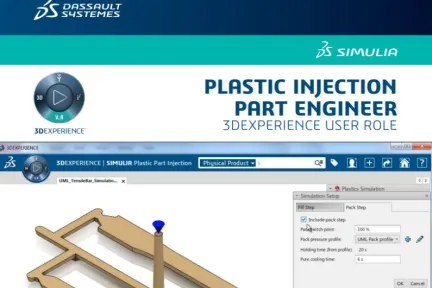
PLASTIC INJECTION PART ENGINEER 3DEXPERIENCE USER ROLE

Plastic Injection Part Engineer brings easy-to-use injection molding simulation directly to the designers of plastic parts and injection molds. It simulates how melted plastic flows during the injection molding process to predict manufacturing-related defects on plastic parts. You can quickly evaluate manufacturability while you design, to eliminate costly part redesign, improve part quality, and accelerate time to market. Plastic part designers and product developers can analyze and modify designs at the same time as optimizing for form, fit, and function.

Brochures
PLASTIC INJECTION PART ENGINEER 3DEXPERIENCE USER ROLE
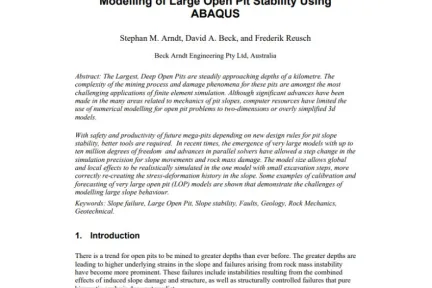
Modelling of Large Open Pit Stability Using ABAQUS

The Largest, Deep Open Pits are steadily approaching depths of a kilometre. The complexity of the mining process and damage phenomena for these pits are amongst the most challenging applications of finite element simulation. Although significant advances have been made in the many areas related to mechanics of pit slopes, computer resources have limited the use of numerical modelling for open pit problems to two-dimensions or overly simplified 3d models.

Customer Papers

Modelling of Large Open Pit Stability Using ABAQUS
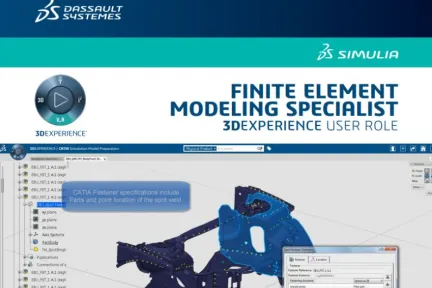
FINITE ELEMENT MODELING SPECIALIST 3DEXPERIENCE USER ROLE

The Finite Element Modeling Specialist role specializes in the creation and/or management of large and complex finite element assemblies requiring automated modeling techniques and the collaborative efforts of several engineering teams. Finite Element Modeling Specialist allows Specialist users to define procedures through a scripting language, thus capturing the company’s modeling standards and best-practices, which can be shared with other users across the enterprise on the 3DEXPERIENCE Platform.

Brochures

FINITE ELEMENT MODELING SPECIALIST 3DEXPERIENCE USER ROLE
A geomechanical reservoir modeling tool

A link between the geological software Irap RMS and ABAQUS is established using ABAQUS scripting interface in order to have; automated generation of geomechanical reservoir simulation models, to better account for geomechanical effects in the reservoir simulation and 4D feasibility studies. The link consists of a set of Python scripts that rebuild the reservoir geometry in ABAQUS/CAE: the tool may connect corresponding hanging wall and foot wall grid blocks in order to generate an unfaulted global model, the tool may open up the grid along the fault surfaces and introduce the geometry of the fault fill material, It adds the geometry of the over-, side- and under-burden. In other words all developments are geometry based which is believed to be a unique feature of the tool.

Customer Papers

A geomechanical reservoir modeling tool
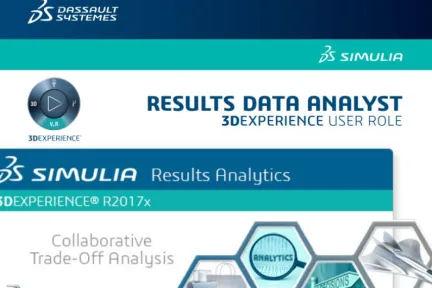
RESULTS DATA ANALYST 3DEXPERIENCE USER ROLE

Whether data is generated from simulation or physical test, customers continue to generate large amount of data that requires Results Analytics to post-process, visualize, and analyze trade-offs. Users can now unlock their data to collaboratively answer common questions, such as “What if?” or “What is my best option?” while retaining decision history and reference material in one place.

Brochures

RESULTS DATA ANALYST 3DEXPERIENCE USER ROLE
Using ABAQUS with 3D imaging techniques for material characterization

Image-based meshing is opening up exciting new possibilities for the application of computational continuum mechanics methods (e.g. CFD and FEA) to material characterization based on micro-structural scan data. An innovative mesh generation technique has been developed which converts 3D scanner data (such as from microCT or X-ray tomography) directly into meshes suitable for use in FE and CFD simulations. The ease and robustness with which simulation models can be generated have opening up exciting new avenues in materials research, particularly in materials characterization and non destructive testing.

Customer Papers

Using ABAQUS with 3D imaging techniques for material characterization
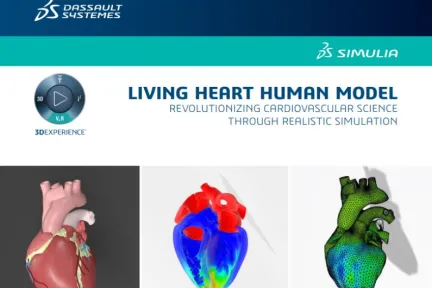
LIVING HEART HUMAN MODEL REVOLUTIONIZING CARDIOVASCULAR SCIENCE THROUGH REALISTIC SIMULATION

The SIMULIA Living Heart Human Model is a high-fidelity multiphysics model of a healthy, 4-chamber adult human heart and proximal vasculature. The dynamic response of the Living Heart is governed by realistic electrical, structural, and fluid (blood) flow physics. With this model, medical professionals, researchers, and device manufacturers will be able to rapidly conduct virtual experiments in a highly realistic 3D environment. The Living Heart can readily be used to study cardiac defects or diseased states and explore treatment options by modifying its geometry, loading, or electromechanical properties. In addition, medical devices can be inserted into the model to study their influence on cardiac function, validate their efficacy, and predict their reliability under a wide range of operating conditions.

Brochures

LIVING HEART HUMAN MODEL REVOLUTIONIZING CARDIOVASCULAR SCIENCE THROUGH REALISTIC SIMULATION
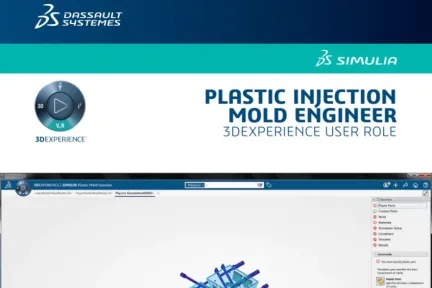
PLASTIC INJECTION MOLD ENGINEER 3DEXPERIENCE USER ROLE

Plastic Injection Mold Engineer provides anyone who designs or builds injection molds an accurate, easy-to-use way to optimize them. You can leverage runner and cooling layouts created in CATIA Mold & Tooling Designer Apps or import them from any CAD system. Single-cavity, multi-cavity, and family mold layouts, including sprues, runners, and gates can be analyzed to obtain estimated cycle time, clamp tonnage, and shot size, enabling you to optimize feed system design and avoid costly mold rework. Users can analyze simple or complex mold cooling line layouts and optimize cooling system design to minimize cycle times and decrease manufacturing costs.

Brochures

PLASTIC INJECTION MOLD ENGINEER 3DEXPERIENCE USER ROLE
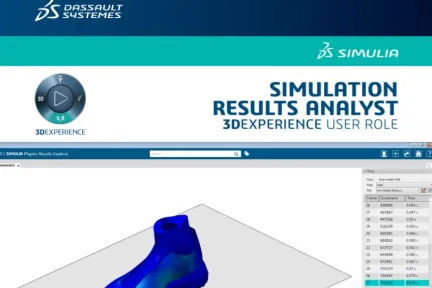
SIMULATION RESULTS ANALYST 3DEXPERIENCE USER ROLE

As simulation technology and implementation increases, the output datasets can grow exponentially, often reaching 100 million nodes or more. This causes challenges in displaying results quickly and efficiently. Simulation Results Analyst solves this problem by providing high performance capabilities for visualizing and exploring simulation results, particularly large datasets. Results files are not copied to the user workstation and visualization computations are performed within the distributed environment. The result is a state-of-the-art visualization capability enabling the processing of very large models with breathtaking performance.

Brochures

SIMULATION RESULTS ANALYST 3DEXPERIENCE USER ROLE
Stepwise Validated Finite Element Model of the Human Lumbar Spine

Understanding the lumbosacral spine and the functional spinal unit (FSU) is essential in assessing the mechanics associated with normal spine function, spinal loading, degenerative disc disease (DDD), simulations of surgery as well as the impact of fusion, and total disc replacement (TDR). The lumbosacral spine and FSU comprise of bones and complex soft tissues such as intervertebral discs (IVD) and ligaments. Probabilistic studies based on these deterministic FE formulations are of great interest currently as model input parameters (such as properties of nucleus, annulus and facet, ligament stiffness and reference strain) have been characterized experimentally and contain substantial levels of variability.

Customer Papers

Stepwise Validated Finite Element Model of the Human Lumbar Spine
Transient Dynamic Analysis of a Head Surrogate Model

In this paper, an ABAQUS two dimensional transient modal dynamic finite element analysis was performed of a simplified brain model surrounded by cerebral spinal fluid and encased in PMMA. Viscoelastic material parameters of the brain tissue simulant were obtained from open literature. Low speed loading conditions were applied at different locations of this simple brain model structure. The von Mises stress and pressure contours at different times and displacement history plots are presented. The transient dynamic analyses provide insight into key areas of interest and information on the optimal placement of sensors in a more complex brain surrogate model.

Customer Papers

Transient Dynamic Analysis of a Head Surrogate Model
Temperature Cycling Analysis of Lead-Free Solder Joints in Electronic Packaging

Numerical simulations have found growing interests in evaluating interconnect reliability in electronic packaging, particularly for lead-free solder joints. To achieve good predictive capability, appropriate constitutive properties for the solder balls and a damage mechanism based life prediction model must be provided. In this paper, a simple published but efficient approach is adopted to predict life of SnAgCu joints subjected to temperature cycling. The complete finite element model and its analysis are done in ABAQUS using its scripting interface. Finally a numerical example is presented to illustrate the procedures, and, hence, demonstrates the capability of ABAQUS in electronic packaging modeling.

Customer Papers

Temperature Cycling Analysis of Lead-Free Solder Joints in Electronic Packaging
There are 245 results

Customer stories

There are 129 results

From the communities

There are 6 results

SIMULIA Self Learning

We provide hundreds of self-learning modules so you can continue to learn at your convenience

Blogs

Read the SIMULIA blog on the latest news and innovations from our experts.

There are 694 results

Learn What SIMULIA Can Do for You

Speak with a SIMULIA expert to learn how our solutions enable seamless collaboration and sustainable innovation at organizations of every size.

Get Started

Courses and classes are available for students, academia, professionals and companies. Find the right SIMULIA training for you. 

Get Help

Find information on software & hardware certification, software downloads, user documentation, support contact and services offering