There are 1489 results
Fatigue Crack Propagation Comparison of a Hydropower Main Inlet Valve Using 3D Crack Meshes in a Full Model Versus a Sub-mode

Fatigue crack propagation of a surface crack in a hydropower main inlet valve is evaluated and compared by two approaches using Abaqus/Standard. Crack propagation is modeled using a series of 3D crack meshes to compute the crack front stress intensity values, used to compute the crack growth rates. The first approach inserts the crack mesh into the global model and connects it with tied contact, solving the combined mesh including the crack. The second approach uses a sub-model containing just the crack, where the boundary displacements are obtained from the uncracked global model results. The two methods are introduced and compared.

Customer Papers

Fatigue Crack Propagation Comparison of a Hydropower Main Inlet Valve Using 3D Crack Meshes in a Full Model Versus a Sub-mode
Fatigue Life Prediction of Welds in Motorcycle Frames on a Rough Road

Motorcycle production is increasing with strong demand for commuter models. These models are used for commuting and transporting goods with total demand in excess of 40 million units per year mostly in Asia. For production efficiency and lower cost, frames are made by welding steel pipes together forming different welded joints. The welded joints are used to make the frame compact and to provide necessary stiffness. With most welded parts, the most prone to fatigue failure is at or near the weld. Although reinforcing or strengthening can be done, cracks will just grow on different parts of the weld or joint. Thus, the need for simulation is very important to investigate the problem and consider proper design early in the development stage. This paper compares the Hot Spot Stress method and Equivalent Structural Stress Method (Verity method) to predict fatigue life of the welded joint.

Customer Papers

Fatigue Life Prediction of Welds in Motorcycle Frames on a Rough Road
Making Efficient and Effective Use of Simulation Results for Critical Design Decisions

Mechanical design of products like mobile phones is a difficult task due to the sheer number of components and design decisions. In order to ship a high quality product, teams manage every little dimension, round, tolerance gap and material choice. Finite element simulations have proven over time to be an unmatched tool in its ability to avoid failures and aide in the design process. This is especially true when designing for drop events, which can be catastrophic. Finite element analysis tools allow us to simulate these types of events and optimize the design to improve the probability of survival. In some regions of the world, network carriers require certain minimum reliability performances to ensure low field failure rates. It is our goal as simulation engineers to ensure we not only meet these specification, but we provide unmatched quality and reliability to our customers around the world.

Customer Papers

Making Efficient and Effective Use of Simulation Results for Critical Design Decisions
A Concurrent Patient-specific Musculoskeletal and Finite Element Modeling Framework for Predicting in Vivo Kinematics and Contact Mechanics of Total Knee Replacement

Understanding the kinematic and contact mechanics for in vivo specific patient has dictated the success of current total knee replacement (TKR) prostheses. In this paper, an in vivo predicting method to analyze kinematic and contact mechanics within specific TKR knee joint has been proposed and experimentally verified based on concurrent dynamic finite element model (FEM) and patient-specific musculoskeletal (MS) technology, which was achieved by the commercial software Abaqus and Isight from Dassault Systemes. The hybrid MS model was built mainly including three parts, namely cadaver-based MS model, subknee model and deformable FE prosthesis model, based on CT images.

Customer Papers

A Concurrent Patient-specific Musculoskeletal and Finite Element Modeling Framework for Predicting in Vivo Kinematics and Contact Mechanics of Total Knee Replacement
Multi-Stage, Multi-Wellbore Hydraulic Fracturing Simulation in Naturally Fractured Reservoirs Using Cohesive Zone Model

The model quantified limited cluster stimulation, the activation of a complex NF network, and fluid infiltration depending on the stimulation scenario, wellbore pressure drop, randomly distributed perforation lengths, and fracturing fluid viscosity. The complex stimulation patterns is featured by further control on cluster stimulation in the sequential fracturing case compared to the simultaneous case especially in the presence of non-uniform shaped-charge perforations. This improved model enhances the reliability on numerical simulations for hydraulic fracturing design.

Customer Papers

Multi-Stage, Multi-Wellbore Hydraulic Fracturing Simulation in Naturally Fractured Reservoirs Using Cohesive Zone Model
Dynamic Simulation Methodology of Half-toroidal IVT Variator System with Feedback Control

Dynamic simulation methodology of a half-toroidal IVT variator system using a traction drive was developed. The rheological properties of a traction fluid dependent on surface pressure, sliding velocity, and contact surface temperature were identified from four-roller test apparatus by considering Hertzian pressure distribution on traction surface. Since a half-toroidal CVT variator system was required to analyze simultaneously the vibration, deformation, and contact behavior, Abaqus/Explicit solver was used. Additionally, this approach provides arbitrary control of the variator speed ratio, a mechanical sensor-less control logic that combined a state estimation observer with feedback control was also coupled with the solver. These methods made it possible to quantify the torque capacity and power transmission efficiency of a half-toroidal variator, and also enabled visualization of the friction force spinning behavior on traction surface.

Customer Papers

Dynamic Simulation Methodology of Half-toroidal IVT Variator System with Feedback Control
High Rise Elevators – Challenges and Solutions in Ride Comfort Simulations

This presentation is focused on in-car vibrations and shows how KONE uses ABAQUS in the chain of multi-physic computation. The ride comfort depends on the elevator design, running parameters, installation quality and the building behavior. From finite element point of view the important issues that induce guide rails variable movement are: misalignment of the guide rails which typically are in the range of millimeters with a 10 cm distance between the peaks and lengths over 500 meters, suspension, compensating and travelling ropes introducing variable mass acting on the sling as a function of car position, air-flow induced forces caused by the counterweight passage at high speed and sway shape and magnitude of the building.

Customer Papers

High Rise Elevators – Challenges and Solutions in Ride Comfort Simulations
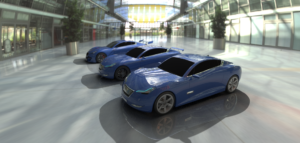
Development of the High-performance Bushing Model using Abaqus

To obtain sufficient accuracy for vehicle dynamic performance simulation, it is necessary to consider bushing amplitude and frequency dependency as well as preload effects in the rubber bushing model. FE models are capable of reproducing these characteristics though it is difficult to obtain sufficient calculation accuracy within practical computation time. This paper proposes a new low DOF bushing model by utilizing the user subroutine functionality of Abaqus. The new bushing model exhibits high computational performance while maintaining precision.

Customer Papers
Development of the High-performance Bushing Model using Abaqus
DPS INDUSTRIAL EQUIPMENT

As automation becomes more widespread across many industries, predicting and fine-tuning complex machine behavior is increasingly critical for optimizing performance. International engineering software provider Digital Product Simulation (DPS) was looking to develop a methodology for simulating the interaction of electronic controls with factory hardware.

Tech Notes

DPS INDUSTRIAL EQUIPMENT
Process Modeling and Validation for Metal Big Area Additive Manufacturing

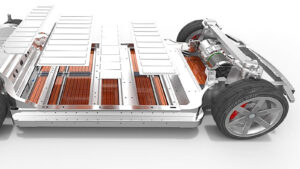
Metal Big Area Additive Manufacturing (mBAAM) is a new additive manufacturing (AM) technology based on the metal arc welding. A continuously fed metal wire is melted by an electric arc that forms between the wire and the substrate, and deposited in the form of a bead of molten metal along the predetermined path. Objects are manufactured one layer at a time starting from the base plate. The final properties of the manufactured object are dependent on its geometry and the metal deposition path, in addition to depending on the basic welding process parameters.

Customer Papers
Process Modeling and Validation for Metal Big Area Additive Manufacturing
There are 245 results

Customer stories

There are 129 results

From the communities

There are 6 results

SIMULIA Self Learning

We provide hundreds of self-learning modules so you can continue to learn at your convenience

Blogs

Read the SIMULIA blog on the latest news and innovations from our experts.

There are 694 results

Learn What SIMULIA Can Do for You

Speak with a SIMULIA expert to learn how our solutions enable seamless collaboration and sustainable innovation at organizations of every size.

Get Started

Courses and classes are available for students, academia, professionals and companies. Find the right SIMULIA training for you. 

Get Help

Find information on software & hardware certification, software downloads, user documentation, support contact and services offering