

SIMULIA Resource Center
Find everything that you need on SIMULIA
There are 1489 results
Simulation of Controlled Deflation, Folding and Inflation of Large-Scale Confined Inflatable Structures
Transportation tunnels have been identified as particularly vulnerable to different threats such as propagation of toxic gases, or smoke originated by human activities, or flooding originated by extreme climatic events such as hurricanes and severe weather. The implementation of large-scale inflatable structures to plug specific locations of the tunnel system to minimize the consequences of the propagation of disastrous events is now possible. The finite element simulations presented in this work are focused on reproducing deflation, folding, and placement procedures for deployment and inflation of a largescale inflatable from the ceiling of a tunnel segment.
Customer Papers
Brake Caliper Design for Revolve NTNU
With the large amount of dynamic loads and heat the brake system of a Formula Student racecar experiences, the system requires resistance to both heat and external loads in several of its components. With respect to both, loading conditions have been defined and evaluated for the redesign of the brake calipers for Revolve NTNU’s 2018 racecar, Atmos. Suitable production methods for manufacturing of the brake calipers have been evaluated concerning availability and impact on the final design. Topology optimization has been conducted in Tosca, subject to the evaluated loading conditions. The optimization has yielded a weight reduction of 28% and 38% for the front and rear brake calipers, respectively, compared to commercially available calipers of the same class.
Customer Papers
Automotive Hood Inner Panel Optimization with Tosca Structure.bead
Undesired deformation of vehicle front hoods during the E-coat process panel is an added concern that necessitates determining the optimal structural performance of the hood assembly system during the manufacturing process, in addition to those during its service life, all at a minimum cost and weight. Key quality factors such as functional structural stiffness, and maintaining its geometry and appearance during the stamping, painting, final assembly, distribution and customer usage stages during the product life cycle are the main focus point of this study.
Customer Papers
Cracking Problems in Wind Turbines
By their very nature, wind turbines are subjected to many variable and cyclic loads and, consequently, they are prone to experiencing fatigue cracking problems in various parts of the turbine. Examples include the aluminium rings (alurings) of the blades of several commercial wind turbines, the gears of the yaw control mechanism and even the main rack supporting all the equipment. The paper concentrates on two of the cases studied, that of the alurings and that of the yaw drive gears. It describes the methodology used for analysing the problem, the results obtained from the simulations and the conclusions reached.
Customer Papers
ABAQUS/XFEM to study the fracture of 3D printed polymers considering layer interfaces
Additive manufacturing (or 3D printing) is being increasingly used in a wide range of areas including civil, aerospace and biomedical engineering where it offers significant advantages over conventional methods for model prototyping. However, the reduced fracture resistance typically observed in 3D printed materials limits its application to functional components. The fracture of 3D printed polymer materials with various layer orientations is studied using the extended finite element method (XFEM) with the aid of finite element software ABAQUS. Single edge notch bend (SENB) specimens made of acrylonitrile-butadiene-styrene (ABS) materials through fused deposition modeling (FDM) with various crack tip/layer orientations subjected to 3- point bending are considered.
Customer Papers
Prediction of Cure Overheating in Thick Adhesive Bondlines for Wind Energy Applications
Bondline failure is a key failure mode in wind turbine blades. One of the dominant sources of failure can be the degradation of the adhesive due do the cure overheating. Substantial variation in bondline thickness can result in different thermal histories for the adhesive layer due to the exothermic curing of common adhesives. Predictive guidance on the impact of this variability in adhesive cure temperature cycle is extremely limited. A finite element model capable of tracing the thermal and conversion histories in the adhesive has been developed to address this problem. To be successful in predicting the effects of the exothermic reaction on temperature within the adhesive in cure cycle simulations, the standard heat transfer equation has been coupled with a cure kinetics model in Abaqus/CAE implementing user subroutines.
Customer Papers
Critical Buckling Load Optimization of a Filament Wound Composite Cylindrical Underwater Structure
Filament wound composite structures have high resistance to water corrosion which makes them popular for military underwater applications besides their high strength to weight ratio. The main loading condition for an underwater structure is hydrostatic external pressure which generally causes structural instability or buckling rather than rupture of the structure. In this study, a military underwater cylindrical Glass/Epoxy filament wound structure was analyzed in terms of buckling. Abaqus/CAE and Isight tool with Response Surface Method were used. Helical winding angle and thickness of helical and hoop layers with constant total thickness were used as main variables to investigate the effects of them on the critical buckling pressure.
Customer Papers
Using Simulation to Identify Loads Contributing to a Structural Durability Failure of an Engine Component
Honda engines undergo severe testing for evaluation of performance and durability. This paper focuses on a structural durability failure of a steel tube press-fit into an aluminum casting installed on an engine. While the engine is operating, the assembly experiences complex load conditions including modal excitation, high acceleration, as well as, forces and moments caused by system deformation. Traditionally, these loads cannot be measured without completely changing the system. This makes determining a root cause difficult. Therefore, True-Load was used in conjunction with measured strain data to calculate the transient behavior of the loads acting on the components and the stresses experienced by the tube. Analysis of this information allowed the loading conditions driving the failure to be identified. This provided direction for future design iterations.
Customer Papers
Design Optimization of Composite Rotor Blade of Helicopter
The composite rotor blades, by design, are intended to meet performance, stiffness, strength and fatigue requirements, taking into consideration the weight and manufacturability. The design process to achieve an optimum blade configuration is highly iterative, considering several design variables. Further, it is of paramount importance to also make a judicial tradeoff between these design variables to achieve acceptable design in the preliminary design phase. The multi-disciplinary and multi-objective nature of the blade design demands suitable optimization techniques to reduce iterations, errors, time and cost. The present study consists two phases.
Customer Papers
Developing UMAT to predict thermo-mechanical fatigue lifetime of Aluminum
The improvement of fuel efficiency and the development of high power engines have been increasing the thermal load of the engine parts. This is increasing the cases of the thermalmechanical fatigue damage. Thermo-mechanical fatigue (TMF) failure is caused by the cumulative plastic strain due to cyclic thermal loads, unlike mechanical fatigue failure. In order to predict the TMF lifetime, a nonlinear material equation including viscoelastic plasticity behavior under high temperature thermal load conditions should be constructed and appropriate tests should be conducted to obtain appropriate material parameters. And then the crack propagation model is linked to derive the lifetime prediction formulas. In this paper, an aluminum material model for TMF lifetime prediction is developed. Theoretical formulas were constructed through the process described above, and material parameters were obtained through testing. Also, the derived lifetime prediction equation was composed of ABAQUS UMAT so that it can be used for the lifetime analysis of aluminum.
Customer Papers
Automatic 3D Crack Placement using the Python API in Abaqus CAE
This paper illustrates automated capabilities using the Python API in Abaqus/CAE to build, execute, and process complicated geometries with 3D semi-elliptical crack fronts suitable for linear-elastic analyses. These Python scripts adopt the same workflow used in Abaqus/CAE, which enables rapid debugging and post-analysis modifications through the GUI if necessary. These scripts are fully parameterized and support control over a crack’s size, its shape, its location, and its discretization, e.g., the number of elements along its front. Due to the complexity of the required meshes, these scripts produce highly detailed crack-front regions with hundreds of edges, faces, and cells. Furthermore, these scripts support post-processing of stress-intensity factors along the crack front and other quantities of interest.
Customer Papers
E-Seminars
There are 245 results
Customer stories
There are 129 results
From the communities
Events
There are 6 results
SIMULIA Self Learning
We provide hundreds of self-learning modules so you can continue to learn at your convenience
Blogs
Read the SIMULIA blog on the latest news and innovations from our experts.
There are 694 results
Preventing RF Breakdown with CST Studio Suite and Spark3D
As radio frequency (RF) systems advance, they operate at higher and higher...
Article
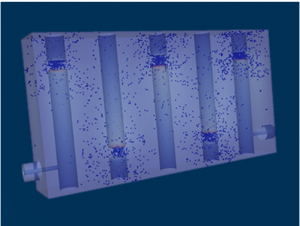
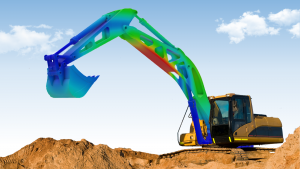
Simulating Equipment Strength and Durability
The design and manufacture of industrial equipment is a major challenge for...
Article
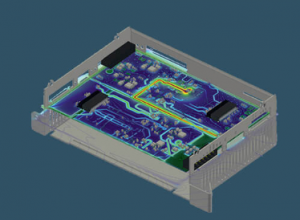
Simulation Tools for Electromagnetic Interference
The world of electromagnetic devices is rapidly expanding, to include everything from...
Article
A Look Back at the Most Popular Blogs of 2019
As 2019 comes to a close and 2020 makes its appearance, we’d...
Article

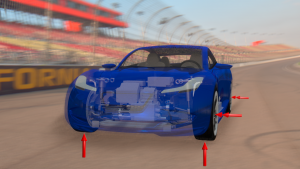
Multibody System (MBS) Simulation for Vehicle Dynamics
When test driving a vehicle, customers are looking to ensure that the...
Article
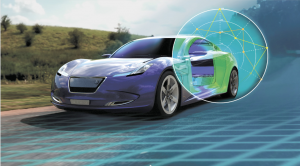
Simulation for Performance Driven Architectures
The world of vehicles is a large and diverse one, with a...
Article
Reveal the World Tour: Week 9 and 10 Highlights
Reveal The World Tour: Week 9 and 10 Highlights It all began...
Article

What does 5G mean for your business and life?
At CES 2020—the Consumer Electronics Show that will be held in Las...
Article

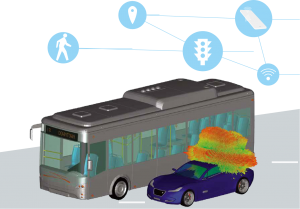
From Hype to Reality – Building the Infrastructure That Makes Autonomous Vehicles Possible
This article was originally published in the September 2019 issue of REVEAL...
Article
Abaqus Leads the Way with Latest Advances in Contact Modeling
When two or more solids interact, they impact each other in a...
Article
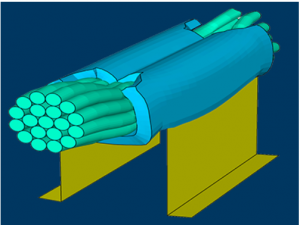
Avoiding Fatigue in Welded Joints
Welding is a common method of joining metal objects together, but welded...
Article
Material Modeling with 3DEXPERIENCE
Across industries, materials are becoming increasingly advanced, and predicting their complex behavior...
Article
Connect with SIMULIA
Learn What SIMULIA Can Do for You
Speak with a SIMULIA expert to learn how our solutions enable seamless collaboration and sustainable innovation at organizations of every size.
Get Started
Courses and classes are available for students, academia, professionals and companies. Find the right SIMULIA training for you.
Get Help
Find information on software & hardware certification, software downloads, user documentation, support contact and services offering