
Fulfilling Consumer Expectations of Robust Mobile Devices
Don’t Drop That! Fulfilling Consumer Expectations of Robust Mobile Devices
Infographics

Finden Sie alles, was Sie über SIMULIA brauchen
Don’t Drop That! Fulfilling Consumer Expectations of Robust Mobile Devices
Infographics
Simulating the human body is complex, and detailed models have been used to describe aspects of its physiology. Examples of applications include simulated crash tests, joint replacements and even a modelling of a beating heart. When evaluating a product interacting with the body, the body may not be the primary analysis objective, but rather is a necessary participant in the simulation. Disposable personal care products, such as absorbent incontinence garments or feminine care offerings, often interact intimately with the body and are intended to fit a range of body sizes and shapes. Virtual evaluations of these products often consider many body sizes and shapes; however, the cost of complex human models for product evaluation can limit the number of use cases considered. Here, cost refers to the price and resource expense of obtaining geometry, creating a finite element definition and the computation of the model. This paper describes techniques used to provide low cost virtual articulated humans suitable for product evaluation.
Customer Papers
Heat exchangers are essential components in many engineering processes in industries. Helical baffle and segmental baffle are two major types of shell and tube heat exchangers. Helical baffle heat exchangers offer lower pressure drops and higher heat transfer efficiency as compared to segmental baffles. In present work, numerical simulations are performed on a helical baffle heat exchanger using 3DEXPERIENCE flow simulation application to predict heat transfer and pressure drop. Since helical baffle inclination angle is an important design parameter, a parametric study is carried out to evaluate its effect on pressure drop and heat transfer. Optimum baffle angle found in the present study is baffle angle of 350 for which pressure drop and heat transfer is best.
Customer Papers
Expandable sand screens are a sand control system, which is used to control the ingress of solids in oil and gas reservoirs with weak and unconsolidated formations. There are two different variations of expandable screens; a system based on a slotted basepipe which are easy to expand compliant to the formation but is relatively low in strength and a system based on a drilled basepipe which is very strong but is more difficult to expand compliantly. The model was used to study the effects of formation screen interactions in inclined wellbores, through multiple rock layers. The model is also routinely used to study new applications for potential problems.
Customer Papers

Automotive engine valves draw the air and fuel into the cylinders and allow the exhaust gas out. The valves are under various loads during the engine running: a combustion pressure, a spring force, thermal loads and the impact force due to valve closing speed. Their combined loads sometimes lead a valve fracture. In this paper, the failure behavior in the exhaust valve is investigated with the finite element methods. An implicit time integration method is used to simulate the transient dynamic behavior of the valve. The stresses results by FEA were in good agreement with the measured data under a valve train rig test.This study showed the durability of the valve neck, the most common failure position, is subject to various factors such as the partial contact due to the thermal deformation of the valve seat, the degradation of material strength due to high temperature, the dynamic load when the valve closes.
Customer Papers
Concrete anchors are critical fastening elements in transferring structural load to concrete foundation. In this case study, cast-in-place mechanical anchors with local reinforcement were modeled using SIMULIA Abaqus. Steel anchor bolt and rebars were modeled using elasticplastic material, and concrete slab was modeled using concrete damage plasticity model. Because of the large model, contact, and damage failure procedure were involved, parallel computing had to be employed to speed up the solution process. The UberCloud HPC Experiment provided a great opportunity to tap into HPC resource in the cloud.
Customer Papers
In a previous study, the authors presented the development of knitted fabric models for finite element analysis to simulate the large deformation behavior of garments and the distribution of clothing pressure on the human body in a stationary position. This paper describes an extension of the investigation to a study of the human body in motion. The study accomplished a fully automatic simulation of the clothing pressure change in T-shirts during jogging. The analysis technique is expected to be utilized in the development of a stabilized electrocardiogram measurement for a person during exercise.
Customer Papers
Package technology is constantly improving in order to keep up with the advances in silicon technology. Multi layered packages exhibit several failure modes that can be predicted using modern software tools. This paper provides a methodology for creating a high-fidelity model of the interposer with all the conductor geometries in Abaqus/CAE. The two failure modes that are explored with this model are package warpage prediction due to actual copper imbalance and filled microvia delamination. Each layer can meshed based on the actual geometry in the layout design. Package warpage is caused by copper imbalance between the two sides of the interposer.
Customer Papers
Self piercing riveting (SPR) is a cold joining technique used in the automotive industry replacing the resistance spot welding. SPR creates a strong mechanical attachment between two or more similar or dissimilar sheets using a semi tubular rivet forge with a die. The number of sheet material combinations is increasing as vehicle design becomes more complex. Improving the mechanical properties of the rivet will enable greater versatility of standard rivet and die combinations. A 3D model of a prototype rivet during forging was developed, different die velocities and material hardness were analyzed aiming to validate the performance of a Boron steel (10B37), focus was set on the rivet, different mesh densities were assessed, the material behavior was input via tensile testing data obtained with wire samples according to ASTM E8 standard, while the die was assumed in all cases analytical rigid, also the influence of friction was studied.
Customer Papers
Molybdenum’s high melting point, high electrical conductivity, resistance to sagging at glass bath temperatures, and resistance to attack by most glasses make it an ideal material for glass melting electrodes. However, dissolution of molybdenum electrodes still occurs during glass melting and processing. A single piece molybdenum electrode was found to have cracked at the end of its service life. Post-mortem analyses also showed melting of the molybdenum material in the crack region. Finite element simulations using Abaqus were used to evaluate the crack formation. This study involved coupled thermal-mechanical modeling to predict the crack size and location. The FEA model was qualitatively successful in predicting the crack morphology based on very limited operational knowledge. The simulation results were compared with experimental results to evaluate necessary design changes for improving electrode life.
Customer Papers
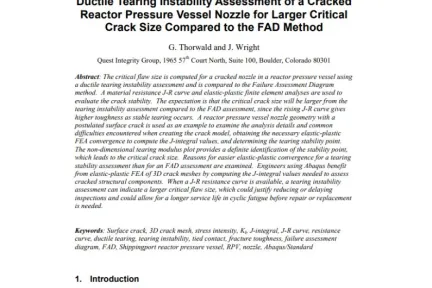
The critical flaw size is computed for a cracked nozzle in a reactor pressure vessel using a ductile tearing instability assessment and is compared to the Failure Assessment Diagram method. A material resistance J-R curve and elastic-plastic finite element analyses are used to evaluate the crack stability. The expectation is that the critical crack size will be larger from the tearing instability assessment compared to the FAD assessment, since the rising J-R curve gives higher toughness as stable tearing occurs. A reactor pressure vessel nozzle geometry with a postulated surface crack is used as an example to examine the analysis details and common difficulties encountered when creating the crack model, obtaining the necessary elastic-plastic FEA convergence to compute the J-integral values, and determining the tearing stability point.
Customer Papers
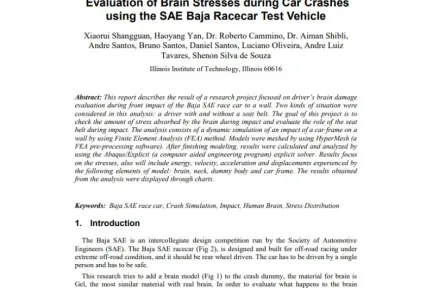
This report describes the result of a research project focused on driver’s brain damage evaluation during front impact of the Baja SAE race car to a wall. Two kinds of situation were considered in this analysis: a driver with and without a seat belt. The goal of this project is to check the amount of stress absorbed by the brain during impact and evaluate the role of the seat belt during impact. The analysis consists of a dynamic simulation of an impact of a car frame on a wall by using Finite Element Analysis (FEA) method. Models were meshed by using HyperMesh (a FEA pre-processing software). After finishing modeling, results were calculated and analyzed by using the Abaqus/Explicit (a computer aided engineering program) explicit solver. Results focus on the stresses, also will include energy, velocity, acceleration and displacements experienced by the following elements of model: brain, neck, dummy body and car frame. The results obtained from the analysis were displayed through charts.
Customer Papers
Wir bieten Hunderte von Selbstlernmodulen an, damit jeder nach seinen eigenen Vorstellungen lernen kann
Lesen Sie die neuesten Nachrichten und Innovationen unserer Experten auf dem SIMULIA Blog.
Simulation technology has come a long way since its inception around five...
Article
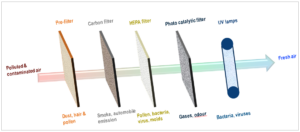
Indoor Air Quality and Air Filters With increasing emissions, risks of pandemics...
Article
Industrial equipment can create a great deal of noise, which has the...
Article
Have you been to the SIMULIA Community lately? If you want the best...
Article
The following post is from our friends at Fidelis. You can find...
Article
Have you been to the SIMULIA Community lately? If you want the best content,...
Article

Perhaps the most common and yet important engineering materials are the metal...
Article
This blog was co-written by Mirosław Wołoszyn, Associate Professor of Electrical Engineering...
Article
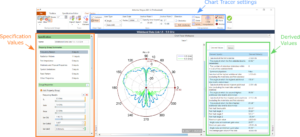
Antenna manufacturers protect their IP by providing only selective information to...
Article
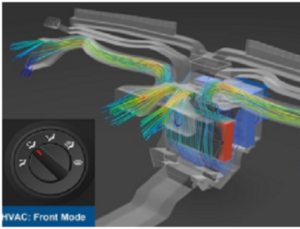
Fluid dynamics is an important discipline that applies to numerous industries. It...
Article
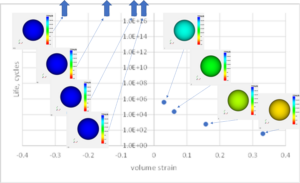
In this partner spotlight, Will Mars of Endurica talks about hydrostatic loading...
Article
Mobile phones play a significant part in our daily lives, and accidental...
Article

Lassen Sie sich von unseren SIMULIA Experten zeigen, wie unsere Lösungen eine nahtlose Zusammenarbeit und nachhaltige Innovation in Unternehmen jeder Größe ermöglichen.
Wir bieten Kurse und Schulungen für Studierende, Hochschulen, Fachleute und Unternehmen an. Finden Sie die passende SIMULIA Schulung.
Hier finden Sie Informationen zu Software- und Hardware-Zertifizierungen, Software-Downloads, Anwenderdokumentation, Support-Kontakten und Serviceangeboten