



Raphe mPhibr
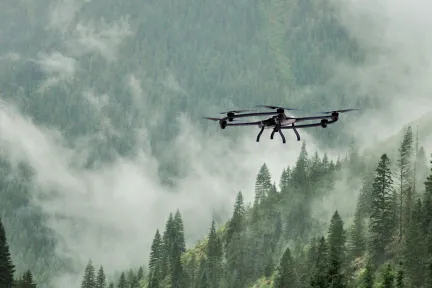
The 3DEXPERIENCE platform supports the India-based company in engineering over 100 unique intellectual property breakthroughs across robotics, aerospace and advanced materials.
Customer Story
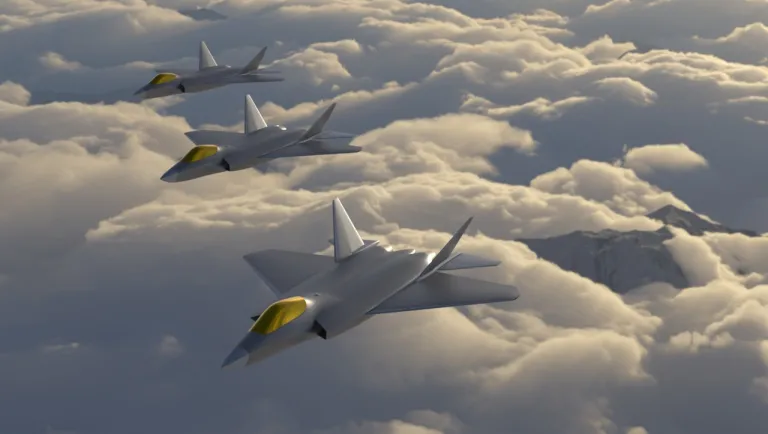
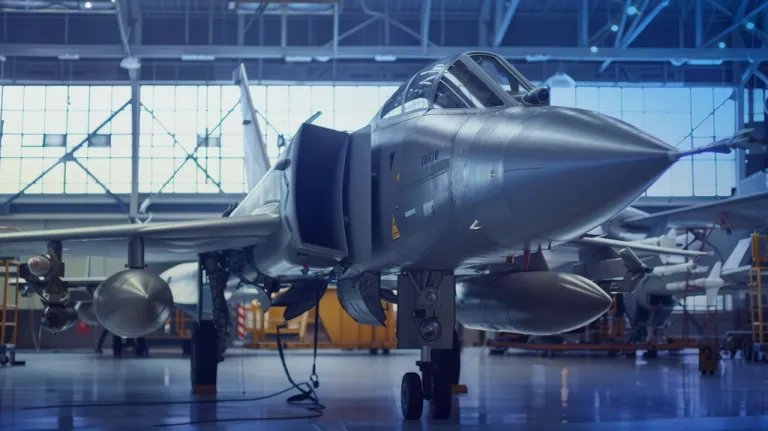
Optimize defense aircraft design, achieve advanced stealth, aerodynamics, and structural integrity through high-fidelity simulations with SIMULIA solutions.
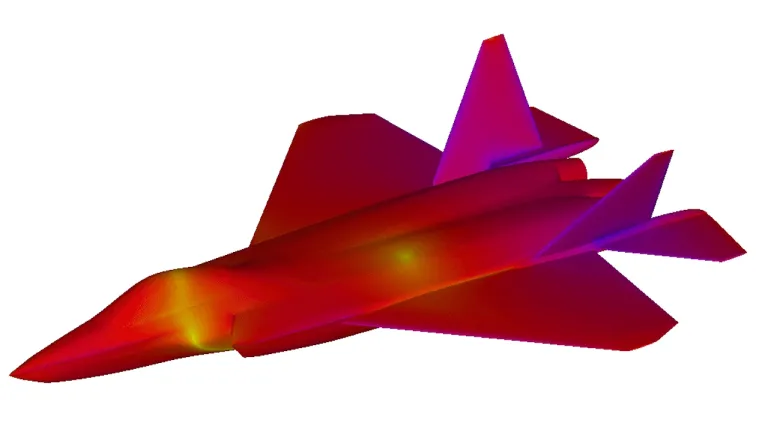
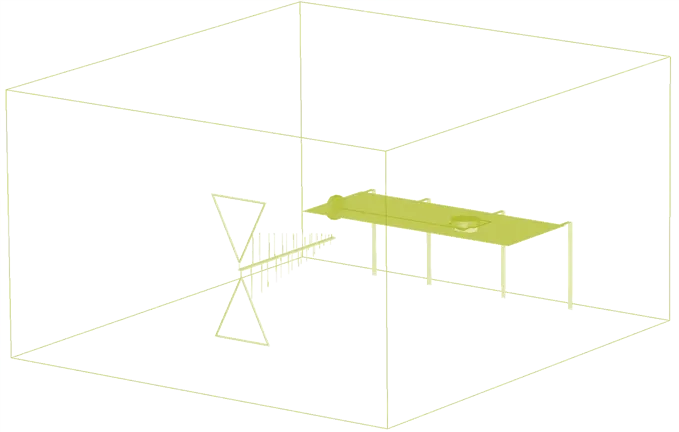
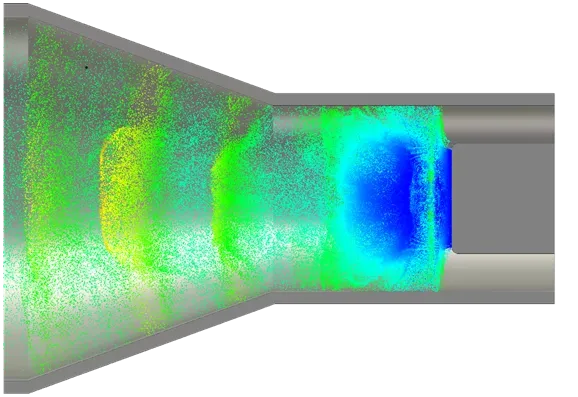
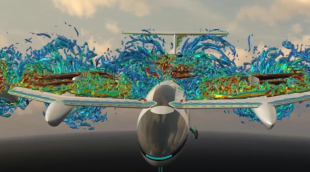
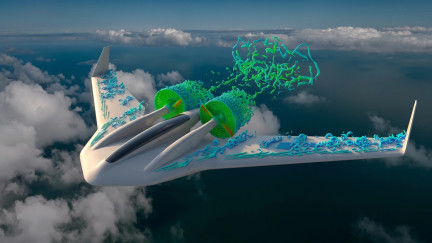
Defense aircraft face extreme conditions, requiring advanced stealth, aerodynamics, and structural integrity. SIMULIA provides the tools to meet these demands, offering nonlinear structural simulation with Abaqus for resilience, aerodynamic insights into shocks and flow dynamics with PowerFLOW, and electromagnetic simulation for radar and antennas with CST Studio Suite.
Integrated on the 3DEXPERIENCE platform, SIMULIA ensures traceability across processes, accelerates innovation, and supports smarter, more robust system designs through Model-Based Systems Engineering (MBSE).
Enhance prediction accuracy through automated coupling of structural, aerodynamic and electromagnetic simulations
Enhance certification confidence by enabling Certification by Analysis
De-risk program proposals by enhancing CATIA Magic System Models with advanced simulations
Defense systems are characterized by extreme operational requirements. SIMULIA provides the most advanced non-linear simulation capabilities required for these systems.
The 3DEXPERIENCE platform supports the India-based company in engineering over 100 unique intellectual property breakthroughs across robotics, aerospace and advanced materials.
Customer Story
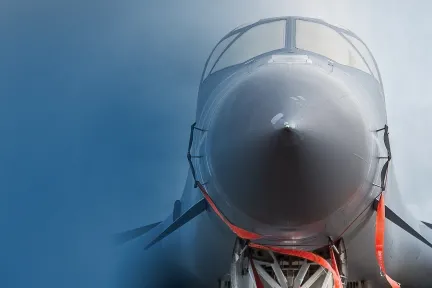
Supported by the Keep Them Operating industry solution experience on the 3DEXPERIENCE platform, NIAR will take the B-1 Lancer aircraft completely apart, scan every single structural element and digitally reassemble the aircraft to create virtual twins for future sustainment activities.
Customer Story
Explore our on-demand webinar series to discover the latest innovations in defense simulation. Learn how PowerFLOW enables transonic and supersonic flow simulation up to Mach 2, how CST Studio Suite addresses radar, communications, electronic warfare, and stealth challenges, and how MODSIM on the 3DEXPERIENCE platform helps accelerate development through connected engineering and simulation.
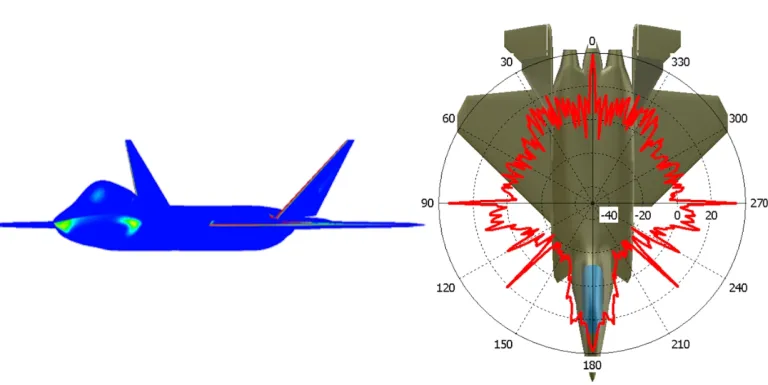
Unlock next-level stealth with CST Studio Suite®.
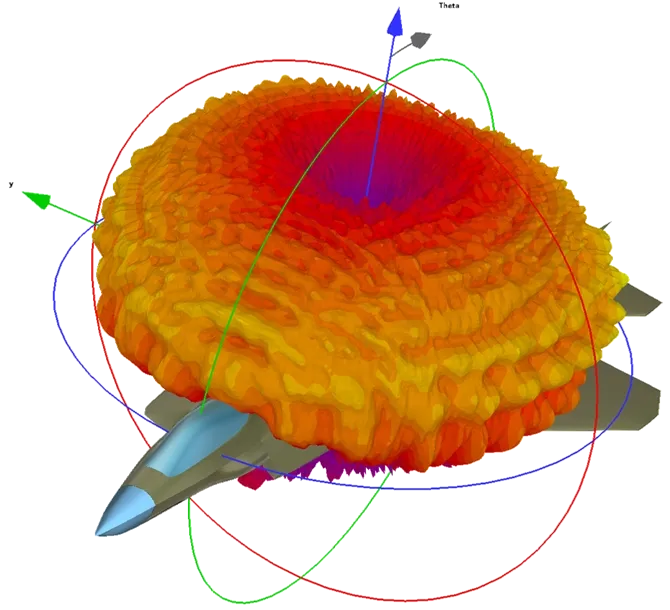
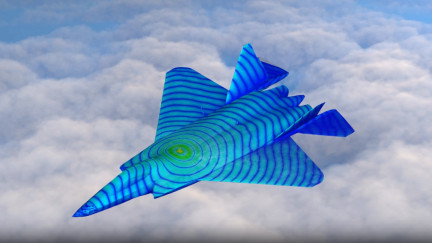
Analyze and optimize Radar Cross-section (RCS) with 3D electromagnetic simulation, replacing costly physical tests. From the earliest stages of designing military aircraft, drones, or missiles, gain unmatched insight into radar detectability.
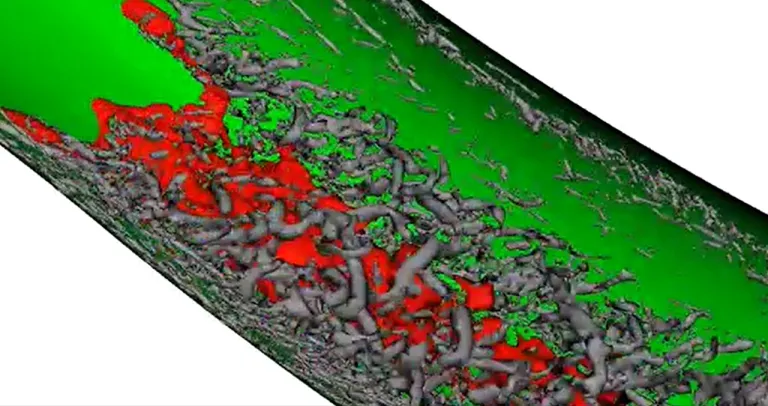
Military aircraft must withstand extreme vibrations and unsteady aerodynamic loads that threaten structural integrity, avionics reliability, and crew safety. Failure to address these risks can compromise performance and mission readiness.
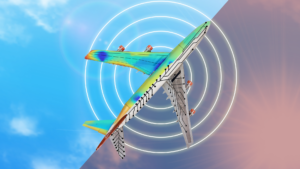
With SIMULIA PowerFLOW and Wave6, engineers gain high-fidelity vibro-acoustic simulation to accurately predict complex aero-vibro-acoustic interactions caused by highly unsteady external flows. This integrated solution enables design improvements, risk mitigation, and enhanced equipment performance—while replacing expensive and time-consuming wind-tunnel tests to provide aerodynamic loads with high-fidelity PowerFLOW simulations.
From airframe durability to pilot safety, SIMULIA delivers the precision and insight required for mission-critical defense applications.
The adoption of Model-Based Systems Engineering (MBSE) is accelerating as Defense organizations and their supply chains face increasingly complex requirements.
CATIA Magic, integrated with the 3DEXPERIENCE platform, delivers a unified environment for defining, simulating, and qualifying systems across all engineering milestones. This model-centric approach enables early trade-off of alternatives, automated simulation to increase confidence in design choices, reduced risk in concept phases, and higher fidelity through multi-domain integration.
Extended with SIMULIA high-fidelity simulation tools, MBSE models can incorporate detailed structural, thermal, and multi-physics analysis to validate performance under real-world conditions. Together, CATIA Magic, SIMULIA, and the 3DEXPERIENCE platform provide a scalable framework for rigorous, traceable, and efficient systems engineering.
Modern defense systems are evolving rapidly under the pressures of digitalization, requiring faster, more collaborative, and more resilient product development. Digital modeling and simulation now extend across disciplines—from design and analysis to procurement, manufacturing, testing, sustainment, and beyond—demanding a unified approach.
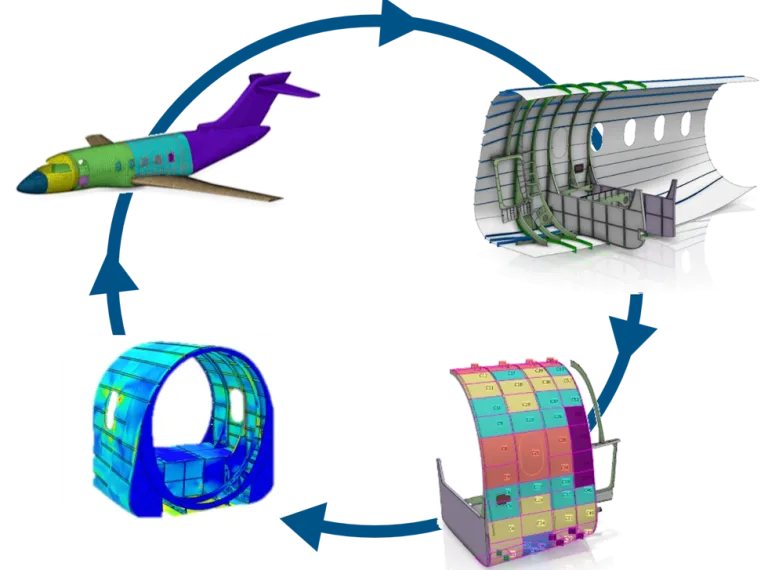
MODSIM (Modeling and Simulation), powered by the 3DEXPERIENCE platform, integrates modeling and simulation within a single environment to connect data, teams, and processes. By replacing linear, sequential workflows with cyclical, collaborative ones, MODSIM enables true concurrency and simulation-driven design. A single source of truth links evolving requirements, real-time design iterations, and high-fidelity simulation in a collaborative context.
The result: faster innovation, reduced risk, and more effective defense systems engineered with precision and confidence.
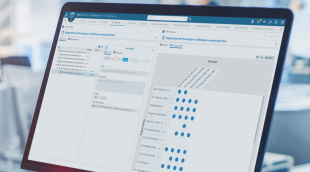
As simulation tools grow in scale and complexity, managing multidisciplinary interdependencies and diverse data threads requires advanced solutions. The 3DEXPERIENCE platform enhances simulation governance by:
This ensures better decision-making and streamlined workflows.
Defense systems demand high performance and reliability, generating vast simulation data that must be managed effectively. The 3DEXPERIENCE platform streamlines SPDM by:
SPDM ensures efficient, reliable, and scalable simulations.
Meeting the Demands of Extreme Flight Conditions
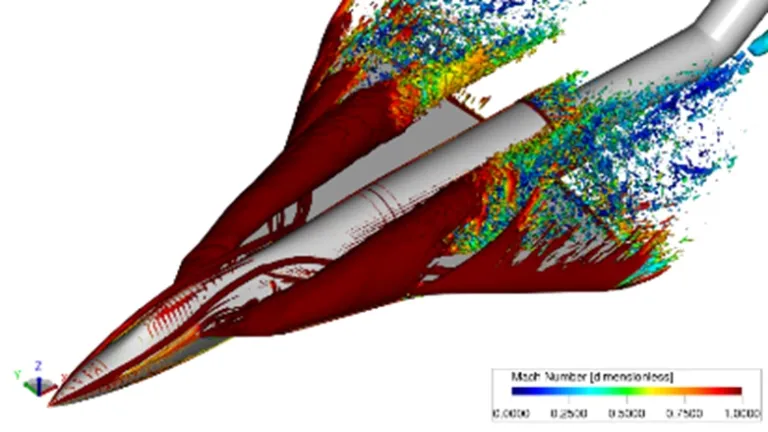
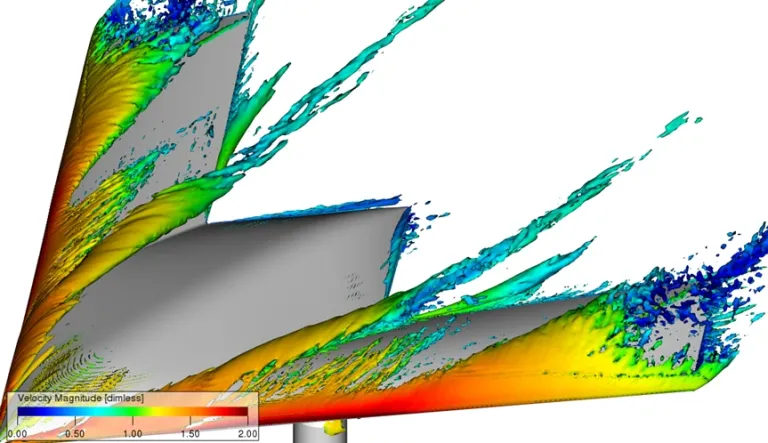
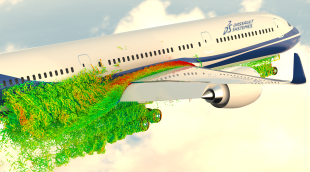
Defense aircraft operate in extreme conditions with larger, more demanding flight envelopes than civil aircraft. While airliners encounter flow separation and shock-boundary layer interactions at the edges of their performance, these phenomena are routine for defense aircraft and often lead to complex or novel designs.
PowerFLOW excels in addressing defense aircraft challenges:
Stability and control are critical for military aircraft, which face demanding flight conditions such as extreme maneuvers and high angles of attack. PowerFLOW delivers high-fidelity results, enabling precise analysis of aerodynamic stability and control characteristics to ensure optimal performance and safety in challenging scenarios.
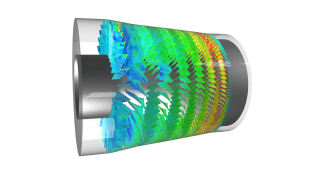
PowerFLOW offers proven capabilities to predict and reduce distortions of engine inlet flows under demanding flight conditions.
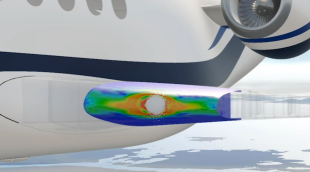
Similarly cavity flows and store separation scenarios – which generally generate highly transient flow conditions – can be accurately handled with PowerFLOW.
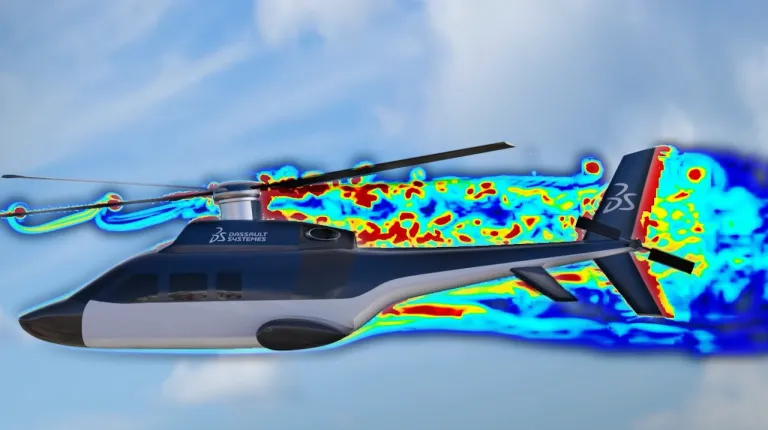
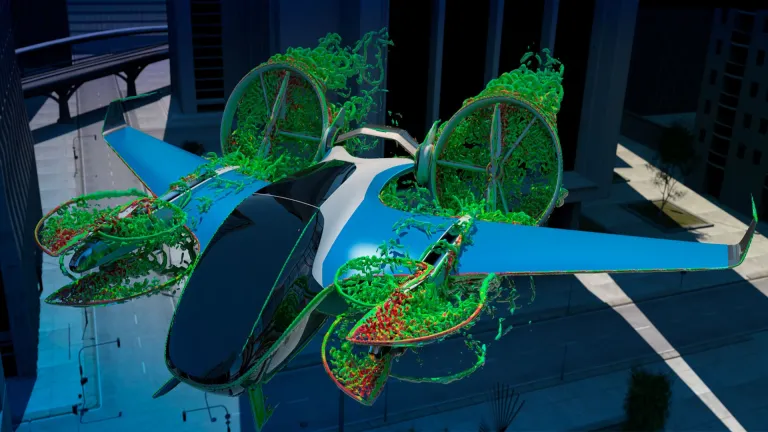
Rotorcraft – both manned and unmanned – play a critical role in ensuring mission success. PowerFLOW particularly excels in accurately predicting the highly unsteady flow conditions of rotorcraft to optimize both aerodynamic and noise performance, including:
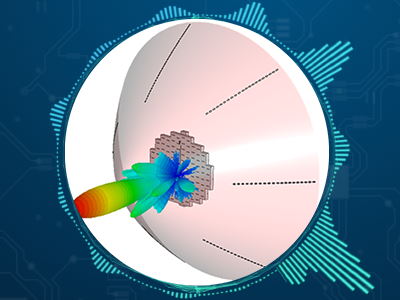
SIMULIA’s electromagnetic and multiphysics simulation solutions support the design and optimization of Communication, Navigation, and Detection systems for modern defense applications.
Protecting defense systems from electromagnetic threats is critical for mission success. CST Studio Suite’s EM simulation capabilities, spanning time and frequency domains, enable early vulnerability detection, risk mitigation, and shielding against the full spectrum of E3 effects, while ensuring compliance with standards like MIL-STD-464D and NATO AECTP-500.
Ensure performance, safety, and interoperability of defense subsystems operating in harsh electromagnetic environments across land, sea, air, and space.
Electromagnetic warfare (EMW) leverages the electromagnetic spectrum and directed energy to control, deny, or exploit it, disrupting enemies while ensuring access for friendly forces across land, sea, air, and space.
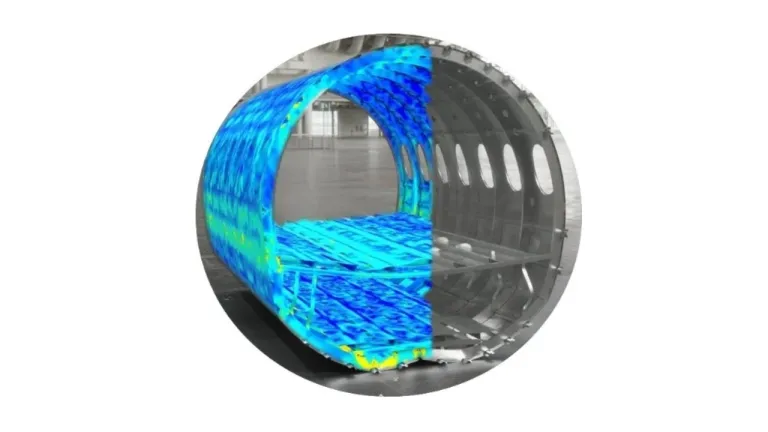
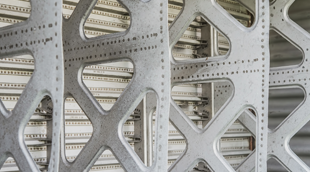
Aircraft structural design and certification require accurate prediction of strength and durability under flight and ground loads. Finite Element Analysis (FEA) remains the industry standard for internal load redistribution, damage tolerance, and stress–strain evaluation.
Abaqus on the 3DEXPERIENCE platform supports linear and non-linear analysis with:
Advanced material models and large-scale fastener representation
Best-in-class contact and mechanical interaction modeling
Proven method, including load case superposition, sub-structuring, and VCCT for strength and durability assessment
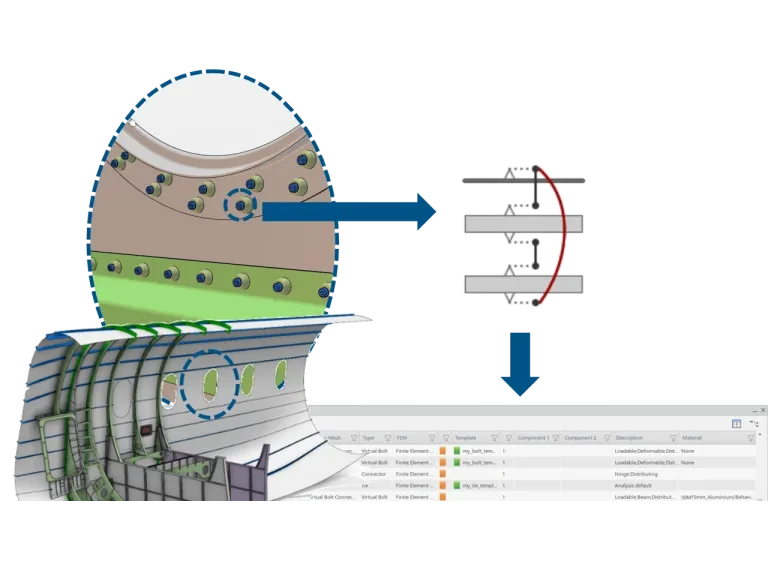
Analysis of mechanically fastened connections in aerospace structures requires automation and ideation to balance scale with predictive accuracy. Finite element analysis remains the dominant technique for strength and integrity predictions.
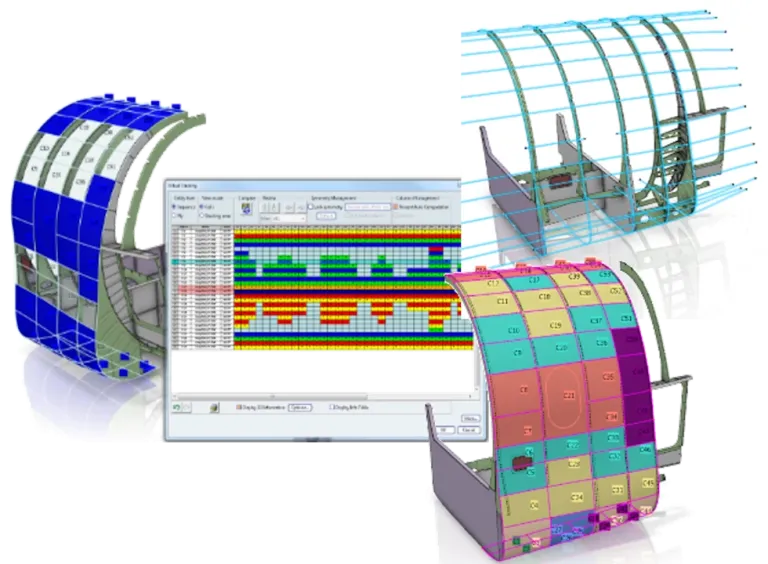
The drive for lightweight aerospace structures has increased the use of composites, requiring careful integration of manufacturability and performance. Early design phases benefit from efficient macroscopic ideations, with higher model fidelity introduced as designs mature.
Use electromagnetic simulation to evaluate communication system designs during early development stages, leading to better performance and reduced design time
Process
Develop and virtually validate the performance of aircraft systems when subject to electromagnetic environmental effects such as lightning strike
Process
Virtually validate and characterize aircraft aerodynamic performance for the entire flight envelope to reduce time consuming and expensive physical tests
Process
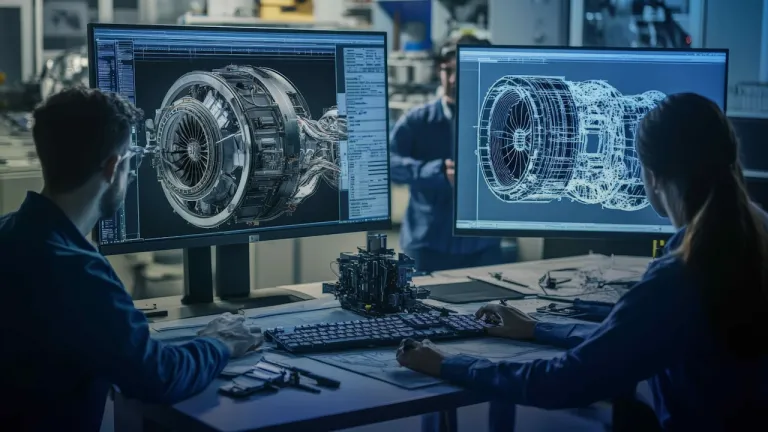
Leverage high-fidelity flow simulations to improve the aerodynamic, acoustics and thermal performance of gas turbine engines while reducing physical tests
Process
Evaluate, quantify and reduce the susceptibility of critical aircraft components to damage caused by structural impact events, saving time, cost & reducing risk
Process
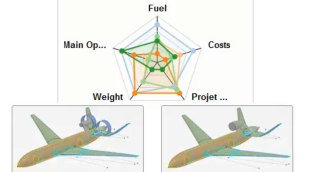
Perform virtual design exploration and trade-off studies to increase innovation, reduce physical prototyping, reduce rework costs, and speed time to market
Process
Increase efficiency, reduce noise, costs, and time-to-market of rotorcraft and eVTOL vehicles with an integrated design, simulation and optimization process
Process
Perform simulation-based structural validation of airframe designs from sub-system level to coupon level, to reduce testing cost and improve product performance
Process
Plan and execute product design validation & verification strategy to ensure all target requirements are met on time and on budget
Process
The world of Defense Aircraft Design is changing. Discover how to stay a step ahead with SIMULIA.
Applications of Lattice-Boltzmann based technologies to high-speed, unsteady flow and vibration analysis.
E-seminar
Speed up validation, reduce program risk and optimize integration with advanced EM simulation.
E-seminar
Reliable operation to specification of communications systems, navigation equipment and RADAR detection...
Article
Flying in an airplane is an experience that makes many people uneasy....
Article
Join this Tech Talk to learn more about how a multidisciplinary design optimization workflow is proposed for designing airborne radomes.
E-seminar
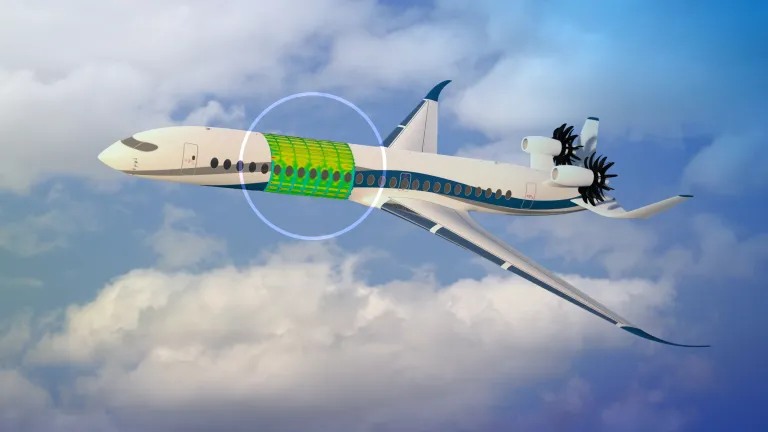
Experience sustainable, efficient aircraft design with Dassault Systèmes' SIMULIA and the 3DEXPERIENCE Platform. Unlock innovation in Aerospace & Defense.
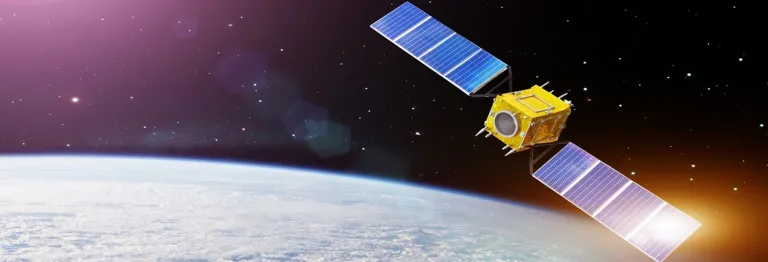
Advanced simulation for spacecraft design, enabling reliable performance in extreme conditions, accelerating development, and improving mission success.
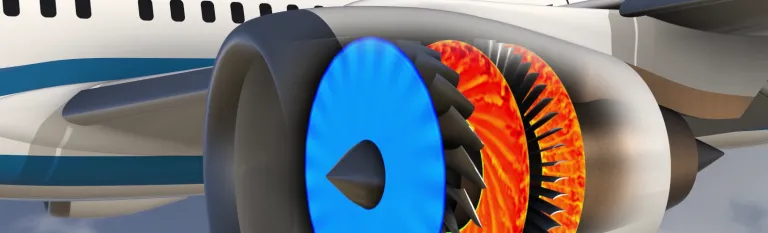
Optimize aircraft propulsion with SIMULIA solutions to improve engine performance, reduce aeroacoustic noise, and ensure reliable turbomachinery integration.
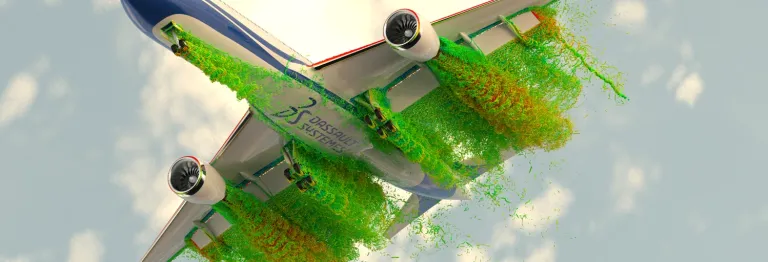
Design faster, safer, and more sustainable aircraft with SIMULIA on the 3DEXPERIENCE platform — integrating high‑fidelity multiphysics simulation and MODSIM.
Simulation for Urban Air Mobility (UAM)
Speak with a SIMULIA expert to learn how our solutions enable seamless collaboration and sustainable innovation at organizations of every size.
Courses and classes are available for students, academia, professionals and companies. Find the right SIMULIA training for you.
Find information on software & hardware certification, software downloads, user documentation, support contact and services offering