
SIMULIA Community Conference May 2015 Berlin
SIMULIA Community Conference May 2015 Berlin
Customer Papers
Finden Sie alles, was Sie über SIMULIA brauchen
SIMULIA Community Conference May 2015 Berlin
Customer Papers
2015 SIMULIA Community Conference Simpleware & Abaqus: Bridging 3D Image Data & Realistic Simulation
Customer Papers
A cable grommet is a tube ring through which an electric cable passes. They are usually made of rubber or metal. The cable grommet is used to protect, improve friction or seal cables passing through it, from a possible mechanical or chemical attack and for aesthetic look. It becomes very important to determine the optimum length of the grommet used for particular application. Bigger length will have results into folding of grommet and lesser length will yield into stretching of rubber grommet. Finite element simulation technique presented in this paper can be used to determine the optimum geometry of the grommet. Component used for this study is an automotive door harness rubber grommet.
Customer Papers
Components made of short-fiber-reinforced plastics (SFRP) are stressed highly both mechanically and thermally. Therefore an intelligent component design is required in order to fully exploit the potential of these materials. Hence, the design of such components must be based on a reliable strength assessment. For this purpose models for the description of the anisotropic and elasto-plastic failure behavior of SFRP are required. In contrast to the widespread use of SFRP, methods for a reliable strength assessment based on FE analyses for components made of these materials have not been sufficiently developed yet. This paper presents an approach for the strength assessment of SFRP components based on FE analyses. In the scope of this appropriate failure limits and failure criteria for these materials are presented.
Customer Papers
More innovation using Cradle SC/Tetra and Abaqus for FSI simulations
Customer Papers
In research and development environment and concept design, people involved in new projects often need to design a completely new shape for the structure target of the analysis. The loading conditions and constraints are usually known but the designer hardly knows how to create the geometry of the structure that meets the requirements of the project and that can be manufactured at the same time respecting the target costs. In this paper is presented the topology optimization of a motorcycle swing arm, starting from a design space which takes into account the overall dimensions, and trying to minimize the mass while maximizing stiffness. The use of Tosca Structure, that drives the FEM simulation of the swing arm performed with Abaqus, allowed to obtain a shape that can be manufactured in compliance with the requirements of the project.
Customer Papers
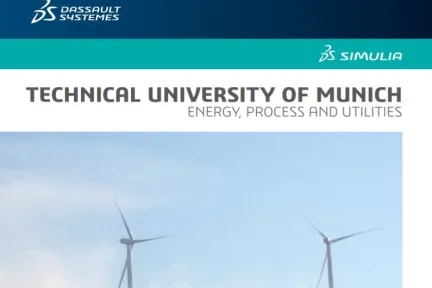
Research Associate Stefan Sicklinger employed SIMULIA’s co-simulation engine (CSE) to link four physics—flow, structure, multi-body dynamics and control—into highly accurate 3D models of wind turbine startup, run and emergency braking. Abaqus FEA’s robust solver provided extremely realistic simulations of the flexible turbine blades during operation.
Tech Notes
This paper describes the behavior of the DuPont thermoplastic composite sheet offering, under the name DuPontTM VizilonTM and matches this to composite models as implemented in Abaqus. Subsequently, to obtain a more accurate description of the actual behavior of these materials, DuPont has developed a new material model by combining both plastic deformation of the thermoplastic matrix material with a more classical composite damage model for the description of the non-linear permanent deformation of the woven continuous fiber reinforcement and subsequent failure. The (current) results obtained with this model, implemented in Abaqus, are presented, demonstrating the potential of this model for thermoplastic composites.
Customer Papers
This paper presents several Finite elements modeling techniques for simulating and optimizing pipe bending process using Abaqus/Explicit. Designing and tuning pipe-metal forming tools are quite complicated and time consuming tasks. These tasks must take into consideration a number of potential issues, such as the rate of forming, pipe shape smoothness, reduction ratio of metal sheet thickness, and pipe metal wrinkling. This paper demonstrates Abaqus forming applications that helped resolve matters arising from realistic industrial forming design and production processes. Furthermore this paper argues the difference of three element types which are shell, continuum shell and solid.
Customer Papers
Current industrial state of the art for predictive engineering of fiber reinforced thermoplastic materials utilizes nonlinear isotropic material modelling and/or anisotropic linear modelling. Both approaches give inaccurate predictions, since the effect of the orientation and length of the fibers is not taken into account in the former. Whereas, the latter omits the plastic behavior typically observed in thermoplastics. An innovative approach is developed in the last years which takes into consideration the anisotropic nonlinear behavior of the material. This approach which is based on micromechanical homogenization theories that considers both correct processing and fiber orientation, can significantly improve the accuracy of mechanical predictions, but is unfortunately very costly in terms of analysis time.
Customer Papers
Application of Abaqus to Analysis of 3D Cracks and Fatigue Crack Growth Prediction
Customer Papers
Wir bieten Hunderte von Selbstlernmodulen an, damit jeder nach seinen eigenen Vorstellungen lernen kann
Lesen Sie die neuesten Nachrichten und Innovationen unserer Experten auf dem SIMULIA Blog.
In this online only course, we cover the metal fatigue methods implemented...
Article
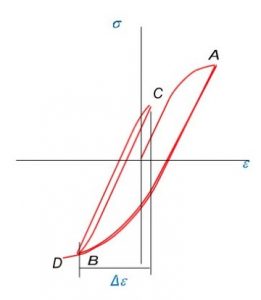
Imagine that you are on a family road trip. Traveling to your...
Article

‘Project of the Year’ is an annual contest held by Dassault Systèmes where students...
Article
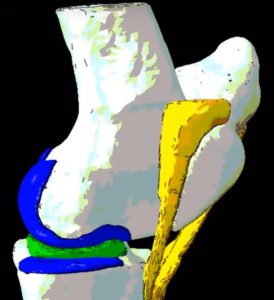
The first blog post in this series shared the top questions on...
Article
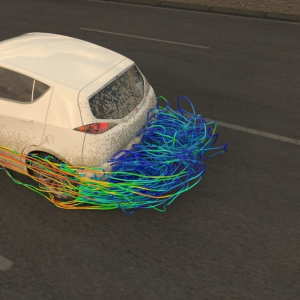
As this issue of SIMULIA Community News aptly demonstrates, the electric vehicle...
Article
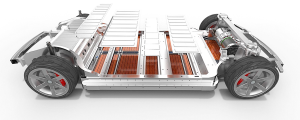
September this year saw the fourth annual EPSRC MultiSim Modelathon held at...
Article
This is the second blog post in a new series where we...
Article

As part of a sponsoring agreement between Dassault Systèmes and Institut Polytechnique...
Article
This is the first video in a series of Video Enablement Manuals...
Article
Advancements in modeling and simulation technologies are transforming healthcare by allowing medical...
Article

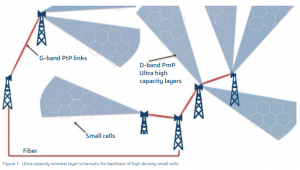
Claudio Paoloni, Head of Engineering Department and Cockcroft Chair, Lancaster University authored...
Article
When we shop for clothes, one of the key things we look...
Article

Lassen Sie sich von unseren SIMULIA Experten zeigen, wie unsere Lösungen eine nahtlose Zusammenarbeit und nachhaltige Innovation in Unternehmen jeder Größe ermöglichen.
Wir bieten Kurse und Schulungen für Studierende, Hochschulen, Fachleute und Unternehmen an. Finden Sie die passende SIMULIA Schulung.
Hier finden Sie Informationen zu Software- und Hardware-Zertifizierungen, Software-Downloads, Anwenderdokumentation, Support-Kontakten und Serviceangeboten