Use the filters below to quickly find courses relevant to your products, topics, or learning goals.

There are 140 results
Material Calibration Essentials

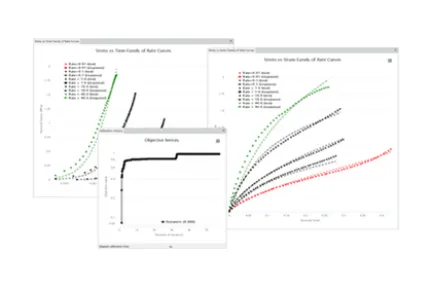
An accurate means to correlate the response of the mathematical model for structural simulation to test data is important, to modeling real world performance of assemblies. This course will introduce optimization methods in the Material Calibration app used to determine optimized material values, check the goodness of fit and exported materials for use in Abaqus or 3DEXPERIENCE structural simulation.

Course Catalog
Mechanical Scenario Creation: Advanced Topics

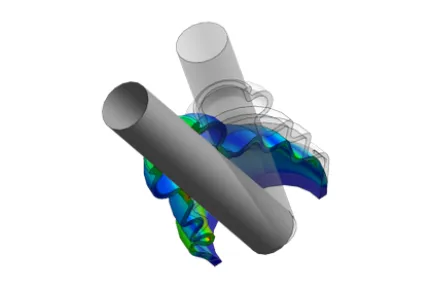
This course is an overview of selected advanced topics related to simulation with the Mechanical Scenario Creation app on the 3DEXPERIENCE platform. The topics are independent of each other. Thus, you may consider only those topics of interest and examine them in any order.

Course Catalog
Mechanical Scenario Creation: Linear Dynamics

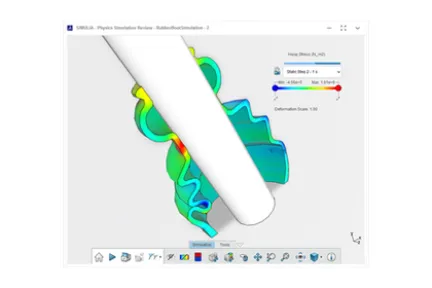
This course is an introduction to linear dynamics simulation with the Mechanical Scenario Creation app on the 3DEXPERIENCE platform. It covers how to solve linear dynamics problems including natural frequency extraction, harmonic response, random response, response spectrum and model dynamic applications. It also introduces interior structural acoustic problems and complex eigenvalue analysis.

Course Catalog

Metal Forming with Abaqus

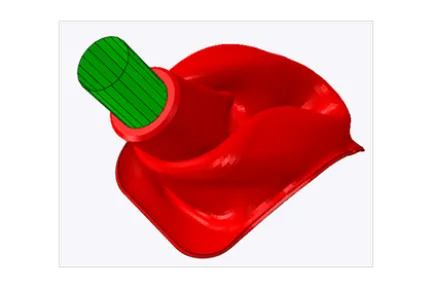
Metal forming processes are highly nonlinear because they involve geometric, material and contact nonlinearities. Therefore, simulating these processes numerically can be a difficult task. However, numerical simulations of forming processes present advantages that outweigh the difficulties. Numerical simulation can reduce both the cost and length of a product development cycle by identifying potential forming problems prior to tooling fabrication and reducing the time and cost associated with tooling rework. Numerical simulation can also improve the quality of the part being manufactured through testing to ensure that the manufacturing processes appropriately account for springback and stretching of the parts. Using lectures and hands on workshops, this course provides practical modeling skills and techniques for simulating forming processes.

Course Catalog

Metal Inelasticity in Abaqus

Properly modeling the inelastic behavior of materials is very important when evaluating the performance of a design in critical loading situations. This course provides a brief overview of the inelastic behavior observed in metals and the basic concepts of plasticity theory. The course shows Abaqus users how to model various forms of metal plasticity using a combination of examples and workshops to demonstrate the material models and the type of experimental data necessary to calibrate them. The assumptions and limitations of the various plasticity and creep models are also discussed.

Course Catalog

Model Assembly Design Essentials

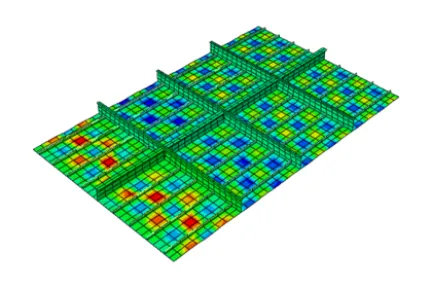
This course is an introduction to creating Finite Element Models (FEMs) for large and complex assemblies using the automated modeling technology in the 3DEXPERIENCE platform. The course also discusses managing the product structure for large assemblies of parts and meshes created either in the 3DEXPERIENCE platform or in 3rd party tools.

Course Catalog

Modeling Contact and Resolving Convergence Issues with Abaqus

This course provides an in depth discussion on solving nonlinear problems in Abaqus Standard with an emphasis on modeling and convergence related issues for contact. Convergence issues related to complicated material models and geometrically unstable behavior are also covered. Many years of practical experience in understanding and resolving convergence issues have been condensed into this course. The course is divided into lectures and workshops. The course's workshops are integral to the training. They are designed to reinforce concepts presented during the lectures. They are intended to provide users with the experience of running and troubleshooting actual Abaqus analyses.

Course Catalog

Modeling Contact with Abaqus/Standard

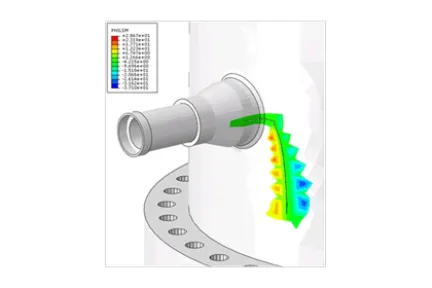
Understanding the interaction between bodies is essential for solving many engineering problems. Manufacturing processes, gears, bearings, seals and dynamic impact events all involve contact. This course covers many techniques and guidelines for solving challenging contact problems. Participants are given a brief overview of the contact formulation and contact logic used in Abaqus/Standard.

Course Catalog

Modeling Extreme Deformation and Fluid Flow with Abaqus

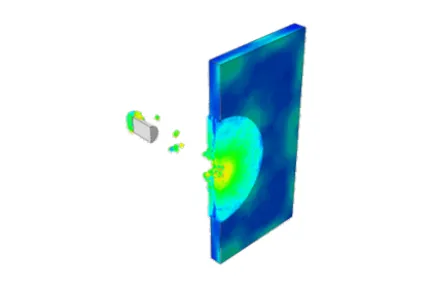
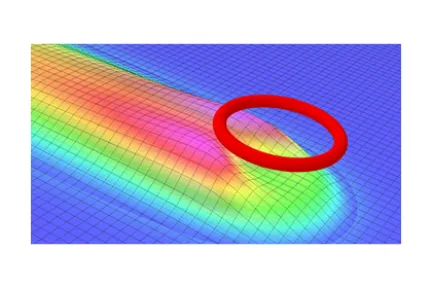
Abaqus includes several advanced techniques for modeling extreme deformation and fluid flow. The pure Eulerian analysis capability in Abaqus Explicit allows for effective modeling of fluid flows and extremely large deformations in solids. Coupling the power of this capability with the traditional Lagrangian approach makes it possible to simulate complicated multiphysics phenomena such as fluid structure interactions where highly deformable materials interact with relatively stiff bodies. The need for modeling high velocity impacts, extremely violent fluid flows, and material phase changes requires the use of Smoothed Particle Hydrodynamics, a meshless Lagrangian method capable of solving these challenging problems efficiently. This course aims at providing users with a solid understanding of the Coupled Eulerian Lagrangian (CEL) and Smoothed Particle Hydrodynamic (SPH) methods and illustrating approaches to setting up and analyzing real world problems using these advanced analysis methods.

Course Catalog

Modeling Fracture and Failure with Abaqus

Fracture and failure modeling allows for product designs that maximize the safe operating life of structural components. Abaqus offers many capabilities that enable fracture and failure modeling. This course provides a detailed discussion of these capabilities.

Course Catalog

Modeling Rubber and Viscoelasticity with Abaqus

Rubber and resilient foam are widely used for a variety of applications, such as seals and gaskets, shock mounts, vibration isolators and tires. The mechanical and chemical properties of these materials allow them to act as excellent seals against moisture, pressure and heat.

Course Catalog

Modeling Stents Using Abaqus

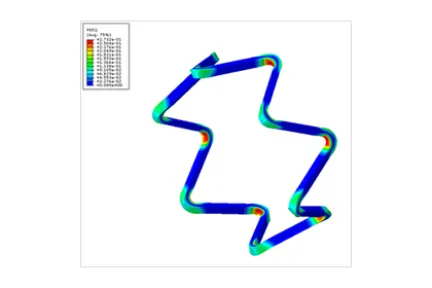
The simulation of stent behavior reveals detailed stress-strain distributions that are important in predicting device fatigue life.

Course Catalog

Motion Analysis Essentials

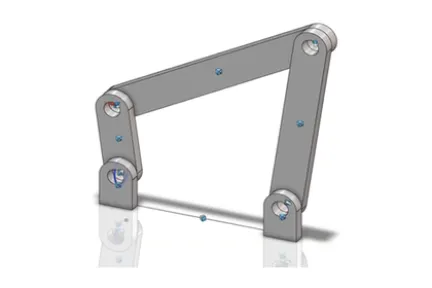
This course is an introduction to performing multibody system simulation on the 3DEXPERIENCE platform. The Motion Analysis app enables engineers to perform kinematic and dynamic simulations to predict and optimize the motion behavior of any mechanical system.

Course Catalog

Multiphysics Analysis with Opera-3d

This two day course covers Opera’s capabilities for coupling electromagnetics, thermal and stress analyses to solve multiphysics problems. Lectures and practical sessions are designed to give you both theoretical background and hands on experience in modelling various multiphysics scenarios.

Course Catalog

Multiscale Experiment Creation Essentials

This course is an introduction to performing multiscale and multiphysics simulations in the 3DEXPERIENCE platform. Multiphysics experiments involve high precision 3D simulations such as mechanical finite element analyses, computational fluid dynamics (CFD) flow simulations, and electromagnetic simulations. You can combine two different physics domains to create a Co simulation such as a fluid structure interaction (FSI) and conjugate heat transfer (CHT) analysis and can also include highly abstracted approximations of real world physical behavior (logical systems usually packaged in the form of a functional mockup unit or FMU).

Course Catalog

Obtaining a Converged Solution with Abaqus

Obtaining converged solutions for highly nonlinear simulations can sometimes be challenging. Difficulties can arise, especially in simulations involving contact, complicated material models and geometrically unstable behavior. This course provides an in-depth discussion on solving nonlinear problems in Abaqus/Standard and addressing the most common convergence-related issues.

Course Catalog

Optimizing Engineering Methods with Isight

This course provides a brief overview of Isight and optimization before discussing nonlinear optimization theories and applications. Topics such as design space searching, multi objective optimization, optimization strategy, and multidisciplinary optimization are covered. Attendees will learn key differences between the optimization algorithms offered in Isight, how to choose the preferred method based on the problem, how to remedy issues with run time performance, and other topics relevant to improving the usage and value of Isight for real engineering optimization problems.

Course Catalog

Parametric Design Improvement: Fluids

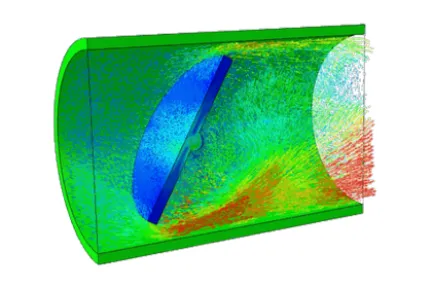
Design improvement studies allow engineers to find the best design while varying design parameters. Using the Parametric Design Study app, you can easily author, monitor and postprocess a parametric design improvement study based on a flow analysis. Physics simulations from which the user initiates a study are first defined and run using the Fluid Scenario Creation app.

Course Catalog

Parametric Design Improvement: Structural

Design improvement studies allow engineers to find the best design while varying design parameters. Using the Parametric Design Study Essentials or Parametric Design Study app, you can easily author, monitor and postprocess a parametric design improvement study based on an analysis case for a single physics simulation object or a geometrical model. Physics simulations from which the user initiates a study can be either: structural analysis case or durability analysis case.

Course Catalog

Performance Study Essentials

This course is an introduction to the lightweight web based tool in the 3DEXPERIENCE platform that allows simulation analysts and engineers to run predefined Simulation Processes. The tool enables one to quickly search, run, and monitor existing Simulation Processes.

Course Catalog

Performance Trade-off Essentials

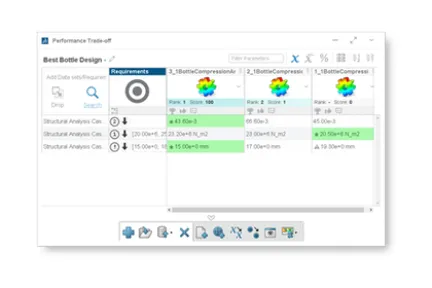
This course is an introduction to the dashboard app in the 3DEXPERIENCE platform that allows decision makers to select the best option among the competing objectives by providing Trade-off and collaborative decision support capability.

Course Catalog

Physics Results Explorer Essentials

This course is an introduction to results visualization and postprocessing with the Physics Results Explorer app on the 3DEXPERIENCE platform. This allows designers and engineers to view and evaluate simulation results from disciplines such as structures (including composites) and fluids.

Course Catalog

Physics Simulation Review Essentials

This course teaches you how to view lightweight simulation data with the Physics Simulation Review widget in the 3DEXPERIENCE platform dashboard interface. If the native apps user has generated experience content, the reviewer will be able to browse: the mesh, material assignments, scenario content (such as loads and restraints), and results. Results display can include contour plots, streamlines, sensors and charts. You can animate these lightweight results and change way objects in the plots are displayed.

Course Catalog

Also Discover

Join the SIMULIA User Community

Connect with SIMULIA users, experts, and learners worldwide. Explore discussions, technical insights, learning resources, and shared experiences across industries and disciplines.

Customized Training for Your Team

Organize private or on-site instructor-led training adapted to your products, workflows, and business objectives. Contact SIMULIA training teams to discuss your needs and request a customized learning program.

Get Help

Find information on software & hardware certification, software downloads, user documentation, support contact and services offering