Equipment Structural Engineering
Accelerate equipment design, reduce physical testing and avoid product failure and warranty costs with proven predictive simulation solutions
Process
Optimize power and fluidic equipment with multi-physics simulation to improve efficiency, reliability, and maintenance performance.
When gas turbines make up 70% of the European Union (EU) energy production needs, even incremental improvements can have significant impacts. Because of this, governments across the world are focusing on improving turbine efficiency, and new turbine designs and power generation cycles are slowly redefining the energy landscape. This ambition to reduce emissions does not stop with turbines however; induction motors currently account for 64% of drive energy consumption in manufacturing plants, and pumps 27%; in the case of pumps, an energy reduction potential of up to 50% can be achieved.
Power and Fluidic Equipment Engineering solutions from Dassault Systèmes help you meet the latest legislation requirements, and extend the operating life of your equipment. Avoid breakdown, increase operating performance, and investigate new cleaner materials with our designer oriented solutions. Investigate the behavior of your products in installed conditions, and without a prototype, through our multiphysics workflows.
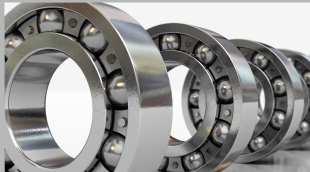
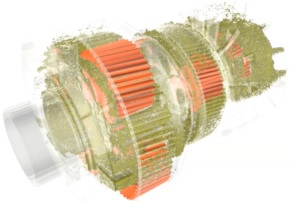
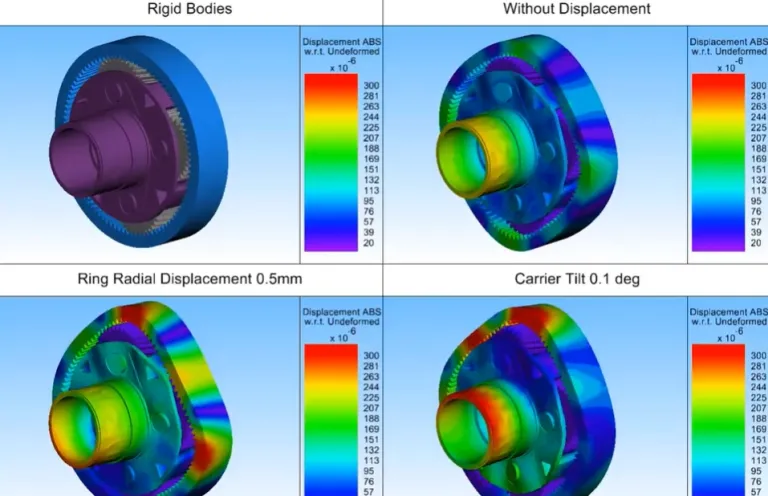
SIMULIA enables high-fidelity simulation of gear mechanisms to design lighter, more efficient, and more reliable power transmission systems. By capturing nonlinear contact, structural loads, and system dynamics under real operating conditions, engineers can predict performance and durability before physical testing — increasing power density, improving efficiency and emissions performance, accelerating time-to-market through cost-effective design decisions, and reducing risk by complementing and enhancing physical testing.
SIMULIA Capabilities
Benefits
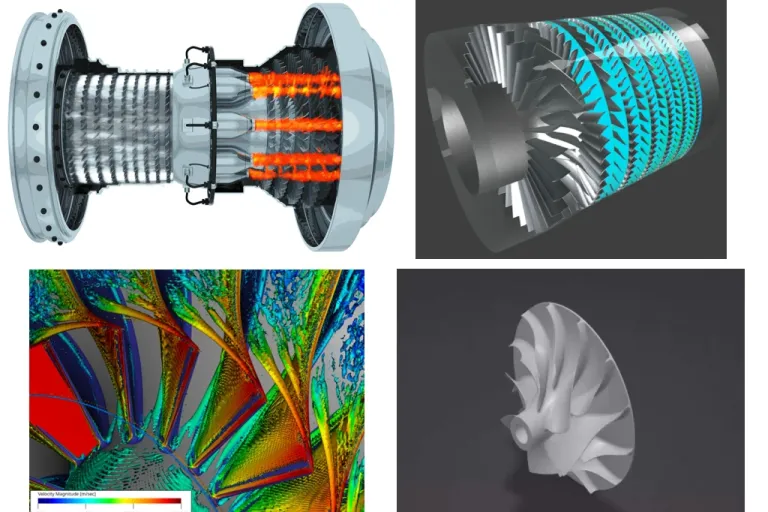
Maximize energy production with advanced simulation that captures the full flow dynamics of the turbine assembly — leaving no detail overlooked. By redesigning blade cooling channels and improving resistance to creep and fatigue, you can:
Simulation-driven design allows engineers to explore innovative turbine solutions, accelerate development, and improve both performance and reliability.
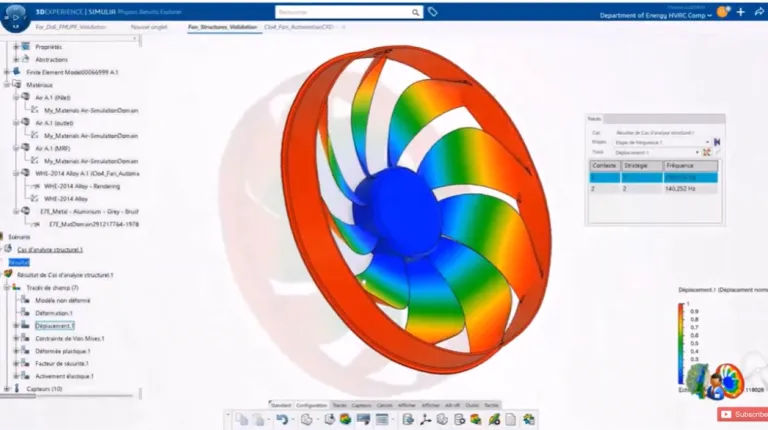
Focus on individual aspects of turbomachinery design - structural, aerodynamic and aero-acoustic and component cooling
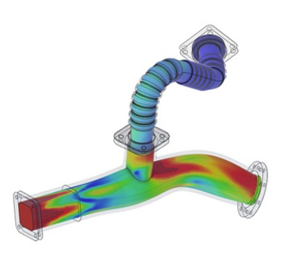
Our simulation solutions predict the behavior of pumps and connected duct systems, even when complex fluid-structure interactions are involved, such as in peristaltic pumps or intricate piping networks. Valve performance and pressure losses can also be optimized, with capabilities that:
By accurately capturing fluid dynamics and mechanical interactions, engineers can optimize pump and duct designs, reduce energy consumption, extend equipment lifespan, and ensure reliable performance across the system.
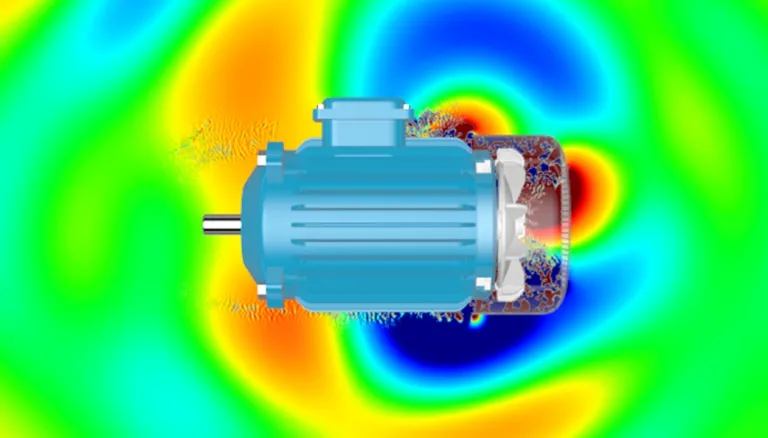
Induction motors drive most industrial systems and demand is rapidly increasing. Higher-torque designs need forced cooling, and ventilation fans become the main noise source.
Equipment noise can reach 120–150 dB, while limits near homes are typically ~55 dB. As power and industrial plants move closer to communities, noise control is critical for compliance, worker safety, and public acceptance.
Designing quiet cooling systems is difficult: engineers must deliver high airflow, high efficiency, and low noise — a combination that requires advanced aeroacoustic expertise and costly development cycles.
More performance → more cooling → more noise. Smarter fan and acoustic design is the key.
Electromagnetic (EM) simulation enables you to optimize electrical power equipment — such as switchgear, transformers, motors, and generators — for performance, reliability, and sustainability. With these capabilities, you can:
By integrating EM simulation into your design workflow, engineers can reduce environmental impact, improve efficiency, and deliver reliable, safe electrical power equipment — all while supporting faster innovation and regulatory compliance.
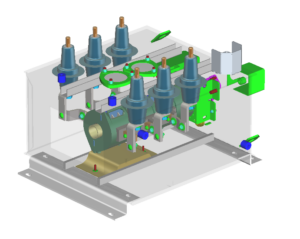
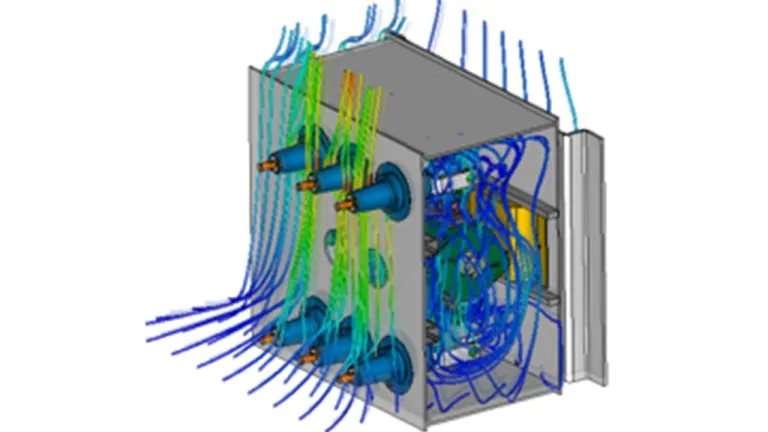
Current-carrying components and bus-bar systems in electrical equipment can be subjected to currents up to 20 or 30 times the rated current for just a few milliseconds, which can generate forces that cause catastrophic failure. It is critical for designers to establish short-circuit withstand and mechanical strength in such systems and to ensure adherence to standards such as IEC 60865-1, IEC 61439 and their variants.
Simulation is used to evaluate the thermal and structural response of bus-bar systems under short-circuit conditions, helping verify mechanical strength and compliance with industry standards.
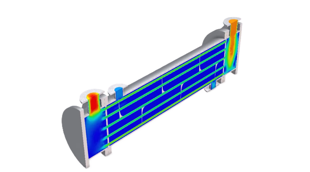
Heat exchangers play a critical role in power plants, where efficient heat transfer directly impacts overall plant performance. Challenges arise from complex fluid flow patterns, temperature gradients, and interaction between fluid and solid domains, which influence heat transfer efficiency and pressure drop.
Simulation is used to predict flow and heat transfer performance in heat exchangers, helping optimize efficiency and ensure reliable operation across varying conditions.
Insulation failure can lead to electrical breakdown, catastrophic failure and system downtime in electrical power equipment such as switchgear and any equipment exposed to potential breakdown conditions. Sulfur hexafluoride (SF6) has long dominated high- and medium-voltage Gas-Insulated Switchgear (GIS), Gas-Insulated Circuit Breakers (GCB), and Gas-Insulated Transmission Lines (GIL). SF6 also has an extremely high GWP of around 23,500, which is 23,500 times that of CO2. Significant effort is underway to discover SF6-free solutions to address this environmental concern.
Simulation is used to assess insulation performance and breakdown risk in electrical equipment, helping validate safe operating limits and reduce the need for physical testing.
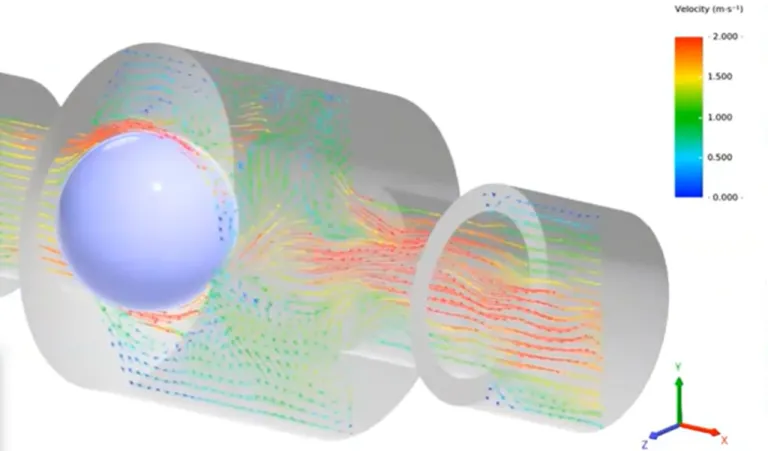
Couple fluid flow and heat transfer in a single simulation. Improve the integration of heat exchanger in your system by ensuring maximum heat exchange. Include coolant computation, flow aerodynamics and convection, and thermal conduction and radiation in the simulation.
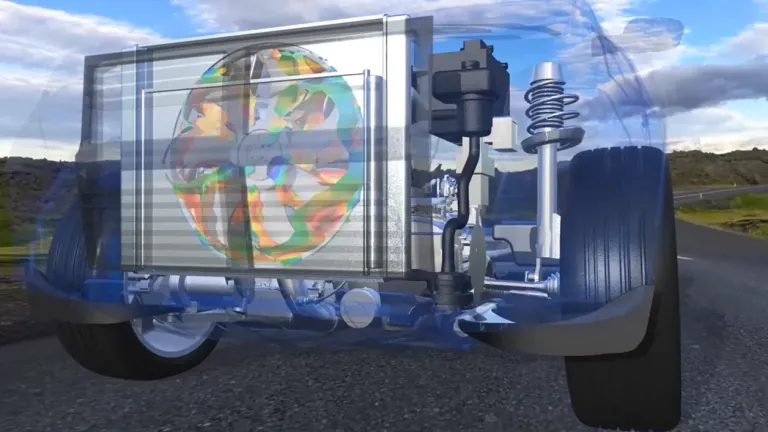
Couple CFD with system modeling to optimize HVAC components across varying operating and weather conditions, integrating experimental and 3D simulation data as 1D behavior laws via Functional Mockup (FMU) interfaces to balance accuracy, complexity, and development time.
Predict thermal loads by coupling electromagnetic and thermal solvers. Safely investigate novel designs numerically eliminating unnecessary and destructive tests and also reducing the number of prototypes. Emulate costly mandatory tests and determine pass-fail compliance to avoid late stage failures. Integrate simulation in early design stages to reduce product development costs.
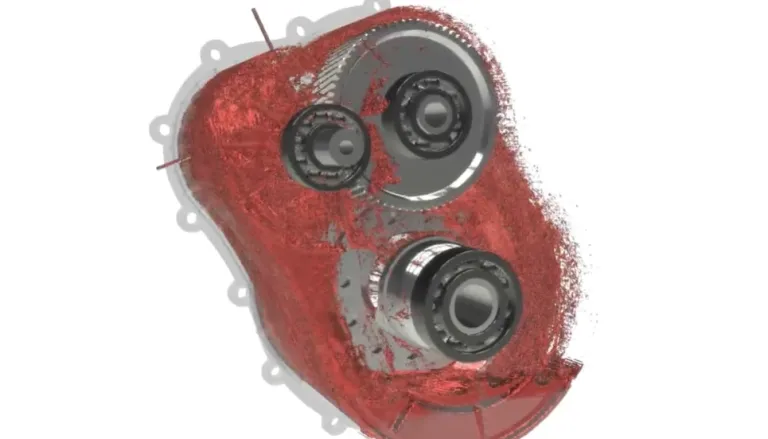
Our GPU native solution empowers designers and analysts to perform complex Powertrain simulations, that involves multiphase flows and moving parts, such as Gearboxes, in a very fast and affordable way, without the significant hardware and long turnaround time that traditional CPU solutions required.
Accelerate equipment design, reduce physical testing and avoid product failure and warranty costs with proven predictive simulation solutions
Process
Reduce community noise, evaluate product performance and avoid machine breakdown with high fidelity, multi-physics simulation solutions
Process
Accelerate innovation and reduce costs and time to market with fast prediction of key performance attributes using multidisciplinary simulation solutions.
Process
Explore the technological advancements, innovative methodologies, and evolving industry demands that are reshaping the world of Power & Fluidic. Stay a step ahead with SIMULIA. Discover now.
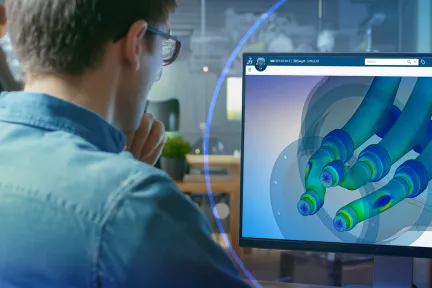
For decades, computational fluid dynamics (CFD) has been a domain of experts: powerful, technical and often inaccessible to those without specialized training. At Dassault Systèmes, we believe that simulation should empower all engineers, not just a select few. With Fluid Dynamics Engineer, our goal is to make advanced CFD and multiphysics simulation more intuitive, scalable and collaborative without compromising the scientific rigor that defines our technology. Democratizing CFD isn’t about simplifying science; it’s about designing experiences that make it easier to understand, explore and innovate.
Article
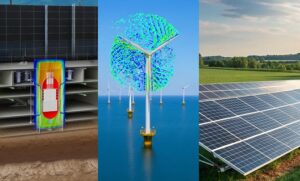
Global electricity demand is rising. Low-emission sources like renewables and nuclear power must meet this demand. For engineers, this moment brings pressure to design smarter, cleaner energy systems that can be deployed faster, maintained easily, and deliver consistent, long-term performance. A new engineering workflow is required, one that unites faster decision-making, collaboration, and advanced simulation to validate performance from the first iteration.
Article
Manatee is a specialized software designed to tackle e-NVH (electromagnetic Noise, Vibration, and Harshness) challenges in electric drives. It offers a suite of tools for analyzing and optimizing noise and vibration, enabling engineers to make precise design choices. This blog outlines key workflows, including electrical machine definition, simulation execution, and targeted noise mitigation strategies. It highlights advanced features like parameter sweeps and harmonic current injection for streamlined NVH optimization. With efficient algorithms and an intuitive interface, Manatee simplifies the design process, supports early decision-making, and enhances the performance of powertrains.
Article
Virtual prototyping for electric drives is particularly useful in assessing e-NVH—electric Noise, Vibration, and Harshness. This blog will analyze the capabilities of Manatee software in performing detailed e-NVH simulations, highlighting its role in optimizing the design and performance of electric drive systems.
Article
In this blog post, we show how machine learning can be used in the design process of a centrifugal pump to optimize diffuser geometry. The AI model is trained on data from best-in-class simulation tools which produce reliable data that closely agrees with experimental validation results. Using a trained AI model based on simulation data, engineers can explore the impact of changes to diffuser parameters with instant feedback.
Article
Dassault Systèmes offers powerful modeling and simulation tools integrated in a unified experience (MODSIM) to help designers tackle the challenge of increasing demand for industrial gear units with higher efficiency, lower noise and longer life.
Article
This post is a continuation in a series about simulation on the 3DEXPERIENCE...
Article
The control and switching of power requires high reliability and safety and...
Article
The SIMULIA Blog is committed to providing high-quality simulation content that is...
Article
Perform fluid flow and heat transfer simulations, leading to better quality designs while avoiding manufacturing issues
Role
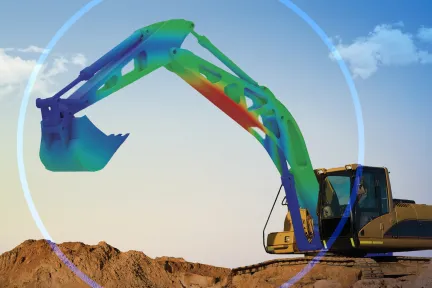
Optimize performance, reduce costs, enhance safety, and ensure reliability using SIMULIA Heavy Mobile Machinery Design & Simulation solutions.
Optimize tire performance with SIMULIA. From noise reduction to durability, leverage advanced simulations for smarter, faster, and cost-effective design.
Minimize downtime costs with durable products and robust manufacturing equipment designed and optimized by SIMULIA industry solutions.
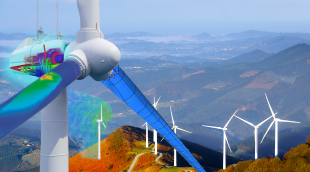
Simulate and optimize complete wind turbine systems, subsystems, and individual components with SIMULIA’s industry solutions.
Speak with a SIMULIA expert to learn how our solutions enable seamless collaboration and sustainable innovation at organizations of every size.
Courses and classes are available for students, academia, professionals and companies. Find the right SIMULIA training for you.
Find information on software & hardware certification, software downloads, user documentation, support contact and services offering