


Moonrider
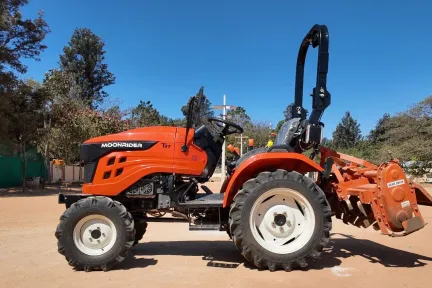
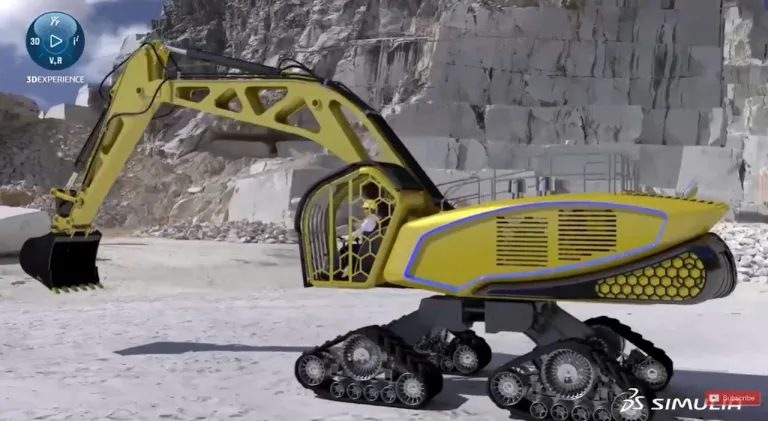
Moonrider simplifies the complexity of designing its electric tractors and advanced battery packs using the 3DEXPERIENCE platform on the cloud.
Customer Story
Optimize performance, reduce costs, enhance safety, and ensure reliability using SIMULIA Heavy Mobile Machinery Design & Simulation solutions.
Heavy mobile machinery, including farm, construction, and mining equipment, must perform reliably in harsh and diverse environments. Manufacturers face the challenge of ensuring durability, efficiency, and safety under heavy loads, fatigue, thermal stress, and vibration. Machines must meet strict regulations, support varied operational tasks, minimize downtime, and reduce maintenance costs, all while maintaining operator comfort and productivity.
SIMULIA enables engineers to optimize heavy mobile machinery across key domains:
Accelerated design and simulation integration reduces work and enables extensive virtual testing
Enhances certification confidence by minimizing physical testing through digital certifications of DEF tank & ROPS
Simulates real-world conditions for diverse drive cycles and environmental extremes
Facilitates comprehensive multi-physics evaluations to improve noise reduction, structural integrity, and energy efficiency
Moonrider simplifies the complexity of designing its electric tractors and advanced battery packs using the 3DEXPERIENCE platform on the cloud.
Customer Story
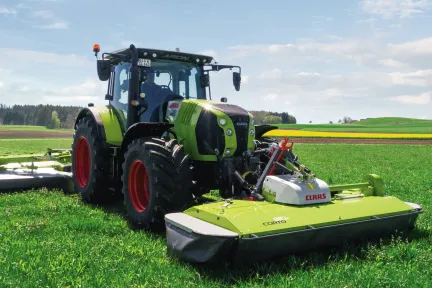
CLAAS adopted Dassault Systèmes’ 3DEXPERIENCE platform and its Single Source for Speed industry solution experience. Engineers and designers at CLAAS sites around the world have access to a unique source of product information that enables collaboration, design reuse, digital simulation before manufacture and consequently less waste and production corrections.
Customer Story
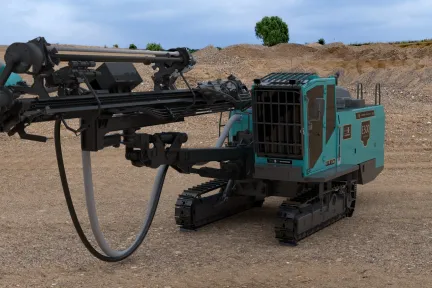
Hyundai Everdigm manufactures heavy mobile equipment and is now able to work more productively and seamlessly with the 3DEXPERIENCE platform.
Customer Story
Youtube
Duration 2min 50s
Youtube
Duration 2min 59s
Discover how Kreisel Electric uses the 3DEXPERIENCE platform for digital continuity.
Customer Story
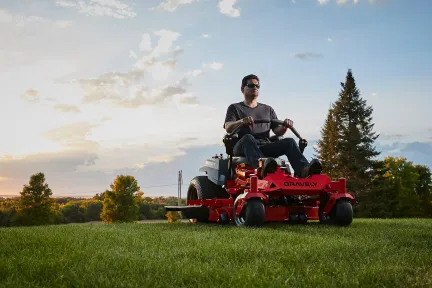
Ariens engineers used Abaqus/CAE and fe-safe from Dassault Systèmes SIMULIA, along with Wolfstar Technologies’ True-Load, to locate and accurately model strain gauges in all areas of the lawn mower, enabling weld elimination, part-count reduction, fatigue life improvement and other design enhancements.
Customer Story
BIAD uses MODSIM to set new benchmarks in smart hospital architecture, improving patient experience and processes with advanced design and simulation.
Customer Story
MODSIM helps eliminate inefficiencies and incomplete designs, cutting project costs while improving planning accuracy.
By integrating CAD and CAE tools, MODSIM streamlines workflows, accelerates project timelines, and prevents costly delays.
Learn how MODSIM enhances collaboration, drives innovation, and boosts profitability, helping businesses maintain a competitive edge in industrial equipment.
Discover how SIMULIA’s Equipment Strength and Durability Performance solution enables end-to-end tracking of project requirements from ideation to product rollout. By providing a single source of truth representation of design and simulations, it reduces costly miscommunications between teams and avoids ensuing delays.
Heavy mobile equipment must operate under strenuous conditions for decades, necessitating durable designs to reduce service downtimes and potential downstream effects. The demand for customized variants further complicates manufacturers' ability to maintain a durable product portfolio.
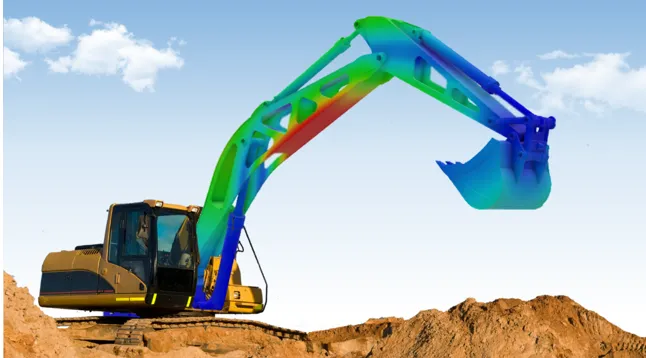
The Heavy Machinery Structural Engineering solution on the 3DEXPERIENCE platform offers an end-to-end structural and durability analysis tool. It streamlines simulations to identify product failures and minimize warranty costs across individual components and large assemblies, including welded structures, benefiting designers and engineers alike.
Simulate variety of extreme operating cases, evaluating virtually the complete system ensuring structural integrity and stability in unfavorable and critical scenarios are met. Ultimately, Improving the design in holistic way, and reduce physical testing and cost.
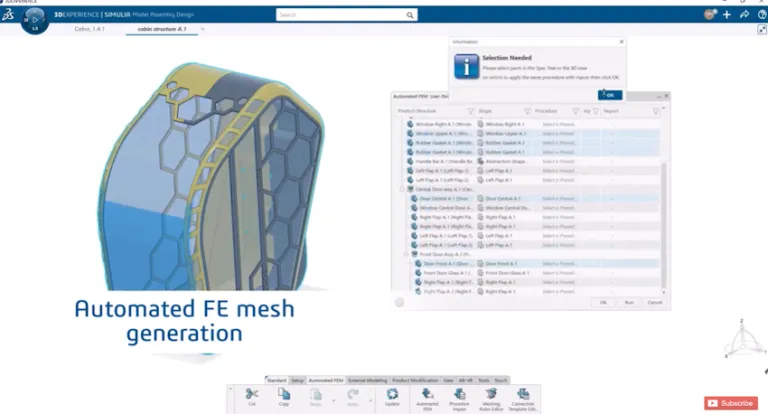
Reduce physical testing and cost by gaining insights through simulation, identifying risks of welding failure, and improving the design to meet expected operation life. Supported by validated fatigue technology, best-in-class general contact enables seamless assembly setup and accurate simulation. Automated compatible weld mesh generation speeds up modelling of large assemblies.
Reduce physical testing and cost by gaining insights through simulation, identifying risks of component failure under severe working conditions, and improving the design to meet expected operation life. Supported by best-in-class general contact to enable seamless assembly setup and accurate/realistic simulation.
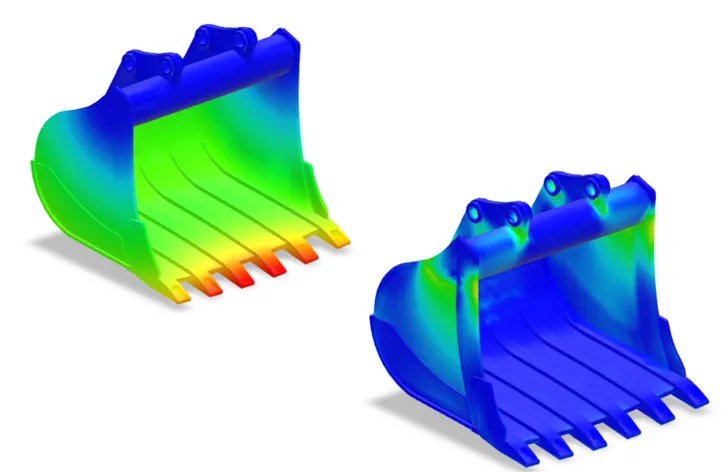
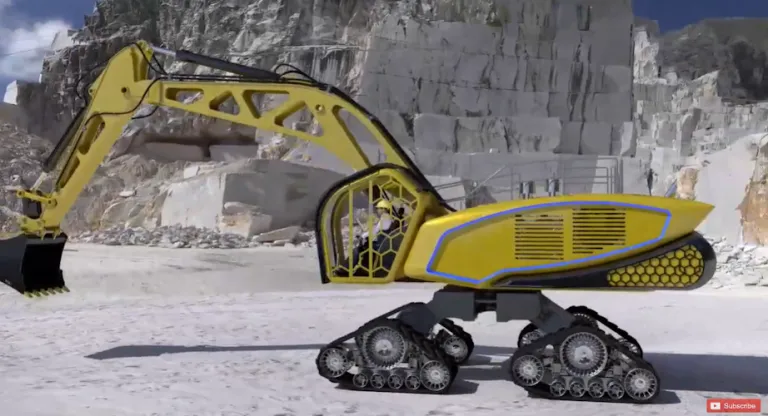
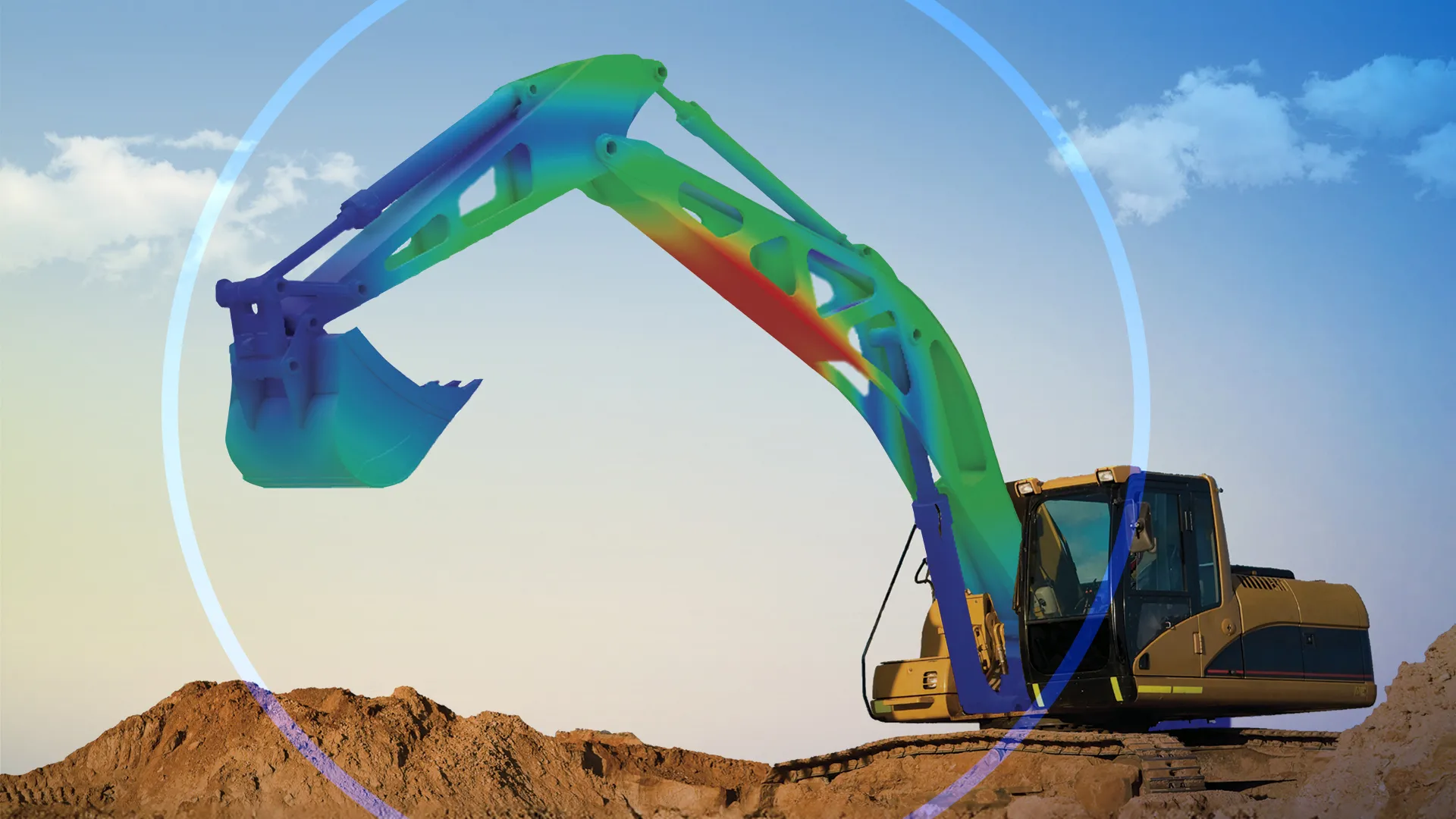
Empower designers with the expert capabilities to minimize part weight, maximize stiffness, reduce cost and optimize material usage. Designers must push past conventional ways of working to think outside the box. Innovating one concept at a time is no longer a sustainable method, Generative design is a new way to design lighter & stronger components. It allows for exploring of unimaginable shapes while respecting design specifications.
The Heavy Machinery Operating Performance solutions address the challenges of creating durable, high-performing heavy equipment in an evolving landscape marked by stricter regulations and the shift towards electrification. This set of solutions is designed to optimize the lifespan and efficiency of machinery across farming, construction, and mining sectors, ensuring they meet contemporary operational demands.
Acoustic engineers have the ability to reliably assess the noise generated by operating systems (fan, exhaust, etc.). They can also correct potential issues, to ensure regulations are met before manufacturing a final physical prototype.
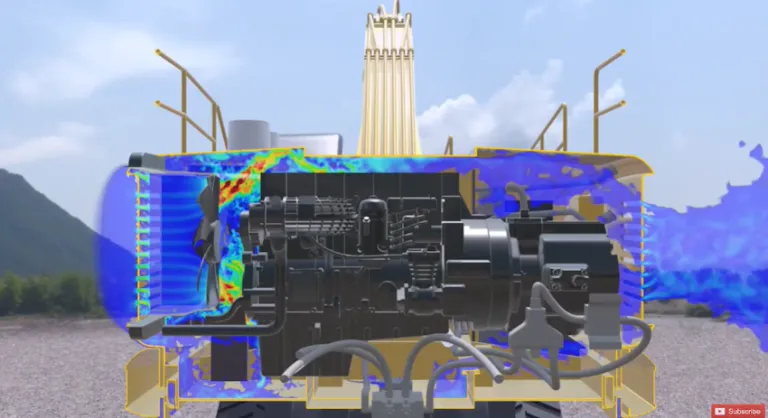
In contrast to automobiles, these slow moving and stationary machinery do not have any “free” ram air to help with the cooling but rely solely on the performance of the cooling package including cooling fan(s) and heat exchangers to reject the excess heat. Thus, an effective cooling system is extremely important for them. Gradual heating is required to avoid thermal shock, and uniform cooling is crucial to prevent temperature spikes that can result In structural issues. In addition, there is strong need to utilize digital solutions to meet engine certification requirements and reduce the failure risks.
Thermal engineers have the ability to leverage highly accurate simulation-driven design of cooling fan systems to ensure proper cooling airflow. They can also verify operating temperatures underhood in operating conditions, ensuring the final product will keep cool and be durable.
Antenna engineers ensure proper placement of antennas for best connection and minimum co-site interferences leveraging Dassault Systèmes’ electromagnetic solutions for antenna performance.
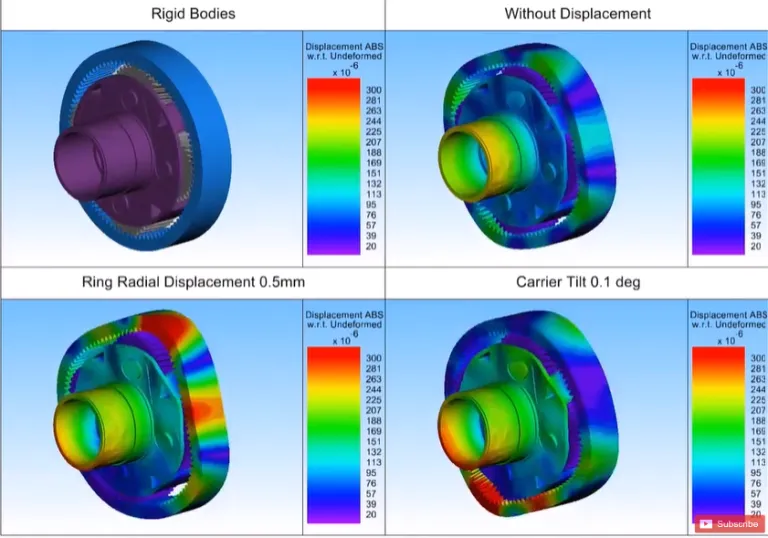
Gear module engineers use multibody simulation solutions for drivetrain dynamics to develop quiet, durable and high-performing drivetrain that provides the required power to run the machine smoothly.
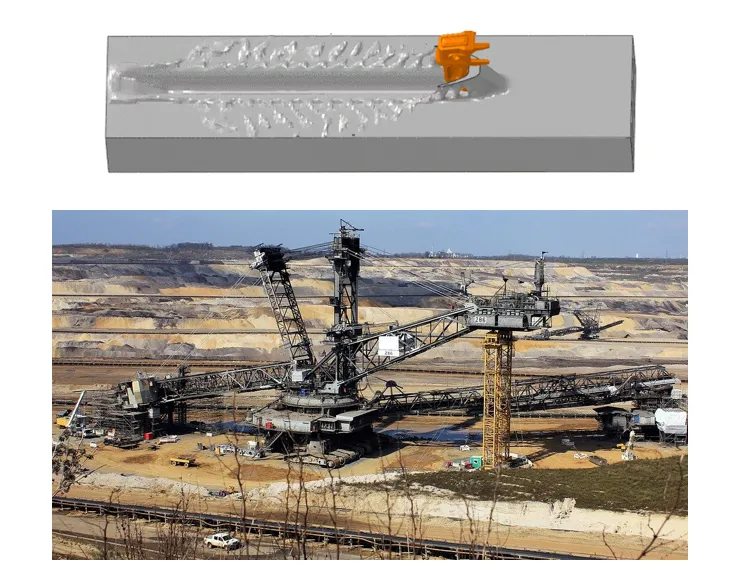
Achieve maximum operating performance and minimum risk of failure, through fatigue analysis. Verifying the ability to dig, plow, manipulate or transport material and soil with simulation of material transport on support structures.
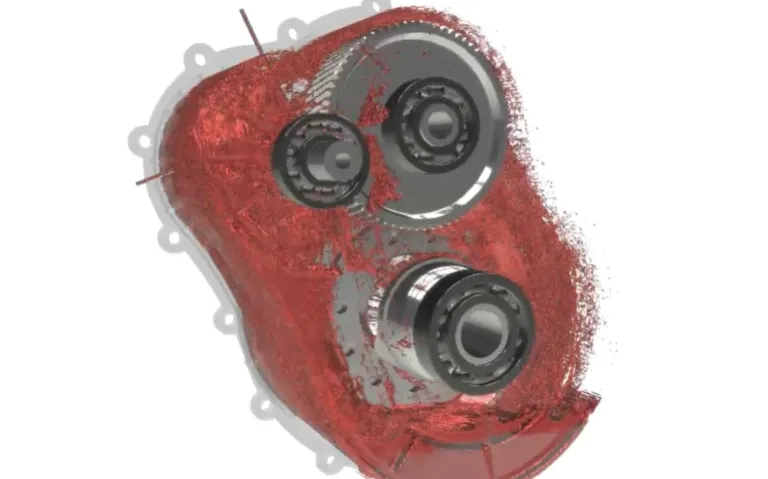
Our GPU native solution empowers designers and analysts to perform complex Powertrain simulation. It involves multiphase flows and moving parts, such as Gearboxes, in a very fast and affordable way, without the significant hardware and long turnaround time that traditional CPU solutions required.
Facing the challenge of operator fatigue, which incurs costs of $1200 to $3100 per employee annually according to the US National Health Council, manufacturers are now prioritizing cabin comfort to reduce costs. Amidst intense market competition, technological innovations, and stringent regulations, Dassault Systèmes provides cost-effective solutions for designing next-generation cabins.
These solutions streamline the development process by reducing the need for costly prototypes and tests while ensuring the creation of superior operator experiences. By offering a comprehensive insight into cabin safety and comfort, these innovations enable manufacturers to make impactful improvements efficiently.
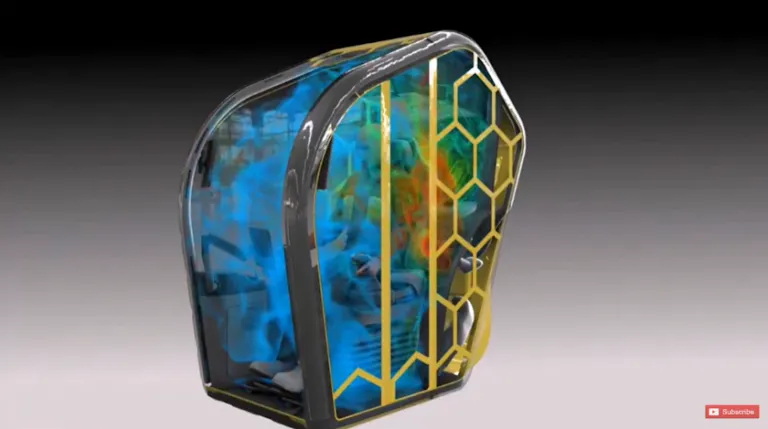
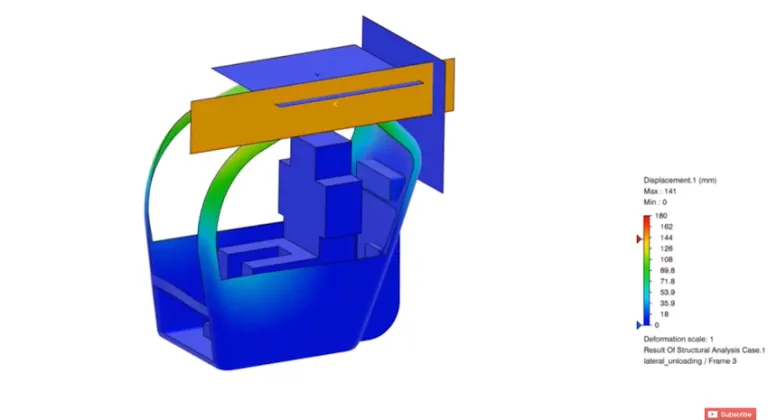
Thrown object in injuries are the third leading cause of work related death. Strict regulations have been imposed to develop roll-over and thrown object structures. Besides ROPS certification, it is also important to keep operator comfort by creating spacious design with high visibility. Our workflow can assess the cabin and improve the structural performance with quick design change and updating FE models. Dynamic explicit simulation helps in assessing impact of object.
A quarter of operators are expecting improved climate control performance. Our human-centric solutions maximize the thermal and acoustic comfort of the operator in any weather and environment, whilst ensuring maximum energy efficiency. These solutions focus both on high accuracy methodologies providing homologation quality results, and early stage topology optimization to explore hundreds of designs effectively.
Stay competitive with through the Heavy Machinery Safety and Comfort workflows by :
The heavy machinery sector is rapidly adopting electric solutions to comply with global regulations, facing challenges such as high battery costs and limited testing data. To address this, batteries must be durable and perform well under extreme conditions while meeting emission and noise standards.
Through advanced simulation, we optimize battery cost, durability, and efficiency, and ensure safety and regulatory compliance under various stresses. This streamlined, multi-physics approach accelerates development and product market readiness.
High power requirements, and harsh operating conditions, which leads to thermal management challenges. Leverage fully-parametrized models with automatic simulation scenario generation across physics. Minimize noise and failure risks through improved thermal management across operating conditions
Complex multi-discipline system with conflicting design requirements. Stringent durability requirements for maintenance-free engines operating in harsh environment during long duty cycles & high cost of raw materials. Achieve high power density motors through the simulation of tightly-coupled multi-physics. Virtually test 1000s of insulation coverage scenarios through automated DOEs.
Heavy machinery industry is rapidly transitioning to electric solutions due to increasing regulatory pressures globally. Hence there is pressure to market the products in a timely manner. The high battery cost with limited prior test data makes it challenging release the product in a given time. The battery packs used in the equipment must be durable and need to have longer life cycle whilst exposed to extreme conditions. Further, there are stricter regulations for emission and noise levels, hence quiet and efficient designs are needed for extended duty cycle periods. In simulation, the battery cells and packs can be optimized to satisfy cost, durability & efficiency for different operating conditions and designs. We can also test the safety of the battery pack and see if it passes legislation requirements under exposure to extreme mechanical, thermal and electrical conditions. With our multi-physics, multi-scale capability we can solve the problem in different domains and development stages. Finally, the solutions can be solved in single environment for most of the cases.
Battery Module Strength & Durability
Battery Module Safety
Accelerate equipment design, reduce physical testing and avoid product failure and warranty costs with proven predictive simulation solutions
Process
Accelerate innovation and reduce costs and time to market with fast prediction of key performance attributes using multidisciplinary simulation solutions.
Process
Improve product life and evaluate thermal performance with proven, predictive, multi-physics simulation solutions.
Process
Leverage best-in-class HVAC and antenna placement simulation solutions to design smart and energy-efficient buildings.
Process
The world of Industrial Equipment Engineering is changing. Discover how to stay a step ahead with SIMULIA.
Moonrider simplifies the complexity of designing its electric tractors and advanced battery packs using the 3DEXPERIENCE platform on the cloud.
Customer Story
Watch our replay to see how MODSIM transforms industrial equipment design by reducing costs and improving collaboration through integrated modeling and simulation.
E-seminar
Accurate results using unified modeling and simulation for industrial equipment
EBooks
Simulation of Thermal Systems helps Optimize Performance and Durability.
EBooks
The design and manufacture of industrial equipment is a major challenge for...
Article
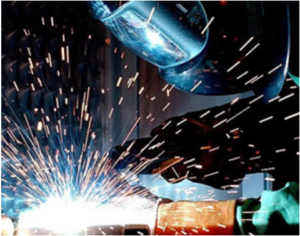
Welding is a common method of joining metal objects together, but welded...
Article
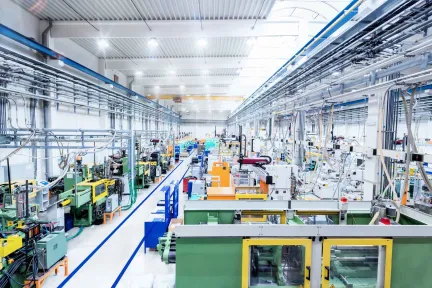
Digitalize manufacturing to deliver made-to-order innovation.
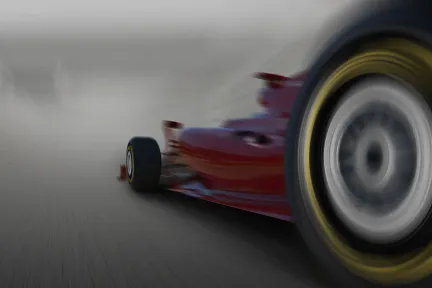
Optimize tire performance with SIMULIA. From noise reduction to durability, leverage advanced simulations for smarter, faster, and cost-effective design.
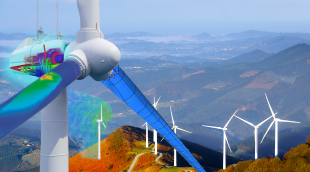
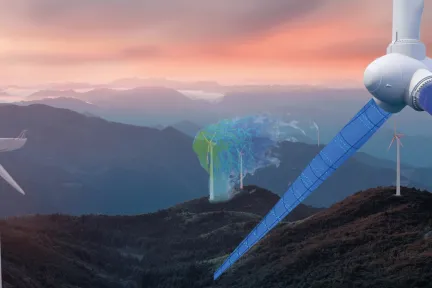
Simulate and optimize complete wind turbine systems, subsystems, and individual components with SIMULIA’s industry solutions.
Speak with a SIMULIA expert to learn how our solutions enable seamless collaboration and sustainable innovation at organizations of every size.
Courses and classes are available for students, academia, professionals and companies. Find the right SIMULIA training for you.
Find information on software & hardware certification, software downloads, user documentation, support contact and services offering