1506 Ergebnisse
Numerical Analysis to Optimize Peen-Forming Process Parameters

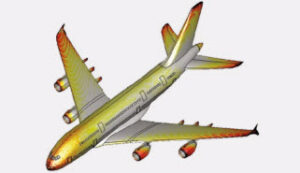
Peen-forming is a practical technique for forming of metallic aeronautical components. The method performance of this cold-working procedure mainly depends on the efficient selection of process parameters. Currently, trial and error procedures, based on operators' experience are used to determine peen-forming intensity patterns. This expensive and time consuming method could be avoided by the accurate estimation of peen-forming process parameters. The absence of a predictive tool to determine these parameters makes difficult to give a quick response to market for the industrialization of new components.

Customer Papers
Numerical Analysis to Optimize Peen-Forming Process Parameters
Study of mechanical compatibility at the mortarblock interface in a heritage building and numerical modeling by Abaqus

This research work aims at modeling the mortar-block assembly for analyzing the potential occurrence of mechanical problems at interfaces as the consequence of an eventual incompatibility. The study considers a heritage building located in Morocco. The authors focus their attention on a representative part of the building and perform numerical simulations, studying the stress repartition inside the masonry. For carrying out efficient analysis, the mechanical characteristics (Modulus of Resistance, Modulus of Elasticity) are collected through non-conventional testing techniques dedicated to the field of Heritage Conservation that are briefly described. The scenario considered in the proposed study concerns a bearing wall restored with a non-adequate mortar. The goal of the modeling works is to compare the repartition of internal solicitations between the original situation and the restored one in order to quantify the risk, for materials that should be conserved, associated with the “stress shielding” phenomenon and to justify the particular attention to be paid for the choice of a specific mortar for interventions to be carried out on the concerned building.

Customer Papers

Study of mechanical compatibility at the mortarblock interface in a heritage building and numerical modeling by Abaqus
Using Abaqus/CAE and User-Defined Material Subroutines to Predict the Deformations of a Stitched Triaxial Fabric during Forming Processes

The use of a stitched triaxial fabric in composite forming applications is investigated. The fabric of interest consists of three layers of stitched fibers, which were originally oriented at [-60°/0°/60°]. The tensile, shear, and frictional behavior was investigated experimentally. Conventional shear frame testing methodology assumes that the yarns are intially mutually perpendicular. This assumption is not valid for this particular fabric geometry and must be adjusted accordingly. The determined material behavior was implemented into a user-defined material subroutine within a discrete mesoscopic finite element model built in Abaqus/CAE. Different element types were investigated to represent the fabric and determine ideal mesh configurations to best capture the mechanical behavior of the fabric.

Customer Papers

Using Abaqus/CAE and User-Defined Material Subroutines to Predict the Deformations of a Stitched Triaxial Fabric during Forming Processes
Improvement and Enhancement of Concrete Damage Plasticity Model

The purpose of this paper is to make an improved concrete damage plasticity model that focus on a post cracking behavior. First, we constitute the material model that simulates a process of closing the large tensile cracks and recovering the compression stiffness. Second, the model is enhanced by adding another feature that simulates a transition from compression to tension again. Finally, experimental simulation analyses are conducted for validation of efficiency.

Customer Papers

Improvement and Enhancement of Concrete Damage Plasticity Model
Ductile Fracture Criterion Comparisons & Development of a Numerical Material Damage Model

By using Abaqus finite element software, contributions to understanding and quantifying the ductile fracture behavior of metallic materials have been realized. The end result has enhanced product development by reducing unnecessary conservatism resulting in reduced failure rates, product weight, and costs. Unlike the methods of LEFM or EPFM which presume a preexisting flaw, the ductile fracture approach requires no initial flaw size, shape, or flaw orientation relative to the component geometry. In this paper, numerical examples using various damage approaches are used to highlight differences in their resulting failure modes. In addition, the use of a damage model on a practical example is used to emphasize the utility of the method.

Customer Papers

Ductile Fracture Criterion Comparisons & Development of a Numerical Material Damage Model
RESIDUAL STRENGTH OF THE CARBON FIBER PANEL WITH DELAMINATION

Carbon fiber reinforced materials are getting widely spread. But at present time method of the calculation of impact residual strength for carbon fiber parts is poorly developed. Especially this method is underdeveloped in case of the delaminated composite parts. Residual strength is very essential for any project where the composite material parts are used. The possibility to estimate the value of residual strength of the carbon fiber reinforced parts is highlighted in terms of safety for Aerospace structures. In this work we propose a method to calculate the carbon fiber panel residual strength of the civil plane wing prototype with respect to delamination progress simultaneously with degradation law of the material properties. This approach has been developed and realized based on ABAQUS software.

Customer Papers

RESIDUAL STRENGTH OF THE CARBON FIBER PANEL WITH DELAMINATION
Use of a Discrete Mesoscopic Finite Element Approach Implemented in Abaqus/Explicit to Investigate the Bending and Folding of Fiber-Reinforced Composite Materials during the Manufacturing Process

During the manufacturing of fabric-reinforced composite parts using a matched-die compression molding process or resin transfer molding, the fabric may experience local in-plane compressive loads that cause out-of-plane deformations. The waves that form from such out-ofplane motion can result in resin-rich pockets (during the infusion stage of a dry fabric) or the waves may be forced down into a fold by the tooling. Such defects can compromise the structural integrity of the formed composite part. A comparison of the simulation results to the experimental data shows the finite element model accurately captures this phenomenon. An additional model is presented to demonstrate the capability of the simulation tool to capture fabric folding.

Customer Papers

Use of a Discrete Mesoscopic Finite Element Approach Implemented in Abaqus/Explicit to Investigate the Bending and Folding of Fiber-Reinforced Composite Materials during the Manufacturing Process
Non-linear elastic models for composite materials

Modern composite materials exhibit nonlinear behavior even under the conditions of elastic deformation. Usually shear properties have essentially more non-linearity than the tensile longitudinal or transverse ones almost for all reinforced plastics. For dry textile composites, it is especially important to take into account the shear nonlinearity for the prediction of the deformation characteristics, shape and structure of composite structural members during the draping and the performance of a layup process. Two approaches to take into account composite elastic nonlinearity effect are developed.

Customer Papers

Non-linear elastic models for composite materials
Abaqus Analysis Methods on Highly Restrained Pipeline with Soil Berm Formation

Wood Group Kenny has developed an advanced pipe-soil interaction subroutine to accompany the analysis of pipeline lateral buckling and axial walking in Abaqus. The pipesoil interaction subroutine takes into consideration both variations in axial friction and the lateral soil berm formation mechanism in the analysis of lateral buckling and axial walking of pipelines subject to cyclic loading. The lateral soil berm formation scheme accounts for differential berm growth on the soil berm front and rear faces, berm resistance accumulation, mobilization distance and the residual ‘sweep’ friction variation in production operation cycles.

Customer Papers

Abaqus Analysis Methods on Highly Restrained Pipeline with Soil Berm Formation
Simulation Lifecycle Management in the real world: Practical application in PRIME aerostructures

Simulation has become a key factor in the development of competitive and innovative products. However, the implementation of simulation in an efficient way goes further than choosing the most powerful analysis tools or working with the best engineers: Managing simulation data, the usage of non-standard methods or communication problems, are some of the issues that need to be solved. We also present our success analyzing sports car exhaust systems, where different analyses such as a heat transfer, a thermo-mechanical or a dynamic simulation are performed for every new project. Scenario definition tools help us standardizing the methods, giving the engineer the steps to follow. In this way it is easier to follow the state of a project and accessing to its data.

Customer Papers

Simulation Lifecycle Management in the real world: Practical application in PRIME aerostructures
Bird Strike Analysis for Impact-Resistant Design of Aircraft Wing Krueger Flap

Bird strike is a severe high velocity impact load case for all forward-facing aircraft components and a major design driver due to the high energies and the strict safety requirements involved. This paper summarises an experimental and numerical study to design a bird strikeproof lightweight metallic Krueger flap as a high-lift device concept for a laminar wing leading edge of a single aisle short range aircraft. The whole design process was based on numerical optimisations for static load cases in combination with high velocity bird impact simulations, with the focus on accurate modelling of the fluid-like bird projectile, the plasticity of the aluminium material and the failure behaviour of the structural hinges and fastened joints.

Customer Papers

Bird Strike Analysis for Impact-Resistant Design of Aircraft Wing Krueger Flap
Achieving Higher Productivity on Abaqus Simulations with HPC Clustering Technologies

Engineers from wide ranges of industries face an ever increasing need to run virtual tests to simulate complex models for improving reliability as well as reducing product development time and costs. Abaqus Unified FEA is designed to tackle these challenges by producing high-quality realistic simulation solutions, while delivering high performance in productivity by utilizing efficient use of modern compute cluster available in High Performance Computing (HPC). This study presents the techniques and profiling results to further understand Abaqus dependencies on the CPUs, network, and the other underlying hardware and software components. The paper will review the effects by comparing various components using different simulation models on Abaqus.

Customer Papers
Achieving Higher Productivity on Abaqus Simulations with HPC Clustering Technologies
260 Ergebnisse

Kundengeschichten

145 Ergebnisse
2 Ergebnisse

SIMULIA Selbstlernprogramm

Wir bieten Hunderte von Selbstlernmodulen an, damit jeder nach seinen eigenen Vorstellungen lernen kann

Blogs

Lesen Sie die neuesten Nachrichten und Innovationen unserer Experten auf dem SIMULIA Blog.

696 Ergebnisse

Vernetzen Sie sich mit SIMULIA

Erfahren Sie, was SIMULIA für Sie tun kann

Lassen Sie sich von unseren SIMULIA Experten zeigen, wie unsere Lösungen eine nahtlose Zusammenarbeit und nachhaltige Innovation in Unternehmen jeder Größe ermöglichen.

Erste Schritte

Wir bieten Kurse und Schulungen für Studierende, Hochschulen, Fachleute und Unternehmen an. Finden Sie die passende SIMULIA Schulung. 

Hilfe anfordern

Hier finden Sie Informationen zu Software- und Hardware-Zertifizierungen, Software-Downloads, Anwenderdokumentation, Support-Kontakten und Serviceangeboten