


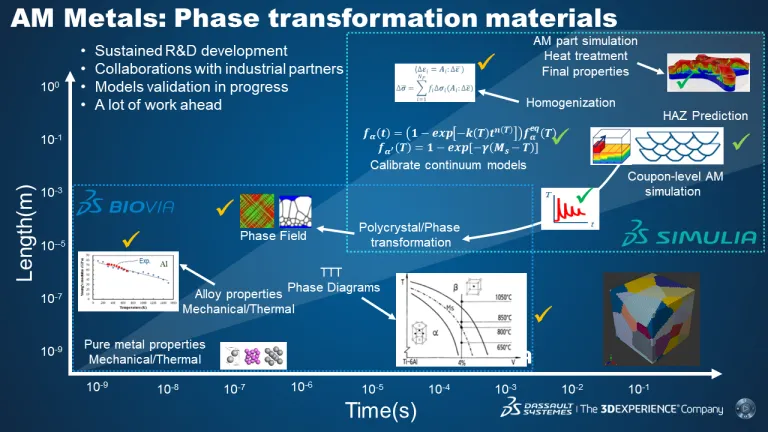
What is Digital Additive Manufacturing Simulation?

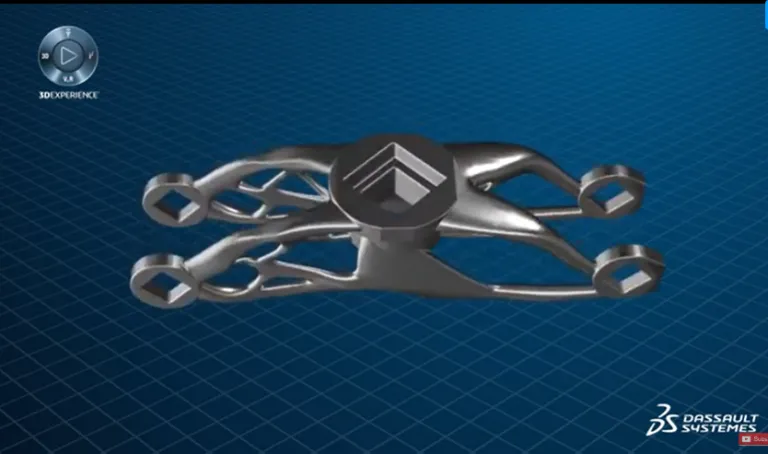
Digital Additive Manufacturing (DAM) is an advanced fabrication process in which parts or objects are built layer by layer through material addition. Traditional subtractive manufacturing methods, such as turning, drilling, and milling, remove material to achieve a desired shape. In contrast, additive techniques utilize 3D printing technology to develop components directly from digital models.

How does Digital Additive Manufacturing work?

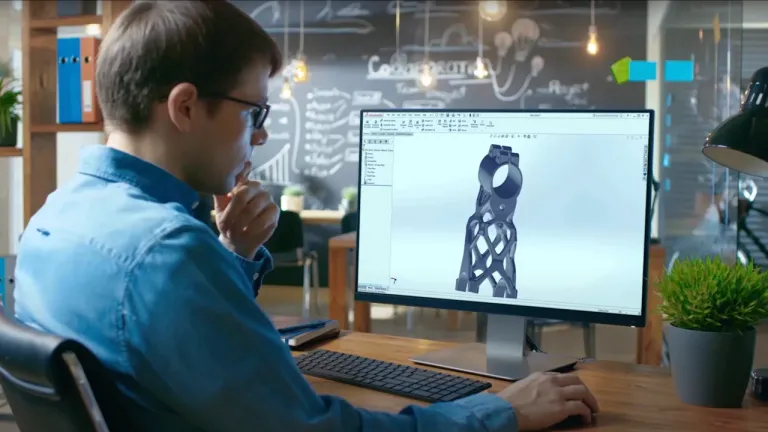
In Digital Additive Manufacturing, a Digital Mock-Up (DMU) of the part or fabrication bed is created. This involves:

  • Three-dimensional CAD representations: Geometric designs that depict the intended final product.
  • Fabrication process representations: Detailed descriptions of methodologies, including material extrusion, recoating, scan paths, and energy deposition.

The entire process is managed digitally, and the resulting digital thread is converted into machine code, which gives specific commands for machines to follow during fabrication.


How does Simulation help in Digital Additive Manufacturing?

Additive Manufacturing (AM) presents unique challenges, but simulation transforms these obstacles into opportunities for innovation.

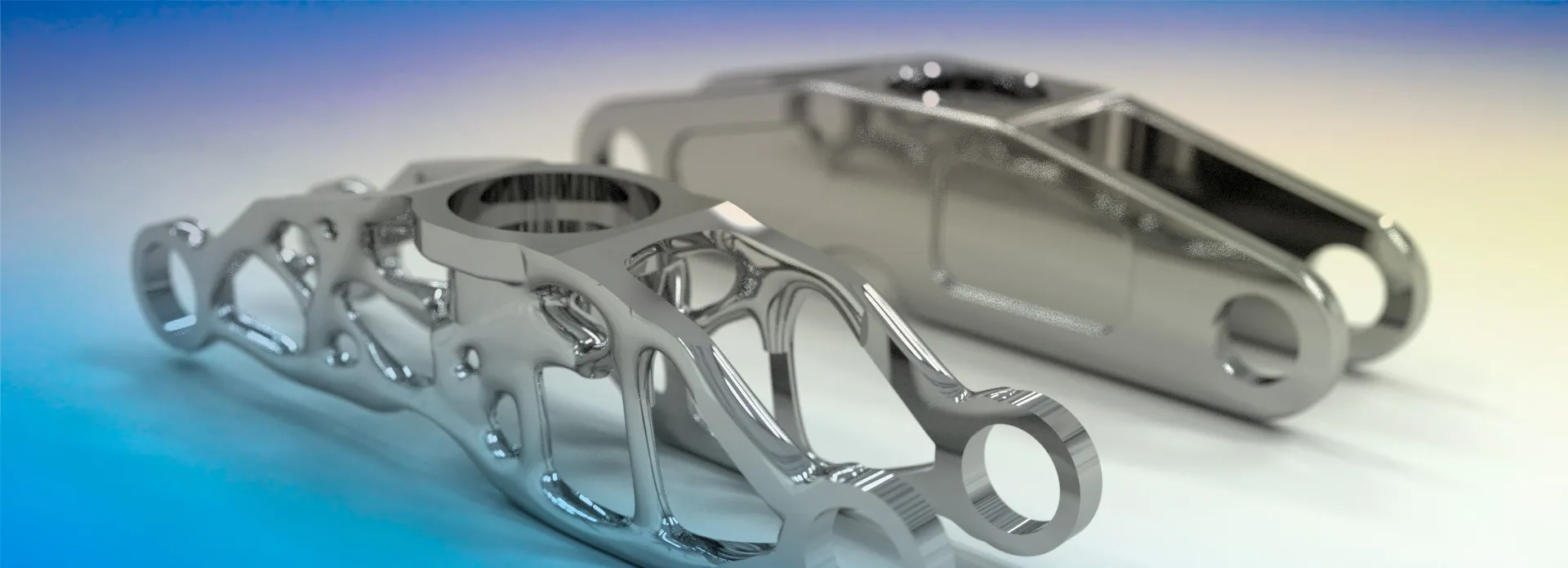
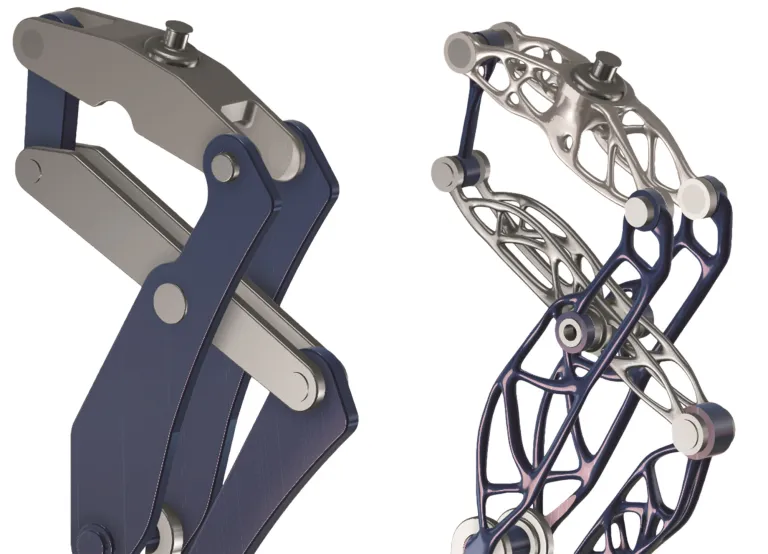
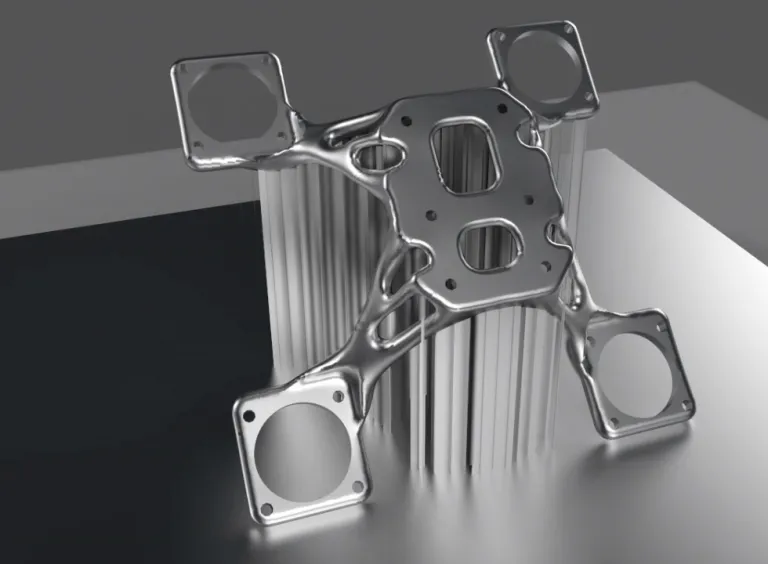
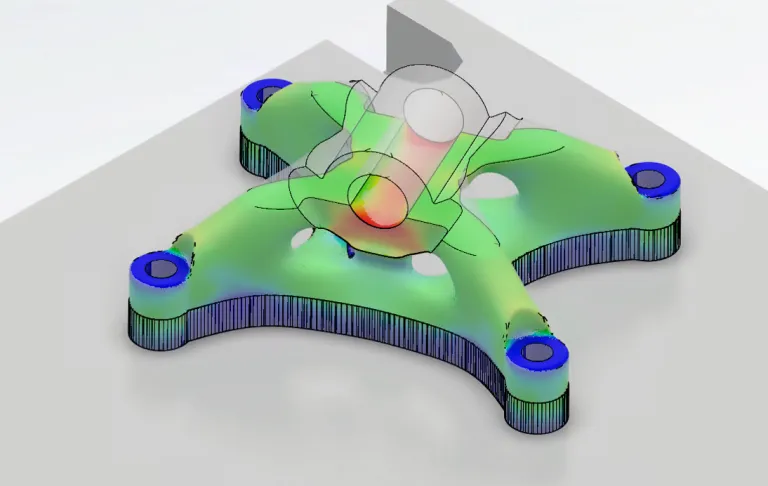
  • Optimizing Design: AM's design freedom requires new paradigms. Simulation helps explore optimal forms while ensuring support structures are effectively integrated to prevent fabrication failures.
  • Understanding Performance: Phase changes, driven by chemical reactions and thermal processes, significantly influence product performance. Simulation allows for predicting residual stresses and distortions that can arise during fabrication, enhancing overall reliability.
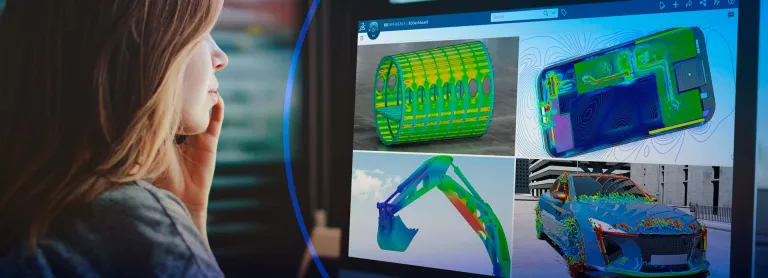
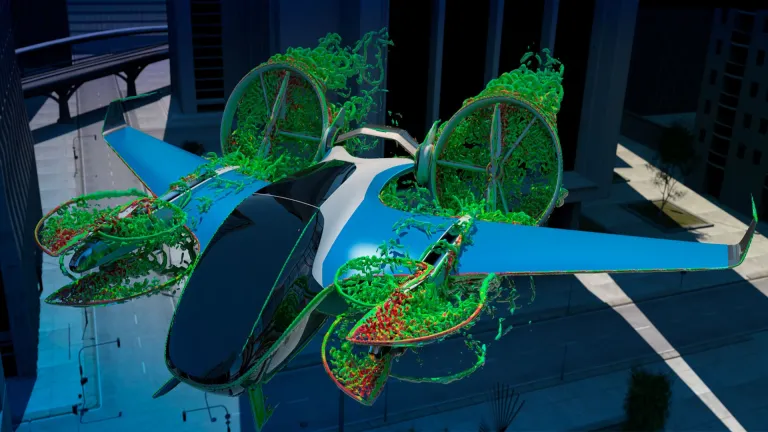
  • Advanced Tools for Success: Simulation technologies, such as finite element analysis and computational fluid dynamics, enable virtual process testing and reverse product engineering. These tools provide valuable insights that refine design and production.
  • Driving Efficiency: Using simulation capabilities, manufacturers can reduce development cycles, cut costs, and improve decision-making. The ability to anticipate and address potential issues before they arise mitigates program risks and ensures high-quality outcomes.

Key Benefits of Additive Manufacturing Simulation

Material Savings

Minimize waste and utilize advanced materials (e.g., TPU filaments, metal superalloys).

Design Flexibility

Use generative design techniques to create intricate geometries and lightweight structures.

Streamlined Processes

Consolidate multiple components into one part, cutting assembly time and costs.

Enhanced Sustainability

Promotes environmentally friendly manufacturing practices.

Elevate Collaboration with the 3DEXPERIENCE Platform

Digitalization minimizes time-to-market and costs by shifting design from linear to collaborative processes. Collaborative Engineering emphasizes efficient content sharing across the product lifecycle. 

Design for Additive Manufacturing (DfAM) involves a multidisciplinary approach, utilizing generative design and topology optimization to reveal new opportunities. Virtual testing through simulations provides critical insights into build failure predictability and post-build product performance, which are closely tied to manufacturing processes and design specifications.

The 3DEXPERIENCE platform enables seamless data integration across disciplines, supports content lifecycle management, and cultivates a collaborative engineering environment. Effective content lifecycle management, maturity, and robust data organization enhance issue resolution, change management, routing, and testing, fostering a productive collaborative atmosphere.

Additive Manufacturing Digital Thread

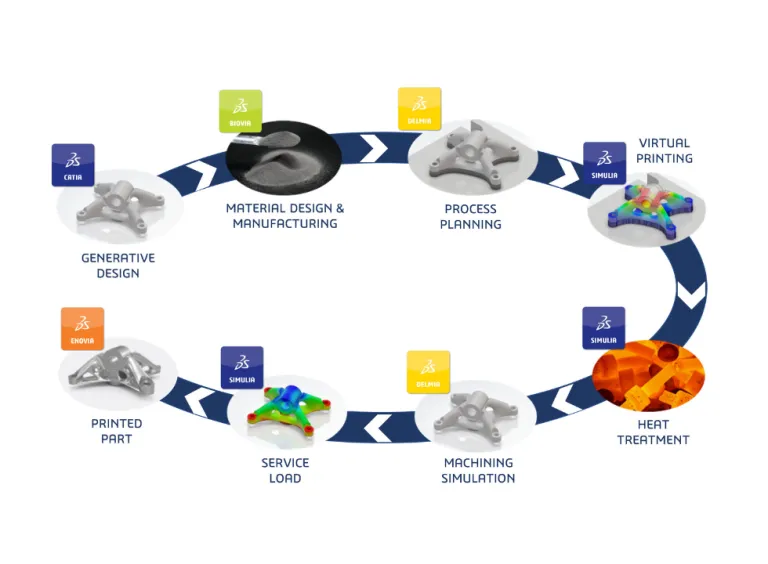
Dassault Systèmes offers a portfolio of integrated applications to maximize the capabilities of additive manufacturing techniques by connecting all disciplines for an authentic end-to-end development chain from product design to manufacturing and simulation. The 3DEXPERIENCE platform provides numerous advanced roles and a rich set of powerful applications to cover all aspects of digital product development. The digital thread provided by the 3DEXPERIENCE platform ensures a tight connection between these powerful and intuitive applications, as highlighted in the tabs below.

3DEXPERIENCE Marketplace

3DEXPERIENCE Make is an on-demand manufacturing platform that connects designers and engineers with industrial manufacturing service providers. It connects the industrial ecosystem of Designers, Engineers, Buyers, and Production planners with industrial manufacturing service providers such as Xometry, Sculpteo, American Additive, Get It Made, Any-Shape, and more. 

With our robust algorithm, you can get quotes in seconds from our network of service providers for your 3D printing and CNC machining project.

Process Design & Production Planning

Fabrication applications on the 3DEXPERIENCE platform provide guided workflows to design and plan production and production processes associated with Additive solutions and machines. Commencing with creating or reusing build volumes and plates, automatically nest parts to maximize build volume usage, capture and reuse rules to assess optimal part orientation and compute minimal support structures. Specify custom rules for slicing, scan patterns and process parameters for the entire build or individual parts. Visualize the scan path for diagnostic checks and reuse process data in downstream Virtual Printing simulations and studies.

Customer Testimonials

Listen to our customers in their own words. Check out these videos.

Start Your Journey

The world of Digital Additive Manufacturing is changing. Discover how to stay a step ahead with SIMULIA

Additive Manufacturing Resources

Prediction of the Degree of Bonding in the Extrusion Deposition Additive Manufacturing Process of Semi-Crystalline Polymer Composites

The Extrusion Deposition Additive Manufacturing (EDAM) process is a manufacturing process used to produce three-dimensional objects made by deposition of molten polymer composite in a layer-by-layer fashion. Printing with fiber reinforced, semi-crystalline polymers provides for the manufacture of molds that can be used in high-temperature composite prototype molding applications. Further, the EDAM is scalable and can provide printed geometries in the centimeter to meter scales. However, in plane (X-Y) fiber orientation of the extrudate results in mechanical properties in the stacking orientation (Z) that are governed by the bond formed between adjacent extrudate layers. The quality of this interlayer bond is strongly influenced by the processing conditions, namely temperature and printing history.

Customer Papers
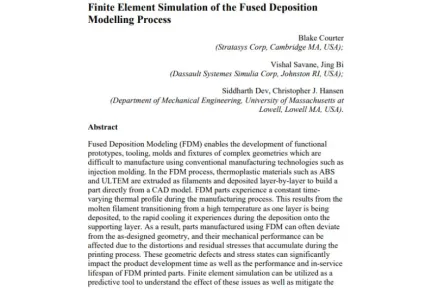
Finite Element Simulation of the Fused Deposition Modelling Process

In this paper, the commercial finite element software package Abaqus is used to simulate the FDM process. A Mobius arm part is used to illustrate the simulation procedure and a sequentially coupled thermo-mechanical analysis is performed. The heat transfer analysis calculates the temperature history which is mapped onto and used to predict residual stress and potential part distortion in the subsequent structural analysis. The tool path patterns dictate how material is progressively added to the part during the build and directly influence the accumulation of residual stresses within the part. Independent tool path events are characterized using event series data such as time, location and bead cross-sectional area.

Community News

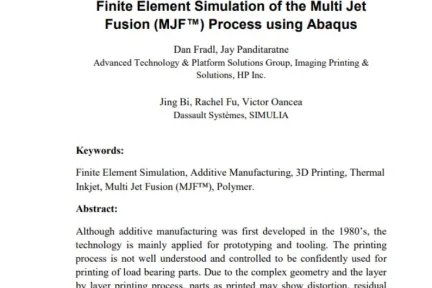
Finite Element Simulation of the Multi Jet Fusion Process using Abaqus

Although additive manufacturing was first developed in the 1980’s, the technology is mainly applied for prototyping and tooling. The printing process is not well understood and controlled to be confidently used for printing of load bearing parts. Due to the complex geometry and the layer by layer printing process, parts as printed may show distortion, residual stress, delamination and failure that render the part unusable at the moment that it comes out of the machine. Finite element simulations of additive manufacturing can be very effective in understanding the cause of these defects and predicting the in-service performance of the printed parts. However, most finite element codes are not designed for simulating additive manufacturing processes.

Customer Papers

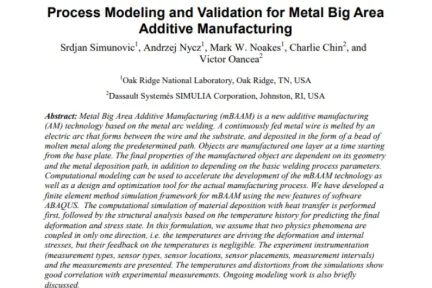
Process Modeling and Validation for Metal Big Area Additive Manufacturing

Metal Big Area Additive Manufacturing (mBAAM) is a new additive manufacturing (AM) technology based on the metal arc welding. A continuously fed metal wire is melted by an electric arc that forms between the wire and the substrate, and deposited in the form of a bead of molten metal along the predetermined path. Objects are manufactured one layer at a time starting from the base plate. The final properties of the manufactured object are dependent on its geometry and the metal deposition path, in addition to depending on the basic welding process parameters.

Customer Papers

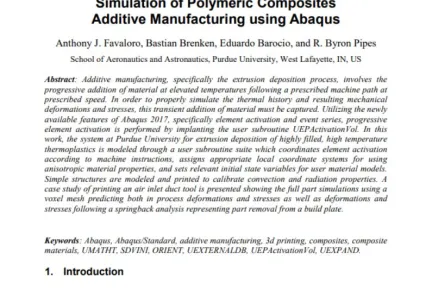
Simulation of Polymeric Composites Additive Manufacturing using Abaqus

Additive manufacturing, specifically the extrusion deposition process, involves the progressive addition of material at elevated temperatures following a prescribed machine path at prescribed speed. Utilizing the newly available features of Abaqus 2017, specifically element activation and event series, progressive element activation is performed by implanting the user subroutine UEPActivationVol. In this work, the system at Purdue University for extrusion deposition of highly filled, high temperature thermoplastics is modeled through a user subroutine suite which coordinates element activation according to machine instructions, assigns appropriate local coordinate systems for using anisotropic material properties, and sets relevant initial state variables for user material models.

Customer Papers

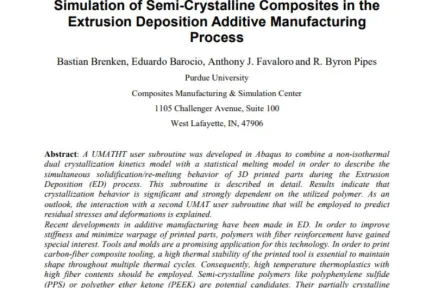
Simulation of Semi-Crystalline Composites in the Extrusion Deposition Additive Manufacturing Process

A UMATHT user subroutine was developed in Abaqus to combine a non-isothermal dual crystallization kinetics model with a statistical melting model in order to describe the simultaneous solidification/re-melting behavior of 3D printed parts during the Extrusion Deposition (ED) process. This subroutine is described in detail. Results indicate that crystallization behavior is significant and strongly dependent on the utilized polymer. As an outlook, the interaction with a second UMAT user subroutine that will be employed to predict residual stresses and deformations is explained.

Customer Papers

External Resources for Additive Manufacturing Simulation

FAQs about Additive Manufacturing Simulation

Also Discover

Learn What SIMULIA Can Do for You

Speak with a SIMULIA expert to learn how our solutions enable seamless collaboration and sustainable innovation at organizations of every size.

Get Started

Courses and classes are available for students, academia, professionals and companies. Find the right SIMULIA training for you. 

Get Help

Find information on software & hardware certification, software downloads, user documentation, support contact and services offering