有 1511 个结果
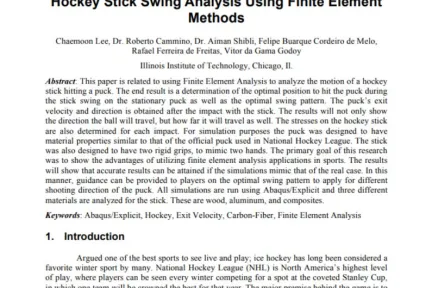
Hockey Stick Swing Analysis Using Finite Element Methods

This paper is related to using Finite Element Analysis to analyze the motion of a hockey stick hitting a puck. The end result is a determination of the optimal position to hit the puck during the stick swing on the stationary puck as well as the optimal swing pattern. The puck’s exit velocity and direction is obtained after the impact with the stick. The results will not only show the direction the ball will travel, but how far it will travel as well. The stresses on the hockey stick are also determined for each impact. For simulation purposes the puck was designed to have material properties similar to that of the official puck used in National Hockey League. The stick was also designed to have two rigid grips, to mimic two hands.

Customer Papers
Hockey Stick Swing Analysis Using Finite Element Methods
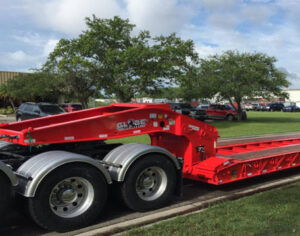
Development of a multifunctional truck cross member made of continuous fiber reinforced plastics

Lightweight design of trucks enables to increase the payload and represents a way to reduce the fuel consumption per transported weight. Many engineers around the world are focusing on this topic. One idea to handle this issue is to combine several vehicle parts or functions in an integrated module. This contribution shows the development of a cross member made of a combination of continuous fiber reinforced plastic and steel. Beside the function as an important structure of the truck main frame, the part represents a liquid/CNG reservoir at the same time. The management of design issues, the assessment regarding stiffness and strength was the major focus of the project.

Customer Papers
Development of a multifunctional truck cross member made of continuous fiber reinforced plastics
XFEM Simulation of Radial-Median Crack Evolution in Knoop Indentation of Brittle Materials

In sharp indentation of brittle materials, a complex three-dimensional stress field evolves in the material beneath the indenter and may cause cracking. During unloading, a tensile residual stress field drives the crack to its final semi-elliptical shape. The so-induced crack can be used for e.g. crack growth experiments, but for which the initial crack size and shape have to be known. For the analysis of the crack evolution in a material subject to a complex stress field, which changes with position, time and crack advancement, the extended finite element method (XFEM) represents a useful tool.

Customer Papers

XFEM Simulation of Radial-Median Crack Evolution in Knoop Indentation of Brittle Materials
有 250 个结果

客户成功故事

有 151 个结果
有 4 个结果

SIMULIA 自学

我们提供数百个自学模块,以便您能够在方便的时间不断学习

博客

欢迎阅读 SIMULIA 博客,了解最新报道以及我们专家的最新创新。

有 701 个结果
New Release – R2019X

End-to-end Support for Your Unique Industry Processes SIMULIA is excited to announce...

Article

New Release – R2019X

了解 SIMULIA 可以为您带来哪些价值

与 SIMULIA 专家交流,了解我们的解决方案如何在各种规模的企业中实现无缝协作和可持续创新。

开始使用

现为学生、学术机构、专业人士和企业提供各类课程与培训。查找适合您的 SIMULIA 培训。 

获取帮助

查找有关软硬件认证、软件下载、用户文档、支持联系人和服务项目的信息