有 1511 个结果
Fluid Simulation: Advanced Topics

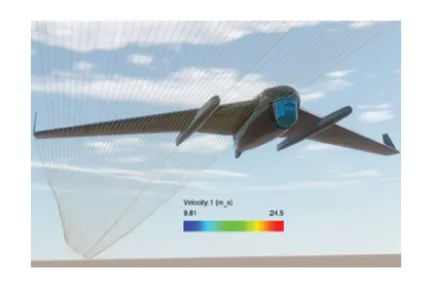
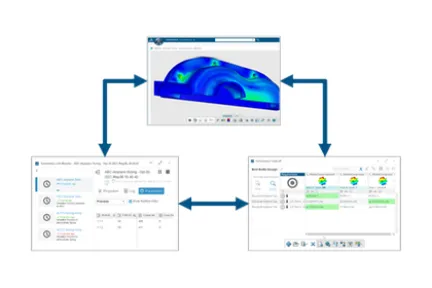
This course includes lessons and workshops covering advanced capabilities and techniques that can be included in a flow simulation using the Fluid Model Creation and Fluid Scenario Creation apps on the 3DEXPERIENCE platform.

Course Catalog

Fluid Simulation: Advanced Topics
Fluid Simulation Essentials

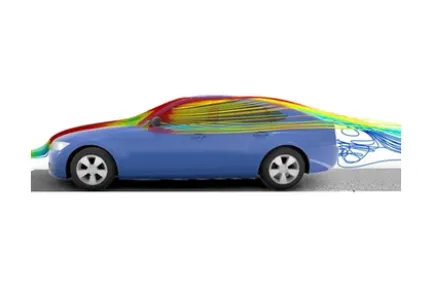
This course is an introduction to solving fluid flow and conjugate heat transfer problems in the 3DEXPERIENCE platform. In this course, you will learn workflows for steady state internal and external flow as well as Conjugate Heat Transfer (CHT) problems through the Fluid Model Creation and Fluid Scenario Creation apps.

Course Catalog

Fluid Simulation Essentials
Connector Elements and Mechanism Analysis with Abaqus

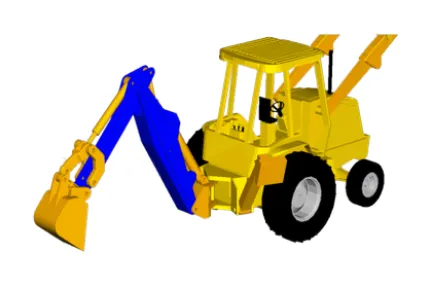
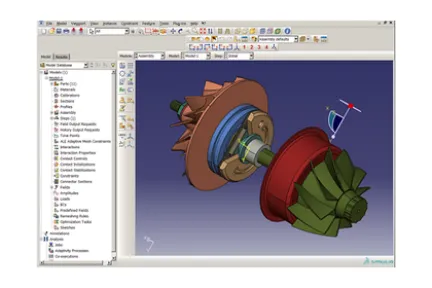
The combination of mechanisms, rigid bodies, and finite elements in Abaqus makes a powerful simulation tool. The mechanism capability expands the ability of Abaqus to model connections among individual bodies in a variety of ways. Connections can be as simple as pins and rigid links or as complicated as nonlinear frictional joints with elasticity and failure. In this course you will explore the variety of connection types available in Abaqus and learn how to define connections that suit your needs.

Course Catalog

Connector Elements and Mechanism Analysis with Abaqus
Co-simulation with Abaqus and Dymola

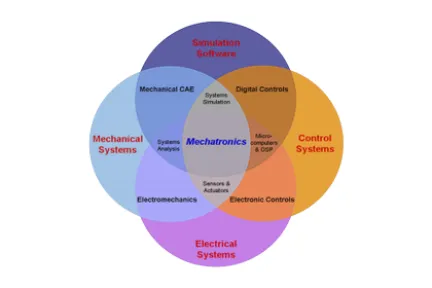
AbaqusDymola Co simulation is useful when logical modeling needs to be included in a physical system simulation; for example, it can be used to couple Anti lock Braking System (ABS) logic modeled in Dymola with an Abaqus rolling tire and brake simulation. In a typical workflow, sensor data computed in Abaqus (the physical system) are passed to Dymola (the controller), which in turn computes the needed actuation to drive the Abaqus model to a desired state. The powerful logical modeling features in Dymola cover a wide variety of engineering fields, such as electromechanics, control systems, hydraulics, penumatics, etc. This course illustrates coupling Dymola and Abaqus to develop a very versatile logical physical modeling capability.

Course Catalog

Co-simulation with Abaqus and Dymola
Electromagnetic Analysis with Abaqus

Abaqus provides computational electromagnetic capabilities for the simulation of problems involving steady state electrical conduction, piezoelectric phenomena and low frequency eddy currents. In this course, you will learn how to analyze low frequency eddy current problems in Abaqus Standard.

Course Catalog

Electromagnetic Analysis with Abaqus
Modeling Fracture and Failure with Abaqus

Fracture and failure modeling allows for product designs that maximize the safe operating life of structural components. Abaqus offers many capabilities that enable fracture and failure modeling. This course provides a detailed discussion of these capabilities.

Course Catalog

Modeling Fracture and Failure with Abaqus
Uncertainty Quantification with Isight

This course introduces Isight users to methods dealing with statistical behavior as a result of variability in the system. It motivates why uncertainty quantification (UQ) analysis is important, presents concepts and methods in Isight to do UQ analysis, and shows how to use Isight’s open architecture to integrate user developed algorithms into components as Plug ins.

Course Catalog
Uncertainty Quantification with Isight
Introduction to Abaqus Scripting

Abaqus makes extensive use of Python, a powerful, object oriented scripting language that is used widely by organizations throughout the world. Python has been embedded within the Abaqus software products. The language has been extended to include a rich set of commands that are well suited for the daily tasks of a finite element analyst. These extensions are referred to as the Abaqus Scripting Interface (ASI). The Abaqus Scripting Interface may be used by the finite element analyst at many different levels. Scripts can be written as stand alone utilities, or can be written to integrate the Abaqus products with other codes. At a basic level, scripts may be used to automate repetitive tasks such as the creation of results plots from a collection of output files. With some experience, users may actually extend the functionality of the Abaqus products. Advanced users may work with SIMULIA affiliates to customize the graphical user interface of the Abaqus interactive products (Abaqus CAE and Abaqus Viewer). This course covers basic usage of the Abaqus Scripting Interface and Python’s syntax. It includes numerous hands on exercises for the student to learn to automate tasks that are common to most analysts.

Course Catalog

Introduction to Abaqus Scripting
Getting Started with Automation and Optimization

This interactive course is intended for on demand learning and is the prerequisite for many process automation and design optimization courses (if you are new to using the 3DEXPERIENCE platform). Using automation apps requires a baseline knowledge of how to log in to the platform, use 3DSearch to find and filter data, manage maturity of the data for collaboration. The 3DEXPERIENCE native (desktop) apps and web interfaces (including dashboards) will be introduced in this course.

Course Catalog

Getting Started with Automation and Optimization
Introduction to Abaqus/CAE

This introductory course introduces you to Abaqus CAE, the interactive interface for Abaqus products. Abaqus CAE provides a complete interactive environment for creating Abaqus models, submitting andmonitoring analysis jobs and viewing and manipulating simulation results.

Course Catalog
Introduction to Abaqus/CAE
Durability Simulation Essentials

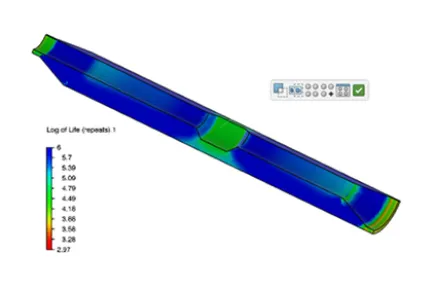
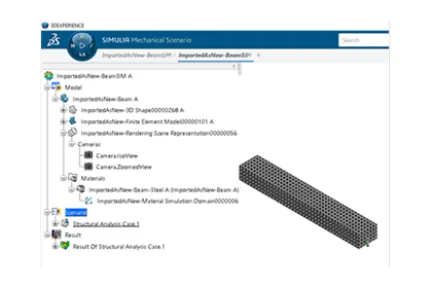
This course is an introduction to fatigue of metals on the 3DEXPERIENCE platform. Using a structural analysis that has been run in the Structural Scenario or Mechanical Scenario apps, the frames can be used to define a complex fatigue loading history. Depending on the material, the durability case can calculate either stress life or strain life damage, infinite life factors or FKM utilization along with other durability output. These can be used to redesign parts and assemblies in conjunction with the structural results.

Course Catalog

Durability Simulation Essentials
Getting Started with Physics Simulation

This interactive course is intended for on demand learning and is the prerequisite for many physics simulation courses (if you are new to using the 3DEXPERIENCE platform). Using physics simulation apps on the3DEXPERIENCE platform requires a baseline knowledge of how to log in to the platform, use 3DSearch to find and filter data, explore the data and manage maturity for the purpose of collaboration. The 3DEXPERIENCE native (desktop) apps and web interfaces (including dashboards) will be introduced in this course.

Course Catalog
Getting Started with Physics Simulation
有 250 个结果

客户成功故事

有 151 个结果
Toyo Tire Corporation

Toyo Tire worked with Dassault Systèmes to build a new simulation process and data management system based on the 3DEXPERIENCE platform and its industry solution experience SMARTYRE to bring together company-wide product development data.

Customer Story

Toyo Tire Corporation
Royal Enfield

By using SIMULIA structural durability and optimization technology throughout the design process of the engine and chassis, Royal Enfield engineers are able to rapidly improve performance and safety while reducing weight.

Customer Story

Royal Enfield
Airbus

다쏘시스템 솔루션 덕분에 당사는 프로세스, 방법, 도구를 조화롭게 결합해 귀중한 시간을 절약할 수 있었고 기술 혁신에 더 많은 시간을 할애할 수 있었습니다.

고객 사례

Airbus
Knust-Godwin

Knust-Godwin uses Dassault Systèmes’ 3DEXPERIENCE platform, including the ENOVIA and SIMULIA applications, to help customers improve product manufacturing and maximize the benefits of additive manufacturing.

Customer Story

Knust-Godwin
Sunreef Yachts

Sunreef Yachts uses Dassault Systèmes’ applications for design and realistic simulation to optimize the engineering processes of their highly customized luxury catamarans.

Customer Story

Sunreef Yachts
Eviation Aircraft

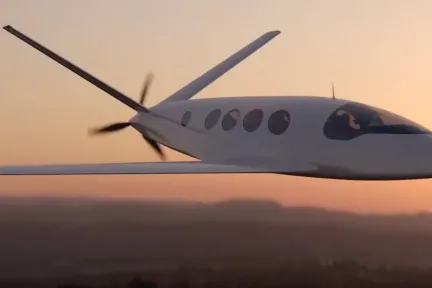
Eviation Aircraft wanted to design and build an all electric airplane for mid-range distances that is cost-effective and environmentally friendly on an aggressive time schedule by using the 3DEXPERIENCE platform on the cloud.

Customer Story

Eviation Aircraft
Amcor

플라스틱 용기 제조 분야의 선도기업인 Amcor는 견고하고 비용 효율적이며 동시에 원자재 사용량을 줄일 수 있는 음료 용기를 제작하는 방법을 지속적으로 모색하고 있습니다.

고객 사례

Amcor
Amcor Rigid Packaging

Leading container manufacturer Amcor Rigid Packaging is continually looking for ways to reduce the amount of material used in beverage containers while keeping them strong and cost-effective to produce.

Customer Story

Amcor Rigid Packaging
Fuji Xerox

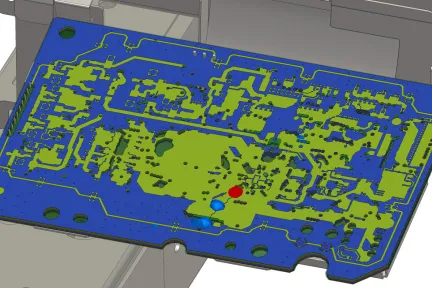
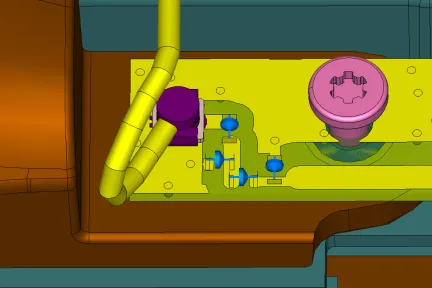
By allowing some measurements to be replaced by simulation, CST Studio Suite reduced the number of physical prototypes needed, shortening the design process. With simulation, Fuji Xerox engineers were able to predict EMC problems before constructing the prototype and identify the mechanism behind any that did arise, making them easier to mitigate.

Customer Story

Fuji Xerox
Convergentia

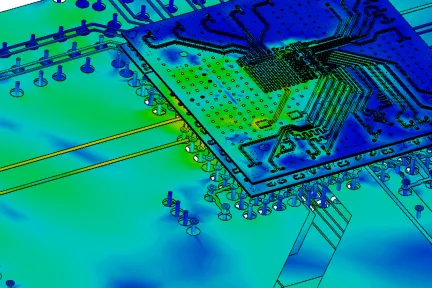
Simulation with CST Studio Suite, a SIMULIA simulation tool, made it possible for designs to be examined without the cost of constructing a prototype, and field visualization allows resonant components to be identified by eye

Customer Story

Convergentia
eASIC

By using CST Studio Suite and partitioning the model, eASIC was able to achieve up to five-fold speed-up in its multi-level PCB and package simulations, when compared with simulation using the full model. This gave eASIC a significant speed advantage and helped them to shorten the design process.

Customer Story

eASIC
FEops

Dassault Systèmes software has proven highly capable of accurately simulating the methods and complexities of heart-disease treatment. FEops can explore the application of their technologies to a wide range of heart-related fields, getting medical devices to market faster and helping patients everywhere.

Customer Story

FEops
有 4 个结果

SIMULIA 自学

我们提供数百个自学模块,以便您能够在方便的时间不断学习

博客

欢迎阅读 SIMULIA 博客,了解最新报道以及我们专家的最新创新。

有 701 个结果
Use Machine Learning to Optimize Weld Integrity

As a welded part cools down, residual stresses form within the part. The structural performance of a weld depends heavily on the parameters of the welding process, such as heat input, welding paths, and fixture designs. Simulation can model the weld process in order to calculate the residual stress distribution and deformation within welded submarine parts. This article explains how artificial intelligence (AI) and machine learning can be used to accelerate analysis and optimization of welds.

Article

Use Machine Learning to Optimize Weld Integrity
New, FREE Short and Interactive eLearning for Simulation!

SIMULIA introduces several short eLearning courses to help users adapt quickly to simulation on the 3DEXPERIENCE platform. This new format teaches today’s learners in a succinct, dynamic, interactive way and after registration these courses can be accessed without any cost!

Article

New, FREE Short and Interactive eLearning for Simulation!
Game, Set, Match! Simulation of the Magnus Effect in Tennis

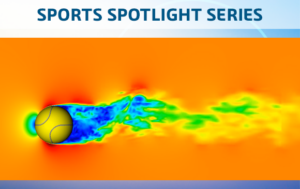
The Magnus effect is a well-known effect that impacts the motion of a spinning object through a fluid. One of the most common ways to experience the impact of this principle is through the motion of balls in sports. Indeed, this physics principal is used by amateurs and professional athletes in sports such as tennis, soccer, cricket, baseball etc. In the below example, we ask Nicolas Fougere, SIMULIA Fluids, Industry Process Consultant Manger, to walk us through a tennis ball simulation workflow.

Article

Game, Set, Match! Simulation of the Magnus Effect in Tennis
SiminSitu EU Project with 4RealSim

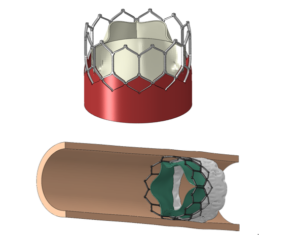
SIMULIA is delighted to work with engineering leaders and academics as they leverage simulation capabilities to help shape the future of their industry. We had the opportunity to interview 4RealSim, a company specializing in high-end numerical analysis services. During the interview, we discussed how 4RealSim uses Abaqus in the SimInSitu EU project (http://www.siminsitu.eu/). SimInSitu aims to develop sophisticated in-silico methods to predict the short- and long-term behavior of in-situ tissue-engineered heart valves (TEHV) by combining advanced tissue remodeling algorithms with a personalized virtual heart modeling approach. The method will be specifically developed to predict the complex transformation process of biodegradable heart valves from the initially synthetic scaffold into a fully remodeled and functional valve.

Article

SiminSitu EU Project with 4RealSim
Democratizing Engineering Analysis Through a Universal Material Subroutine

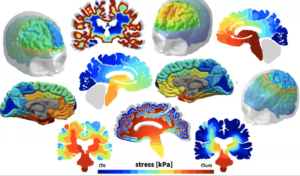
The recent webinar playback for Democratizing Engineering Analysis Through a Universal Material Subroutine with Dr. Ellen Kuhl from Stanford University and Dr. Mathias Peirlinck from Delft University of Technology is now available in the SIMULIA Community. Listen as they share their expertise on democratizing engineering analysis through a universal material subroutine.

Article

Democratizing Engineering Analysis Through a Universal Material Subroutine
Engineering Insights: Dr. Alison McMillan on Modeling Material Fatigue

The annual SIMULIA Regional User Meetings (RUMs) provide a forum for practicing engineers and researchers to exchange ideas and experiences in all aspects of simulation technology. Late last year, Alison McMillan, Professor in Aerospace Technology at Wrexham University, gave a presentation to RUM attendees in the UK, Fretting: Modeling mechanisms for material damage.

Article

Engineering Insights: Dr. Alison McMillan on Modeling Material Fatigue
Workflow for Patient-specific Femur Simulation

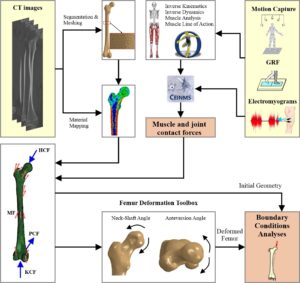
Hear from SIMULIA Champion, Professor Stefanie Feih of Griffith University, about how orthopedic surgical planning can now leverage patient-specific neuromusculoskeletal models to determine physiologically plausible muscle and joint contact forces comprising points/areas of application, magnitude, and direction. Finite element analysis (FEA) is subsequently employed to estimate stresses and strains in the implants and their host tissues throughout the complete gait cycle. These simulations, or digital twins, may facilitate validated implant designs and surgical placement, leading to improved surgical outcomes.

Article

Workflow for Patient-specific Femur Simulation

了解 SIMULIA 可以为您带来哪些价值

与 SIMULIA 专家交流,了解我们的解决方案如何在各种规模的企业中实现无缝协作和可持续创新。

开始使用

现为学生、学术机构、专业人士和企业提供各类课程与培训。查找适合您的 SIMULIA 培训。 

获取帮助

查找有关软硬件认证、软件下载、用户文档、支持联系人和服务项目的信息