

SIMULIA 资源中心
通过 SIMULIA 找到您需要的一切
有 1511 个结果
CST STUDIO SUITE ELECTROMAGNETIC FIELD SIMULATION SOFTWARE
CST STUDIO SUITEELECTROMAGNETIC FIELD SIMULATION SOFTWARE
Brochures
OPERA SIMULATION SOFTWARE
Engineering products are becoming more sophisticated and complex, yet development timescales invariably shorten. In today’s global marketplace, competition is becoming more intense. More than ever before, successful products need to be highly optimized for their target markets. This might demand optimization in different forms such as lower raw material costs, better performance, smaller size or greater efficiency.
Brochures
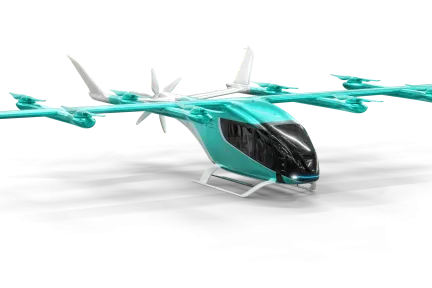
Embraer Selects Dassault Systèmes’ Simulation Technology to Support Quieter eVTOL Aircraft Development for Eve Air Mobility
Press Release
2024年3月14日
一图读懂带您了解3DEXPERIENCE平台
Infographics

Coupled Thermomechanical Forging Simulations and the Effect of Material Constitutive Laws
Correct hot forming design relies on accurate prediction of forming loads, material deformation, and material properties. This is particularly true for coupled thermomechanical analyses, where die/workpiece contact will change local deformations and temperatures. These strains and thermal histories can change the material microstructures and resulting product properties. This presentation examines the influence of different material and contact models within a hot forging simulation and discusses the consequences on ultimate product performance. We use rate-independent plasticity and compare the results with the Anand internal variable, viscoplastic model available within Abaqus. We also use different contact conditions with varying pressure sensitivity for heat transfer. The simulations demonstrate that constitutive model selection has a strong effect on the final predicted properties of the forging.
Customer Papers
Mechanisms-Based Fracture Model for Geological Materials
Over the past decade, hydraulic fracturing has become an industry-changing technology that enables commercial production of hydrocarbons from previously non-productive lowpermeability shale formations. R&D efforts focus on the development of economically efficient production protocols, where the selection of engineering solutions is guided by numerical simulations. Typically, the simulations are based on phenomenological fracture models that are adapted for the prediction of fluid-driven fracture processes at depth. These models rely on a longterm trial-and-error approach and offer reliable material response at conditions that have previously been experimentally investigated. For this reason, an extrapolation of such phenomenological models into untested regimes is not always successful.
Customer Papers
Flow-Induced Vibration Modeling
The current work pertains to a re-closeable annular flow valve oil completion tool (XAFV) with high gas flow passing through the valve, causing pressure oscillation due to flow separation and high turbulence energy. The objective is to assess the vibration level to protect the tool from damage. The first step was to perform CFD simulation by using Fluent on The valve port region. The power spectral density (PSD) of pressure fluctuations at the high turbulence region was obtained. The next step of the work was to extract natural frequencies of the tool by using Abaqus. The last step was to utilize random vibration analysis (RVA) to obtain the PSD and root mean square of stresses to assess the random vibration effect by using CFD predicted PSD of excitation pressure.
Customer Papers
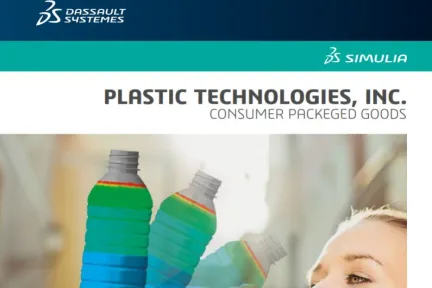
PLASTIC TECHNOLOGIES, INC. CONSUMER PACKEGED GOODS
PLASTIC TECHNOLOGIES, INC. CONSUMER PACKEGED GOODS
Customer Stories
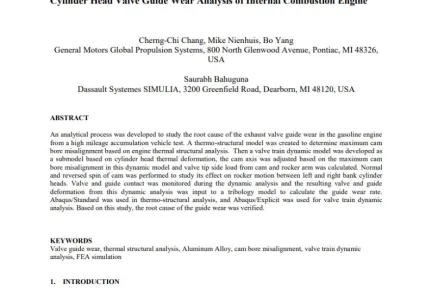
Cylinder Head Valve Guide Wear Analysis of Internal Combustion Engine
An analytical process was developed to study the root cause of the exhaust valve guide wear in the gasoline engine from a high mileage accumulation vehicle test. A thermo-structural model was created to determine maximum cam bore misalignment based on engine thermal structural analysis. Then a valve train dynamic model was developed as a submodel based on cylinder head thermal deformation, the cam axis was adjusted based on the maximum cam bore misalignment in this dynamic model and valve tip side load from cam and rocker arm was calculated. Normal and reversed spin of cam was performed to study its effect on rocker motion between left and right bank cylinder heads. Valve and guide contact was monitored during the dynamic analysis and the resulting valve and guide deformation from this dynamic analysis was input to a tribology model to calculate the guide wear rate. Abaqus/Standard was used in thermo-structural analysis, and Abaqus/Explicit was used for valve train dynamic analysis. Based on this study, the root cause of the guide wear was verified.
Customer Papers
线上研讨会
有 250 个结果
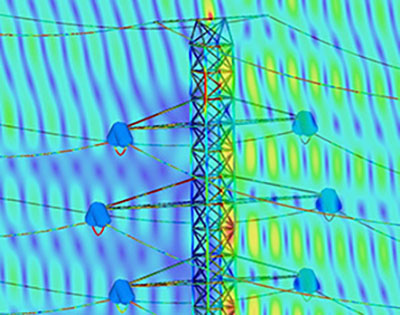
Simulation of Electromagnetic Pulse with SIMULIA CST Studio Suite | Dassault Systèmes
In this e-seminar, we will explore what an EMP is and how it can be modeled in SIMULIA CST Studio Suite to study the effects of an EMP event.
E-seminar
On demand
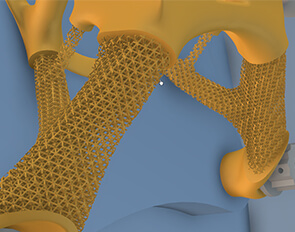
Lattice Optimization and Process Simulation of a Turbine Blade | Dassault Systèmes
Additive manufacturing offers the ability to build lightweight components designed through topology optimization, incorporating lattice structures to provide conformal cooling.
E-seminar
On demand
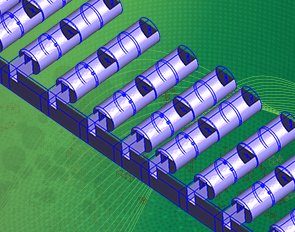
Electromagnetic Design of Complex Multiplexers | Dassault Systèmes
Learn how the design of multiplexers (and filters) can be aided with the use of simulation, with a focus on achieving the complete electromagnetic design of complex multiplexers.
E-seminar
On demand
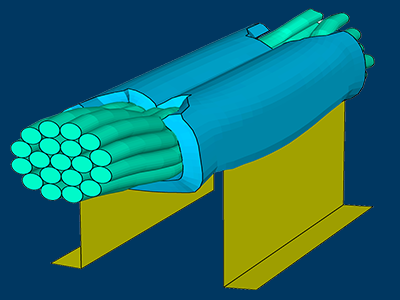
Contact Robustness & Performance | Dassault Systèmes
This e-seminar will focus on contact modeling with Abaqus.
E-seminar
On demand
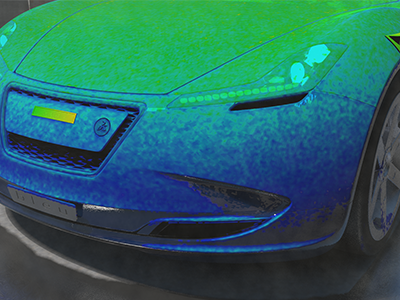
Improve Vehicle Water Management and Soiling using Simulation to Drive Design | Dassault Systèmes
In this e-seminar, we will show how PowerFLOW helps with design decision making related to soiling and water management.
E-seminar
On demand
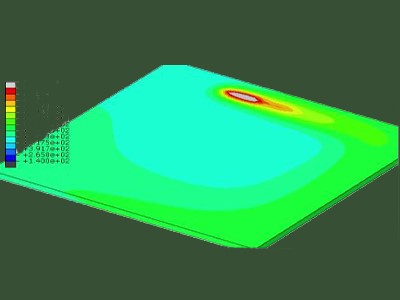
Additive Manufacturing Process Simulation Validations and Microstructure Prediction | Dassault Systèmes
In this e-seminar we will discuss how numerical methods are sought to provide insight into the process and help accelerate progress in raising the quality of AM parts.
E-seminar
On demand
Function-Driven Generative Design: A New Way to Design - Part 1 | Dassault Systèmes
This session looks at how Function-Generative Design can be used for additive manufacturing using Dassault Systèmes' full portfolio of integrated applications for additive manufacturing that works seamlessly across design, manufacturing, and in-service performance.
E-seminar

On demand
Electric Drive Noise and Vibration Analysis | Dassault Systèmes
Manufacturers of internal combustion engine automobiles have had a century to perfect these machines and ensure customer satisfaction.
E-seminar
On demand
Multiphysics Simulation of MRI Systems | Dassault Systèmes
Discover the central role that multiphysics multiscale simulation has to play in MRI device design.
E-seminar

On demand
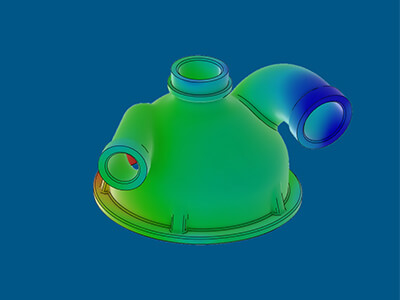
Inherent Strain Methods for Additive Manufacturing Process Simulations | Dassault Systèmes
There are many simulation solutions addressing additive manufacturing. In this e-seminar we will discuss the eigenstrain method as it is used in the context of additive manufacturing process simulations.
E-seminar
On demand
客户成功故事
有 151 个结果
来自社区
活动
有 4 个结果
SIMULIA 自学
我们提供数百个自学模块,以便您能够在方便的时间不断学习
博客
欢迎阅读 SIMULIA 博客,了解最新报道以及我们专家的最新创新。
有 701 个结果
Women in Engineering: Katerina Galitskaya
SIMULIA is proud to work with a variety of women in the...
Article

Let’s Learn Together: Simulation Collaborator
This post is a continuation in a series about simulation on the 3DEXPERIENCE...
Article
5th Wind and Drivetrain Conference
Introduction There is no doubt that we are living in increasingly precarious...
Article

Magnets for Magnetic Resonance Imaging
Magnets are ubiquitous in modern life, used in motors, generators, wind turbines,...
Article
Women in Engineering: Tristan Donley
SIMULIA is proud to work with a variety of women in the...
Article

Let’s Learn Together: Durability and Mechanics Engineer Role
This post is a continuation in a series about simulation on the 3DEXPERIENCE...
Article
Let’s Learn Together: Structural Mechanics Engineer Role
This post is a continuation in a series about simulation on the 3DEXPERIENCE...
Article
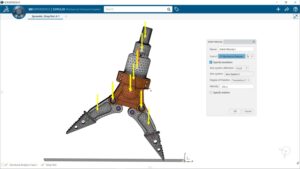

Let’s Learn Together: Durability Performance Engineer Role
This post is a continuation in a series about simulation on the 3DEXPERIENCE...
Article
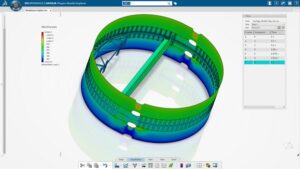
Modeling Cracking in Reinforced Concrete Structures | Dassault Systèmes Blog
Concrete structures need to be reinforced in regions subject to tension, to...
Article
Let’s Learn Together: Structural Performance Engineer Role
This post is a continuation in a series about simulation on the 3DEXPERIENCE...
Article
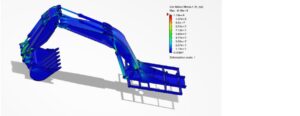
Model Based Systems Engineering: Tech Talk with Kiran Jacob, INCOSE Certified MBSE Specialist
With the increasing competition in manufacturing sector, what are the current challenges...
Article

联系 SIMULIA
了解 SIMULIA 可以为您带来哪些价值
与 SIMULIA 专家交流,了解我们的解决方案如何在各种规模的企业中实现无缝协作和可持续创新。
开始使用
现为学生、学术机构、专业人士和企业提供各类课程与培训。查找适合您的 SIMULIA 培训。
获取帮助
查找有关软硬件认证、软件下载、用户文档、支持联系人和服务项目的信息