
Decentralized Clinical Trials: From On-Site to Online
Discover how a global healthcare organization monitored 15,000+ patients in a decentralized clinical trial and reduced travel emissions by 73% using MEDIDATA on the 3DEXPERIENCE platform.
How One Healthcare Organization Conducted A Clinical Trial And Reduced Emissions
Is it possible to monitor over 15,000 trial participants in a clinical trial while reducing greenhouse gas emissions? One organization achieved it, and Dassault Systèmes helped make it happen.
Centralized vs. Decentralized Clinical Trials: Why the Healthcare Sector Is Shifting
The healthcare sector is undergoing a transformative decarbonization process in every aspect of its operations. One key pillar of this sector involves clinical trials, where hundreds (if not thousands) of participants are monitored and tracked over a specific time period.
Clinical trials require tremendous resources. In addition to the online systems needed to keep track of sensitive medical information, there are also stumbling blocks inherent to such an exercise — excessive on-site visits for participants and extensive travel times.
Is it possible to streamline this process? A global medical organization looked for a way to eliminate these stumbling blocks as it embarked on one of its largest clinical trials to date — tracking and monitoring the progress of more than 15,000 participants over a period of more than two years.
Decentralized Trial Platform as a Sustainability Solution
While looking for a solution, the organization recognized the potential to solve an even bigger challenge. By deploying a digital solution to enable decentralized clinical trials (DCT), the organization could reduce greenhouse gas emissions through a reduction of on-site visits and travel for participants.
Discover how this organization implemented a more sustainable methodology for clinical trials, powered by Dassault Systèmes' innovative solutions.
About the Customer
Use Case: The implementation of MEDIDATA on the 3DEXPERIENCE® platform enabled over 15,000 clinical trial participants to make only one on-site follow-up visit instead of seven visits during the course of the trial. This greatly reduced the travel requirements of the patients, leading to significant emission reductions.
Industry
Life sciences & healthcare
Company size
Approx. 26,000 full-time employees
Location
United States
The Challenge
The customer's key challenges stemmed directly from its:
Business Needs
To track and monitor the progress of over 15,000 participants in a clinical trial while reducing greenhouse gas emissions
Operational Requirements
A digital solution to enable DCT that can reduce emissions by minimizing on-site visits and travel for participants

The Solution
By adopting its Decentralized Clinical Trial (DCT) solution on the 3DEXPERIENCE platform, Dassault Systèmes helped the company achieve its objective of reducing its environmental footprint.
The Outcome
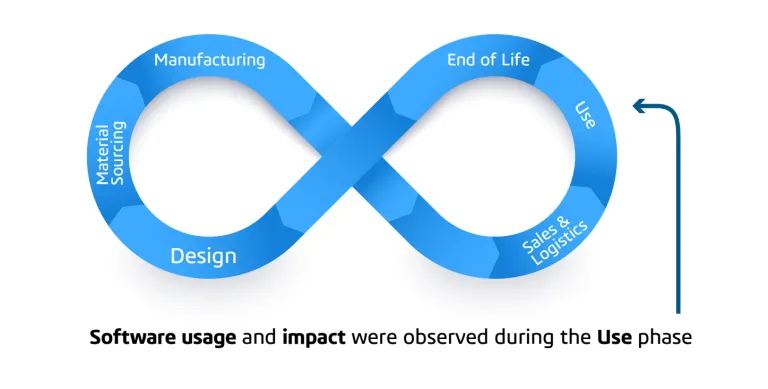
The clinical team tracked and monitored over 15,000 patients through MEDIDATA for the entire duration of the trial. MEDIDATA allowed the clinical team to interact with the patients and collect all relevant data, preserving data quality. By implementing a Bring Your Own Device (BYOD) policy, trial participants used their own mobile devices — smartphones, tablets and computers — to upload the necessary medical data onto the platform without compromising the user experience.
The implementation of MEDIDATA reduced on-site visits for the patients. As a result, they required only one on-site follow-up visit instead of seven during the entire 26-month trial. The virtual nature of the study also allowed patient representation to be more inclusive, allowing individuals who wouldn't normally participate in clinical trials because of location or convenience to become part of the study.

The End Result
Decentralized clinical trials remove geographic barriers for patients, reducing travel and carbon emissions while improving engagement and the overall study experience.
Methods
The avoided emission estimation was estimated following the:
- EU Taxonomy (Regulation Guideline), ISO 14067, 11044 and Guidance of WBCSD Net Zero Initiative Guidelines
- Methodology based on the comparison of two scenarios for one given functional unit (ISO 14067:2018 and ISO 14064-2:2019)
Dassault Systèmes' methodology has been certified by an independent third party and elaborated in compliance with the EU Taxonomy (Regulation Guideline), ISO 14067, 11044 and Guidance of WBCSD Net Zero Initiative Guidelines. The end result expressed in tCO2e remains an estimation.
Measuring the Sustainability Benefits of Our Solutions
Discover how we accurately quantify the sustainability benefits of our solutions for customers, using a certified methodology. Through real-world use cases, see how we support organizations in their sustainability transition, delivering tangible, measurable results.
Frequently Asked Questions
Sources
1Emissions avoided/reduced have been estimated following EU Taxonomy (Regulation Guideline), ISO 14067, 11044 and Guidance of WBCSD Net Zero Initiative Guidelines. Dassault Systèmes' approach and calculations, along with the allocated contribution of the software have been certified by an independent third party. External View URD 2023, Chapter 2.
Related Content
Regulatory Compliance
Drive profitability and meet consumer demands while ensuring regulatory compliance with the 3DEXPERIENCE® platform.
Decarbonizing Industry Operations
Decarbonizing industry operations is key to achieving net-zero emissions. Learn how Dassault Systèmes is innovating for a sustainable future.
Circular Economy
How circular economy practices can help your business dare to be bold through new business models that preserve the environment for future generations.
Circularity in Action
It’s time for concerted action. Here’s how to make the circular economy achievable, scalable and profitable.