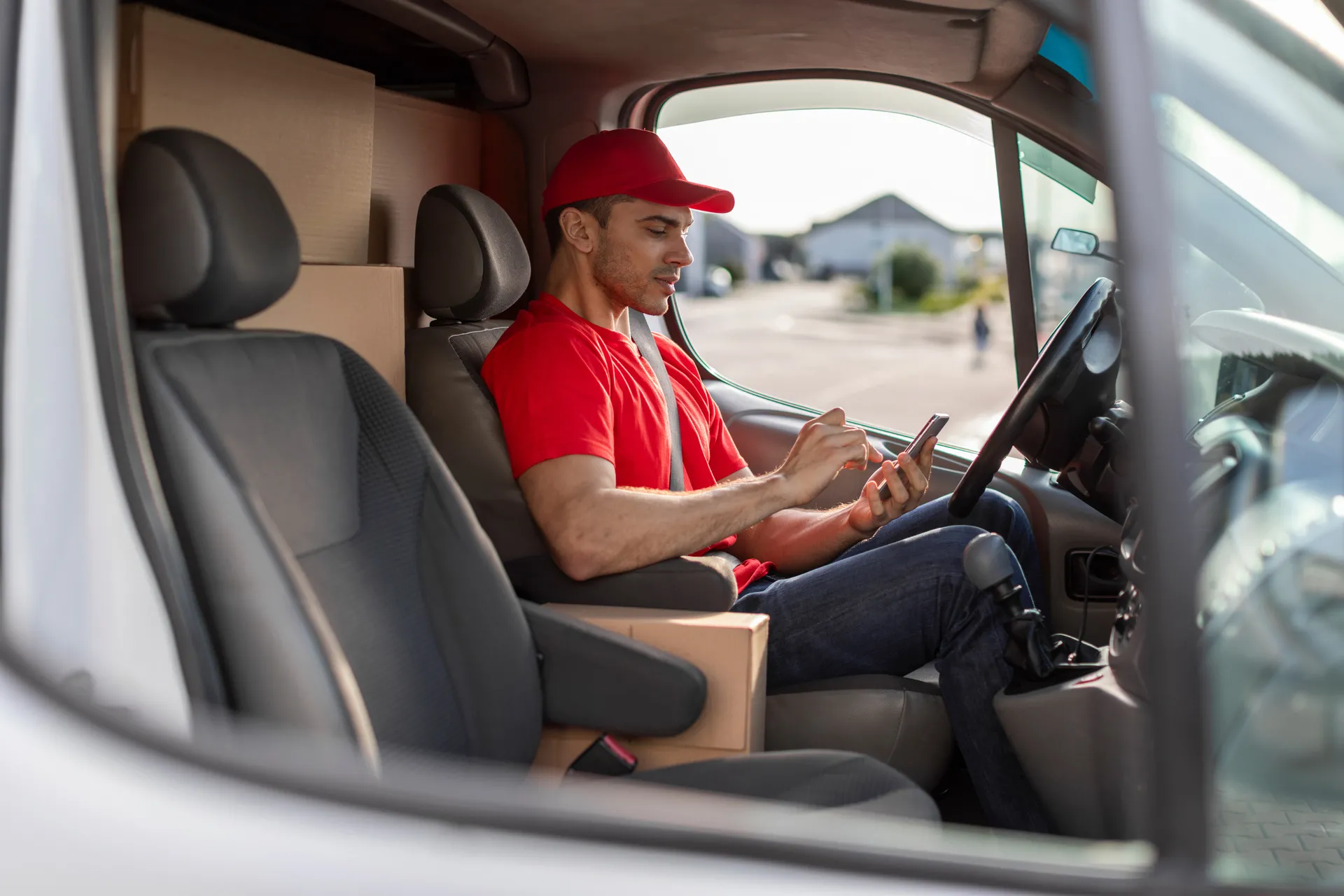
Reducing Carbon Footprint in Logistics From Store to Fridge
Learn how to reduce carbon footprint in logistics with optimized route planning, efficient delivery systems, and sustainable supply chain solutions. Discover real-world results and strategies to cut emissions.
How One Industry Leader Is Mitigating Grocery Delivery Emissions
When a major grocery retailer wanted to reduce its delivery vehicles’ mileage and fuel consumption, Dassault Systèmes provided route planning and logistics solutions to make it happen.
E-commerce Carbon Footprint and Rising Delivery Emissions
Spurred by the development of e-commerce and changes in consumer habits, home delivery has soared in recent years—as well as the carbon emissions that result from it.
Companies that offer delivery services must find competitive ways to meet customer demands for more convenience while reducing their environmental impact.
By embracing the shift to online grocery shopping and home delivery, one of our customers experienced exponential growth in a short timeframe.
Supply Chain Carbon Emissions in Transport and Grocery Delivery
With over 700 stores in two countries, this supermarket chain had to optimize its resources and operations to provide speedy, cost-effective, and sustainable deliveries.
By improving its delivery planning and logistics, the company was able to reduce its fleet’s travel distances, operational costs, and greenhouse gas emissions.
Discover how Dassault Systèmes’ DELMIA Quintiq solutions supported this grocery retailer on its journey to minimize the carbon footprint of its home delivery system.
About the Customer
Use case: Deployment of DELMIA Quintiq on the 3DEXPERIENCE® platform to optimize planning and logistics of grocery delivery in urban and rural areas to reduce mileage, fuel consumption and CO2 emissions.
Industry
Grocery retail.
Company size
100,000 employees.
Location
Strong presence in Western Europe.
The Challenge
The customer’s key challenges stemmed directly from its
Business needs
- Scale up a home delivery service to transport products from 18 distribution hubs to urban and rural areas.
- Reduce mileage, fuel consumption, and greenhouse gas emissions.
Operational requirements
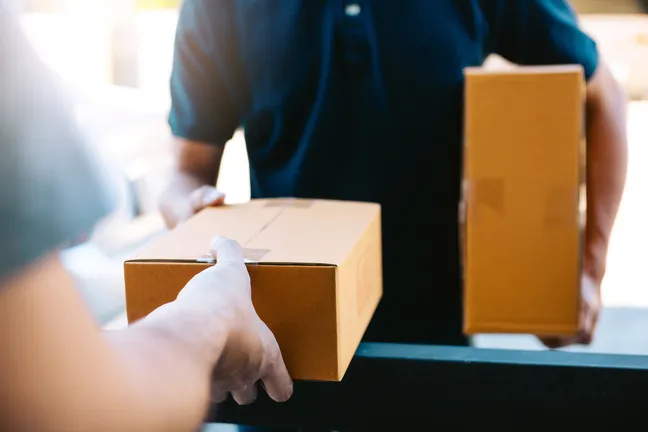
Must make optimal and cost-effective use of vehicles to lower greenhouse gas emissions from delivery while meeting customer demands for convenience.
The Solution
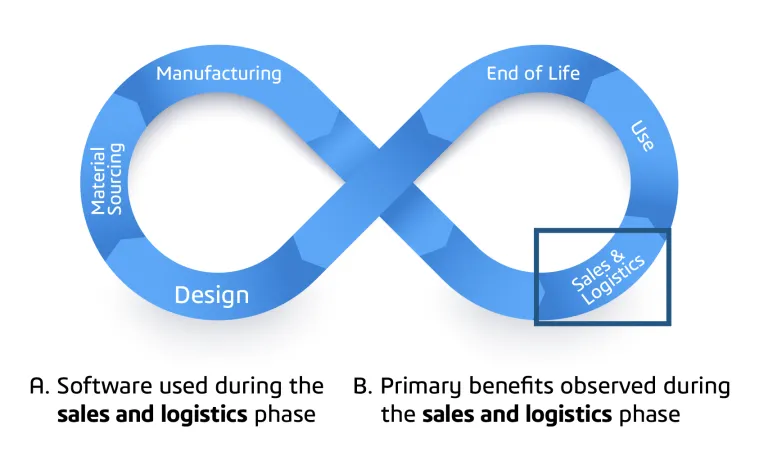
Dassault Systèmes’ approach addressed a crucial part of the process to achieve this objective:
- Software used during the sales and logistics phase.
- Primary benefits observed during the sales and logistics phase.
The Outcome
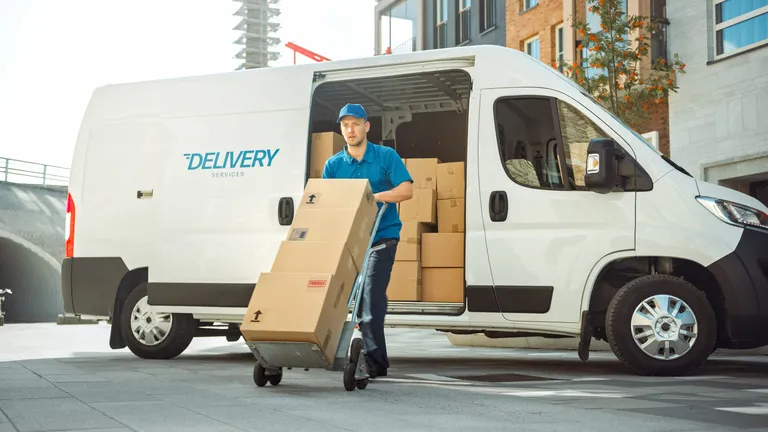
By using DELMIA Quintiq’s integrated solutions, the supermarket chain maximized its delivery capacity by configuring its vehicles to a high level of detail, from loading dock allocation to multi-compartment configuration and temperature management.
The company improved its logistics network across its supply chain to optimize different routes, from suppliers to distribution centers, stores and home deliveries.
Route planning and stops were carefully studied to reduce the number of vehicles on the road and the distance traveled per day, resulting in lower fuel consumption and gas emissions.
The grocery retailer was able to scale its operations up and down according to demand and achieve its strategic goal of providing customer-centric services. It also introduced dynamic time slot deliveries, increasing convenience for its customers without compromising sustainability or cost-effectiveness.
The End Result
We’ve found the right technology partner to help us plan and control our supply chain. Dassault Systèmes’ DELMIA Quintiq provides us with integrated supply chain management, an approach that is demand-driven and optimized based on our business goals and constraints.
Methods
The avoided emission estimation was estimated following the:
- EU Taxonomy (Regulation Guideline), ISO 14067, 11044, and Guidance of WBCSD Net Zero Initiative Guidelines.
- Methodology based on the comparison of two scenarios for one given functional unit (ISO 14067:2018 and ISO 14064-2:2019).
- 3DS methodology has been certified by an independent third party and elaborated in compliance with the EU Taxonomy (Regulation Guideline), ISO 14067, 11044, and Guidance of WBCSD Net Zero Initiative Guidelines. The end result expressed in tCO2e remains an estimation.
Measuring the Sustainability Benefits of Our Solutions
Discover how we accurately quantify the sustainability benefits of our solutions for customers, using a certified methodology. Through real-world use cases, see how we support organizations in their sustainability transition, delivering tangible, measurable results.
Frequently Asked Questions
Sources
1Each of these case studies is a past or current project for which emissions avoided or reduced have been estimated following EU Taxonomy (Regulation Guideline), ISO 14067, 11044, and Guidance of WBCSD Net Zero Initiative Guidelines. The 3DS approach and these calculations, along with the allocated contribution of the software, have been certified by an independent third party. External View URD 2023, Chapter 2.
2Each of these case studies is a past or current project for which emissions avoided or reduced have been estimated following EU Taxonomy (Regulation Guideline), ISO 14067, 11044, and Guidance of WBCSD Net Zero Initiative Guidelines. The 3DS approach and these calculations, along with the allocated contribution of the software, have been certified by an independent third party. External View URD 2023, Chapter 2.
Related Content
Regulatory Compliance
Drive profitability and meet consumer demands while ensuring regulatory compliance with the 3DEXPERIENCE® platform.
Is Onshoring The Road to Sustainable Supply Chains?
Companies can now relocalize their production more sustainably and efficiently with smarter supply chain planning on an integrated platform.
Decarbonizing Industry Operations
Decarbonizing industry operations is key to achieving net-zero emissions. Learn how Dassault Systèmes is innovating for a sustainable future.
Circularity in Action
It’s time for concerted action. Here’s how to make the circular economy achievable, scalable and profitable.