
Building high-performing batteries
How to harness collaboration and simulation for faster, safer and more powerful battery cell engineering.
White Papers

Find everything that you need on SIMULIA
How to harness collaboration and simulation for faster, safer and more powerful battery cell engineering.
White Papers
Revolutionize rail safety, fuel efficiency and reliability of your rail operations through aerodynamics and vehicle dynamics simulation using virtual twin technology.
EBooks

How manageable steps towards a MODSIM approach help A&D companies to optimize aircraft development.
EBooks

Replay | Keynote presentation with engineering.com
E-seminars
Take the first step towards a more powerful and cost-effective simulation solution.
Contact

Accurate results using unified modeling and simulation for industrial equipment
EBooks

How a Modeling and Simulation (MODSIM) approach can save time and cost.
White Papers

Industry experts use MODSIM to streamline product design by breaking down silos, validating designs early, optimizing parts, and fostering better collaboration.
EBooks

The primary objective of the present study is to investigate the impact of the recirculating flow that develops inside a closed, hemi-anechoic test chamber on the noise generation mechanisms of a drone rotor operated under static thrust conditions. To that end, Lattice-Boltzmann simulations are conducted for both an idealized, semi-infinite free-field and a confined, hemianechoic domain that models the test chamber, with the latter validated against experimental measurements. Comparison between simulations reveals a significant increase in rotor noisedue to confinement, up to 5 dBA in overall sound pressure level depending on microphone location, with negligible impact on aerodynamic performance. Blade-strip and beam-forming source identification techniques are utilized to determine those sound-generation mechanisms responsible for the increase in rotor noise. Leading-edge interactions between the vortical structures convected by the recirculating flow and the rotor’s blades are demonstrated to be directly responsible for the generation of unsteady loads that lead to significantly higher bladepassing frequency harmonic peaks. A small enhancement of the high-frequency self-noise contribution is also observed, whereas blade-tip vortex dynamics are largely unaffected by confinement so that the contribution of blade-vortex interaction noise is negligible.
Tech Notes
This paper describes computational work ows for the evaluation of the acoustic environmental impact of vertical take-o and landing vehicles. An operational scenario of a vehicle undertaking an approach maneuver over a at terrain is considered. The aeroacoustic sources are predicted by using the high-fidelity CFD solver SIMULIA PowerFLOW based on the Lattice-Boltzmann/very-large-eddy-simulation method. An integral approach based on the Ffowcs-Williams and Hawkings analogy is used to compute the noise on a hemisphere centered around the vehicle. Finally, the on-ground noise footprint is computed by using the hemisphere noise extrapolation approach. In view of future trajectory/maneuver optimization studies, different trimmed trajectories are considered in order to show the effect of both the aero-mechanical setting of the vehicle and its instantaneous position on the perceived noise levels along a fly-over event. Trajectories are described by a time sequence of waypoints, vehicle pitch angle, tilt angles of the propulsion units and rotational speed of the rotors.
Tech Notes
The present work describes a numerical reproduction of the 22-in source diagnostic test fan rig of the NASA Glenn Research Center. Numerical flow simulations are performed for three different rotor/stator configurations and one rotational speed, representative of an approach operating condition, by using the lattice-Boltzmann solver PowerFLOW. The full stage and nacelle geometries are considered, and results are compared to available measurements. Tripping the rotor blades results in a slightly more accurate noise prediction as a consequence of amore accurate prediction of the velocity fluctuations in the rotor wake over the whole blade span. Fourier circumferential analyses are performed for an intake and a bypass duct section with the intent of explaining the origin of some tonal noise components and comparing the present results to available literature results. Finally, the effects of adding an acoustic treatment in the intake is shown by directly resolving the unsteady flowfield in a single-degree-offreedom honeycomb layer.
Tech Notes
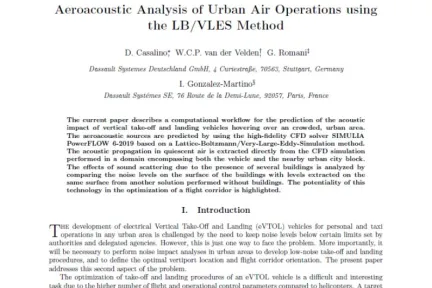
The current paper describes a computational work ow for the prediction of the acoustic impact of vertical take-o and landing vehicles hovering over an crowded, urban area. The aeroacoustic sources are predicted by using the high-fidelity CFD solver SIMULIA PowerFLOW 6-2019 based on a Lattice-Boltzmann/Very-Large-Eddy-Simulation method. The acoustic propagation in quiescent air is extracted directly from the CFD simulation performed in a domain encompassing both the vehicle and the nearby urban city block. The effects of sound scattering due to the presence of several buildings is analyzed by comparing the noise levels on the surface of the buildings with levels extracted on the same surface from another solution performed without buildings. The potentiality of this technology in the optimization of a ight corridor is highlighted.
Tech Notes
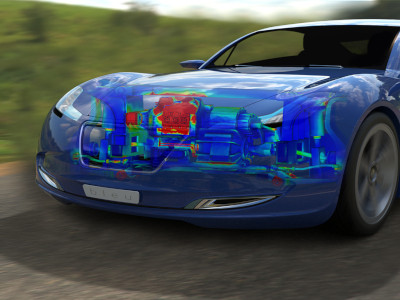
Reduce conducted or radiated emissions to meet regulatory standards with virtual prototype.
E-seminar
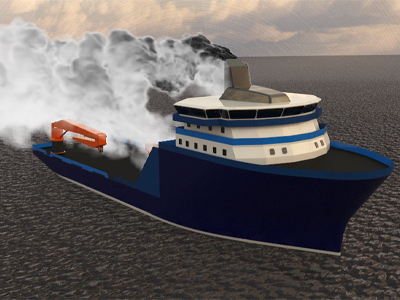
SIMULIA has a diverse offering of multi-phase solutions for addressing problems across a large range of industries.
E-seminar
Improve performance of integrated antenna designs, while reducing development time and cost, with proven 3D electromagnetic simulation
E-seminar

This e-seminar will give you a tour of CST Mphysics Studio, its main features together with two detailed examples.
E-seminar

In this workshop, we will get into the technical details of Noise & Vibration Simulation for wind noise and sound package workflows.
E-seminar
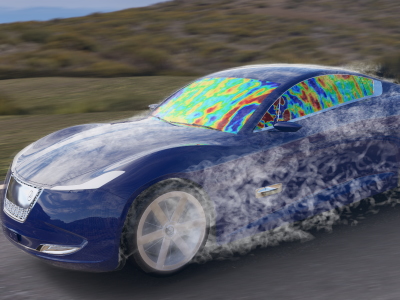
Watch the replay as we explore how to use digital solutions to diagnose noise & vibration issues early in the vehicle development process and optimize shapes and materials to address noise sources and paths.
E-seminar
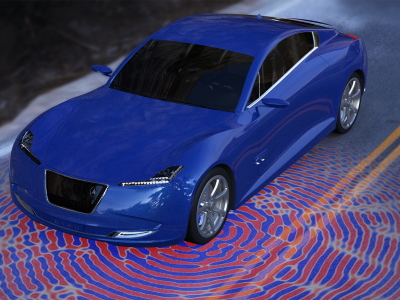
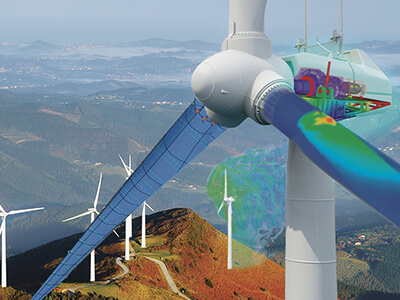
The Wind Turbine Dynamics e-seminar covers the wide range and necessity of current MBS applications within the wind turbine sector.
E-seminar
Watch the digital event organized by Dassault Systèmes & IDC and discover the opportunities you can have with an innovative product development strategy supported with virtual twins.
E-seminar
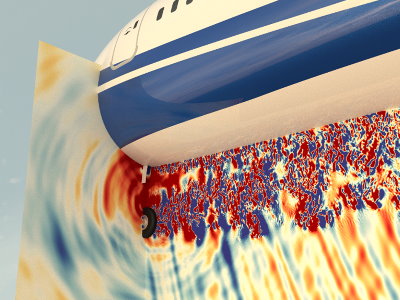
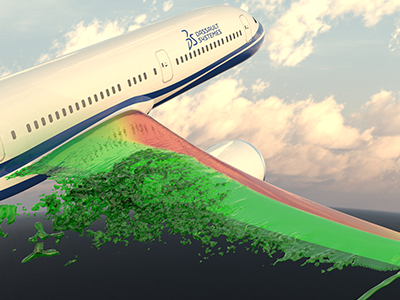
Watch the replay to discover how aeroacoustic simulations are performed for aircraft using the PowerFLOW software. Specific applications covered include noise generated by landing gear and high-lift configurations.
E-seminar
Numerical flow simulations using the lattice Boltzmann method (LBM) evolved over the past 30 years to become a widely used CFD tool in industry.
E-seminar
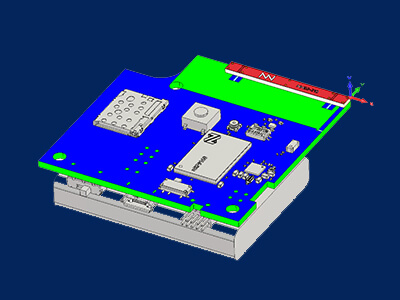
The e-seminar will show how easy is to design IoT devices embedding Virtual AntennaTM with CST Studio Suite.
E-seminar
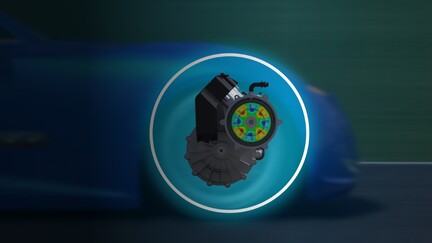
Watch the replay to learn how multi-disciplinary workflows can be used to simulate the complexity of an electric drive and evaluate multiple design variants quickly and efficiently.
E-seminar
We provide hundreds of self-learning modules so you can continue to learn at your convenience
Read the SIMULIA blog on the latest news and innovations from our experts.
Speak with a SIMULIA expert to learn how our solutions enable seamless collaboration and sustainable innovation at organizations of every size.
Courses and classes are available for students, academia, professionals and companies. Find the right SIMULIA training for you.
Find information on software & hardware certification, software downloads, user documentation, support contact and services offering