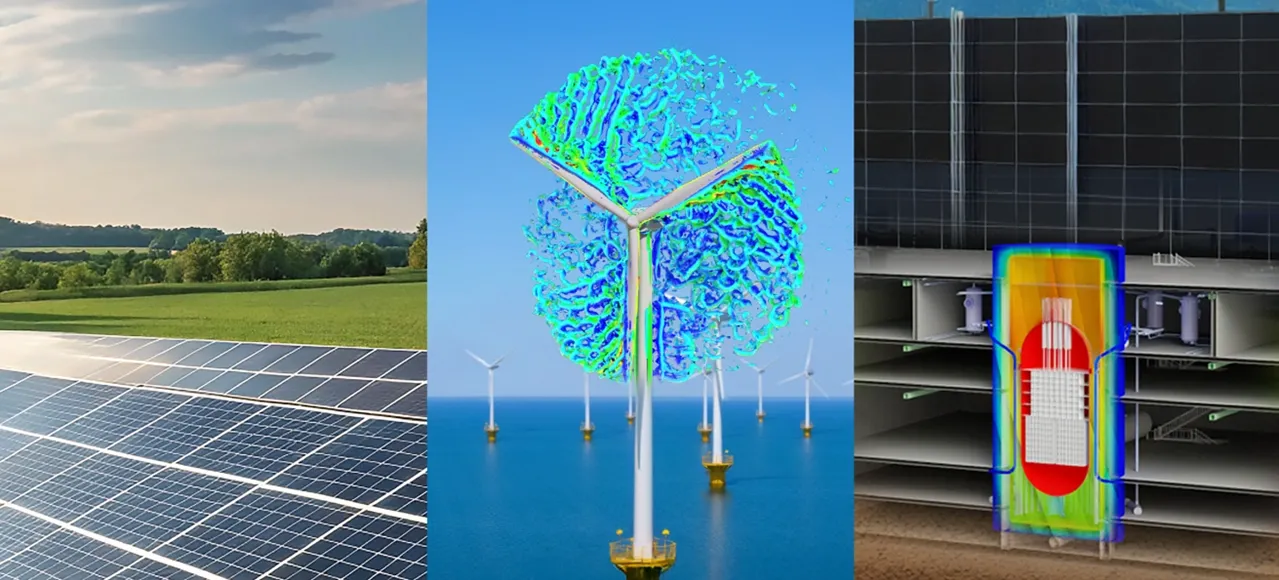
Simulation for Power Generation
Advanced simulation for power generation, enabling early validation, predictable performance, and faster delivery of efficient, low-emission energy systems.
Advancing the Energy Transition with Simulation
The power sector is at a critical inflection point, driven by rising demand from electric vehicles, smart homes, and data centers, alongside the shift to low-emission energy sources such as renewables and nuclear.
To master this complexity, energy providers must move beyond cost overruns and underutilized assets toward predictable, high-quality project delivery.
SIMULIA delivers advanced modeling and simulation to capture real-world, multi-domain behavior, from conventional generation to emerging technologies like fusion, enabling early validation, improved performance, and confident compliance from the first iteration.
Key Benefits of Simulation for Power Generation

Faster Time to Market
Accelerate development with integrated simulation, enabling rapid iteration and efficient solving of large models using scalable cloud HPC.

Predictable Performance and Compliance
Validate real-world performance early, reduce risk, and ensure compliance with evolving safety and environmental standards.

Data-Driven Decisions, Lower Risk
Leverage virtual testing to validate designs early, minimizing rework, delays, and investment risk.

Sustainable, Cost-Efficient Design
Evaluate performance, materials, and environmental impact upfront to deliver efficient, low-emission solutions.
Accelerate Innovation with Unified CAD Modeling and Simulation
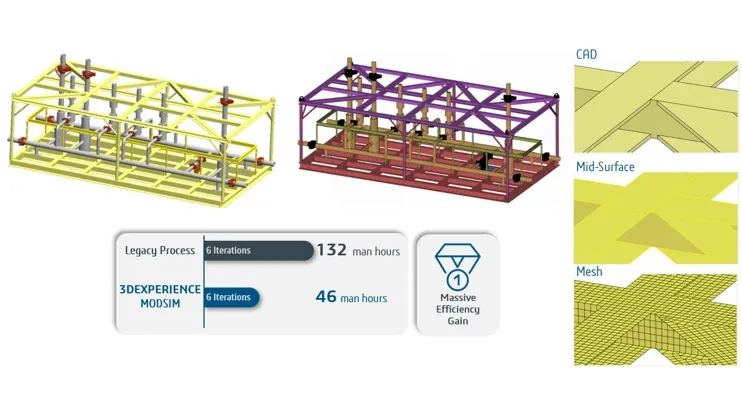
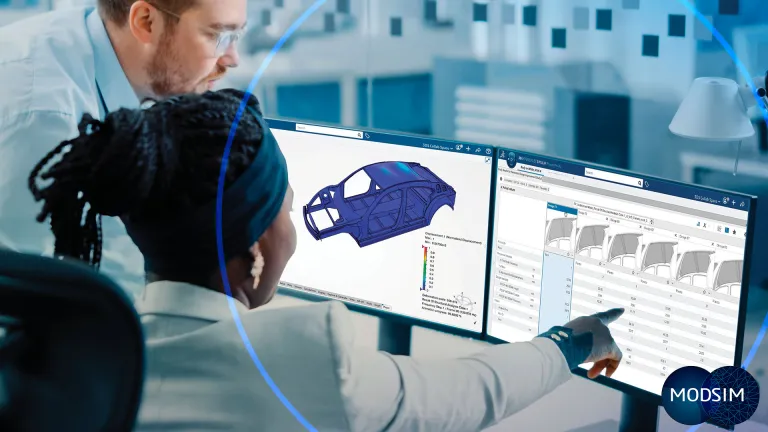
Modern engineering demands an agile approach that moves beyond traditional, linear development cycles. Unified CAD modeling and simulation (MODSIM) eliminates silos between design (CAD) and analysis (CAE) by allowing teams to design and simulate simultaneously on a common data model. This continuous loop supports rapid design exploration, allowing engineers to run what-if studies quickly. In one study, MODSIM halved the simulation analysis time for a subsea frame, cutting effort from 60 man-hours to just 30.
Virtual Twins: Future-Proofing Energy Systems
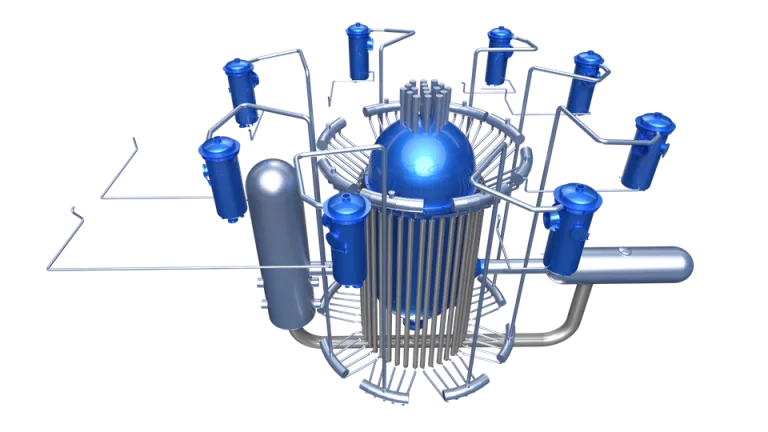
Virtual twins capture the behavior, evolution, and performance of an energy asset across its entire lifecycle. Based on a precise 3D representation, the virtual twin combines geometry, data, and physics to form an evolving model. This enables advanced simulation that integrates real-world data and predicts how the asset will respond under various conditions. This live link allows teams to monitor, optimize, and manage energy systems while documenting every design choice for complete traceability and compliance.
Engineering the Next Generation of Power
SIMULIA solutions are essential for solving the extreme engineering challenges posed by emerging energy systems:
- Fusion Energy: simulation allows engineers to explore and validate challenges like material survival under intense neutron bombardment and managing severe thermal gradients, accelerating the path to commercial viability.
- Small Modular Reactors (SMRs): simulation is used to simplify manufacturing while ensuring safety. It tests new fuel types under hypothetical accident conditions, helping new reactors come to market sooner and achieve regulatory compliance.
SIMULIA Customers in Power Generation

Envision Energy - Going Carbon Neutral with Smart Wind Turbines - Dassault Systèmes
Youtube
Duration 2min 48s

LM Wind Power
LM Wind Power and Dassault Systèmes are collaborating to pioneer simulation methods to address noise and noise regulations for wind turbines.
Customer Story

Simulation in Power Workflows
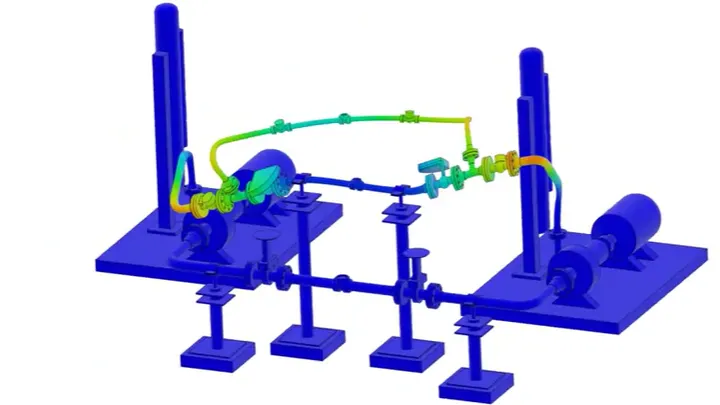
Piping Stress Analysis
Thermal loads from CHT drive expansion and stress in piping systems. Disconnected workflows often cause inaccurate load transfer, while complex layouts introduce combined loading challenges.
Benefits:
Accurate thermal–structural integration, unified modeling, realistic stress prediction, reduced effort, improved reliability.
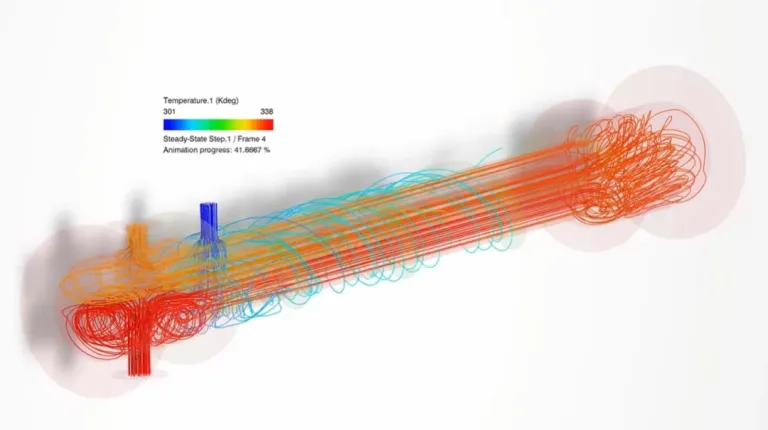
Heat Exchanger Analysis
Performance depends on complex flow, temperature gradients, and design parameters like geometry and flow rate. Simplified methods miss key effects.
Benefits:
Detailed thermal-flow insights, bottleneck identification, design optimization, improved efficiency and reliability.
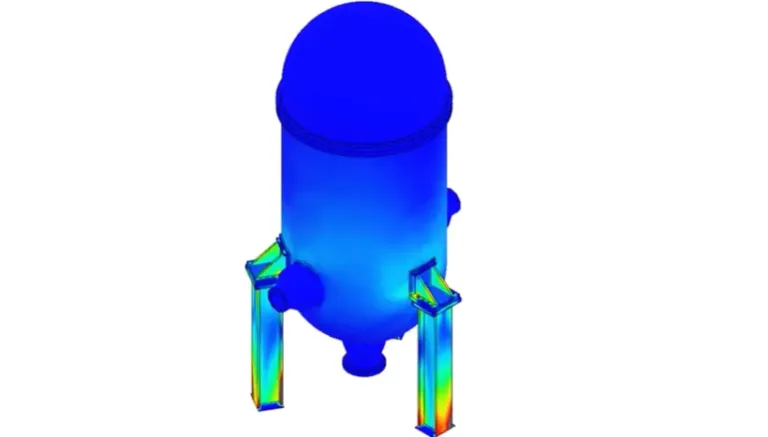
Earthquake Loads
Seismic response depends on accurate modal behavior and multi-mode interactions. Vessel–support coupling adds complexity.
Benefits:
Accurate modal analysis, realistic seismic response, coupled system evaluation, improved safety and compliance.
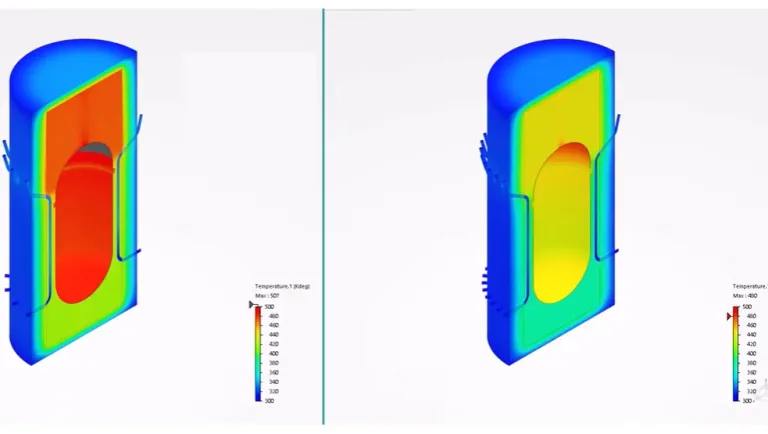
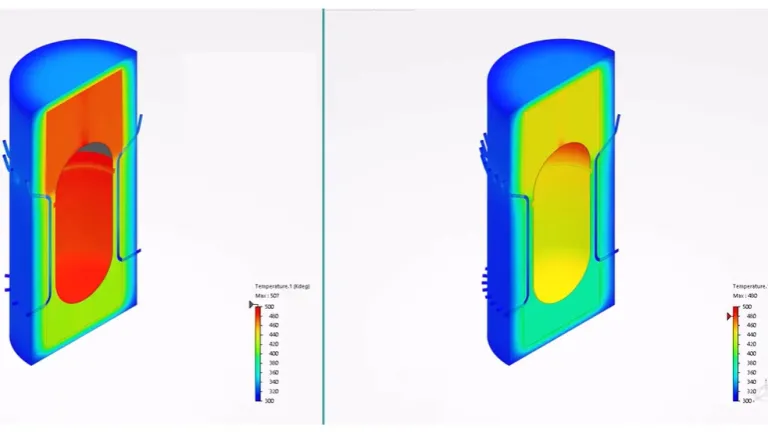
Reactor Cavity Cooling
Cooling performance depends on pipe configuration and cavity design. Small changes can create hotspots.
Benefits:
Rapid design exploration, temperature trend insights, faster optimization, improved cooling efficiency.
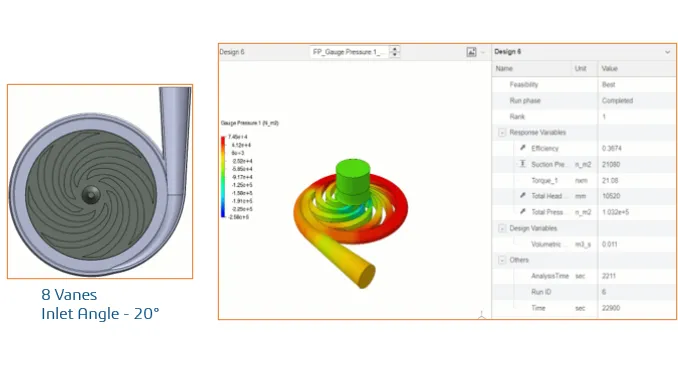
Flow Performance
Pump efficiency is driven by geometry like vane count and inlet angle. Small changes impact flow losses and performance.
Benefits:
Flow insights, design comparison, faster optimization, improved efficiency and reliability.
Wind Turbine Load Calculations
Thousands of load cases require balancing accuracy and speed. Managing simulations at scale is complex.
Benefits:
High-fidelity, scalable simulation; flexible modeling; automation; faster execution; improved design confidence.
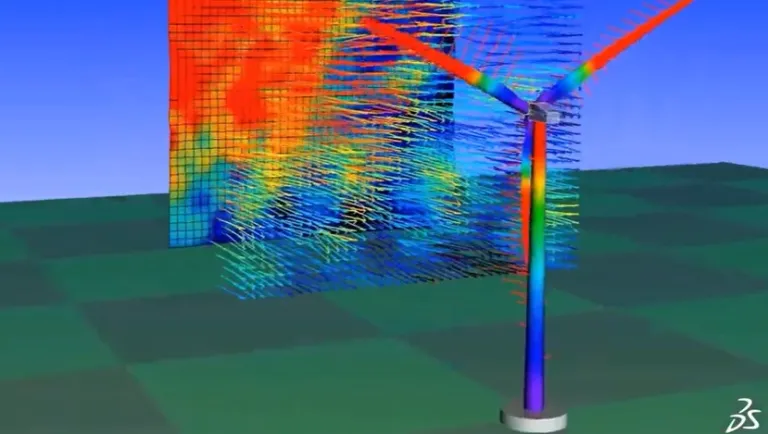
Wind Turbine Extreme Load Cases
Events like shutdowns and gusts require nonlinear, coupled aeroelastic analysis.
Benefits:
Accurate extreme load prediction, coupled system behavior, better safety margins, resilient designs.
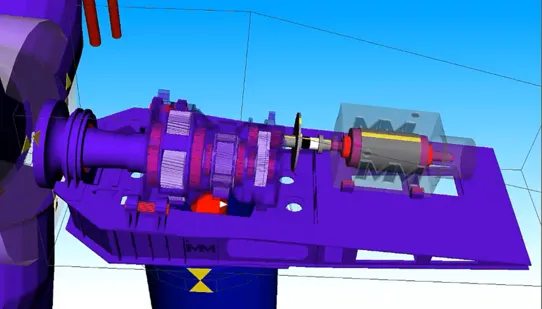
Wind Turbine Drivetrain Resonance Analysis
Resonance across operating speeds can cause failure. Requires full dynamic system understanding.
Benefits:
Resonance identification, full dynamic insight, advanced visualization, improved reliability.
Lifting Analysis
Complex geometry and CoG uncertainty create risks during lifting, amplified by dynamic and space constraints.
Benefits:
Accurate CoG, combined load evaluation, dynamic safety, validated lifting scenarios.
Start Your Journey
How Simulation Accelerates Sustainable Energy Innovation
Global electricity demand is rising. Low-emission sources like renewables and nuclear power must meet this demand. For engineers, this moment brings pressure to design smarter, cleaner energy systems that can be deployed faster, maintained easily, and deliver consistent, long-term performance. A new engineering workflow is required, one that unites faster decision-making, collaboration, and advanced simulation to validate performance from the first iteration.
Article
AI/ML-Driven Design for Shorter Component Development Times | Dassault Systèmes
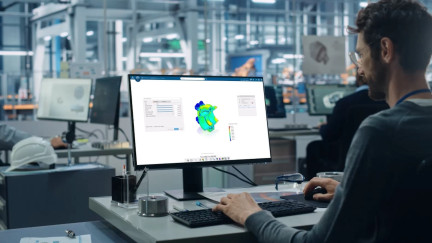
Learn how SIMULIA uses AI and machine learning to predict product performance and transform design efficiency.
E-seminar
On demand

Accelerate Small Modular Reactors Development using Virtual Twins | Dassault Systèmes
Discover an integrated end-to-end approach to accelerate the development of Small Modular Reactors (SMR) projects.
E-seminar

On demand
Industry Processes for Simulation for Power Generation
Wind Turbine Engineering
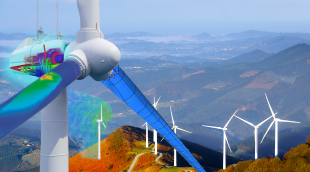
Accelerate innovation and reduce costs and time to market with fast prediction of key performance attributes using multidisciplinary simulation solutions.
Process
Engineering Integrity Analysis
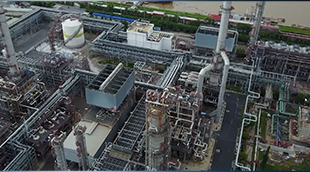
Efficiently and accurately analyze and optimize plant structural integrity, HVAC, and control systems to meet safety standards and avoid potential hazards
Process
Also Discover
Simulation for Oil & Gas
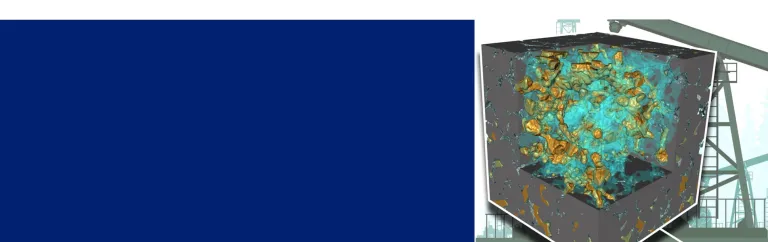
Reduce subsurface uncertainty and optimize performance with SIMULIA Oil & Gas solutions, enabling safer, faster, and more reliable decisions.
MODSIM Unified Modeling & Simulation
MODeling & SIMulation on the 3DEXPERIENCE platform
FAQs about Simulation for Power Generation
Learn What SIMULIA Can Do for You
Speak with a SIMULIA expert to learn how our solutions enable seamless collaboration and sustainable innovation at organizations of every size.
Get Started
Courses and classes are available for students, academia, professionals and companies. Find the right SIMULIA training for you.
Get Help
Find information on software & hardware certification, software downloads, user documentation, support contact and services offering