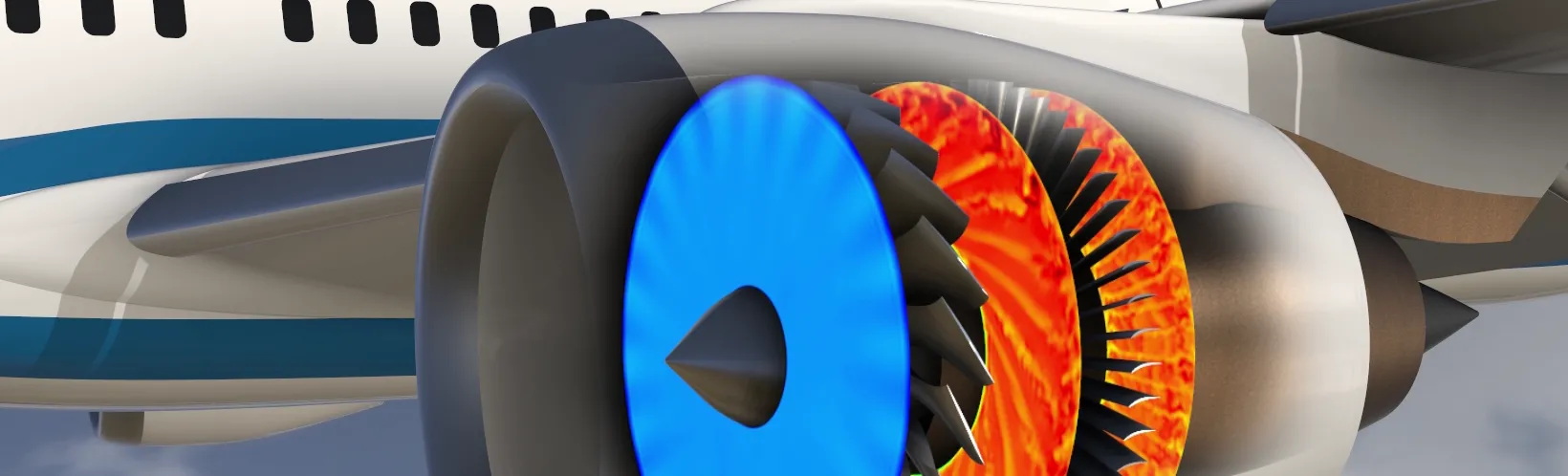
Optimize aircraft propulsion with SIMULIA solutions to improve engine performance, reduce aeroacoustic noise, and ensure reliable turbomachinery integration.
Aircraft Propulsion Systems Simulation
Designing the Next Generation of Aircraft Propulsion
Modern aircraft engines are being pushed to deliver more with less. Fuel efficiency targets are rising, noise and emissions limits are tightening, and production must scale faster, all while development costs and time-on-wing expectations continue to climb.
This level of performance cannot be achieved through single-discipline optimization or late-stage validation. Turbomachinery design now demands high-fidelity, multiphysics simulation from concept through certification.
SIMULIA brings aerodynamics, structural simulation, acoustics, and thermal analysis together on the 3DEXPERIENCE platform, enabling propulsion manufacturers to make confident design decisions, reduce certification risk, and compress development timelines without compromising performance or compliance.
Key Benefits of SIMULIA's Turbomachine & Aircraft Propulsion Solutions

Simulation-Driven Design
Connect simulation directly to design, supported by SPDM for method reuse, issue and change management, and project planning and monitoring.

Simulation Governance and Digital Continuity
Ensure data quality, traceability, and continuity across simulation workflows and domains.

MODSIM Integration
Consume parametric CATIA CAD through standardized interfaces to automate simulation workflows.

Advanced Solvers
Leverage advanced solvers including, structural contact, unsteady aeroacoustics, dedicated electromagnetic analysis for electric propulsion, and advanced material models.
SIMULIA Customers in Turbomachine & Aircraft Propulsion
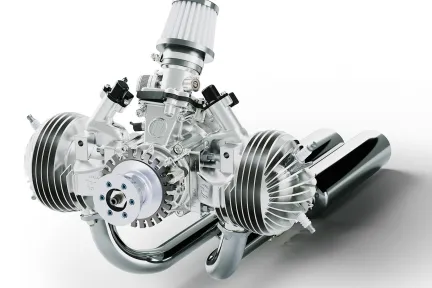
Hirth Engines
German engineering company Hirth Engines develops two-stroke engines and adopted the 3DEXPERIENCE platform on the cloud to manage its data centrally.
Customer Story
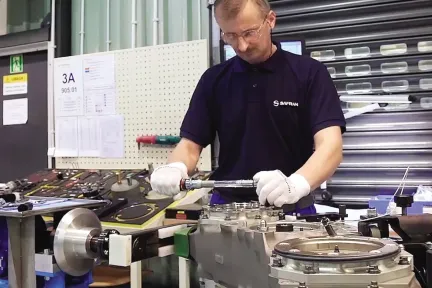
Safran Transmission Systems
Safran Transmission Systems chose Dassault Systèmes’ 3DEXPERIENCE platform including the Co-Design to Target industry solution experience to deliver digital continuity across all product-related
Customer Story
Turbomachine Aero-Acoustics
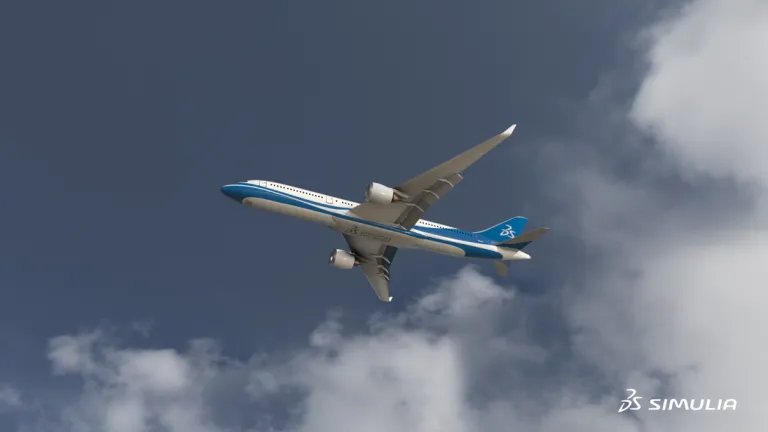
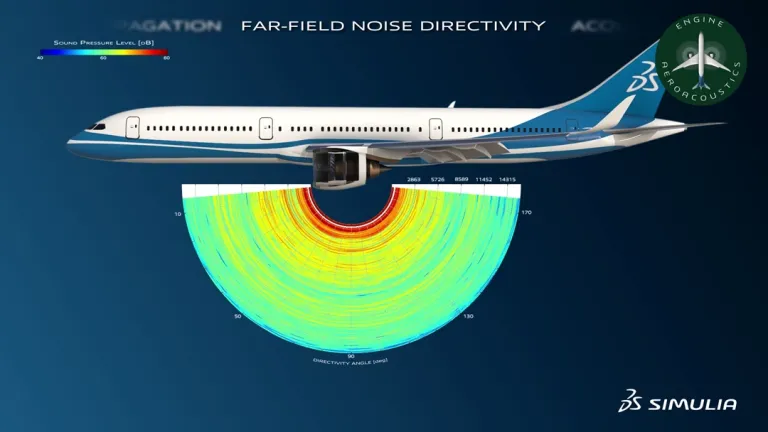
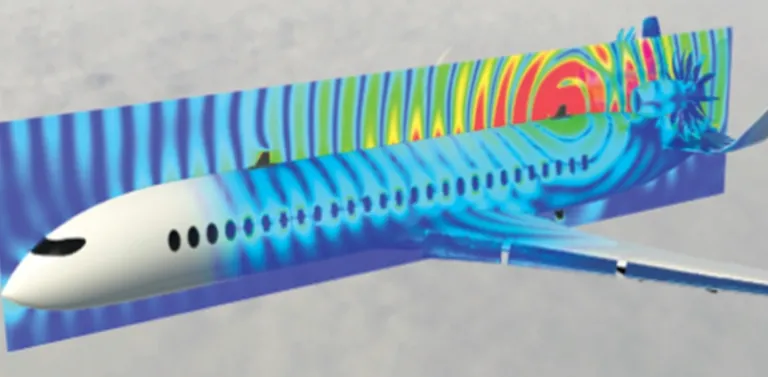
Aircraft engines have become quieter with each new generation, but stricter noise targets from NASA, ACARE, and ICAO demand further reductions. As the primary source of flight noise, engine manufacturers must address fan and jet noise early to meet future community and certification requirements.
SIMULIA delivers a unique high-fidelity simulation workflow to predict aerodynamic noise in the bypass region. A detailed digital model of the aircraft engine enables the generation of accurate tonal predictions, as well as all interactions leading to broadband noise, in a single simulation.
Aircraft Engine Integration
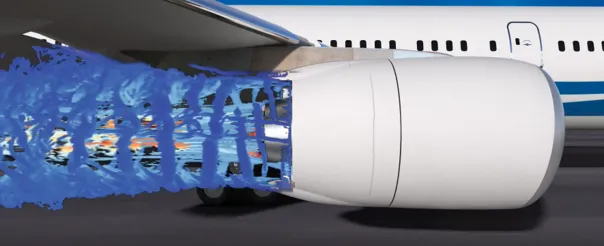
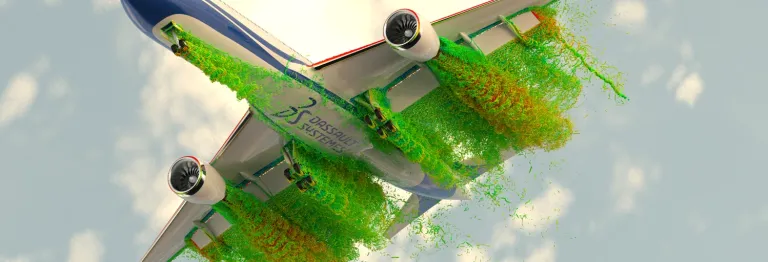
Aircraft engines function as part of a complex “system of systems,” where components like the pylon, nacelle, and thrust reverser impact both the engine and airframe. Integration challenges are compounded by model size, complexity, and late-stage flight test measurements.
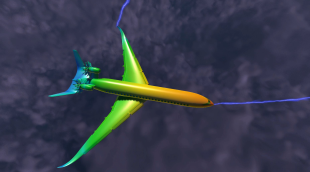
SIMULIA provides comprehensive simulation capabilities to identify integration issues early, reducing costly late-stage redesigns. Current tools support crosswind effects, pylon performance, and jet/high-lift interactions. This image highlights a thrust reverser case study using high-fidelity flow simulation.
Turbomachine & Aircraft Propulsion Workflows
- Fluids
- Structure
- MBS
- Electromagnetics
Aerodynamics Defense
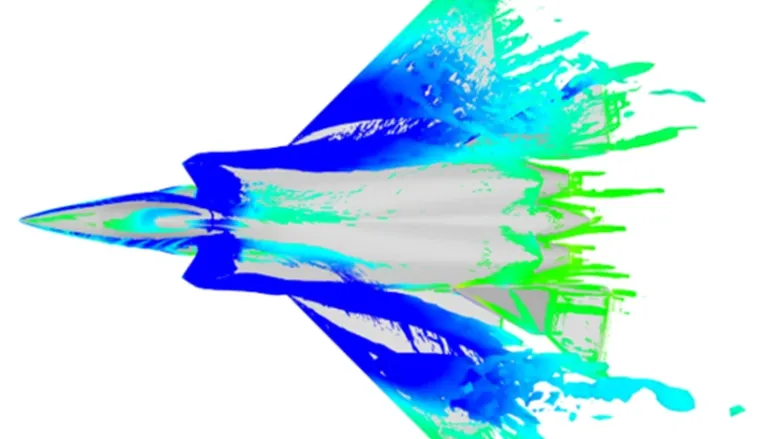
Airborne defense solutions require advanced designs to perform at the edge of the flight envelope.
Key Capabilities include:
- Early-phase aerodynamic evaluation with SIMULIA’s Lattice Boltzmann CFD solver
- Simulations for propeller wake-wing-flap interactions
- Rotor-rotor interactions for multicopter UAS
- Engine intake distortion analysis
- Crosswind and ground effect simulations
- Engine integration analysis
- Prototype-free optimization for flight dynamics and mission performance
Aerodynamics Generic
Engine performance is critical for thrust, fuel efficiency, and flight flexibility.
Key Capabilities include:
- Optimization of propulsion performance with SIMULIA’s Lattice Boltzmann CFD solver
- Open rotor performance analysis
- Propeller wake-wing-flap interactions for transport aircraft
- Propeller integration on VTOL
- Crosswind and ground effect simulations
- Simulation of complex unsteady flows (recirculation, cavity flows, vortex advection, wake propagation) before prototyping for optimal flight dynamics
Aeroacoustics
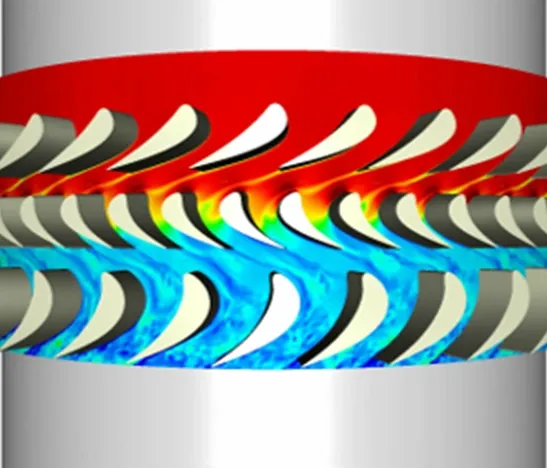
Acoustic signatures influence UAS detectability, rotorcraft survivability, and airport noise compliance.
Key Capabilities include:
- Prediction of trailing edge, fan, and propeller noise
- Analysis of rotor-stator interactions
- Engine-on-wing and integrated propulsion simulations with SIMULIA’s Lattice Boltzmann CFD solver
- Early acoustic design validation and reduced full-scale testing
- Accurate results for unsteady aerodynamic phenomena up to Mach 1.4
Aerothermal
Brayton cycle machines require precise thermal management for durability and performance.
Key Capabilities include:
- Aerothermal simulations with Dassault Systèmes SIMULIA Fluids solution
- Conjugate heat transfer for optimal material limits and durability
- Support for workflows from feature design to full engine assessments
- Film cooling and cooling feature design (turbulators, ribs, pins)
- Impinging jets and rotating cavity cooling
- Engine soak and ventilated cavity cooling
- Advanced co-simulations with thermal models for radiation and complex thermal scenarios
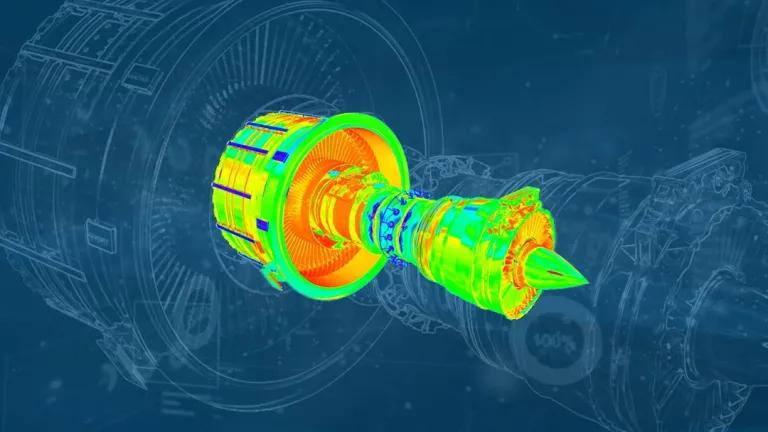
Whole Engine Thermo-Mechanical Modelling
Whole Engine thermo-mechanical modeling balances accuracy and efficiency for complex assembly analysis.
Key Capabilities include:
- Axisymmetric finite element analysis for assembly interference and preload
- Transient temperature response modeling (conduction, convection, advection, radiation)
- Stress, strain, and deformation predictions for durability and damage tolerance
- Handling large assemblies and multi-step assembly interference
- Robust contact interaction resolution with Abaqus/CAE and Abaqus software
- General contact for holistic Whole Engine Model treatment
- Efficient monitoring of inter-component clearances with ‘soft’ pressure-overclosure relationships
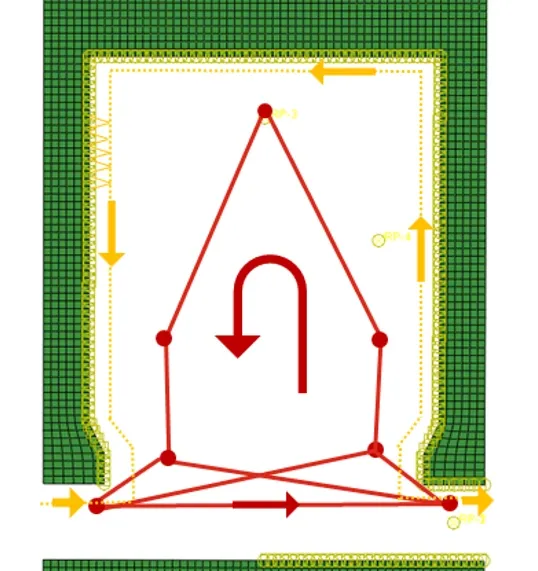
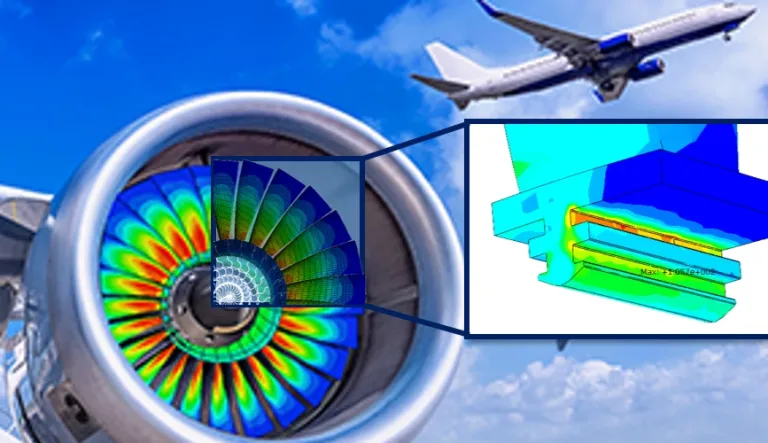
Component Level Analysis
Detailed 3D analysis ensures precision in component integrity, durability, and dynamic response.
Key Capabilities include:
- Stress, strain, and deformation predictions for integrity, durability and damage tolerance
- Frequency extraction and linear dynamics for Campbell and Interference Diagrams
- Harmonic forced response anticipation
- Robust modeling of complex assemblies with Abaqus/CAE and Abaqus software, such as cyclic symmetry and assembly interactions
- Advanced contact capabilities for frictional and non-frictional interfaces
- Multi-step paradigm for pre-stress effects in dynamic procedures
- Integrated sub-model boundary constraints and transient temporal mapping
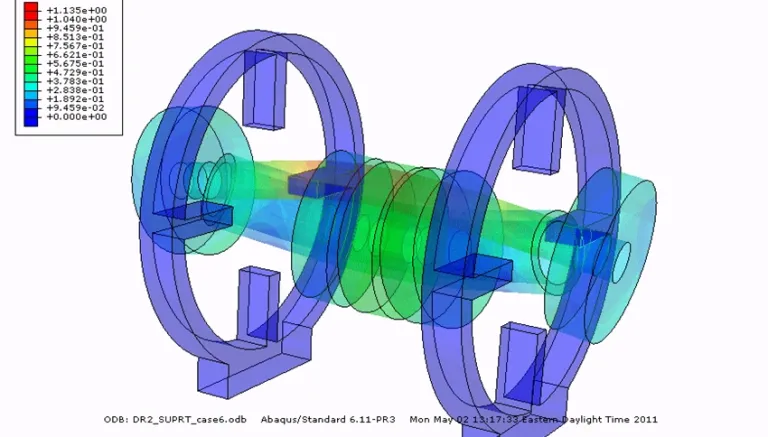
Rotordynamics
Rotor dynamics analysis ensures stability, critical speeds, and dynamic response of rotating systems.
Key Capabilities include:
- Assessment of critical speeds, rotor whirl, and stability
- Steady-state harmonic response (synchronous and asynchronous)
- Time history transient response analysis
- Gyroscopic effects across various elements (mass, rotary inertia, beams, solids, shells)
- Efficient modeling of bearings and seals with connector elements
- Abaqus/CAE plugin for streamlined workflows and a user-friendly experience
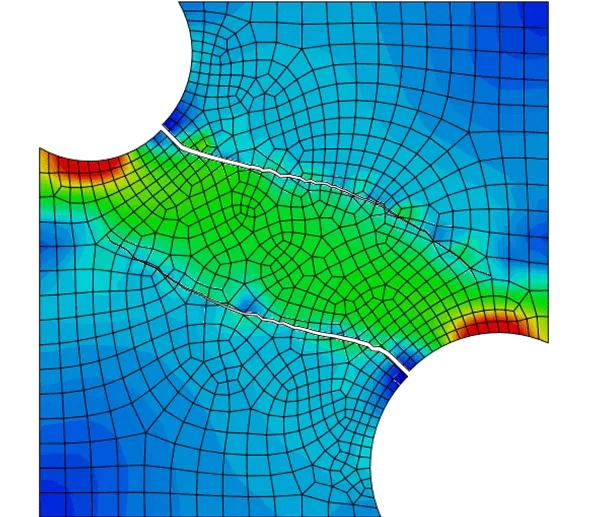
Crack Propagation and Fracture
Advanced 3D analysis is crucial for accurate crack propagation and fracture prediction.
Key Capabilities:
- Evaluation of complex, spatially varying stress fields
- Crack onset analysis using contour integrals
- Crack propagation studies assuming a predetermined crack path and cohesive failure, or by Virtual Crack Closure Techniques
- Arbitrary crack onset and propagation with Extended Finite Element (XFEM)
- Fatigue crack growth analysis using adaptive remeshing
- Industry best practices supported by Abaqus/CAE and Abaqus software suites
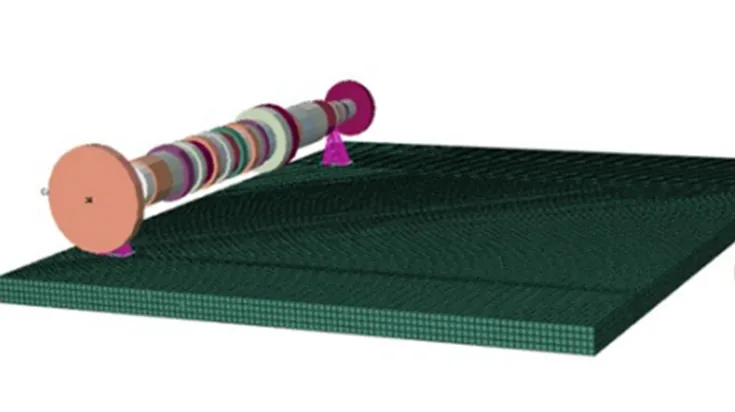
Rotordynamics
Rotating machinery in airborne systems requires high-fidelity modeling to ensure performance and stability.
Key Capabilities:
- High-fidelity rotordynamics simulation with Simpack multibody dynamics
- Rigid and flexible body modeling for realistic deformation and vibration prediction
- Flexible-body capabilities for shaft bending, blade elasticity, and structural coupling
- Simulation of rotating machinery with aircraft motion beyond traditional 2D analysis
- Specialized bearing libraries for detailed modeling of bearings, gears, and couplings
- Analysis of rotor-bearing interactions, critical speeds, unbalance response, and resonance phenomena
- Transient event simulations (run-up, run-down) with lubrication and non-linear contact effects
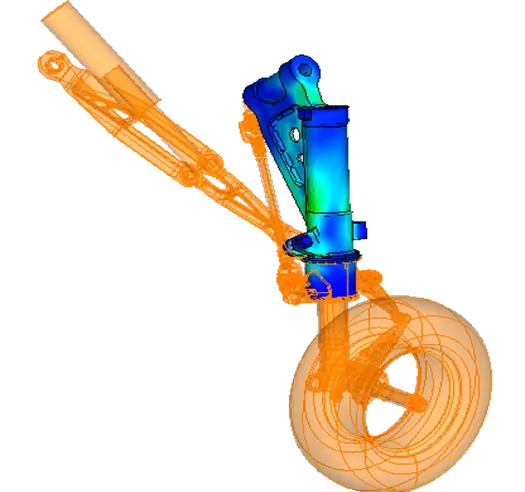
Flexbody modeling
Multibody systems simulation ranges from rigid-body to flexible-body modeling to enhance accuracy.
Key Capabilities:
- Seamless integration with Abaqus for advanced MBS modeling
- Flexible body technology for non-linear deformation and enhanced contact simulation
- Modal response analysis using mode shapes
- Improved mechanism analysis with flexbody representation
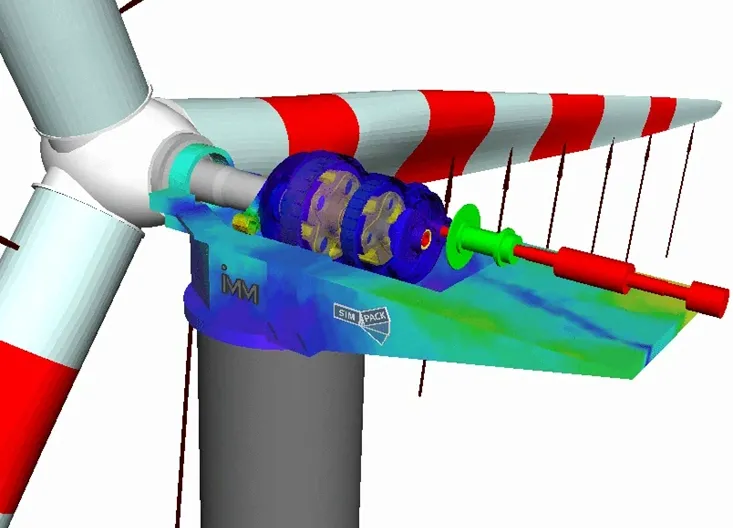
Gear pair analysis
Gearboxes play critical roles in propulsion systems for airborne applications.
Key Capabilities:
- High-power planetary gearbox modeling for fan rotation reduction
- Support for engine auxiliary and helicopter gearboxes, as well as electric engine gear trains
- Multi-gear contact and contact gap/tolerance modeling with Simulia Simpack
- Flexible drivetrain simulations
- Noise, vibration, and harshness (NVH) analysis
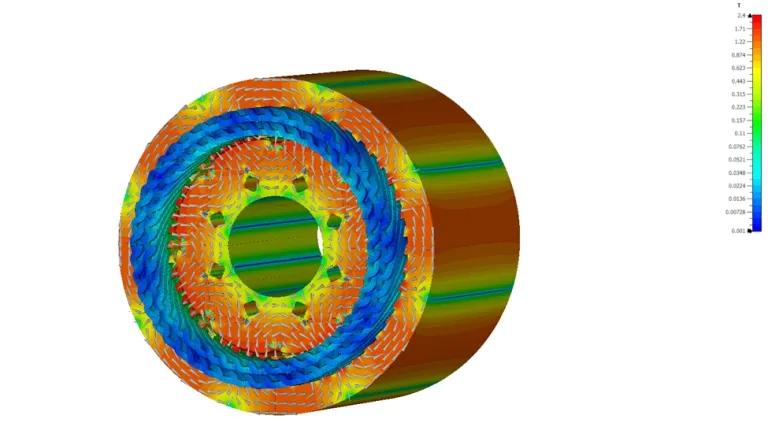
Electric Machines for Aircraft
Electrification transforms aviation with efficient, high-power electric motors and generators.
Key Capabilities include:
- Topology and winding trade studies with torque–speed and efficiency mapping
- Loss breakdown (copper/iron), saturation sensitivity, and demagnetization robustness checks
- Transient and fault scenario analysis (startup, load steps, short-circuits)
- Electromagnetic noise and vibration (e-NVH) performance analysis
- Design variants with traceable assumptions and manufacturability constraints
- Tools: 3DEXPERIENCE platform, CST Studio Suite, Manatee, SIMULIA Opera, Abaqus, Simpack
Benefits:
- Earlier performance confidence
- Fewer redesign loops
- Smoother powertrain integration across aircraft classes
Turbomachinery in Electromagnetic Environments
Turbomachinery electronics require robust protection against electromagnetic hazards.
Key Capabilities:
- Lightning indirect-effects analysis on engine/nacelle harnesses (induced currents/voltages, bonding)
- HIRF susceptibility assessments for nacelle equipment, sensors, and cable interfaces
- Shielding, grounding/bonding, and routing variant comparisons with traceable setups
- Low-frequency induction studies for magnetic components (e.g., generators, actuators)
Tools:
- 3DEXPERIENCE platform, CST Studio Suite, EMC Wizard, Opera
Benefits:
- Earlier detection of electromagnetic issues
- Reduced late-stage troubleshooting
- Better-targeted and efficient physical testing
Industry Processes for Turbomachine & Aircraft Propulsion
Aerospace Communication & Detection System Performance
Use electromagnetic simulation to evaluate communication system designs during early development stages, leading to better performance and reduced design time
Process
Aircraft Aerodynamics
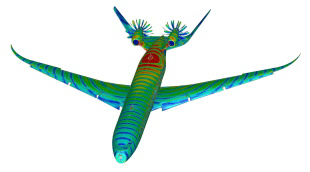
Virtually validate and characterize aircraft aerodynamic performance for the entire flight envelope to reduce time consuming and expensive physical tests
Process
Aircraft Gas Turbine Engine Performance
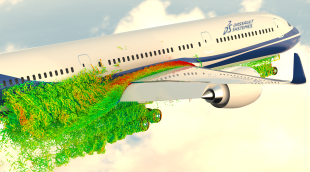
Leverage high-fidelity flow simulations to improve the aerodynamic, acoustics and thermal performance of gas turbine engines while reducing physical tests
Process
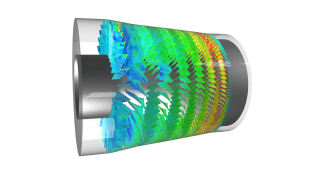
Multidisciplinary Trade-Off Analysis
Perform virtual design exploration and trade-off studies to increase innovation, reduce physical prototyping, reduce rework costs, and speed time to market
Process
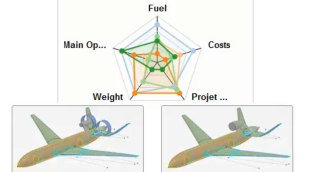
Rotorcraft & eVTOL Vehicle Aerodynamic and Aeroacoustic Performance
Increase efficiency, reduce noise, costs, and time-to-market of rotorcraft and eVTOL vehicles with an integrated design, simulation and optimization process
Process
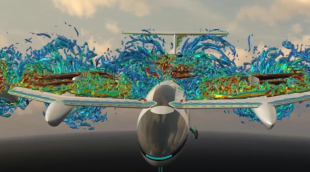
Sub-system Level Structural Validation
Perform simulation-based structural validation of airframe designs from sub-system level to coupon level, to reduce testing cost and improve product performance
Process
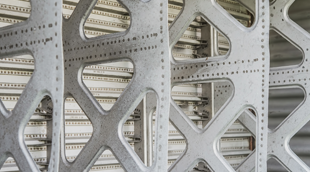
Validation & Verification Strategy, Execution & Analytics
Plan and execute product design validation & verification strategy to ensure all target requirements are met on time and on budget
Process

Aerospace System Electromagnetic Performance
Develop and virtually validate the performance of aircraft systems when subject to electromagnetic environmental effects such as lightning strike
Process
FAQs about Turbomachine & Aircraft Propulsion
Also Discover
Commercial Aircraft Design
Design faster, safer, and more sustainable aircraft with SIMULIA on the 3DEXPERIENCE platform — integrating high‑fidelity multiphysics simulation and MODSIM.
Defense Aircraft Design
Optimize defense aircraft design, achieve advanced stealth, aerodynamics, and structural integrity through high-fidelity simulations with SIMULIA solutions.
Learn What SIMULIA Can Do for You
Speak with a SIMULIA expert to learn how our solutions enable seamless collaboration and sustainable innovation at organizations of every size.
Get Started
Courses and classes are available for students, academia, professionals and companies. Find the right SIMULIA training for you.
Get Help
Find information on software & hardware certification, software downloads, user documentation, support contact and services offering