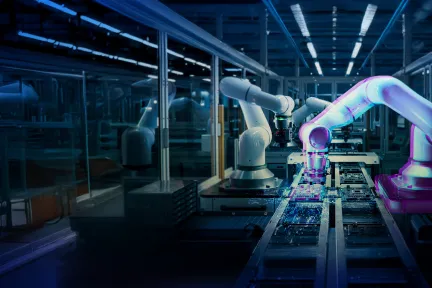

Explore how smart grid technologies powered by virtual twins can help us create a more resilient and sustainable tomorrow.
Podcast

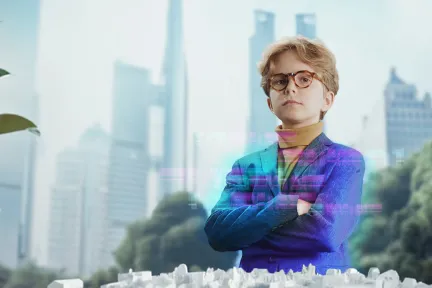
Discover how urban planners can leverage virtual twins to transform our cities for a resilient future.
This is the third part of our series dedicated to biodiversity preservation. In this episode, we dive into the bio-circular strategy of balancing growth with biodiversity protection in the infrastructure and cities industry.
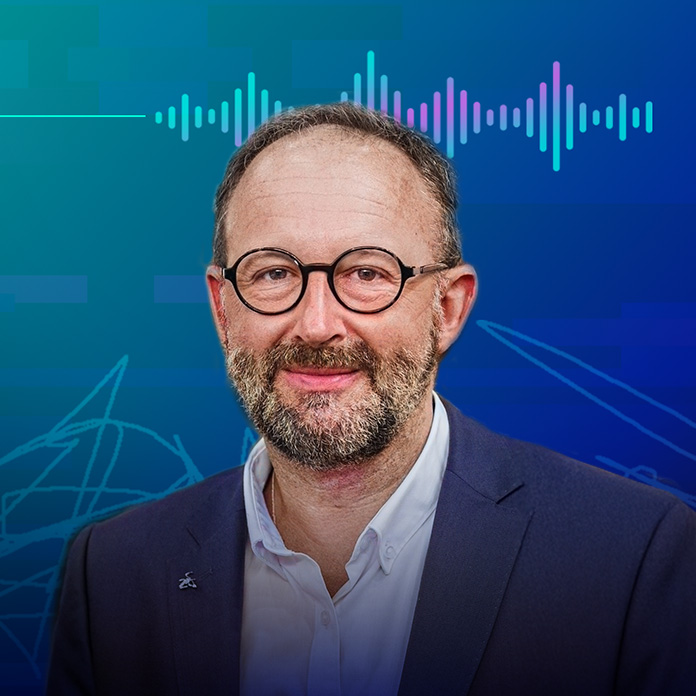
Join Dassault Systèmes expert Emmanuel Bois to find out how virtual twin technology helps urban planners rethink design, infrastructure and policy to build greener buildings and resilient public spaces through smarter land use.
Curious to learn more? Check out our additional resources dedicated to bio-circularity or listen to previous episodes of our biodiversity preservation series about life sciences and manufacturing.


We have to think the city differently. We have to change our mindset in designing the city.”
Emmanuel Bois
Narrator: Welcome back to Disruptors Unleashed, where we explore disruptive technologies and chat with the trailblazers who are redefining industries as we know them. In our last episode, Dassault Systèmes expert Raymond Wodar shared his insights into how consumer packaged goods manufacturers can embrace bio-circularity practices to increase sustainability and cost efficiency.
This is the third part of our series dedicated to biodiversity preservation. In this episode, we're taking a closer look at how the virtual twin solution can help reshape urban planning with both people and nature in mind. Join our expert, Emmanuel Bois of Dassault Systèmes, as he highlights how the 3DEXPERIENCE® platform empowers city planners to optimize urban design and development while balancing growth sustainably.
Emmanuel Bois: First of all, I would like to mention three primary challenges due to increasing urban population: 80% of the growth domestic product (GDP) is already concentrated in urban areas. That's a fact today. Secondly, by 2030, worldwide urban expansion is projected to alter 290,000 square kilometers of natural environments. That's a lot. And finally, by 2050 nearly 80% of the worldwide population will be living in urban areas.
We can see that this rapid urban population growth is putting an immense pressure on land, natural resources and urban infrastructures, which necessitates the expansion of urban areas. That means roughly 5 trillion USD of investment will be needed in urban infrastructures worldwide per year. This is according to the World Bank.
This will be done most often at the expense of natural habitats, which most of the time can lead to a biodiversity loss. That's an immense pressure. For this reason, we believe that effective urban planning must balance the need for housing and infrastructure with the preservation of green spaces and ecosystems.
I would also like to say that the increasing urban population means an increased demand for resources, higher carbon emissions, increased soil sealing and loss of biodiversity. That means urban areas must become more resilient to climate impacts while also protecting and enhancing biodiversity.
Climate change affects biodiversity also throughout the temperature and precipitation patterns. We can see it in the news every day. That can disrupt ecosystems as well. We can hear a lot about heat islands, heat waves, extreme weather events: changing environments can threaten species survival and reduce biodiversity.
For instance, the surface temperature in cities can sometimes be up to 5 to 10 degrees higher than in rural areas. That happens in France, that happens worldwide. There has been a 24% increase of people living in flood-prone areas between 2000 and 2015.
Of course, these impacts vary significantly. For instance, coastal cities may face sea level rise and ecosystem loss for marine species, while inland cities might experience more intense heat waves, droughts, wildfires, flooding. The type and quality of urban development and the amount of existing green infrastructure also play crucial roles in determining these impacts.
Emmanuel Bois: We have to think the city differently. We have to change our mindset in designing the city.
For instance, we need to rethink densification, that means a compact urban design. We need to support green building standards, for instance, new materials, eco-friendly materials. We also need to design low carbon emission infrastructures, and we have technical solutions for that. And finally, we need to protect natural ecosystems within urban areas such as integrating biodiversity corridors. That's, I would say, an introduction to the first priority, but let's go a little bit into detail if you don't mind.
Repurposing and rehabilitating buildings: that means to allow for already existing building to get them a second life and for the ones to be built to be constructed with a short and long-term vision of what purposes they will serve. And this is new in the mindset. We can see it every day in the news.
For example, in France, there are a lot of talks today about the future of the schools. What could be done with the schools, with the land schools are built on for other usage than the schools themselves. You know, for example, for the weekends or during bank holidays. So that's an example, but there's so many around us.
Public spaces and green infrastructure are also key. They help mitigate climate change by reducing urban heat islands, improving air quality and managing storm water. They provide environments for various species, thus supporting biodiversity.
Just two examples: One is in Singapore. Singapore's gardens by the bay. They integrate diverse plant species and promote biodiversity within an urban setting, which is very dense.
Another example here in France, we worked on within Dassault Systèmes. We worked together with a French city to identify and create an index of the existing vegetation ecosystem in a collaborative platform in order to improve the quality and lifetime of the existing biodiversity.
And I would like to mention an even more recent example we worked on close to Paris, in Meudon. We worked on heat islands effect within Meudon and we helped the city to decide and to make the best solutions to reinvent public spaces within the city of Meudon.
Finally, I would just say a word about transportation ability, which is also key to reduce carbon emissions and minimize impact on local wildlife. We need to promote public transportation, cycling and walking within urban areas, because these solutions can significantly reduce carbon emissions and pollution.
Additionally, designing wildlife-friendly infrastructure such as green bridges and underpasses can help minimize the impact on local wildlife.
Emmanuel Bois: Well, virtual twins help create digital replicas of urban environments and their carbon emissions. Because all the data which is available will be put in a single solution, the collaborative platform, that will allow planners to simulate and analyze the impacts of different scenarios on carbon emissions and biodiversity.
This virtual twin will help in making informed decisions that balance development with conservation. Virtual twins also provide simulation and predictive analytics. They enable planners to visualize the long-term impacts of urban development and their carbon emissions on climate and biodiversity.
It helps simulate various scenarios to define the most relevant ones and propose different paths of mitigation. This is a proactive approach and it helps in creating more sustainable and resilient urban environments.
Emmanuel Bois: First, I would like to mention that policies and incentives can take various forms and surround multiple aspects of biodiversity. There are a lot of effective policies which include zoning laws that protect green spaces, natural areas or natural parks for example, incentives for green building practices, regulations about soil sealing, incentives to reduce car congestion, etc. It depends on each country.
City leaders can assess national or local policies in the virtual twin crossed with their own objectives. For example, the air and climate plants in French cities over 20,000 inhabitants. Another example I would like to mention is we worked with the University of Moncton in Canada on a biodiversity corridor to identify where it should be done, what data should be involved in thinking it and protecting it and how it should evolve in the future.
The virtual twins allow both to understand the complexity of this corpus by listing all the prerequisites in a collaborative tool and to make various simulations before taking enlightened decisions. The community engagement is also very important because the virtual twin allows to present future projects to citizens in a very pedagogic way. Thus, it allows to engage citizens in the projects and decisions taken.
Emmanuel Bois: I would mention as an example, because there are as many policies as countries and regions, but in France here we have a law which is called Zero Artificialization Net and which is quite powerful because by 2030 in urban areas for each square meter built, you will need to mitigate and to have one square meter of natural land. So that's very simple, but that allows at least not to spread urban areas too much in the grounds and to protect biodiversity. That's just an example, but there are a lot of examples worldwide.
We can mention five main factors which influence on biological diversity. First of all, the first one is the transformation of natural environments into artificial environments. The second factor is the diverse pollutions which include pollution of air, ground, water, noise and light as well. The third one is over-exploitation of natural resources. The fourth one is the climatic changes, which include of course flooding, we've said a word about it before, but also heat islands for example. And the last one is the introduction of exotic invasive species.
So, we can see that the virtual twin allows to identify, simulate and take the best decisions on most of these parameters to protect the global biodiversity.
Narrator: Thank you, Emmanuel. It's been a pleasure having you on for this discussion. As cities grow and regulatory pressures on sustainability intensify, biodiversity can't be an afterthought. It has to be integrated from the beginning of urban planning. With the virtual twin solution, planners can visualize and simulate urban impacts to make smarter, biodiversity-positive decisions. That's it for today's episode. We'll see you in our next one.
Curious how urban developers are achieving bio-circular success? Download our ebook to unlock actionable strategies powered by the virtual twin.
Disruptors Unleashed is produced by Dassault Systèmes. For more episodes, follow us on Apple Podcasts, Spotify, Deezer, or your nearest audio streaming platform. To learn more about Dassault Systèmes, visit us at 3ds.com.

Our well-being - along with that of the entire ecosystem - depends on biodiversity. And our economy is no exception.

Transform data into action to plan smarter and mitigate climate change with the city virtual twin.

How businesses can leverage virtual twin-powered strategies to protect biodiversity while unlocking new revenue streams.
Explore how smart grid technologies powered by virtual twins can help us create a more resilient and sustainable tomorrow.
Podcast

Discover how urban planners can leverage virtual twins to transform our cities for a resilient future.
Podcast

Learn how virtual twins can help manufacturers optimize lifecycle management and unlock cost savings through sustainable sourcing and eco-design.
Podcast

Discover how rethinking R&D in life sciences and healthcare fosters biodiversity preservation and medical innovation.
Podcast

Discover how Education Experiences equip today’s students with industry-ready skills to engineer a more sustainable tomorrow.
Podcast

Explore how modular construction and digital innovation are reshaping the building industry to enable more efficient, sustainable urban development.
Podcast

Learn how cities’ virtual twins can foster climate resilience and empower communities to adapt and thrive in a changing world.
Podcast

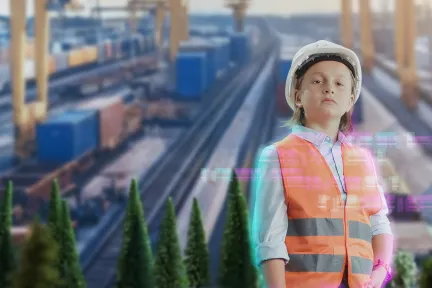
Join 9-year-old Infrastructor Bernardo as he explores how virtual twins enable bold energy solutions to decarbonize rail freight.
Podcast

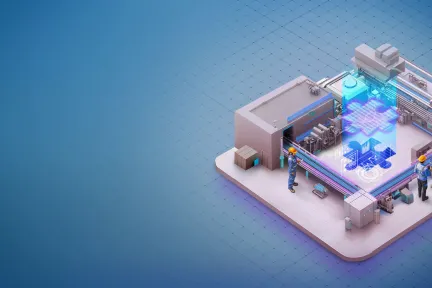
Explore how Dassault Systèmes delivers the missing piece, connecting people, data and processes for end-to-end manufacturing transformation.
Podcast

Learn how the 3DEXPERIENCE platform harnesses collective intelligence, empowering organizations to confront sustainability challenges for a greener future.
Podcast

Discover how the virtual twin fosters end-to-end collaboration across product engineering, manufacturing planning, scheduling and operations.
Podcast

Get the full story on how emerging technologies are transforming the way we teach our engineering students.
Podcast

Discover how virtual twin experiences are shaping the future of industrial equipment manufacturing.
Podcast

Explore the cutting-edge world of virtual twins and their transformative impact on the industrial equipment industry.
Podcast

Discover how seamless collaboration, cloud-enabled apps and effective knowledge re-use accelerate creating innovative high-tech experiences
Podcast

Learn how virtual twin experiences are set to revolutionize medical device design, clinical trials and patient treatments.
Podcast

From the surge in electrification to the advent of software-defined vehicles, these trends compel automotive businesses to innovate faster and more efficiently.
Podcast

Tune in to explore how virtual twin technology enables top aerospace companies to manage conflicting trends, speed up development and reduce costs.
Podcast

Get expert insights on how businesses can empower their engineering teams to achieve greater speed, efficiency and performance through MODSIM.
Podcast

What does a sustainable city of the future look like? Listen to a preview of the Building Tomorrow five-part documentary series.
Podcast

How can the virtual twin help reduce the environmental impact of building a sustainable tower? Bastien Hillen from Dassault Systèmes has the answer.
Podcast

Everything you’ve ever wanted to know about productization — a modular approach to product design — and its impact on the construction industry.
Podcast

We take a peek into Building Tomorrow, a five-part documentary series that examines what a sustainable city of the future will look like.
Podcast

Tune in to learn how In-space Servicing, Assembly and Manufacturing (ISAM) technologies power a more sustainable space environment and economy.
Podcast

Circularity embraces a fundamental economic transformation that redefines product design, the materials used and how businesses operate.
Podcast

Making circular economy achievable, scalable and profitable.
Podcast

Transform how you do business through circular supply chains to achieve profitability and lasting success.
Podcast

Applying Eco-design Principles for the Entire Product Lifecycle
Podcast

Embracing Circularity into Product Development through Sustainable Materials
Podcast

Tune in to discover how digital transformation raises inventory management to new heights, unlocking new horizons for manufacturing success.
Podcast