Transforming Infrastructure & Cities for Your Business and Their Future

#31: How Does Modular Construction Shape Our Future?
Explore how modular construction and digital innovation are reshaping the building industry to enable more efficient, sustainable urban development.
#31: How Does Modular Construction Shape Our Future?
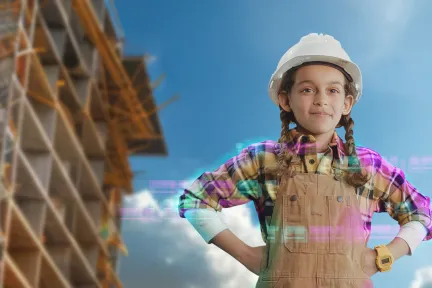
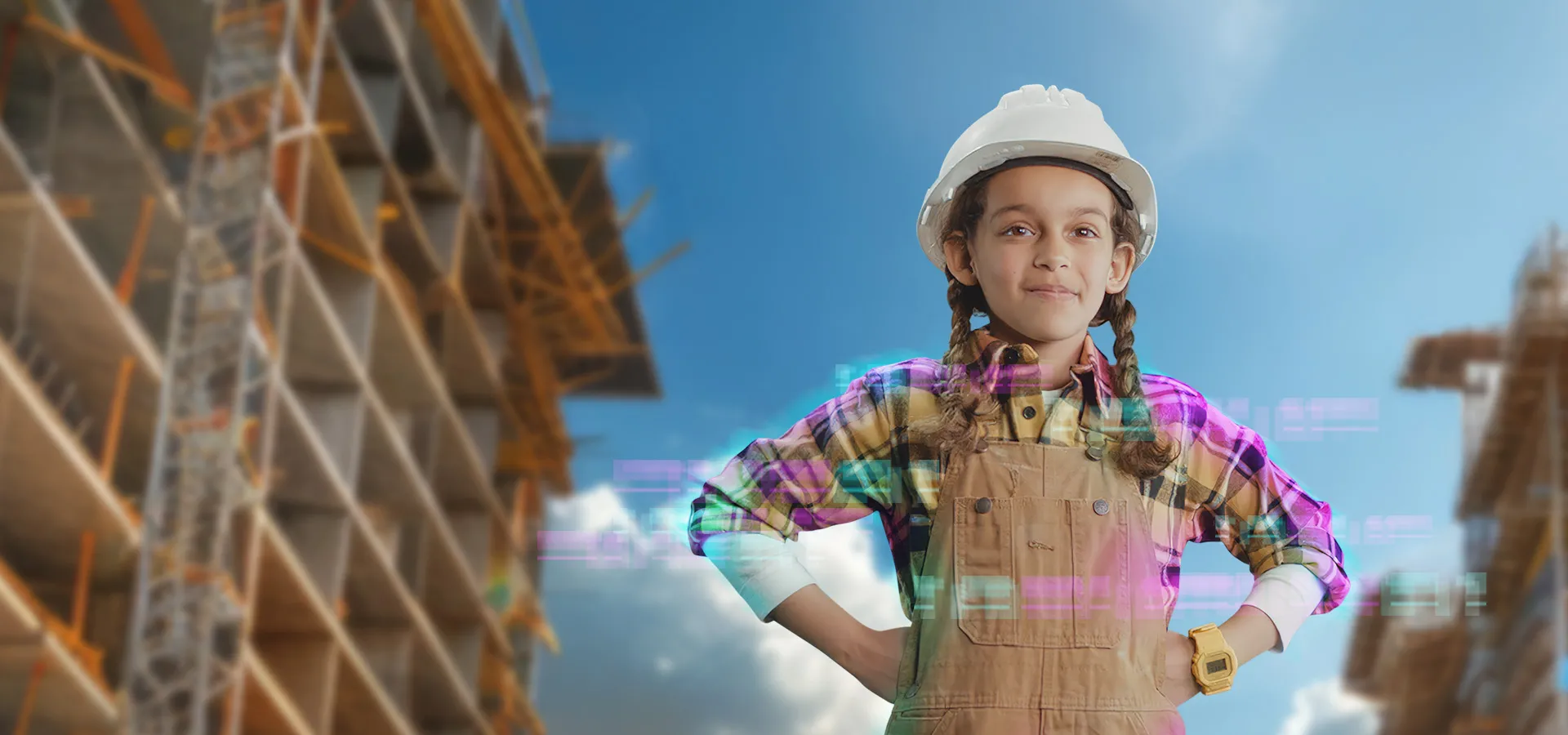
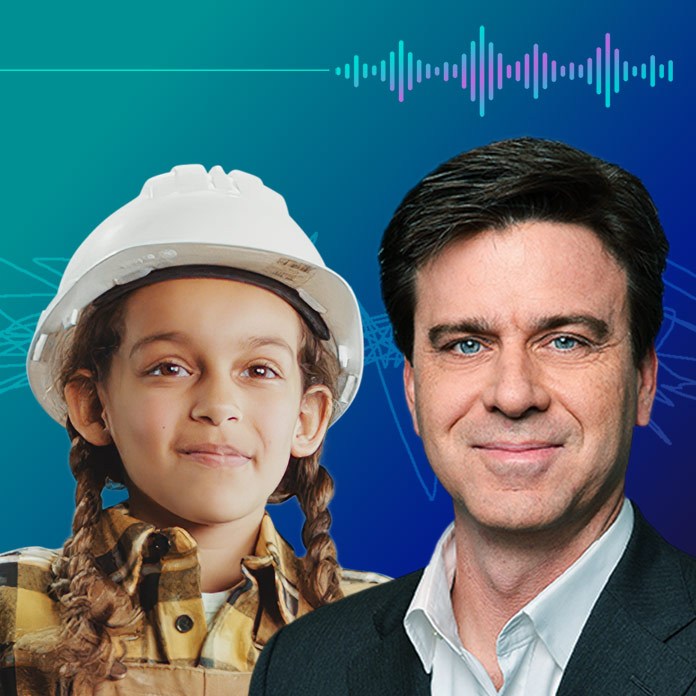
Join 9-year-old Infrastructor Victoria and Architecture, Engineering & Construction expert Marty Doscher as they explore how modular construction and virtual prototyping can help the building industry tackle challenges such as waste, inefficiency and a growing skills gap.
This episode is part of the Infrastructors project. Click here to find out more.
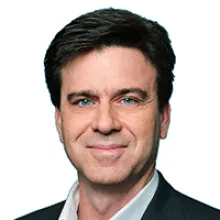
Meet our speakers


By virtually building first, we can work out all of the challenges, optimize all of the processes and we only have to build one time and we get it right.”
Marty Doscher
Read the transcript
Narrator: Welcome back to Disruptors Unleashed, where we explore bold, disruptive ideas and chat with the trailblazers who are redefining industries as we know them. In our previous episode, we listened to 10-year-old Infrastructor Virgil and Alex de Sá from Dassault Systèmes as they discussed how virtual twins can build climate-resilient cities.
Today, we continue with our exciting miniseries featuring our very own Infrastructors. The Dassault Systèmes Infrastructors are the small but mighty engineers, builders and designers of tomorrow who are asking the big questions, like how can our infrastructure and cities change to tackle the challenges of today and tomorrow?
I’ve got a special guest joining me today: Our 9-year-old Infrastructor Victoria. She’ll be speaking with Marty Doscher, one of our leading experts in the Architecture, Engineering & Construction industry. We invited Marty today to talk about one of the major trends reshaping these industries: Modular construction — and it can help us tackle longstanding problems around skills, waste and sustainability. The mic’s all yours, Victoria.
Marty Doscher: Hi, I’m Marty Doscher. I’m an Industry Business Consultant Director on the Architecture, Engineering & Construction industry team at Dassault Systèmes. I have about 12 years of experience in this role and prior to that, I bring about 20 years of experience in the design and construction of the built environment.
Marty Doscher: So, why is a building site so messy? The construction process is generally treated like a first of a kind. So, for any given construction site, a bespoke design is created. A team is coming together – often for the first time – and materials are oftentimes ordered at the wrong time. There’s no proper storage to keep those materials out of the elements on the job site. And there’s so much moving equipment, moving materials, moving teams of people, all trying to manage the constraints of the job site, manage the travel to and from the job site, manage the impact in terms of noise, waste, flow, energy and water to the job site. And so, all of this chaos – in an approach where it’s the first time these people have come together, the first time they’ve done this building on this site for this project – translates to a huge amount of waste, noise and disruption to the local neighbors.
As much as a quarter of the total amount of waste that we generate comes from construction, demolition and new construction. A quarter of the total amount of waste. So, you can imagine the noise. In an urban context, the noise that’s generated by construction is one of the most important sources of noise pollution in our cities. So, it really is important for us to take a look at how we build so that, as you pointed out, we’re not really disrupting your life, too.
Marty Doscher: So, the industry ranges vary about the cost of the waste and inefficiency of traditional means of construction. A few of the indicators that we follow: The average cost to an owner to manage a misunderstanding or a lost bit of information on a construction project generally ranges around €1,500 or $1,500 for each bit of information which is not fully understood by the construction team.
Oftentimes on projects, there are hundreds – sometimes even thousands – of these bits of information that are unknown or not fully understood, which adds up to a very large cost to owners just to have people in the field clear about what they need to do.
There’s a common practice in construction to hold aside what’s called a contingency for things that could go wrong in construction, because it’s so unpredictable out in the field. Oftentimes, that construction contingency – for mistakes or for design errors or for whatever reason – can run as much as 10% of the cost of construction or more. If the process was allowed to run virtually, where you use advanced construction planning processes, virtual prototyping processes, and you use design generation and construction methods generation, you can basically give back that 10% to the project by eliminating all the waste and rework that happens when you’re not doing things and creating errors the first time in the field.
Victoria: 10%? I can imagine when these projects get super expensive, that’s quite a lot. I’m starting to see the value of what we’re doing here.
Marty Doscher: Another key challenge is the amount of material waste that happens on a project, because when construction projects are first planned, there’s so much unknown. The amount of materials that are actually ordered to be consumed by the project is sometimes 10, 15, 20% more than you actually will need if you were to optimize the use of those materials. So, even by better planning and virtually prototyping the project by having a construction virtual twin, you can really dial back the amount of materials that you’re wasting by buying more than you really actually will need when you go to build the project.
Victoria: I see, so you can do everything virtually before you put it into practice in real life. I get it, but it sounds like a lot of extra steps. Why is that the best way to do things?
Marty Doscher: So, by virtually encapsulating their know-how and connecting that to generative design systems and generative planning systems, we’re able to take their wealth of experience and pilot the actual work that’s happening either on-site or off-site, and to virtually build before anyone ever starts building in the factory or field. And, by virtually building first, we can work out all of the challenges, optimize all of the processes and we only have to build one time and we get it right.
The challenge today is that in traditional kinds of construction, all of that noise is coming from the chaos of physically prototyping, physically building things the first time in the field without sufficient amount of planning and practice and testing. And by running the build process virtually, we’re able to eliminate all of that chaos, so that when people get into the factory or into the field, they’ve already built it virtually, they’ve practiced, they’ve optimized and things run much more smoothly.
Marty Doscher: Well, that’s right, Victoria. Around the world, there are hundreds of thousands of unfilled job openings for skilled and unskilled work in construction. This shortage of construction skilled labor is really impacting the built environment, and definitely, switching to modular construction will help that. To do this, I think we need to change the way that we’re training the construction workforce of the future.
Dassault Systèmes is working with some of the leaders in this change and helping to train the young designers and the young construction managers and the young tradespeople to work in a new way. Most of the rest of the sectors have already adopted digitalization, advanced technologies, online presence. And we’re teaching the construction workforce of the future to work this way also.
Victoria: I guess that could include me!
Marty Doscher: By adopting these digital tools, by adopting and integrating digital technology into their physical work and learning new ways of modeling, of simulating, of virtually prototyping and building computationally before they build physically.
We’re working, for example, with Professor David Gerber at the University of Southern California to look at large global challenges related to the circular economy, related to affordability of housing, related to the challenge of urbanization and how we can use modular construction and design for modular construction, so that the next construction workforce is able to learn from things like manufacturing and digital technologies to really make an impact on the livability of the planet.
Victoria: That makes sense.
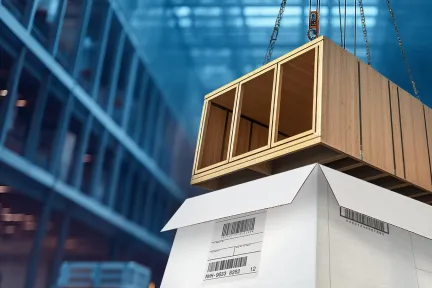
Marty Doscher: An exciting new material is the range of new products using mass timber. So, for example, new kinds of building structures for small and even large buildings take advantage of fast-growth wood for sustainable forestry into new kinds of structural wood products that then take the place of other kinds of construction materials like steel or concrete that maybe don’t have the same circular economy benefits. The advanced manufacturers that are working with those kinds of products are also coming up with new hybrids, where they combine high-performance concrete, new composite materials, those timber products, and even are designing stronger, stiffer, more sustainable kinds of building structures — even new facade panels where you can express that comfortable wood finish in a kind of multipurpose way.
So, in all of the different layers of a building, you’re finding these product companies innovating, engineering new kinds of products, new kinds of assemblies and new kinds of systems that are totally transforming the way that we build our buildings.
Victoria: This sounds super cool.
Marty Doscher: One of our pioneers that’s leading the charge here is Piveteaubois, whose mission is to get the most out of a single timber that they extract from the forest. So, by sustainably harvesting the forest, by getting the most out of every single tree, and by finding a way to more sustainably get that into the building – they’re with CLT, which stands for cross-laminated timber – or other kinds of products, they’re able to deliver the buildings more efficiently, produce them off-site, reducing a lot of that waste associated with traditional construction and allowing the contractor, the occupant, to enjoy the benefits of these new kinds of products.
Victoria: Wow, that’s so interesting! Thanks for explaining everything. I think my neighbors could really do with some modular construction for the kitchen.
Marty Doscher: Thanks for having me, Victoria. It was really great to be with you. I’d love to share the advances we’re making with modular construction. And I really hope that your neighbors can really finish their project soon so your life can get back to normal.
Victoria: Me, too. Okay, Yani, over to you!
Narrator: Thank you, Victoria and Marty, for joining us today and sharing your expertise. It’s been an absolute pleasure having you on the podcast.
Tune in to Disruptors Unleashed if you’re curious to hear from other Infrastructors on the biggest challenges impacting our infrastructure and cities. ‘Til next time!
Disruptors Unleashed is produced by Dassault Systèmes. For more episodes, follow us on Apple Podcasts, Spotify, Deezer, or your nearest audio streaming platform. To learn more about Dassault Systèmes, visit us at 3ds.com.
Learn More
Modular construction is one of the path towards industrialization of the construction industry. Now, what is the most efficient way to achieve Modular? Let’s unpack the process.

Discover how productization revolutionizes construction project management with enhanced efficiency, sustainability and new tech-driven operational models.

Foster students employability with multi-stakeholder collaborative experience that build skills to lead industry innovation and societal change.

Recently Aired
Explore how smart grid technologies powered by virtual twins can help us create a more resilient and sustainable tomorrow.
Podcast

Discover how urban planners can leverage virtual twins to transform our cities for a resilient future.
Podcast

Learn how virtual twins can help manufacturers optimize lifecycle management and unlock cost savings through sustainable sourcing and eco-design.
Podcast

Discover how rethinking R&D in life sciences and healthcare fosters biodiversity preservation and medical innovation.
Podcast

Discover how Education Experiences equip today’s students with industry-ready skills to engineer a more sustainable tomorrow.
Podcast

Explore how modular construction and digital innovation are reshaping the building industry to enable more efficient, sustainable urban development.
Podcast

Learn how cities’ virtual twins can foster climate resilience and empower communities to adapt and thrive in a changing world.
Podcast

Join 9-year-old Infrastructor Bernardo as he explores how virtual twins enable bold energy solutions to decarbonize rail freight.
Podcast

Explore how Dassault Systèmes delivers the missing piece, connecting people, data and processes for end-to-end manufacturing transformation.
Podcast

Learn how the 3DEXPERIENCE platform harnesses collective intelligence, empowering organizations to confront sustainability challenges for a greener future.
Podcast

Discover how the virtual twin fosters end-to-end collaboration across product engineering, manufacturing planning, scheduling and operations.
Podcast

Get the full story on how emerging technologies are transforming the way we teach our engineering students.
Podcast

Discover how virtual twin experiences are shaping the future of industrial equipment manufacturing.
Podcast

Explore the cutting-edge world of virtual twins and their transformative impact on the industrial equipment industry.
Podcast

Discover how seamless collaboration, cloud-enabled apps and effective knowledge re-use accelerate creating innovative high-tech experiences
Podcast

Learn how virtual twin experiences are set to revolutionize medical device design, clinical trials and patient treatments.
Podcast

From the surge in electrification to the advent of software-defined vehicles, these trends compel automotive businesses to innovate faster and more efficiently.
Podcast

Tune in to explore how virtual twin technology enables top aerospace companies to manage conflicting trends, speed up development and reduce costs.
Podcast

Get expert insights on how businesses can empower their engineering teams to achieve greater speed, efficiency and performance through MODSIM.
Podcast

What does a sustainable city of the future look like? Listen to a preview of the Building Tomorrow five-part documentary series.
Podcast

How can the virtual twin help reduce the environmental impact of building a sustainable tower? Bastien Hillen from Dassault Systèmes has the answer.
Podcast

Everything you’ve ever wanted to know about productization — a modular approach to product design — and its impact on the construction industry.
Podcast

We take a peek into Building Tomorrow, a five-part documentary series that examines what a sustainable city of the future will look like.
Podcast

Tune in to learn how In-space Servicing, Assembly and Manufacturing (ISAM) technologies power a more sustainable space environment and economy.
Podcast

Circularity embraces a fundamental economic transformation that redefines product design, the materials used and how businesses operate.
Podcast

Making circular economy achievable, scalable and profitable.
Podcast

Transform how you do business through circular supply chains to achieve profitability and lasting success.
Podcast

Applying Eco-design Principles for the Entire Product Lifecycle
Podcast

Embracing Circularity into Product Development through Sustainable Materials
Podcast

Tune in to discover how digital transformation raises inventory management to new heights, unlocking new horizons for manufacturing success.
Podcast