
Transforming Infrastructure & Cities for Your Business and Their Future

#32: How Can We Empower the Engineers of Tomorrow?
Discover how Education Experiences equip today’s students with industry-ready skills to engineer a more sustainable tomorrow.
#32: How Can We Empower the Engineers of Tomorrow?
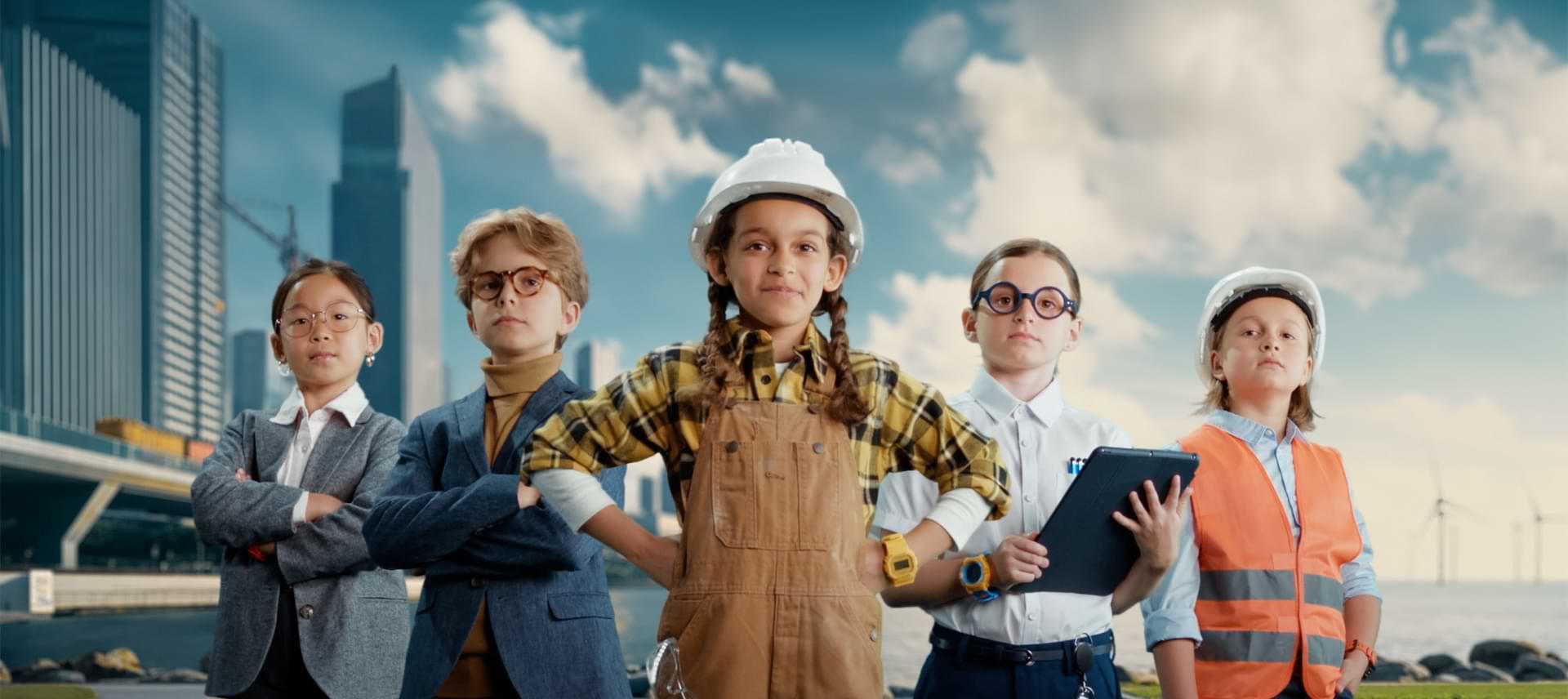
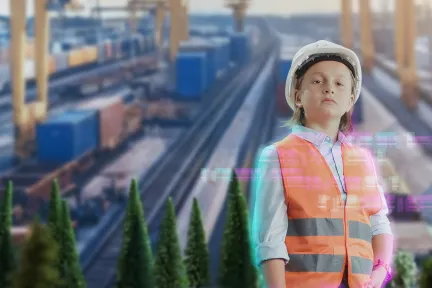
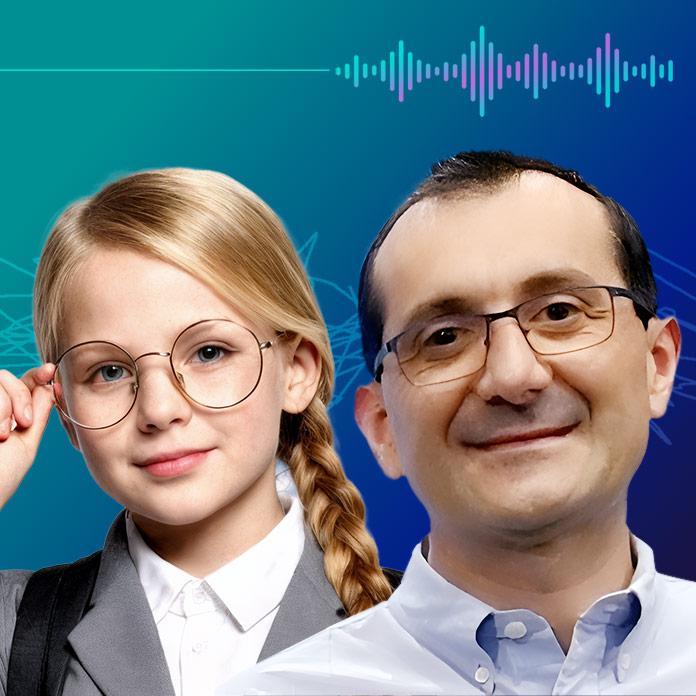
In the face of a growing skills gap, how can we empower tomorrow’s workforce with industry-ready skills? Join 9-year-old Infrastructor Amy as she chats with Thierry Chevrot from 3DEXPERIENCE® EDU about bridging this gap through 3D modeling, simulation and sustainability know-how.
This episode is part of the Infrastructors project. Click here to find out more.
Meet our speakers


We provide industry inside the walls of the classroom, thanks to Education Experiences and the virtual twin — providing industry use cases that are the perfect place, the perfect playground for having kids and students to really be empowered and start to develop the right skills.”
Thierry Chevrot
Read the transcript
Narrator: Welcome back to Disruptors Unleashed, where we explore bold, disruptive ideas and chat with the trailblazers who are redefining industries as we know them. Previously, we heard about modular construction and its impact on the building industry from 9-year-old Infrastructor Victoria and Dassault Systèmes’ Marty Doscher.
Today, we continue with our miniseries featuring our very own Infrastructors. The Dassault Systèmes Infrastructors are the small but mighty engineers, builders and designers of tomorrow who are asking the big questions, like how our infrastructure and cities need to change to tackle the challenges of today and tomorrow.
Joining me today is our Infrastructor Amy, who’s taking the mic to chat with our 3DEXPERIENCE EDU lead, Thierry Chevrot, about how we can ensure students today excel as the engineers of tomorrow. The floor’s all yours, Amy!
Thierry Chevrot: Hi, I’m Thierry Chevrot from 3DEXPERIENCE EDU, the education department of Dassault Systèmes, and I’m supporting the teachers and students around the world on our technology.
Amy: So, I really don’t want to do this math homework. Why is math so important? Don’t we have computers to do this now?
Thierry Chevrot: Okay, Amy. Computers are very powerful, even technologies like AI — you know that. But do you know that math is even more amazing, because it’s like the secret language that makes everything smart work? Math is literally behind everything. It moves globally with science to help us build amazing structures, amazing cities, create super-smart robots and make computers that can learn and help us in so many ways. It’s like the ultimate superpower for making the world smarter and certainly cooler in the future. And something important, Amy, as with all new technology, is that it needs humans to direct it. So, you will be part of it.
Amy: Uh-oh, does that mean I’ll need to do more math?
Thierry Chevrot: You’ll definitely need math. But you will need other skills as well, from 3D modeling to sustainable engineering. 3D modeling is key; it’s the natural language of the engineer. You’re thinking, you’re dreaming on innovation that’s going to be impactful, but how can you translate what you have in mind and share it with engineers to ensure that your ideas and your concept are going to be produced in real life?
And when it’s about sustainable engineering, I’m quite sure that you want to have a meaningful impact regarding sustainability and being sure that everything you do is positively impacting the planet, okay? So, for that, our technologies are addressing this language and the grammar, if I may say, that is, sustainability at the core.
Amy: Sustainability at the core? What does that mean?
Thierry Chevrot: It means that everything you are thinking about with 3D modeling will allow you to articulate that for having a sustainability impact.
Thierry Chevrot: Products are getting more and more complex. By connecting and taking advantage of the connection of different disciplines and industry knowledge and to be able to make that possible, it’s a question of, in the virtual world, being capable to model in 3D, but also to test and innovate and try as many possibilities as possible very quickly and efficiently. It’s a question, for example, of imagining a new material that will be 100% recyclable. It’s the possibility to test new concepts of mobility, new concepts of energy, trying to have new energy sources. So, the potential is so huge.
It’s the question of ensuring that engineers – people who are innovators – can be merged in a place, what we call 3D UNIVERSES, where all this technology can be connected together to be ultra-efficient, to be ultra-reactive and to be, at the end of the day, ultra-creative.
Amy: Wow! Can today’s engineers already do this? I’ve heard there’s a skills gap.
Thierry Chevrot: Amy, this question is really critical because if we’re not addressing this skills gap, that means that the industries that are going to transfer such types of innovative concepts to real life, they won’t have the people knowledgeable with the right skills to be able to define it properly, to innovate on it, to produce them and so on. So, that means that there will be a bottleneck and you will have two populations: One with people like you — very innovative, very committed to being impactful in terms of sustainability and on the other side, having companies not being able to really transform this creativity into something concrete, something in real products or services that have an impact on the world.
So, we are there, connecting you innovators, thanks to your teacher, to connect your school with the industry reality, to be a facilitator that connects the dots and the people and ensures that this talent pipeline with the right skills is really smooth and efficient.
Thierry Chevrot: At the end of the day, we are just people who are facilitators, knowing the constraints of both worlds and ensuring that we provide everything to the academic institution, to the teacher and the student for an engaging learning experience that is as close as possible to what is expected in the industry. It’s what we call industry-realistic education experience. We provide industry inside the walls of the classroom, thanks to Education Experiences and the virtual twin — providing industry use cases that are the perfect place, the perfect playground for having kids and students to really be empowered and start to develop the right skills.
Thierry Chevrot: What we are providing is to ensure that we are always something that is more realistic. Realistic means what the industry is working on, okay?
Imagine if your experience is really focused on theory – theory in math, theory in physics – and on the other side, the industry is expected to really innovate. That means that all these ideas, these concepts, these theoretical stuff, have to be applied, have to be modeled, have to be assessed in the virtual world to ensure that the innovation will have an impact. So, it’s putting it in the hands of the teacher when it’s about supporting academic transformation, but it’s also the same when we’re supporting students in the student competition. It’s providing them the know-how of the industry that has been adapted to the audience to ensure that it respects their constraints and it respects that it will be seamless, because what we want is an innovator, a student, a teacher that is motivated to really empower their students. They have no obstacles, no hurdles. It’s ultra-smooth to transform creativity into something that’s a project that can be transferred to the real world.
Thierry Chevrot: Let’s take the example of FIRST Robotics. It’s a robotics competition that addresses high school pupils. And they’re really addressing complex topics, because a robot is a mechatronic system, meaning that it’s a combination of mechanics, electronics, coding and other stuff. And they’re able to design it in 3D to test in the virtual world and produce it, because very often I said that curiosity is important, but the maker spirit is also important — being able sometimes to tinker and produce what you have dreamed with 3D.
Amy: Sounds like a lot of fun! I bet it’s super exciting to be on the winning team.
Thierry Chevrot: You can see the smile and the sparkle in the eyes of those pupils and that demonstrates that we win with this. We win with this because at the end of the day, this is not only a simple robot; this is something that conveys all the positivity and energy to create tomorrow’s innovator.
Amy: And then? What’s next?
Thierry Chevrot: And when you go to higher education, at the end of the day, you’re closer to industrial employability. So, the challenge has to be more challenging, if I may say that.
Amy: I know this!
Thierry Chevrot: With the Formula Student competition, they play exactly the same as a Formula 1 team, producing a 1-1 scale e-formula with very strong requirements and they play as a team with all the collaboration spirit, with all the discipline, knowledge and skills that are exactly the same as expected by the industry, and the competition is really amazing. And to make the connection and to ensure that we are addressing and we are able to onboard, if I may say that, any student around the world, we have created AAKRUTI.
Amy: AAKRUTI?
Thierry Chevrot: AAKRUTI is a design competition with drivers that align with the sustainability goals. So, for that, that’s something that’s scalable and replicable everywhere in the world. And we are ensuring that each single innovator from a school – because they’re motivated, because they’re curious to challenge themselves – they’re able to play the game, they’re able to demonstrate that their concepts are really interesting and impactful. So, this is, with this third approach, something that allows us at the end of the day to ensure that students – whether they’re part of an academic institution or whether they’re working within a club with a team of friends – they’re able to deploy their creativity in 3D with our solution and start to become and be recognized as innovators for the future.
Amy: Wow, this sounds so fun! It makes me want to start innovating right now. Thanks for showing me what’s out there.
Thierry Chevrot: You’re welcome, Amy. And I really believe in your generation. And it was really a pleasure to speak to you when I see how you’re engaged in sustainability and how you want to impact the world.
Amy: Back to you, Yani!
Narrator: Thank you, Amy and Thierry, for sharing such inspiring perspectives. Want to hear more? Tune in to Disruptors Unleashed to hear from other Infrastructors on the biggest challenges impacting our infrastructure and cities. ‘Til next time!
Disruptors Unleashed is produced by Dassault Systèmes. For more episodes, follow us on Apple Podcasts, Spotify, Deezer, or your nearest audio streaming platform. To learn more about Dassault Systèmes, visit us at 3ds.com.
Learn More
Unlock the potential of your students with the 3DEXPERIENCE platform. International competitions to foster student skills and collaboration.

Foster students employability with multi-stakeholder collaborative experience that build skills to lead industry innovation and societal change.

Teach the Life Cycle Assessment (LCA) methodology and bring a new circular mindset for a more sustainable future!

Recently Aired
Explore how smart grid technologies powered by virtual twins can help us create a more resilient and sustainable tomorrow.
Podcast

Discover how urban planners can leverage virtual twins to transform our cities for a resilient future.
Podcast

Learn how virtual twins can help manufacturers optimize lifecycle management and unlock cost savings through sustainable sourcing and eco-design.
Podcast

Discover how rethinking R&D in life sciences and healthcare fosters biodiversity preservation and medical innovation.
Podcast

Discover how Education Experiences equip today’s students with industry-ready skills to engineer a more sustainable tomorrow.
Podcast

Explore how modular construction and digital innovation are reshaping the building industry to enable more efficient, sustainable urban development.
Podcast

Learn how cities’ virtual twins can foster climate resilience and empower communities to adapt and thrive in a changing world.
Podcast

Join 9-year-old Infrastructor Bernardo as he explores how virtual twins enable bold energy solutions to decarbonize rail freight.
Podcast

Explore how Dassault Systèmes delivers the missing piece, connecting people, data and processes for end-to-end manufacturing transformation.
Podcast

Learn how the 3DEXPERIENCE platform harnesses collective intelligence, empowering organizations to confront sustainability challenges for a greener future.
Podcast

Discover how the virtual twin fosters end-to-end collaboration across product engineering, manufacturing planning, scheduling and operations.
Podcast

Get the full story on how emerging technologies are transforming the way we teach our engineering students.
Podcast

Discover how virtual twin experiences are shaping the future of industrial equipment manufacturing.
Podcast

Explore the cutting-edge world of virtual twins and their transformative impact on the industrial equipment industry.
Podcast

Discover how seamless collaboration, cloud-enabled apps and effective knowledge re-use accelerate creating innovative high-tech experiences
Podcast

Learn how virtual twin experiences are set to revolutionize medical device design, clinical trials and patient treatments.
Podcast

From the surge in electrification to the advent of software-defined vehicles, these trends compel automotive businesses to innovate faster and more efficiently.
Podcast

Tune in to explore how virtual twin technology enables top aerospace companies to manage conflicting trends, speed up development and reduce costs.
Podcast

Get expert insights on how businesses can empower their engineering teams to achieve greater speed, efficiency and performance through MODSIM.
Podcast

What does a sustainable city of the future look like? Listen to a preview of the Building Tomorrow five-part documentary series.
Podcast

How can the virtual twin help reduce the environmental impact of building a sustainable tower? Bastien Hillen from Dassault Systèmes has the answer.
Podcast

Everything you’ve ever wanted to know about productization — a modular approach to product design — and its impact on the construction industry.
Podcast

We take a peek into Building Tomorrow, a five-part documentary series that examines what a sustainable city of the future will look like.
Podcast

Tune in to learn how In-space Servicing, Assembly and Manufacturing (ISAM) technologies power a more sustainable space environment and economy.
Podcast

Circularity embraces a fundamental economic transformation that redefines product design, the materials used and how businesses operate.
Podcast

Making circular economy achievable, scalable and profitable.
Podcast

Transform how you do business through circular supply chains to achieve profitability and lasting success.
Podcast

Applying Eco-design Principles for the Entire Product Lifecycle
Podcast

Embracing Circularity into Product Development through Sustainable Materials
Podcast

Tune in to discover how digital transformation raises inventory management to new heights, unlocking new horizons for manufacturing success.
Podcast