



Explore how smart grid technologies powered by virtual twins can help us create a more resilient and sustainable tomorrow.
Podcast

Learn how virtual twins can help manufacturers optimize lifecycle management and unlock cost savings through sustainable sourcing and eco-design.
Tune in to the second part of our series dedicated to biodiversity preservation, where we discuss how leading manufacturers are reinventing their operations to protect biodiversity.
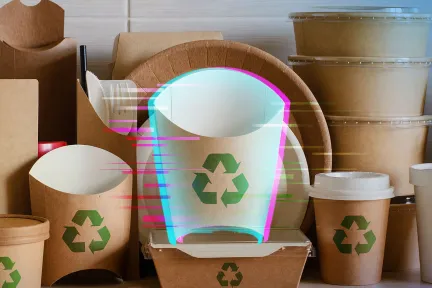
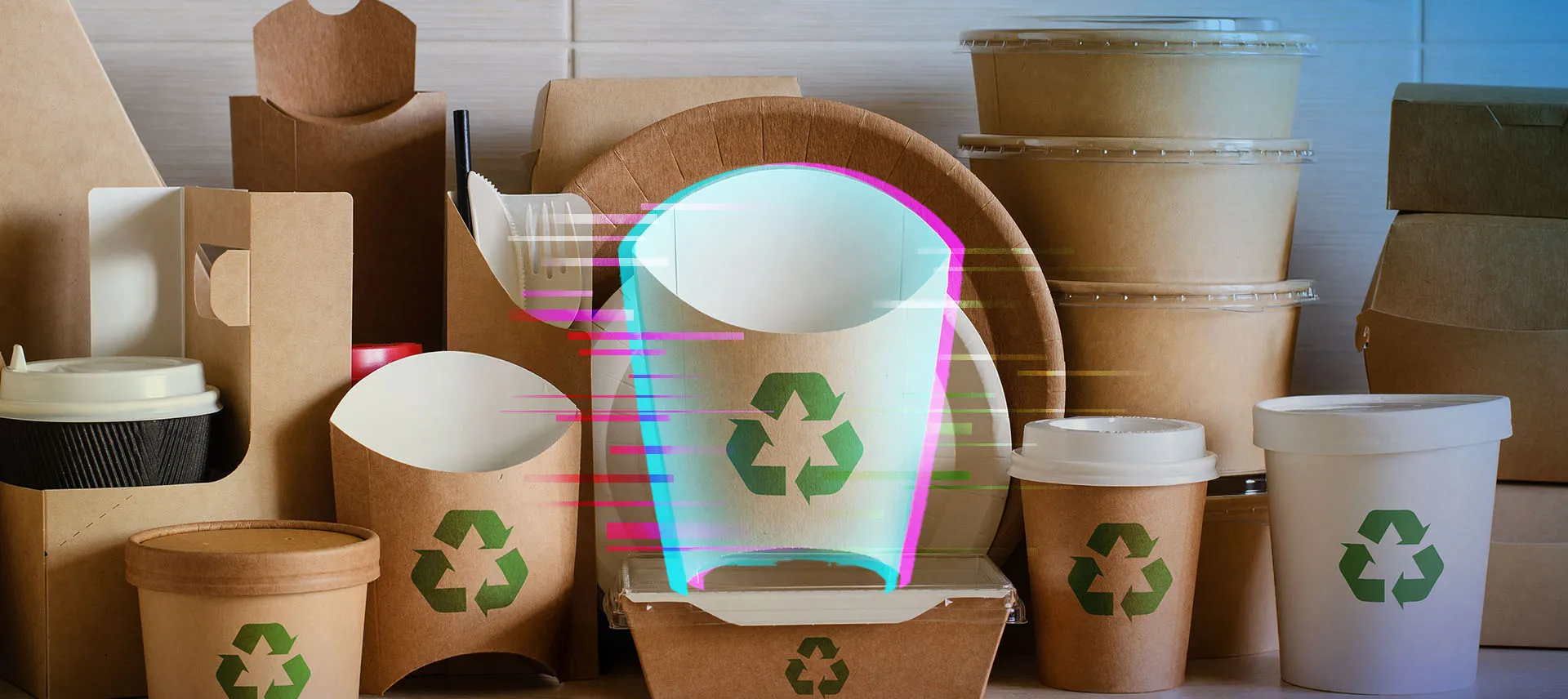
Our expert Raymond Wodar shares how virtual twin technology helps consumer packaged goods companies reimagine sourcing, minimize waste and design smarter, recyclable packaging – transforming bio-circularity into a strategy that drives both sustainability and cost efficiency.
Missed part 1? Learn more about biodiversity preservation in lifesciences and healthcare here.
To go further, discover our resources about bio-circularity here.


Even small improvements in manufacturing efficiency can scale to massive environmental gains.”
Raymond Wodar
Narrator: Welcome back to Disruptors Unleashed, where we explore disruptive technologies and chat with the trailblazers who are redefining industries as we know them. Previously, Dassault Systèmes expert Mahaut de Villepin-Lambert discussed how the life sciences and healthcare industry can enhance innovation while protecting biodiversity.
In our second episode dedicated to biodiversity preservation, we’re talking about manufacturing. Today, we are diving into how consumer goods manufacturers can reimagine bio-circularity from the ground up through traceability and digital innovation.
Join our expert Raymond Wodar of Dassault Systèmes as he unpacks how the 3DEXPERIENCE® platform enables CPG manufacturers to transform every stage of their product lifecycle, from sustainable sourcing and smarter manufacturing, to packaging redesign and traceability.
Raymond Wodar: You know, the CPG industry is deeply dependent on natural systems. If you think about it, for agricultural ingredients, water and packaging materials, these ecosystems are under growing pressure.
With 90% of biodiversity loss, really predetermined, occurring at the start of the value chain, many companies need to rethink sourcing through more of a circular lens. There are five main drivers of biodiversity loss that include land use, climate change, invasive species, exploitation of natural resources and pollution. So, that really means that the industry must shift from an extractive linear-type model to a regenerative, recycled or certified sustainable input.
A circular strategy helps decouple growth from raw material use, reducing pressure on forests, soil, and water systems. By embedding sustainability early in the procurement decisions and product design, CPG firms can reduce nature-related risk.
So, responding to consumer demand for responsible brands and align with upcoming regulatory shifts like the EU's PPWR, which is the packaging and packaging waste regulation, which is really accelerating the move towards reusable and recyclable packaging.
Many of the companies that I have worked with recently – like a global food brand, has designed packaging with more than 50% post-consumer recycled content. This is allowing them to move from extractive to regenerative, recycled and certified sustainable inputs to protect the ecosystems that they're involved in through their supply chain.
Some of the targets for PPWR are, for instance, 30% post-recycled content by 2030 and the reduction of virgin material used on a year-by-year basis.
Narrator: That all sounds very promising.
Raymond Wodar: In the CPG sector, even small improvements in manufacturing efficiency can scale to massive environmental gains due to the high production volumes in the CPG business.
By using less water, reducing energy consumption, eliminating process waste in manufacturing, CPG firms can significantly lessen their dependence on natural resources and lower their impact on local ecosystems.
Manufacturing optimization also allows companies to cut unnecessary raw material uses, which reduces pressure on land, forests and fisheries, depending on the sector that they're operating in. When integrated with circular design principles like lightweighting of packaging, or using recycled content, it results in tangible biodiversity benefits from bottom line savings. So, it's really a win-win.
The beverage company I've been working with reduces water use per liter by up to 25% through closed-loop cleaning systems. So instead of using more water inputs to clean out their systems when they have to change a line, for instance, they have a closed-loop system where they capture all the wastewater and recycle that to be reused in other systems in the process.
Raymond Wodar: If you think about manufacturing plants, they can be much more efficient by using things like renewable energy. You've probably noticed a lot of companies now in various places around the world using solar panels and battery storage systems that can work with local energy authorities to limit the use of their energy from the grid. So, this of course can reduce the burning of fossil fuels and other impacts with regards to the environment.
Also, the percent of waste diverted from landfills from the manufacturing process, if those materials can be repurposed in some way or reused or recycled, this can reduce the impacts again on local biodiversity.
Raymond Wodar: Product and packaging design are critical leverage points. In CPG, it’s known that around 80% of a product's environmental impact is locked in during the design phase.
So, when companies design for recyclability, refillability, or even compostability, they reduce the need for virgin material extraction, and they can lower waste-related biodiversity impacts. That might mean using mono-material packaging to improve recycling rates or choosing materials with a smaller land use footprint.
Circular design can also enable longer-lasting packaging components in reusable systems, which extends material life and reduces the virgin extraction of materials.
With regulatory frameworks like PPWR, setting strict targets for packaging recyclability and reuse companies have a clear incentive to design products that are aligned both with biodiversity protection and circularity. PPWR is an EU regulation that's aiming to reduce packaging waste.
Also, it's trying to standardize the rules across EU countries and nations and accelerate the circular economy transitions. The key goals there are to make sure that all packaging is recyclable by 2030, so at least a portion of the materials going into products are recyclable.
Also, cutting packaging waste per capita by 15% by 2040. There are other various key goals in that regulatory framework, but it's mandatory to enact things like reuse and refill targets and ban certain single-use formats and eliminate a lot of over-packaging that happens in e-commerce type transactions.
Raymond Wodar: The virtual twin really gives manufacturers a dynamic digital model of their product, processes and also supply chains. This allows companies to simulate and optimize how products are made, used and recovered without costly physical trials.
So, with accurate material models, it can also be very predictive. This is very key when designing new products with new materials, when you're not sure of the outcomes. So, it can identify where materials are wasted, where over-packaging may be occurring or where substitutions could reduce environmental and biodiversity impacts.
It also helps design teams explore new materials in packaging formats that meet performance goals with fewer natural resources being used. A lot of companies that I've been working with lately have been using these strategies in lightweighting products to make sure that they're not over-packaging products when they ship them in the market. And this allows them to test them virtually to make sure the products will perform in the marketplace, that they won't arrive at a customer damaged, but they're using less materials overall. Again, it's a good win-win. It reduces cost for the manufacturer, but also reduces the impact on biodiversity.
A lot of our clients using virtual twin technologies have been able to reduce materials. In one use case, up to 12% of raw material usage has been reduced using virtual twins and optimizing materials.
Also reducing the number of physical prototypes needed. I would say up to about 50% of reduction in physical prototypes has been a decent benchmark for some companies I've worked with. And again, this just allows them to use the virtual world to go through multiple different scenarios, different design considerations.
Cost reduction is highly aligned with the reduction of material usage: some of our clients have reduced their cost of goods sold up to 3% on the raw material side by introducing reuse, also doing the rationalization of specifications and using those same materials in multiple products. This allows them to reduce their costs, get to market faster and be more productive.
Narrator: Thank you, Raymond, for sharing your insights with us today. It's been a fascinating discussion on rethinking bio-circularity in the manufacturing sector.
From responsible sourcing to circular design and end-to-end traceability, the virtual twin drives material efficiency, reduces environmental impact and turns regulatory challenges into business opportunities.
Thank you for tuning in. We'll catch you in the next episode. Curious how manufacturing companies are achieving bio-circular success? Download our ebook to unlock actionable strategies powered by the virtual twin.
Disruptors Unleashed is produced by Dassault Systèmes. For more episodes, follow us on Apple Podcasts, Spotify, Deezer, or your nearest audio streaming platform. To learn more about Dassault Systèmes, visit us at 3ds.com.

Our well-being - along with that of the entire ecosystem - depends on biodiversity. And our economy is no exception.

How businesses can leverage virtual twin-powered strategies to protect biodiversity while unlocking new revenue streams.

Innovate every step of your sustainable packaging journey, driving profitability with an end-to-end strategy, powered by the 3DEXPERIENCE® platform.
Explore how smart grid technologies powered by virtual twins can help us create a more resilient and sustainable tomorrow.
Podcast

Discover how urban planners can leverage virtual twins to transform our cities for a resilient future.
Podcast

Learn how virtual twins can help manufacturers optimize lifecycle management and unlock cost savings through sustainable sourcing and eco-design.
Podcast

Discover how rethinking R&D in life sciences and healthcare fosters biodiversity preservation and medical innovation.
Podcast

Discover how Education Experiences equip today’s students with industry-ready skills to engineer a more sustainable tomorrow.
Podcast

Explore how modular construction and digital innovation are reshaping the building industry to enable more efficient, sustainable urban development.
Podcast

Learn how cities’ virtual twins can foster climate resilience and empower communities to adapt and thrive in a changing world.
Podcast

Join 9-year-old Infrastructor Bernardo as he explores how virtual twins enable bold energy solutions to decarbonize rail freight.
Podcast

Explore how Dassault Systèmes delivers the missing piece, connecting people, data and processes for end-to-end manufacturing transformation.
Podcast

Learn how the 3DEXPERIENCE platform harnesses collective intelligence, empowering organizations to confront sustainability challenges for a greener future.
Podcast

Discover how the virtual twin fosters end-to-end collaboration across product engineering, manufacturing planning, scheduling and operations.
Podcast

Get the full story on how emerging technologies are transforming the way we teach our engineering students.
Podcast

Discover how virtual twin experiences are shaping the future of industrial equipment manufacturing.
Podcast

Explore the cutting-edge world of virtual twins and their transformative impact on the industrial equipment industry.
Podcast

Discover how seamless collaboration, cloud-enabled apps and effective knowledge re-use accelerate creating innovative high-tech experiences
Podcast

Learn how virtual twin experiences are set to revolutionize medical device design, clinical trials and patient treatments.
Podcast

From the surge in electrification to the advent of software-defined vehicles, these trends compel automotive businesses to innovate faster and more efficiently.
Podcast

Tune in to explore how virtual twin technology enables top aerospace companies to manage conflicting trends, speed up development and reduce costs.
Podcast

Get expert insights on how businesses can empower their engineering teams to achieve greater speed, efficiency and performance through MODSIM.
Podcast

What does a sustainable city of the future look like? Listen to a preview of the Building Tomorrow five-part documentary series.
Podcast

How can the virtual twin help reduce the environmental impact of building a sustainable tower? Bastien Hillen from Dassault Systèmes has the answer.
Podcast

Everything you’ve ever wanted to know about productization — a modular approach to product design — and its impact on the construction industry.
Podcast

We take a peek into Building Tomorrow, a five-part documentary series that examines what a sustainable city of the future will look like.
Podcast

Tune in to learn how In-space Servicing, Assembly and Manufacturing (ISAM) technologies power a more sustainable space environment and economy.
Podcast

Circularity embraces a fundamental economic transformation that redefines product design, the materials used and how businesses operate.
Podcast

Making circular economy achievable, scalable and profitable.
Podcast

Transform how you do business through circular supply chains to achieve profitability and lasting success.
Podcast

Applying Eco-design Principles for the Entire Product Lifecycle
Podcast

Embracing Circularity into Product Development through Sustainable Materials
Podcast

Tune in to discover how digital transformation raises inventory management to new heights, unlocking new horizons for manufacturing success.
Podcast