有 1511 个结果
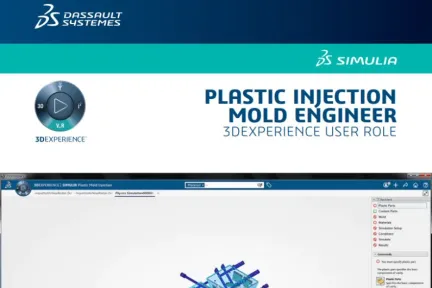
PLASTIC INJECTION MOLD ENGINEER 3DEXPERIENCE USER ROLE

Plastic Injection Mold Engineer provides anyone who designs or builds injection molds an accurate, easy-to-use way to optimize them. You can leverage runner and cooling layouts created in CATIA Mold & Tooling Designer Apps or import them from any CAD system. Single-cavity, multi-cavity, and family mold layouts, including sprues, runners, and gates can be analyzed to obtain estimated cycle time, clamp tonnage, and shot size, enabling you to optimize feed system design and avoid costly mold rework. Users can analyze simple or complex mold cooling line layouts and optimize cooling system design to minimize cycle times and decrease manufacturing costs.

Brochures
PLASTIC INJECTION MOLD ENGINEER 3DEXPERIENCE USER ROLE
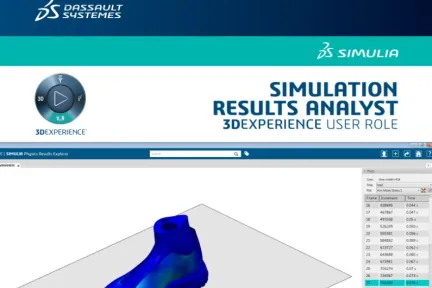
SIMULATION RESULTS ANALYST 3DEXPERIENCE USER ROLE

As simulation technology and implementation increases, the output datasets can grow exponentially, often reaching 100 million nodes or more. This causes challenges in displaying results quickly and efficiently. Simulation Results Analyst solves this problem by providing high performance capabilities for visualizing and exploring simulation results, particularly large datasets. Results files are not copied to the user workstation and visualization computations are performed within the distributed environment. The result is a state-of-the-art visualization capability enabling the processing of very large models with breathtaking performance.

Brochures

SIMULATION RESULTS ANALYST 3DEXPERIENCE USER ROLE
Stepwise Validated Finite Element Model of the Human Lumbar Spine

Understanding the lumbosacral spine and the functional spinal unit (FSU) is essential in assessing the mechanics associated with normal spine function, spinal loading, degenerative disc disease (DDD), simulations of surgery as well as the impact of fusion, and total disc replacement (TDR). The lumbosacral spine and FSU comprise of bones and complex soft tissues such as intervertebral discs (IVD) and ligaments. Probabilistic studies based on these deterministic FE formulations are of great interest currently as model input parameters (such as properties of nucleus, annulus and facet, ligament stiffness and reference strain) have been characterized experimentally and contain substantial levels of variability.

Customer Papers

Stepwise Validated Finite Element Model of the Human Lumbar Spine
Transient Dynamic Analysis of a Head Surrogate Model

In this paper, an ABAQUS two dimensional transient modal dynamic finite element analysis was performed of a simplified brain model surrounded by cerebral spinal fluid and encased in PMMA. Viscoelastic material parameters of the brain tissue simulant were obtained from open literature. Low speed loading conditions were applied at different locations of this simple brain model structure. The von Mises stress and pressure contours at different times and displacement history plots are presented. The transient dynamic analyses provide insight into key areas of interest and information on the optimal placement of sensors in a more complex brain surrogate model.

Customer Papers

Transient Dynamic Analysis of a Head Surrogate Model
Temperature Cycling Analysis of Lead-Free Solder Joints in Electronic Packaging

Numerical simulations have found growing interests in evaluating interconnect reliability in electronic packaging, particularly for lead-free solder joints. To achieve good predictive capability, appropriate constitutive properties for the solder balls and a damage mechanism based life prediction model must be provided. In this paper, a simple published but efficient approach is adopted to predict life of SnAgCu joints subjected to temperature cycling. The complete finite element model and its analysis are done in ABAQUS using its scripting interface. Finally a numerical example is presented to illustrate the procedures, and, hence, demonstrates the capability of ABAQUS in electronic packaging modeling.

Customer Papers

Temperature Cycling Analysis of Lead-Free Solder Joints in Electronic Packaging
Application of Inelastic Analysis of ABAQUS in Japanese Industry

In Japan, social demand for heavy industries seems to have been saturated, resulting in the center of the balance of the engineering population deviating toward the field of products with faster delivery times and lower prices. In such a field, while the constraints due to the trend in demand and cost always take precedence over all others, safety and environmental issues are inherently receiving public attention. Accordingly, the analysis of the ultimate state of products, as represented by the crash of automobiles or the dropping of mobile devices, is strongly desired within actual design cycles.

Customer Papers

Application of Inelastic Analysis of ABAQUS in Japanese Industry
Thread Connection Response to Critical Pressures

Thread connections are widely used in oil and gas industry. Determination of burst and collapse response of threads under critical pressure is important in a design process; however, a straight forward analysis of helical thread connections would require a huge model and long computing time. This paper will discuss other techniques that can determine the required information more efficiently. Using this model, only an axissymmetric model is needed for critical burst-pressure determination.

Customer Papers

Thread Connection Response to Critical Pressures
Simulation of the Forming of a Superelastic Anchoring Stent and its Deployment in the Coronary Vein

Mitral valve regurgitation (MR) occurs when a flaw in the mitral valve causes backflow of blood into the left atrium. It is possible to reduce the amount of MR by reshaping the mitral annulus which, in turn, changes the configuration of the valve leaflets. A new percutaneouslydelivered device which induces this reshaping is currently under development at Edwards Lifesciences. The device, which is placed in the coronary sinus (CS), is essentially a spring with anchoring stents at each end. This study examines the mechanical behavior of one of the anchoring stents, from its forming from a small diameter tube to its deployment into the coronary sinus. The anchoring stent is modeled using the ABAQUS Superelastic constitutive model, and the CS is modeled using a hyperelastic constitutive model.

Customer Papers

Simulation of the Forming of a Superelastic Anchoring Stent and its Deployment in the Coronary Vein
Thermo-Mechanical Model of Solidification Processes with Abaqus

A computational thermo-mechanical model has been developed to simulate the continuous casting of shaped sections, such as used for steel thin slabs. A general form of the transient heat equation including latent-heat from phase transformations such as solidification and other temperature-dependent properties is solved numerically for the temperature field history. The resulting thermal stresses are solved by integrating the highly nonlinear thermo-elastic-viscoplastic contitutive equations using a two-level method. The model is applied to simulate a 3D transverse section of the thin slab caster with a funnel, known for a complex geometry, with actual temperature dependant properties and realistic operating conditions as it moves down the mold.

Customer Papers

Thermo-Mechanical Model of Solidification Processes with Abaqus
Development of Benchmark Examples for QuasiStatic Delamination Propagation and Fatigue Growth Predictions

The development of benchmark examples for quasi-static delamination propagation and cyclic delamination onset and growth prediction is presented and demonstrated for Abaqus/Standard. The example is based on a finite element model of a Double-Cantilever Beam specimen. The example is independent of the analysis software used and allows the assessment of the automated delamination propagation, onset and growth prediction capabilities in commercial finite element codes based on the virtual crack closure technique (VCCT).

Customer Papers

Development of Benchmark Examples for QuasiStatic Delamination Propagation and Fatigue Growth Predictions
Finite Element Analysis of Blast Resistant Structures in the Oil and Gas Industry

A common requirement in the oil and gas industry is to design structures that are adequate against the effects of accidental gas explosions. This paper presents an overview on the methodologies involved in the study of the response of structures to resist blast and explosion, focusing on the use of nonlinear finite element analysis (NLFEA). NLFEA can be used to overcome the limitations of commonly used analytical methods which are predominantly developed for elastic response or limited plastic response and do not allow for large deflection and unstable responses.

Customer Papers

Finite Element Analysis of Blast Resistant Structures in the Oil and Gas Industry
有 250 个结果

客户成功故事

有 151 个结果
有 4 个结果

SIMULIA 自学

我们提供数百个自学模块,以便您能够在方便的时间不断学习

博客

欢迎阅读 SIMULIA 博客,了解最新报道以及我们专家的最新创新。

有 701 个结果

了解 SIMULIA 可以为您带来哪些价值

与 SIMULIA 专家交流,了解我们的解决方案如何在各种规模的企业中实现无缝协作和可持续创新。

开始使用

现为学生、学术机构、专业人士和企业提供各类课程与培训。查找适合您的 SIMULIA 培训。 

获取帮助

查找有关软硬件认证、软件下载、用户文档、支持联系人和服务项目的信息