
SIMULIA 资源中心
通过 SIMULIA 找到您需要的一切
有 1506 个结果
Automated Weight Optimization Process for Automotive Wheel Hub Bearing
Automotive wheel bearing is an essential component of the vehicle. It transmits engine power into wheels and supports vehicle weight. In recent years, the demand worldwide for weight reduction in automotive part in order to improve fuel efficiency has increased. Despite of it, automakers are requiring that wheel bearing performance in the areas of stiffness, strength, and life be maintained or improved. In this study, weight optimization for automotive wheel bearing was performed. Design variables were the bearing geometry and bearing internal specification. Cost function was bearing weight and constraint conditions were bearing life and stiffness. CATIA was used to model the geometry and Abaqus was used to carry out the stiffness analysis. To construct the optimization formulation, the commercial optimization software, Isight was used.
Customer Papers
S-Life - Integrated Static and Fatigue Strength Assessment with Abaqus According to German FKM Guideline
S-Life - Integrated Static and Fatigue Strength Assessment with Abaqus According to German FKM Guideline
Customer Papers
Automated Analysis in CATIA V5
The traditional process for assessing the strength, stiffness and modal performance of a chassis component such as a suspension link, and iterating the design to meet targets in the optimum way, is time consuming. Some design engineers experimented with using integrated analysis in CATIA V5 to assess and iterate the design more efficiently. Success was limited due to the complexity of setup and poor correlation with the results obtained by CAE specialists using the standardised process. This paper outlines how a combination of CATIA V5 analysis and scripting was used to solve these problems for a number of component types. The success of the tools released to date and the advantages of using them will be discussed. Guidelines for identifying processes which are suitable for automation will be presented.
Customer Papers
Materials Gateway 3.0 for Abaqus/CAE - Enterprise-wide Materials Knowledge for Abaqus Users
Materials Gateway 3.0 for Abaqus/CAE - Enterprise-wide Materials Knowledge for Abaqus Users
Customer Papers
Final Element Simulation of Blankholder's Lift-off in a Deep Drawing Tool Using Abaqus/Standard
In the deep drawing tools for forming car body parts, heavy blankholders are used to prevent buckling and wrinkling of the blank. During each press cycle, those large masses need to be lifted, raising thereby the structural dynamic load on the deep drawing tool and on the press. Therefore a detailed knowledge about the blankholder’s lift-off event is essential for an accurate and robust design of forming tools. In this paper, a dynamic finite element method (FEM) simulation of a blankholder’s lift-off in a selected automotive deep drawing tool is presented enabling identification of regions of critical stresses. The FEM model is built within the Abaqus/CAE environment and solved with Abaqus/Standard.
Customer Papers
Numerical Analysis to Optimize Peen-Forming Process Parameters
Peen-forming is a practical technique for forming of metallic aeronautical components. The method performance of this cold-working procedure mainly depends on the efficient selection of process parameters. Currently, trial and error procedures, based on operators' experience are used to determine peen-forming intensity patterns. This expensive and time consuming method could be avoided by the accurate estimation of peen-forming process parameters. The absence of a predictive tool to determine these parameters makes difficult to give a quick response to market for the industrialization of new components.
Customer Papers
Study of mechanical compatibility at the mortarblock interface in a heritage building and numerical modeling by Abaqus
This research work aims at modeling the mortar-block assembly for analyzing the potential occurrence of mechanical problems at interfaces as the consequence of an eventual incompatibility. The study considers a heritage building located in Morocco. The authors focus their attention on a representative part of the building and perform numerical simulations, studying the stress repartition inside the masonry. For carrying out efficient analysis, the mechanical characteristics (Modulus of Resistance, Modulus of Elasticity) are collected through non-conventional testing techniques dedicated to the field of Heritage Conservation that are briefly described. The scenario considered in the proposed study concerns a bearing wall restored with a non-adequate mortar. The goal of the modeling works is to compare the repartition of internal solicitations between the original situation and the restored one in order to quantify the risk, for materials that should be conserved, associated with the “stress shielding” phenomenon and to justify the particular attention to be paid for the choice of a specific mortar for interventions to be carried out on the concerned building.
Customer Papers
Using Abaqus/CAE and User-Defined Material Subroutines to Predict the Deformations of a Stitched Triaxial Fabric during Forming Processes
The use of a stitched triaxial fabric in composite forming applications is investigated. The fabric of interest consists of three layers of stitched fibers, which were originally oriented at [-60°/0°/60°]. The tensile, shear, and frictional behavior was investigated experimentally. Conventional shear frame testing methodology assumes that the yarns are intially mutually perpendicular. This assumption is not valid for this particular fabric geometry and must be adjusted accordingly. The determined material behavior was implemented into a user-defined material subroutine within a discrete mesoscopic finite element model built in Abaqus/CAE. Different element types were investigated to represent the fabric and determine ideal mesh configurations to best capture the mechanical behavior of the fabric.
Customer Papers
Improvement and Enhancement of Concrete Damage Plasticity Model
The purpose of this paper is to make an improved concrete damage plasticity model that focus on a post cracking behavior. First, we constitute the material model that simulates a process of closing the large tensile cracks and recovering the compression stiffness. Second, the model is enhanced by adding another feature that simulates a transition from compression to tension again. Finally, experimental simulation analyses are conducted for validation of efficiency.
Customer Papers
Ductile Fracture Criterion Comparisons & Development of a Numerical Material Damage Model
By using Abaqus finite element software, contributions to understanding and quantifying the ductile fracture behavior of metallic materials have been realized. The end result has enhanced product development by reducing unnecessary conservatism resulting in reduced failure rates, product weight, and costs. Unlike the methods of LEFM or EPFM which presume a preexisting flaw, the ductile fracture approach requires no initial flaw size, shape, or flaw orientation relative to the component geometry. In this paper, numerical examples using various damage approaches are used to highlight differences in their resulting failure modes. In addition, the use of a damage model on a practical example is used to emphasize the utility of the method.
Customer Papers
RESIDUAL STRENGTH OF THE CARBON FIBER PANEL WITH DELAMINATION
Carbon fiber reinforced materials are getting widely spread. But at present time method of the calculation of impact residual strength for carbon fiber parts is poorly developed. Especially this method is underdeveloped in case of the delaminated composite parts. Residual strength is very essential for any project where the composite material parts are used. The possibility to estimate the value of residual strength of the carbon fiber reinforced parts is highlighted in terms of safety for Aerospace structures. In this work we propose a method to calculate the carbon fiber panel residual strength of the civil plane wing prototype with respect to delamination progress simultaneously with degradation law of the material properties. This approach has been developed and realized based on ABAQUS software.
Customer Papers
线上研讨会
有 246 个结果
客户成功故事
有 150 个结果
来自社区
活动
有 6 个结果
SIMULIA 自学
我们提供数百个自学模块,以便您能够在方便的时间不断学习
博客
欢迎阅读 SIMULIA 博客,了解最新报道以及我们专家的最新创新。
有 694 个结果
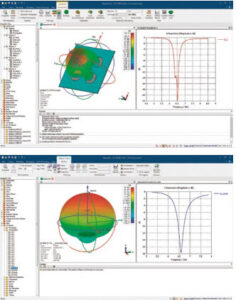
Tech Tip: How Do I Find the Right Antenna for my Design?
This article was originally published in the June 2018 issue of SIMULIA Community...
Article
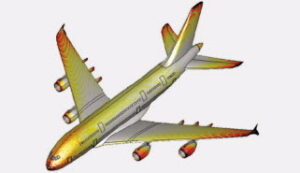
A Bolt from the Blue — Simulating Lightning Strikes on Aircraft
This article was originally published in the June 2018 issue of SIMULIA Community...
Article
Digital Manufacturing: A 70-Year Odyssey, from “Sneakernet” to Machine Learning
This post originally appeared in the Navigate the Future blog. From the birth...
Article

Answered: Your Questions on EV Aerodynamics
There’s no question that vehicle electrification and autonomy are two of...
Article

An Examination of the Future of Truck Aerodynamics
Demand for fuel-efficient trucks has never been higher in our current climate...
Article


Let’s Learn Together: Mechanical Analyst Role
This post is a continuation in a series about simulation on the...
Article
Lithium Mining and Electric Vehicles: Powering Innovation and a Greener Future
This post originally appeared in the Navigate the Future blog. The future of...
Article

The SIMULIA Learning Community: All SIMULIA Knowledge in One Place
The SIMULIA Learning Community is the place to find the latest resources...
Article

The Next Aviation Disruption
This post originally appeared in the Navigate the Future blog. Anyone who still...
Article

联系 SIMULIA
了解 SIMULIA 可以为您做些什么
与 SIMULIA 专家交谈,了解我们的解决方案如何在各种规模的企业中实现无缝协作和可持续创新。
启动开发
课程面向学生、学术界、专业人士和企业开放。查找适合您的 SIMULIA 培训。
获得帮助
查找有关软硬件认证、软件下载、用户文档、支持联系人和服务项目的信息