Use the filters below to quickly find courses relevant to your products, topics, or learning goals. 

There are 28 results
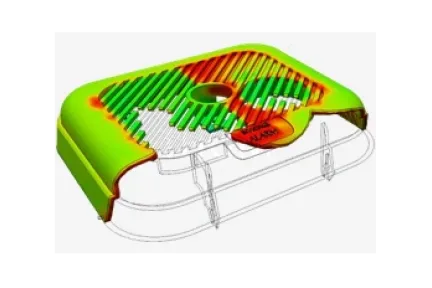
Plastic Part Filling Essentials

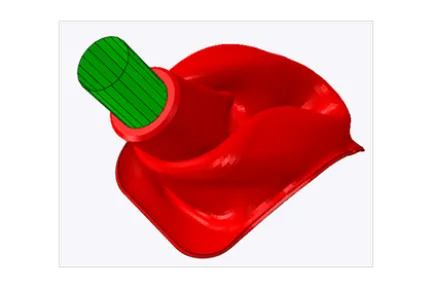
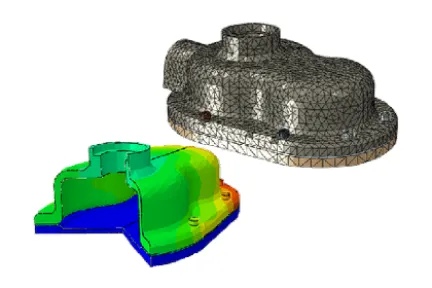
This course is an introduction to performing basic injection molding simulation for product and design innovation on the 3DEXPERIENCE platform. The Plastic Part Filling app enables realistic simulation of the mold filling manufacturing process.

Course Catalog

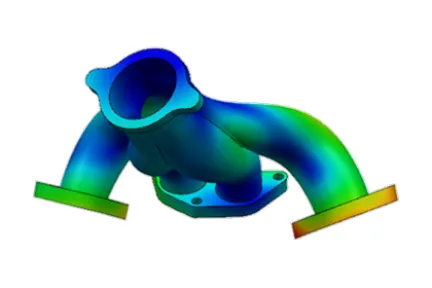
Structural Simulation Essentials

This course is an introduction to structural simulation on the 3DEXPERIENCE platform using the Structural Scenario Creation or Mechanical Scenario Creation app.

Course Catalog

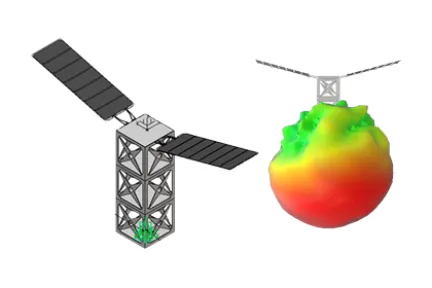
Antenna Placement Essentials

This course is an introduction to the Antenna Placement app on the 3DEXPERIENCE platform. It teaches you how to import antenna models from CST Studio Suite and then evaluate their installed performance at positions on a selected platform (for example, a vehicle, an aircraft, or an electronic device). Antenna placement studies help you find the best position for an antenna on the platform by providing you the results of the installed antenna's performance.

Course Catalog

Modeling Stents Using Abaqus

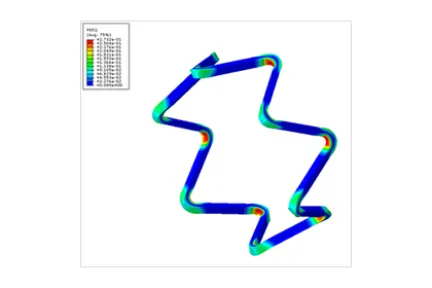
The simulation of stent behavior reveals detailed stress-strain distributions that are important in predicting device fatigue life.

Course Catalog

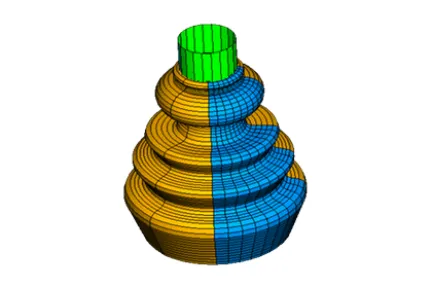
Modeling Rubber and Viscoelasticity with Abaqus

Rubber and resilient foam are widely used for a variety of applications, such as seals and gaskets, shock mounts, vibration isolators and tires. The mechanical and chemical properties of these materials allow them to act as excellent seals against moisture, pressure and heat.

Course Catalog

Analysis of Composite Materials with Abaqus

Composite materials are used in many design applications because of their high stiffness-to-weight ratios. This course shows you how to use Abaqus effectively to model composite materials.

Course Catalog

Modeling Fracture and Failure with Abaqus

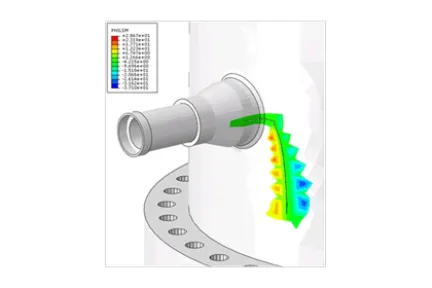
Fracture and failure modeling allows for product designs that maximize the safe operating life of structural components. Abaqus offers many capabilities that enable fracture and failure modeling. This course provides a detailed discussion of these capabilities.

Course Catalog

Modeling Extreme Deformation and Fluid Flow with Abaqus

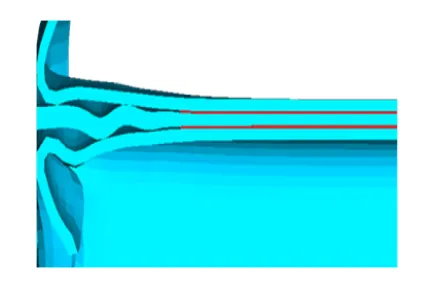
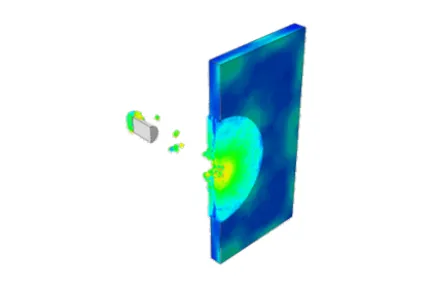
Abaqus includes several advanced techniques for modeling extreme deformation and fluid flow. The pure Eulerian analysis capability in Abaqus Explicit allows for effective modeling of fluid flows and extremely large deformations in solids. Coupling the power of this capability with the traditional Lagrangian approach makes it possible to simulate complicated multiphysics phenomena such as fluid structure interactions where highly deformable materials interact with relatively stiff bodies. The need for modeling high velocity impacts, extremely violent fluid flows, and material phase changes requires the use of Smoothed Particle Hydrodynamics, a meshless Lagrangian method capable of solving these challenging problems efficiently. This course aims at providing users with a solid understanding of the Coupled Eulerian Lagrangian (CEL) and Smoothed Particle Hydrodynamic (SPH) methods and illustrating approaches to setting up and analyzing real world problems using these advanced analysis methods.

Course Catalog

Element Selection in Abaqus

Choosing an element is one of the most fundamental questions that users must answer as they build a finite element model. Many issues should be considered when selecting an element, including: Is there contact in the model? Is the material behavior fully or nearly incompressible? Will the element bend during the analysis? Is the structure thick or thin? Will the mesh become severely distorted? What results are needed from the analysis? Is the analysis a static or dynamic simulation? This course provides an overview of the different element types available in Abaqus for stress analyses. Differences between the Abaqus Standard and Abaqus Explicit element libraries are considered. Application specific recommendations for choosing an element type are provided. The pitfalls and symptoms of choosing incorrect element types are also discussed. Examples and workshops are used to illustrate element behavior and the consequences of choosing incorrect element types for a given problem.

Course Catalog

Introduction to Abaqus

This course is a comprehensive and unified introduction to the modeling and analysis capabilities of Abaqus. It teaches you how to solve linear and nonlinear problems, submit and monitor analysis jobs and view simulation results using the interactive interface of Abaqus.

Course Catalog

Electrochemical Simulation with Abaqus for Li-ion Batteries

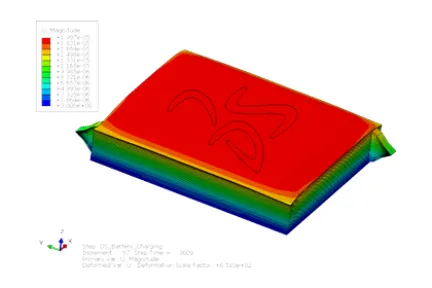
This course introduces you to cell-level multiscale, multiphysics analysis that allows modeling and assessment of the electrochemical performance of Li-ion batteries based on porous electrode theory, the thermal effects from various losses (associated with the ionic diffusion, electrical conduction, entropy change and intercalation) and the mechanical effects due to lithiation-induced swelling in a fully coupled manner. The knowledge gained will allow you to further benefit from the capability by enabling optimization of cell design and performance with respect to a slew of parameters virtually.

Course Catalog

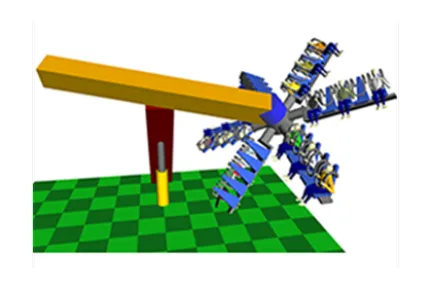
Introduction to Simpack

SIMULIA Simpack is a general multibody system simulation (MBS) software enabling analysts and engineers to simulate the nonlinear motion of any mechanical or mechatronic system. It is particularly well-suited for high frequency transient analyses, even into the acoustic range.

Course Catalog

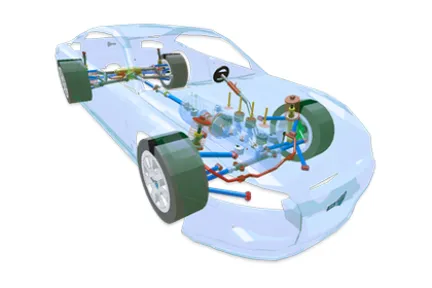
Simpack Automotive

This course describes the procedure to set-up road vehicle models and introduces Simpack’s Automotive elements (tires, roads, steering controllers, etc.).

Course Catalog

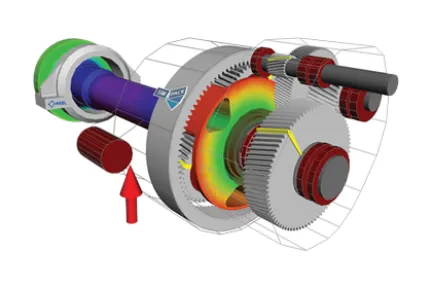
Simpack Drivetrain

The drivetrain training gives an overview of Simpack modeling elements and analysis methods available for drivetrain applications

Course Catalog

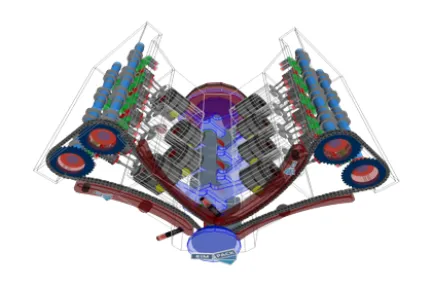
Simpack Engine

This course explains how to use Simpack specific modeling elements for engine applications. These include cranktrain modeling, the Dynamic Spring Generation tool, hydraulic lash adjuster, valvetrain, chain drive systems and Simpack Wizard together with the Engine demo database

Course Catalog

Simpack Flexible Bodies

This course is about structural flexibility in Simpack. It explains how to import linear finite element (FE) models into Simpack and how to model linear and nonlinear beam structures directly in Simpack

Course Catalog

Simpack Rail

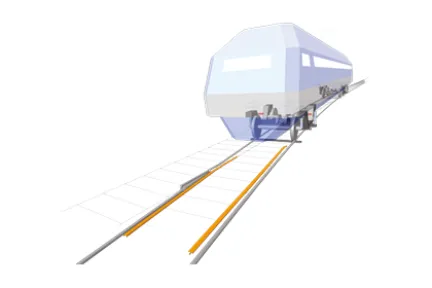
The Simpack Rail training explains how to use Modeling Elements to simulate rail-wheel contact, how to set up entire vehicle models, and the most important analysis types for rail vehicles.

Course Catalog

Simpack Scripting

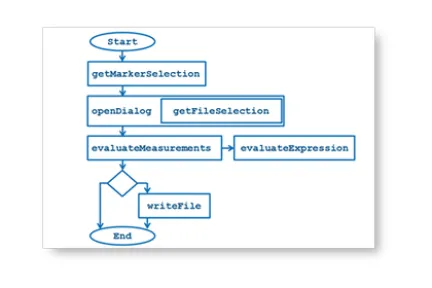
This course explains how to automate tasks in Simpack Pre and Post through scripting. It provides user experience in terms of writing, running and debugging scripts.

Course Catalog

Fluid Simulation: Advanced Topics

This course includes lessons and workshops covering advanced capabilities and techniques that can be included in a flow simulation using the Fluid Model Creation and Fluid Scenario Creation apps on the 3DEXPERIENCE platform.

Course Catalog

CST STUDIO SUITE - Low Frequency

This course aims to improve users’ experience with the tools in CST Studio Suite dedicated to electromagnetic simulation of low-frequency and static applications. After a short overview of the basic usage of CST Studio Suite, the course focuses on the various available sources and solvers in CST EM Studio.

Course Catalog

Structural Simulation: Heat Transfer and Thermal-Stress Analysis

The success of many structural designs requires a thorough understanding of both the thermal and mechanical response of the design. Temperature-dependent material properties, thermally-induced deformation, and temperature variations all may be important design considerations.

Course Catalog

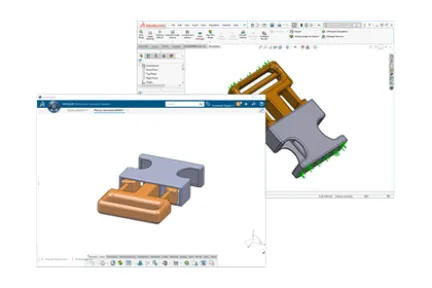
Design Exploration Essentials

This course is a comprehensive introduction to the structural optimization capabilities of the Design Exploration app on the 3DEXPERIENCE platform. Design exploration allows engineers to study and improve designs through topology and shape optimization, review and validate results and easily re-transfer optimized shapes into the downstream design process.

Course Catalog

Optimizing Engineering Methods with Isight

This course provides a brief overview of Isight and optimization before discussing nonlinear optimization theories and applications. Topics such as design space searching, multi objective optimization, optimization strategy, and multidisciplinary optimization are covered. Attendees will learn key differences between the optimization algorithms offered in Isight, how to choose the preferred method based on the problem, how to remedy issues with run time performance, and other topics relevant to improving the usage and value of Isight for real engineering optimization problems.

Course Catalog

Find a Local Training Partner

Our catalog of Course Descriptions can be customized by an education partner with SIMULIA expertise for private and on-site courses based on the customer's needs. 

Instructor-Led Training Policies

Join the SIMULIA User Community

Connect with SIMULIA users, experts, and learners worldwide. Explore discussions, technical insights, learning resources, and shared experiences across industries and disciplines.

Customized Training for Your Team

Organize private or on-site instructor-led training adapted to your products, workflows, and business objectives. Contact SIMULIA training teams to discuss your needs and request a customized learning program.

Get Help

Find information on software & hardware certification, software downloads, user documentation, support contact and services offering