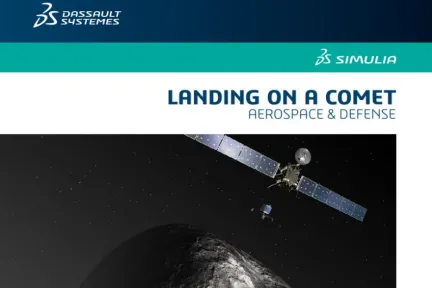
LANDING ON A COMET AEROSPACE & DEFENSE
Scientists watched with bated breath as the Philae lander left the European Space Agency’s Rosetta spacecraft and touched down on the surface of a comet last November after a 10-year, 4-billion-mile journey. Among those glued to their screens was Dr. Martin Hilchenbach, one of the original designers of the lander. He and his team used SIMPACK simulation software (now part of the Dassault Systèmes SIMULIA portfolio), between 1996 and the 2004 takeoff of Rosetta from Earth, to model scenarios for the Philae’s landing and guide design changes that helped ensure its survival. A presenter at the 2015 SCC in Berlin, Dr. Hilchenbach answered some questions for SCN earlier this spring.
Tech Notes