


Architecture, Engineering & Construction
Maximize construction sustainability and project profitability through collaboration and productization
Industry
US-based BOXXCRAFT chose Dassault Systèmes' cloud solutions to create virtual twins of construction projects, ensuring that every element is verified mathematically in the virtual world before installation.
When Jim Taylor, an architect with Malloch Taylor architects in New York City, took on a complete design of a townhouse in New York City’s historic West Village section of Greenwich Village, he knew the assignment was fraught with risk.
The building’s owner wanted a project that incorporated all modern conveniences – HVAC, plumbing, electrical, and whole-house electronics – hidden inside a narrow interior that maximized living space yet was consistent with the neighborhood’s architecture and history. Taylor also knew his discerning clients would reject any standard attempt at camouflaging modern systems: No awkward interior soffits or odd corners allowed.
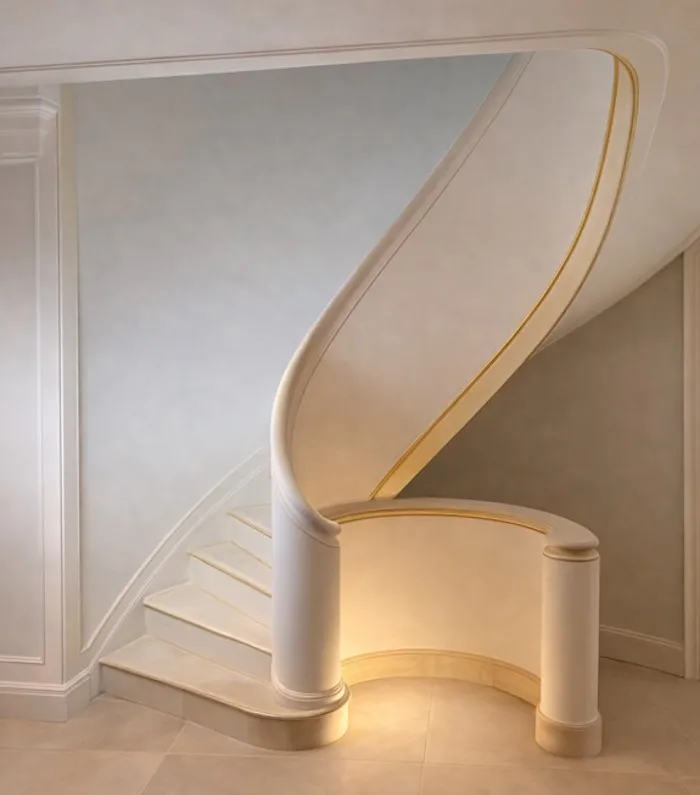
Taylor had an idea for how to achieve the owners’ goals, but it required the perfect execution of an audacious feature: an elliptical staircase. If he could pull it off, the curves of the staircase would create pockets of empty space where he hoped to hide the ductwork, plumbing and wiring to serve all of the building’s floors.
“It was an ambitious idea – daring, even,” Taylor said. “It solved several problems all at one time, but without proof that all the mechanical systems would fit in the spaces behind the ellipse, we probably wouldn’t have taken the risk; we simply wouldn’t have pursued that line of thought.”
So how could Taylor get the proof he needed to evaluate his idea?
Had we not had the Dassault Systèmes platform, we wouldn’t have been able to test the stair idea, and we probably would have abandoned it. But the virtual twin let us see the elliptical stair geometrically in the space, which allowed us to verify that all of the ducts and pipes would fit in the spaces left behind.
To achieve the perfect execution of an elliptical staircase, the architect needed certainty. The virtual twin lets the architect see the elliptical stair geometrically in the space, allowing him to verify that all ducts and plumbing would fit in the spaces left behind.
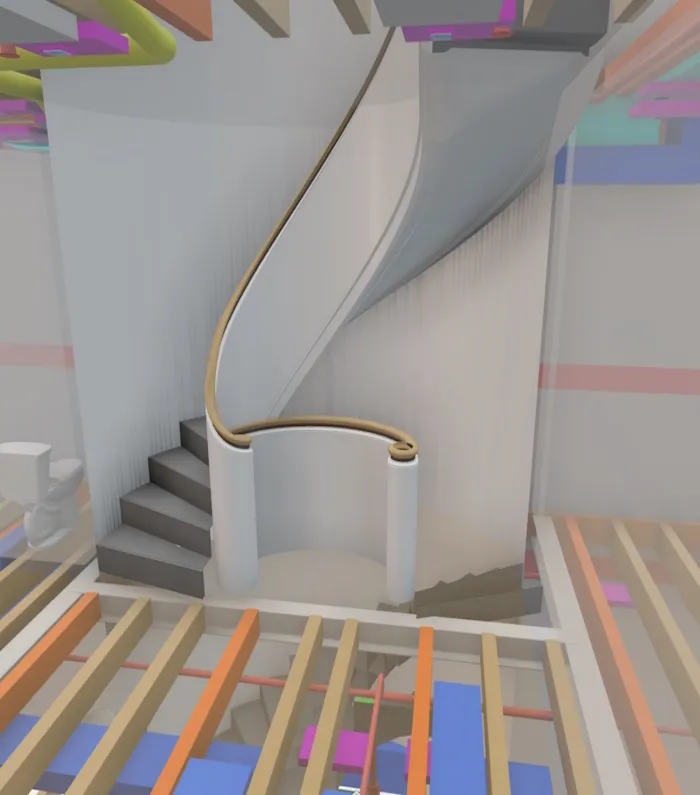
Taylor partnered with BOXXCRAFT, a US-based company created specifically to solve such challenges virtually for architects, engineers, construction companies and their subcontractors. BOXXCRAFT uses Dassault Systèmes' industry solution experiences tailored for the construction industry to create mathematically precise digital prototypes – computerized 3D models, also known as virtual twins or digital twins. The precision of these models on the 3DEXPERIENCE platform eliminates guesswork at every stage, from design to fabrication and installation.
“Had we not had the Dassault Systèmes platform, we wouldn’t have been able to test the stair idea, and we probably would have abandoned it,” Taylor said. “But the virtual twin let us see the elliptical stair geometrically in the space, which allowed us to verify that all of the ducts and plumbing would fit in the spaces left behind.
“Now that we can build prototypes of those systems digitally and push them around digitally, that’s opening doors to new and more creative ideas about the architecture, which is the thing that we love and the reason we do it.”
Another difficulty eliminated by the virtual twin? The time-consuming process of reviewing and approving paper documents.
“Having the ability to review and approve layouts in three dimensions prior to the whole package going to the general contractor was great for us as the architect,” Taylor said. “We all saw everything simultaneously. We didn’t have to wait for the subcontractor to produce shop drawings, wait for the drawings to come in, be interpreted, rebuilt, reissued. With a virtual twin you can go on the platform and it’s visual. It’s right there in front of you and you can see that it all works. Everybody’s happy. Lots of time saved.”
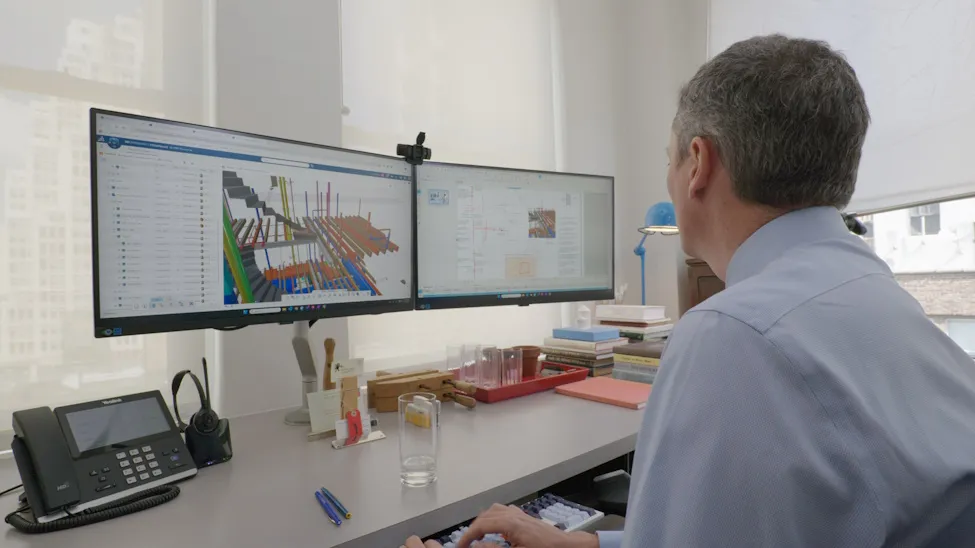
Although it is becoming more common to prototype commercial construction projects as virtual twins, it is not yet routine in high-end residential construction, BOXXCRAFT co-founder James Kotronis said. “It’s some of the most complex, personal and challenging construction that occurs, but it generally skips the prototyping step; they take the blueprints directly into the field, and that’s where they discover the problems.”
BOXXCRAFT aims to change that by providing the expertise to re-create blueprints as virtual twins, a sophisticated skill that many architects don’t have the time or desire to master. The company gives architects the benefit of the technology while allowing them to stay focused on design. BOXXCRAFT also incorporates digital designs created by engineers and other professionals into a shared virtual twin, creating a unified referential that coordinates all models inside a common data environment, providing every stakeholder a consistent view of the overall project and supporting deep dives into specific features and systems.
In the process of building the virtual twins, ENOVIA enables BOXXCRAFT to highlight and document issues, and then collaborate online with the architects, engineers and construction supervisors to resolve them. Designs are released to the field only after all issues have been resolved and then verified by the architect.
The virtual twin process also ensures that every stakeholder fully understands the rationale behind the design, helping everyone to work in harmony.
“Virtual twins show all the stakeholders the intent of a design, played out in the field,” Kotronis said. “ENOVIA’s collaboration capabilities give everybody a central location and a common view of the project so they can coordinate their thinking, understand the constructability, and sequence the work. Architects can see how their objectives play out all the way through constructability and fabrication. And once the design is in the field, the subcontractors have clear, concise instructions about how to sequence their work so that no one infringes on space that’s needed for a different system.”
Virtual twins show all the stakeholders the intent of a design, played out in the field. ENOVIA’s collaboration capabilities give everybody a central location and a common view of the project so they can coordinate their thinking, understand the constructability, and sequence the work.
No matter where they are at any moment, each stakeholder can access the virtual twin on the cloud. Multiple people can access the same twin simultaneously, facilitating design review and speeding the resolution of issues. As the design evolves, the 3DEXPERIENCE platform captures issues that need to be resolved, tracks discussions, highlights how one decision impacts others, and compiles detailed records of the intent behind decisions.
“With the 3DEXPERIENCE platform, we’re moving from a document-centric workflow to a decision-based workflow,” Kotronis said. “That’s significant because once you move beyond the initial design, the amount of data on a project explodes. If you’re document-centric and you’re checking documents without the thinking and reasoning behind the designs, change becomes nearly impossible and mistakes happen, which introduces risk and cost and, potentially, delays.”
Stakeholders can mark issues directly on the 3D model, alerting other team members to the need for reviews and resolutions. A library of pre-defined templates makes it easy to open a new issue, explain the concern and track the resolution. The platform also tracks all versions and revisions until a design is approved, frozen and released to the field.
Subcontractors can choose to see their system in context of others that share the same space, or zero in on specifics of their particular job. No need to search through documents and email for information; everything – from initial design intent to issues and resolutions – is documented directly in the virtual twin.
“The benefit of the platform for us is that we can avoid doing things three or four times, as you usually do on a job site,” said Claudio Delmonte, senior project manager for Highline Construction Group on the West Village renovation. “The traditional way, no matter how much time you spend on coordination, you always have a situation where, for example, you were at lunch and the plumber ran his pipe where a duct was supposed to go, because it wasn’t shown on his version of the drawing. That’s not cost-effective, and it’s not time-effective. The 3D model eliminates that issue.”
“When the information is provided to me by BOXXCRAFT, it accounts for site conditions, unknown field conditions, and coordination issues that could normally slow the process down,” said Mitch Colosimo, site superintendent for Highline Construction Group. “When BOXXCRAFT provides a drawing that has dimensions, it's 1 to 1. I follow that exactly and it's going to work out. The common access provided by BOXXCRAFT has made a big difference in the efficiency of this project.”
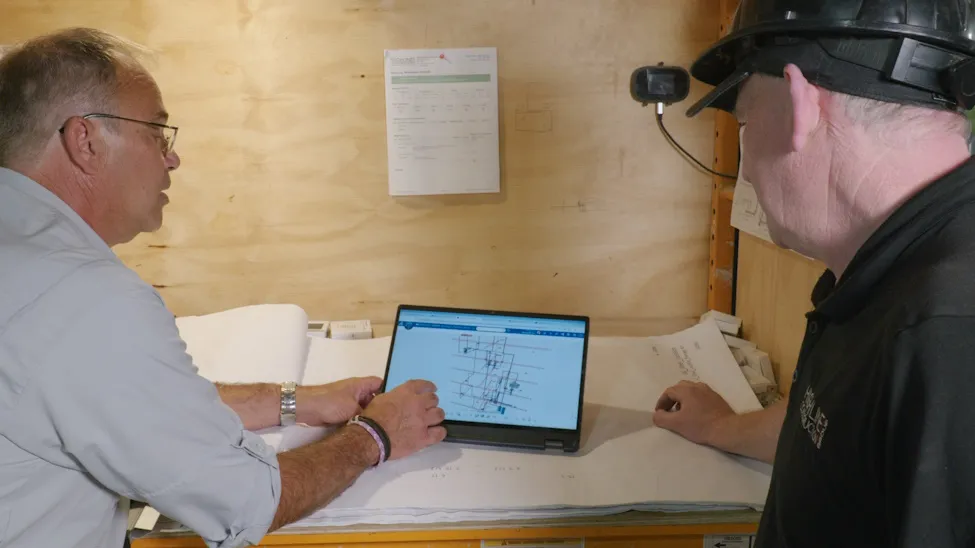
Virtual twins also eliminate the complex mental juggling act required to review 2D paper documents, yet work in a 3D world.
“With paper documents, everyone sees only a piece of the project, and they see it in two dimensions,” said Michael Cunningham, the other co-founder of BOXXCRAFT. “It’s very much a spatial thinking exercise to take five, six, seven different sets of plans from the architect, civil engineers, mechanical engineers, structural engineers . . . all the different stakeholders to build a 3D image in your head.”
With the virtual twin, however, it’s no longer necessary to perform those mental conversions. What’s more, precise measurements in virtual reality deliver valuable advantages.
“It lets everybody know exactly where pipes, penetrations, MEPs [mechanical/electrical/plumbing runs], stairs, windows and doors need to go,” Cunningham said. “Which allows us to easily verify the window and door shop drawings and order them much earlier in the process than would be typical with PDFs. So why wouldn’t you want to have a virtual twin that reduces risk, making mistakes that would normally happen along the way visible in the design stage, so you can fix them as digits rather than physical materials?”
Knowledge is power. Everybody sees what they’re working on. Everybody works happier. Everybody – architects, engineers, designers, homeowners – get what they want in the quickest way possible, saving time and money and delivering a quality job.
Kotronis and Cunningham hope that BOXXCRAFT’s success with virtual twins will inspire the entire construction industry to adopt digital prototyping as a standard operating procedure.
“We would really like to see an industry migration from a document-centric system of static information to a process that is model-centric so that we focus on the ‘why,’ which dictates the ‘what’ and the ‘where,’” Kotronis said.
“Knowledge is power,” Cunningham said. “Everybody sees what they’re working on. Everybody works happier. Everybody – architects, engineers, designers, homeowners – get what they want in the quickest way possible, saving time and money and delivering a quality job.”
Discover more about the Integrated Built Environment industry solution experience.

BOXXCRAFT was founded in 2019 by Mike Cunningham and James Kotronis. The company aims to simplify the creation of bespoke products without compromising on quality by helping clients in the construction industry embrace advanced 3D modeling technology to change the way they handle their custom design to fabrication process.
Headquarters: New York, US
For more information: https://boxxcraft.com
Maximize construction sustainability and project profitability through collaboration and productization
Industry
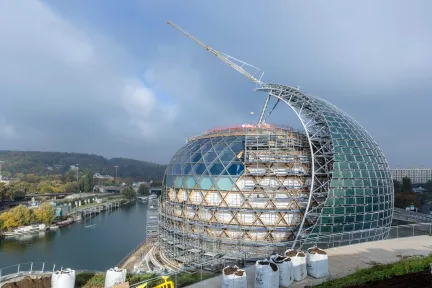
Italian engineering studio VLP+P implemented the 3DEXPERIENCE platform on cloud to design complex surfaces in 3D.
Customer Story
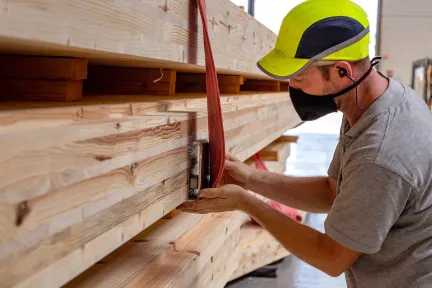
Gaining up to 60% productivity in mass timber production for construction industry.
Customer Story
The company rolls out the 3DEXPERIENCE platform across its global business, benefiting from streamlined decision-making, reduced waste, enhanced quality, and the ability to handle increasingly complex projects.
Customer Story
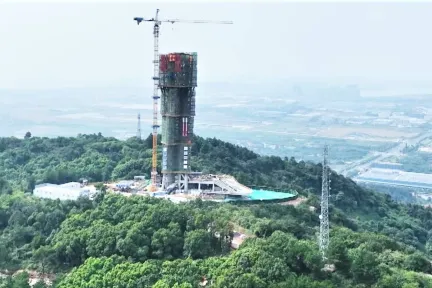
Using industry solutions Building Design for Fabrication and Integrated Built Environment, China's Central-South Architectural Design Institute (CSADI) embraced smart construction on the 3DEXPERIENCE p
Customer Story
CadMakers used Dassault Systèmes’ 3DEXPERIENCE platform on the cloud, including Design for Fabrication industry solution experience (CATIA) and Optimized Planning industry process experience (DELMIA) to virtually model and simulate construction.
Customer Story
Investigate how Branch Technology uses 3DEXPERIENCE Cloud to process complex geometries for digital fabrication. Achieve accuracy and improve efficiency.
Customer Story
Engineering and consultancy firm IDeCOM manages large-scale projects effectively and pursues new business models using the 3DEXPERIENCE platform on cloud.
Customer Story