

Aerospace & Defense
Bridge the gap between the virtual and real world to accelerate from concept to operations.
Industry
FLYING WHALES uses the 3DEXPERIENCE platform to plan and optimize their massive helium-electric airships and purpose-built factory.
Many remote areas remain out of reach for very heavy or oversized cargo. Roads are often nonexistent or impractical, and smaller aircraft can only carry limited payloads. The Franco-Canadian company FLYING WHALES offers an alternative: its enormous aircraft can transport the likes of timber, wind turbine blades, electric pylons, building materials and mobile hospitals, and load and unload cargo without ever touching the ground.
“Our airship functions like a floating crane,” said Tanguy Lestienne, CEO of FLYING WHALES Services. “Filled with helium, it hovers effortlessly and doesn’t need any ground infrastructure to pick up or set down cargo. And compared to planes and helicopters, its distributed electric propulsion cuts emissions by around 70%, with future models expected to reach 90%. That’s especially valuable for timber extraction, renewable energy, or new power line projects where moving and positioning heavy pylons is complex. In this line of work, we can reduce greenhouse gas emissions by almost a factor of ten.”
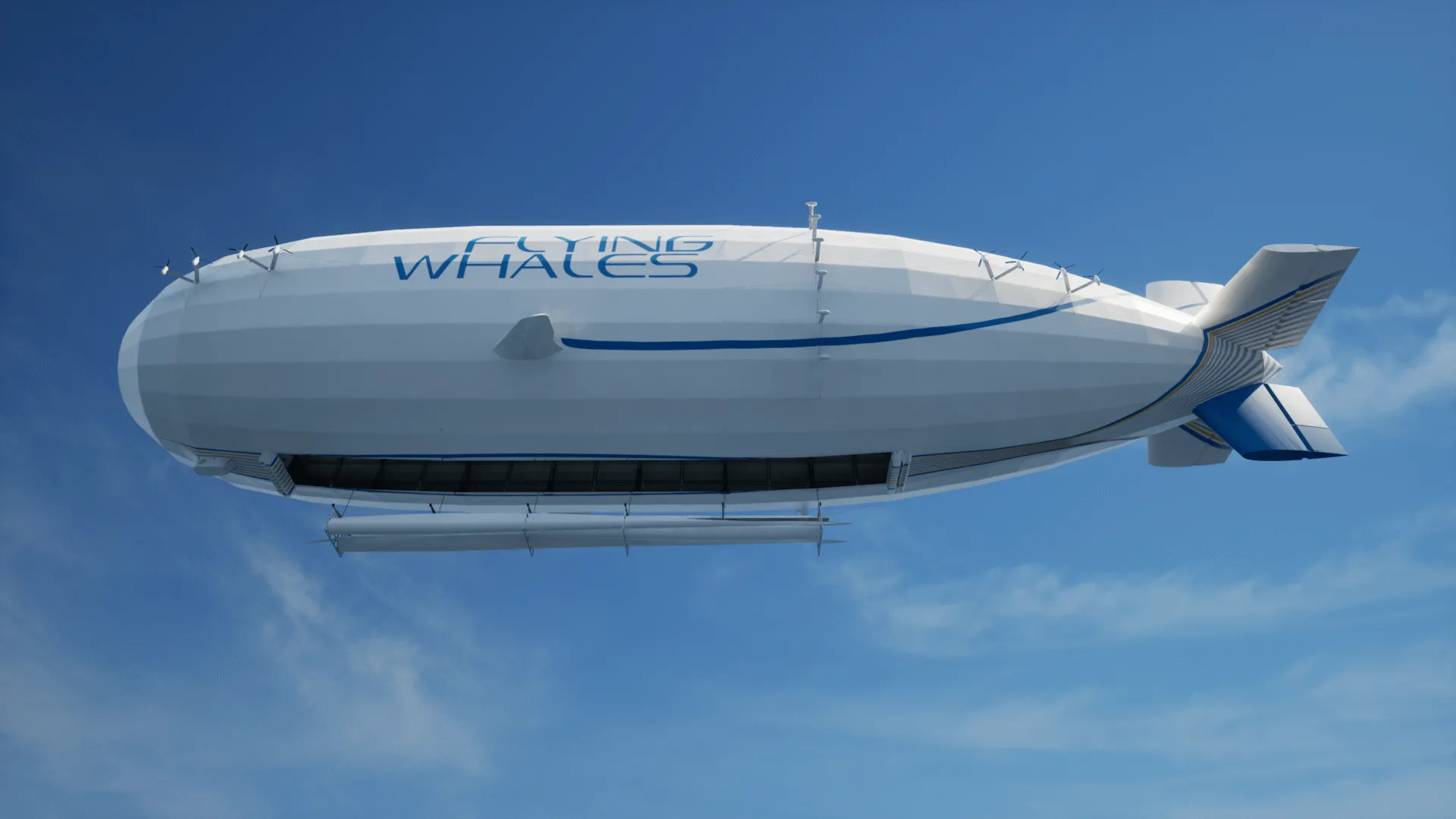
The LCA60T is a hybrid helium-electric airship stretching 200 meters from nose to tail and standing as tall as a 15-story building. Designed to carry up to 60 tons of heavy cargo, this unique air mobility concept is now ready to move from prototype to production.
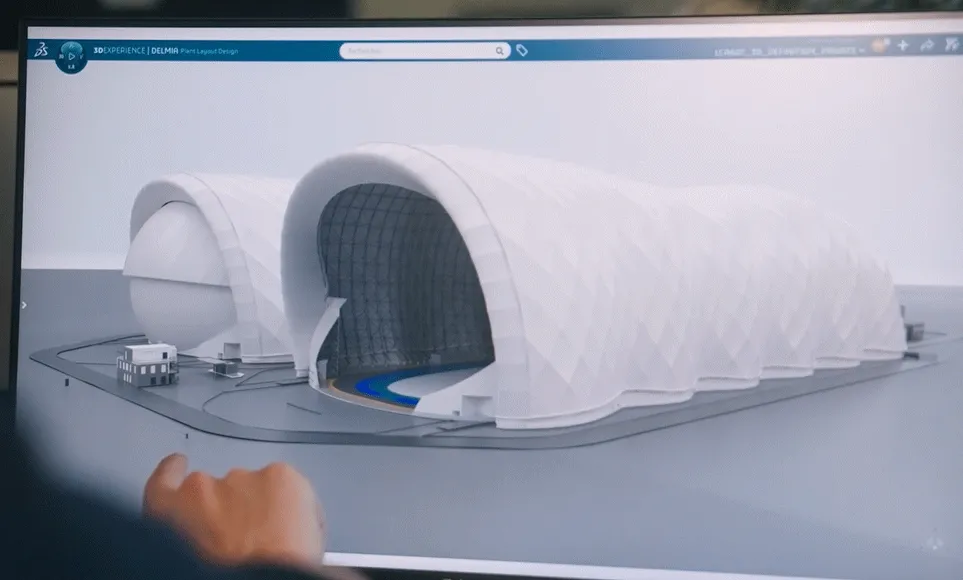
On the outskirts of Bordeaux in southwestern France, construction will soon begin on the production facility where FLYING WHALES’ hybrid airship will come to life. Spanning nearly seven hectares with ceilings reaching 60 meters high, the factory is enormous in scale yet designed with the same care for the environment as the airship itself. Inspired by biomimicry principles, it will blend into the surrounding landscape, collect rainwater for natural re-infiltration and integrate ecological compensation areas across the site. The facility’s optimized structural design will also use around 50% less steel than conventional hangars.
“The most striking characteristic of the production site is its scale and that means we have to think and work in three dimensions at all times” said Simon Debeugny, head of manufacturing engineering at FLYING WHALES. “We’ll need to know who’s working at which level, where and on what. The scale, the structure, the way the airship is assembled, everything is new.”
Managing this complexity, from designing the airship to planning how it will be built in the factory, is done entirely in Dassault Systèmes’ 3DEXPERIENCE platform on the cloud. “All aircraft development is handled on the platform, so it was only natural to use it to define our manufacturing methods and design all the tooling,” Lestienne said.
Before construction begins, FLYING WHALES has developed a complete virtual twin of the assembly site using DELMIA on the 3DEXPERIENCE platform. This navigable 3D model mirrors everything down to the workstations, cranes and assembly zones.
“Because of the scale we’re working at, we need to allocate resources with great precision so that every operation happens in the right place at the right moment,” Debeugny said. “Given that we have an aircraft that’s 50 meters high, a key challenge is keeping our personnel safe and minimizing work at height. With the virtual twin, we can take these safety requirements into account as we plan all production steps and resources.”
Working with its technology partner Keonys, the FLYING WHALES team used Dassault Systèmes’ Value Engagement methodology to map every capability from concept to production. This process helped to identify existing strengths, pinpoint gaps and build the skills required to operate the factory at full scale.
“The fundamental objective is digital continuity,” Debeugny said. “It allows us to link the airship designed in CATIA to the one being produced in DELMIA and connect the manufacturing bill of materials (MBOM) with each operational step so we can model industrial processes in detail, estimate timings and assign people and machines. We’ll end up with a complete database capturing times, parts and resources at every key moment, which will be the foundation for all future production.”
From virtual design to production planning, FLYING WHALES’ engineers and specialists collaborate seamlessly on the 3DEXPERIENCE platform to bring their hybrid airship to life.
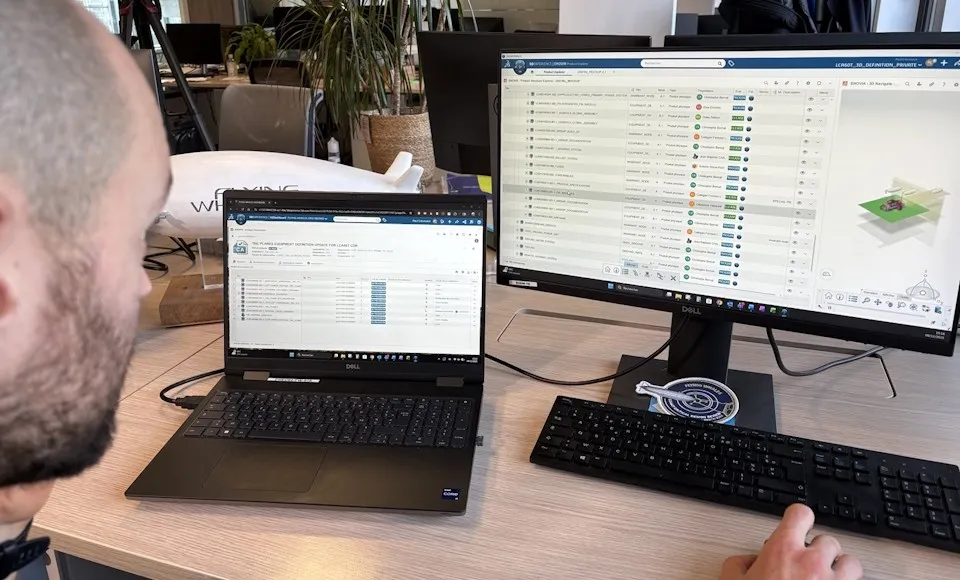
This drive for digital continuity was the main reason FLYING WHALES chose the 3DEXPERIENCE platform. The team needed an end-to-end environment where all stakeholders could work together seamlessly, keep data consistent across every stage of the airship’s development and meet all certification requirements.
From the start, FLYING WHALES received close guidance from Keonys experts on how to make the most of the 3DEXPERIENCE platform. Early on, Keonys supported the rollout across engineering teams, helping to structure how requirements, design, configurations and simulations were managed. More recently, it’s helped Flying Whales explore new areas such as MBOM creation and adapting working methods to the realities of an airship OEM.
“Whenever we have a new feature we want to use, we need to understand exactly what’s behind it,” Debeugny said. “Keonys supports us to fully develop our skills. Over the past six months, their specialists worked alongside us to implement configuration management and develop best practices in DELMIA so that by the end, we had overcome the major challenges we’d identified at the start and gained real autonomy. That empowerment has been key.”
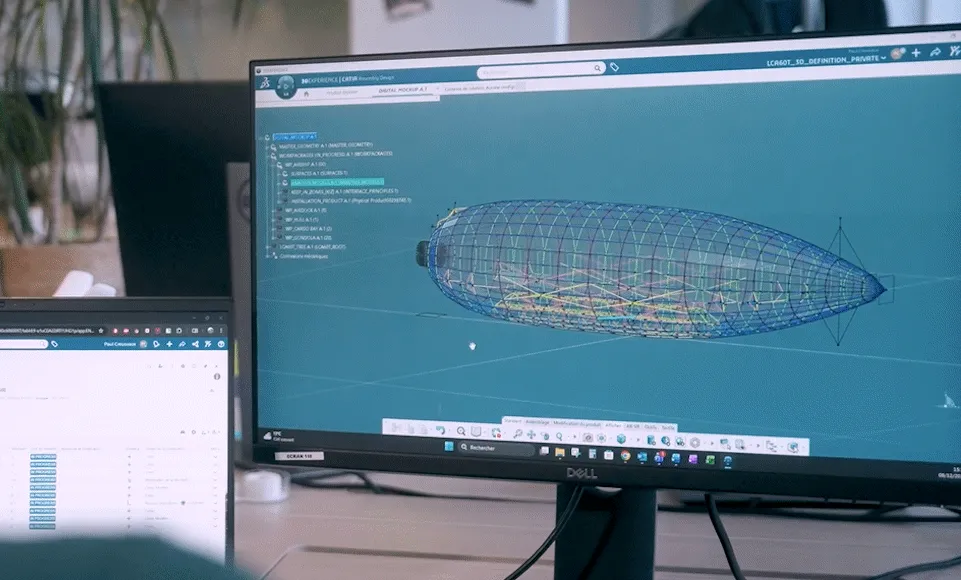
For the airship itself, FLYING WHALES engineers use CATIA on the 3DEXPERIENCE platform to model all components and structural details. The LCA60T’s rigid composite outer frame measures 200 meters long and 50 meters in diameter. Inside, multiple internal cells contain unpressurized helium for aerostatic lift, enclosed within a patented technical textile developed by FLYING WHALES.
“CATIA is the cornerstone of our entire system,” Debeugny said. “It's how we create all our parts and define the external structure, which must maintain a very precise geometry and handle significant internal stress.”
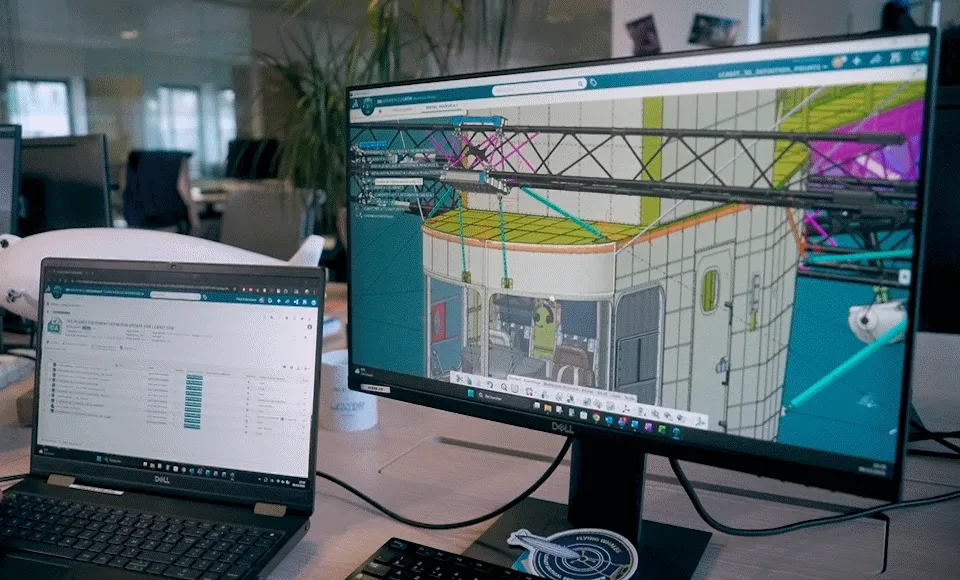
Paul Creusvaux, systems integration engineer at FLYING WHALES, added: “We use CATIA daily to explore integration topics and resolve issues in context. It lets us define the airship’s skeleton and consider how we size it and position each system to make them work together. Space allocation and coordination are key to the entire design.”
To understand how the structure responds to aerodynamic and operational loads, engineers run simulations in SIMULIA. Every iteration helps balance weight and strength, and improves the airship’s lifting capability.
“The airship is subjected to many different types of forces – aerodynamic, assembly, maintenance, and operational loads,” Debeugny explained. “We run iterative simulation loops, from component level up to the full finite element model, to evaluate performance and refine the design.”
The fundamental objective is digital continuity. It allows us to link the airship designed in CATIA to the one being produced in DELMIA and connect the manufacturing bill of materials (MBOM) with each operational step so we can model industrial processes in detail, estimate timings and assign people and machines.
The LCA60T is the product of collaboration on a global scale. FLYING WHALES leads a consortium of more than 50 companies around the world, each responsible for specific subsystems including propulsion, avionics, materials and control systems. Coordinating such a distributed network requires clear communication and a shared view of the design as it evolves.
“One of the great advantages of the 3DEXPERIENCE platform is that it lets us work on the same model with full context,” Creusvaux said. “Our teams are spread across Paris, Bordeaux, Montreal and Quebec, and we spend a lot of time integrating different systems. For example, when my colleagues in Quebec work on the machine’s propulsion system, we can instantly track any changes. The shared cloud platform makes collaboration effortless.”
That coordination is powered by ENOVIA, which provides a unified environment for managing data, processes and configurations across all partners. And thanks to the product lifecycle management layer in ENOVIA, FLYING WHALES can maintain this level of coordination throughout the project’s entire lifecycle.
“We use ENOVIA extensively to manage configurations, resolve conflicts and track every design change,” Creusvaux said. “For example, when we identified a clash between maintenance access points and the ballast-level piping, we could easily visualize the conflict and redesign the routing to free up access.”
Now that the airship’s design is finalized, the next step is validation and testing – a complex process where each company tests its components according to the specifications defined and shared within the 3DEXPERIENCE platform.
“For certification, we must demonstrate at all times that the airship we intend to build is the one we are actually building,” Debeugny said. “We need data that is intact, stored and protected in the Dassault Systèmes cloud, and that flows from one role to another, from the design engineer to the industrial engineer, and tomorrow to the production operator. Any deviation must be fully traced and justified.”
FLYING WHALES’ LCA60T hybrid helium-electric airship effortlessly carries up to 60 tons of oversized cargo, reaching remote locations without roads or runways, while cutting emissions and operating like a floating crane.
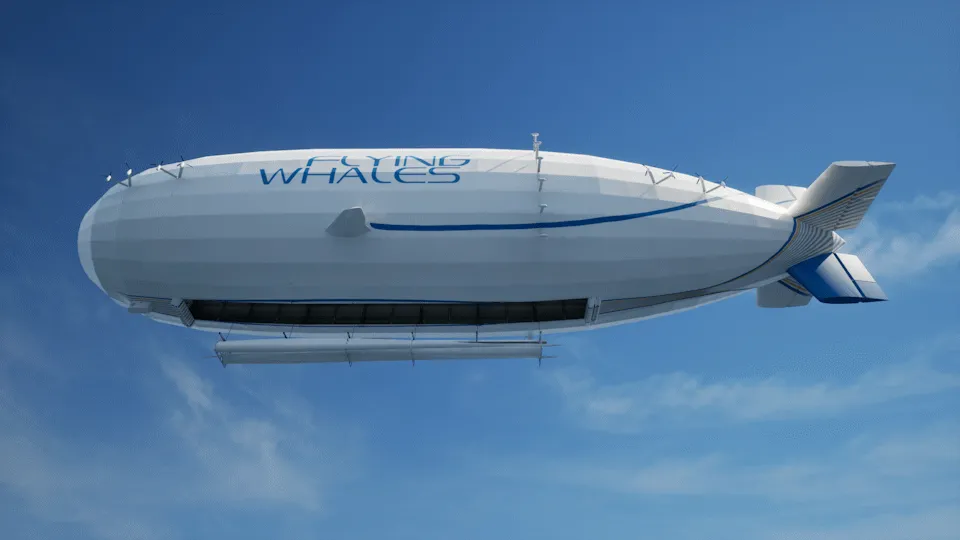
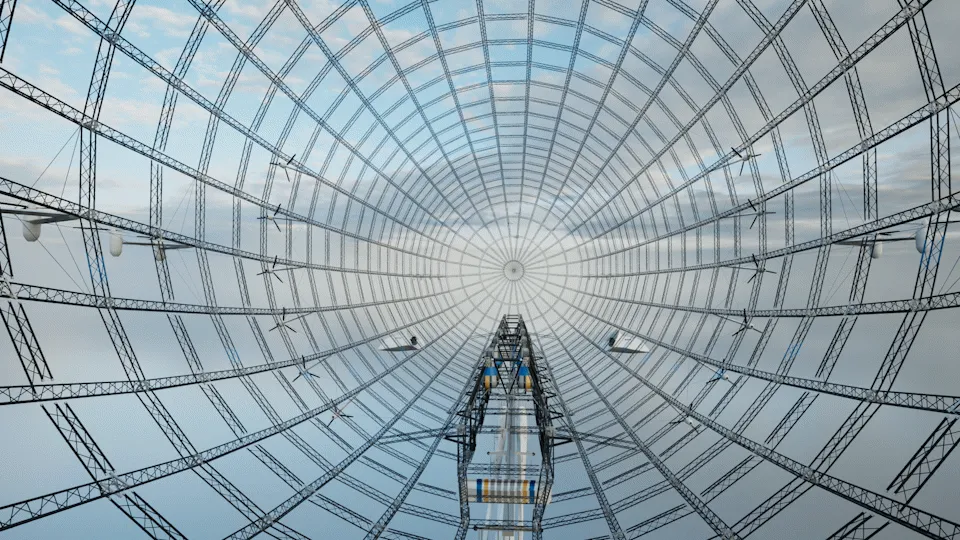
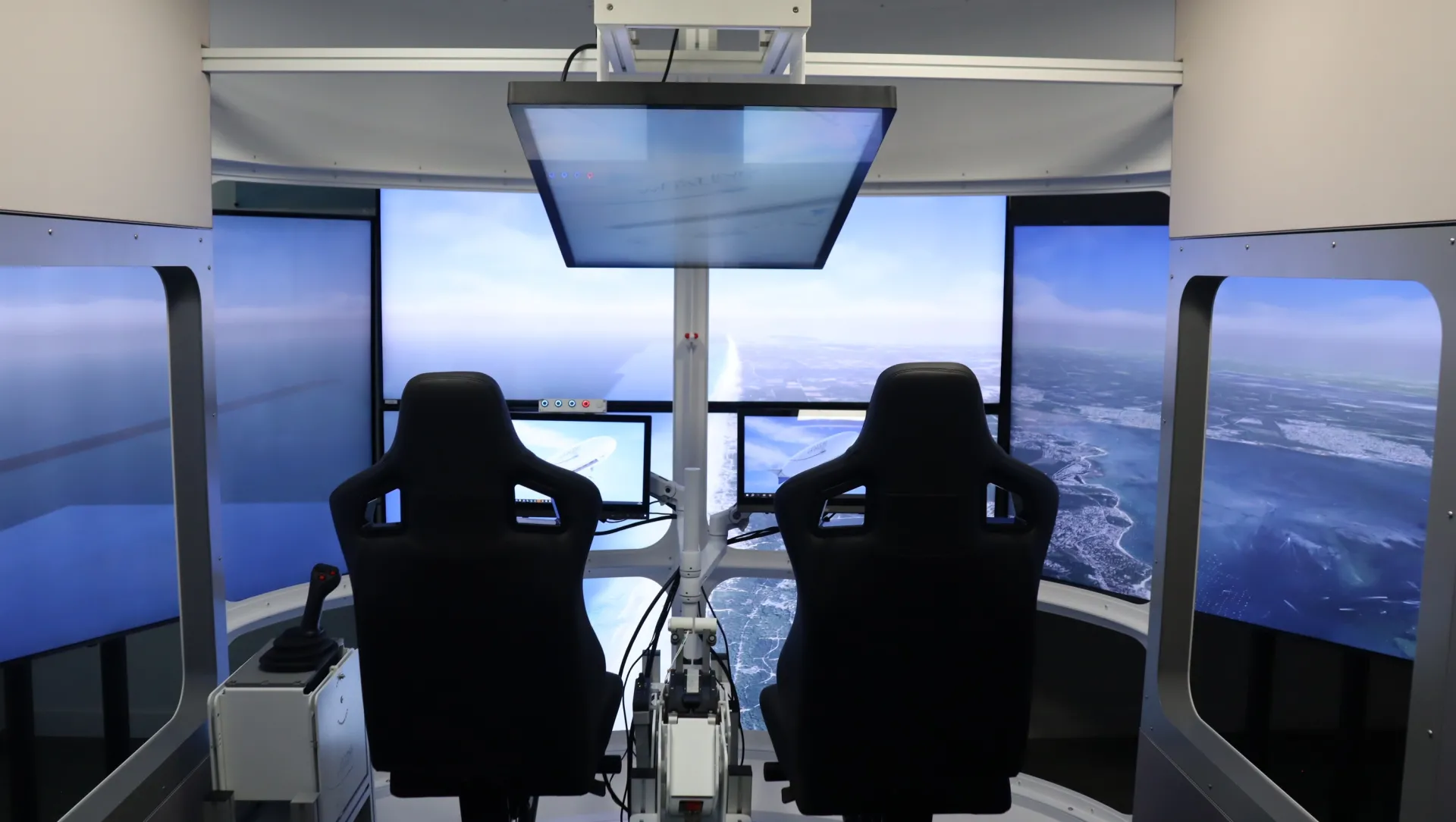
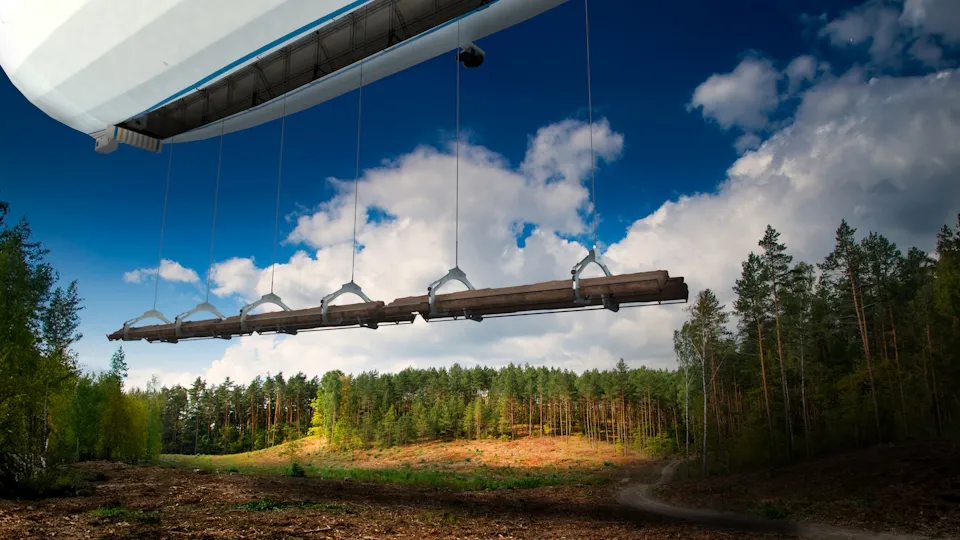
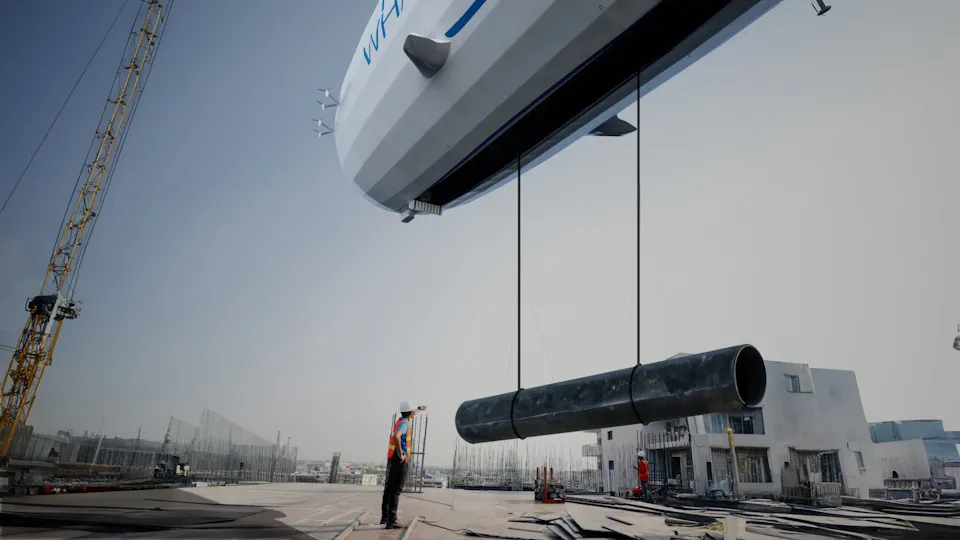
Sustainability is a key consideration across the airship program. By design, the LCA60T offers a lower carbon emissions alternative to helicopters, airplanes and trucks. FLYING WHALES believes its sustainable transportation solution also has far wider environmental benefits.
“Helium will reduce energy consumption, and because the ship can carry 60 tons, it reduces the number of transport rotations needed,” said Sarah Pelleray, environmental engineer at FLYING WHALES. “Since loading and unloading happen while hovering, we’ll also avoid building roads or heavy infrastructure, which offers huge ecological benefits.”
This sustainability focus extends to reducing the environmental impact of all other aspects of the airship, including propulsion, payload systems and structural materials. The company began a full lifecycle assessment early in the program to evaluate various environmental criterion including materials, manufacturing, operations and end of life, and uses this information to continuously refine and improve the design of its airship.
“The 3DEXPERIENCE platform helps me access reliable data quickly, visualize structures and analyze materials,” Pelleray said. “Each new milestone gives us more data and allows us to refine our understanding of the airship’s environmental footprint. The more we progress, the more we can focus our efforts where they make the biggest difference.”
The 3DEXPERIENCE platform helps me access reliable data quickly, visualize structures and analyze materials.
Once operational, FLYING WHALES’ factory will have the capacity to produce up to twelve airships per year. It will then serve as the blueprint for future facilities in Quebec and Australia, each designed to replicate the same digital and industrial model.
“The goal is to duplicate the industrial processes as well as the factory, tooling and digital backbone that supports production,” Lestienne said. “Once the airships are operational, we’ll also use the platform to manage flight planning, mission preparation and maintenance to deliver a complete logistics solution. Our maintenance team is already preparing procedures in the 3DEXPERIENCE platform, which is perfectly suited to this task.”
By managing every stage of the airship’s lifecycle within a single collaborative environment, FLYING WHALES is creating a new model for sustainable air mobility. It’s an approach that combines digital precision with environmental awareness, and global collaboration with local impact.
“The platform is inseparable from the project,” Debeugny said. “We’ve used it from the beginning, and it remains central to how we work today.”
FLYING WHALES is a French-Canadian company working on an ambitious and unique program supported by skilled teams and an industrial consortium to develop the LCA60T, a rigid airship for the transport of heavy loads, with a carrying capacity of 60 tons. Originally designed to access renewable wood resources in hard-to-reach areas, the LCA60T’s unique hover loading and unloading capability will solve many logistical and landlocked challenges around the world with a very small environmental footprint at low cost. FLYING WHALES is also developing FLYING WHALES SERVICES, the operating company for the LCA60T. Its Canadian subsidiary, FLYING WHALES QUÉBEC, of which Investissement Québec is a shareholder, will support the aeronautics program and help expand operations in North America.
For more information: http://flying-whales.com
A long-standing partner of Dassault Systèmes, KEONYS, a subsidiary of the CENIT group since 2017, supports the digital transformation of companies whose strategy is part of a sustainable innovation approach. Committed to supporting the implementation of solutions that best meet its customers’ needs, KEONYS provides comprehensive consultancy services and can assist with all training requirements.
For more information: www.keonys.com
Bridge the gap between the virtual and real world to accelerate from concept to operations.
Industry
Commercial aviation connects people across continents and cultures. At Dassault Systèmes (3DS), we play a crucial role in shaping the industry by leveraging advanced technologies and collaborations across the market.
Market Segment
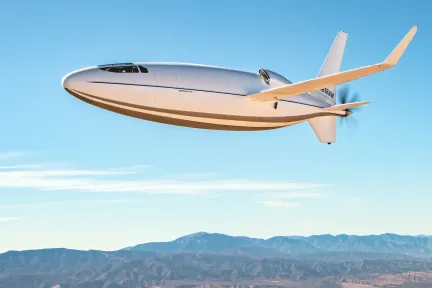
Discover how Otto Aviation will bring to market the world’s first transonic super-laminar aircraft.
Customer Story
The 3DEXPERIENCE platform supports the India-based company in engineering over 100 unique intellectual property breakthroughs across robotics, aerospace and advanced materials.
Customer Story
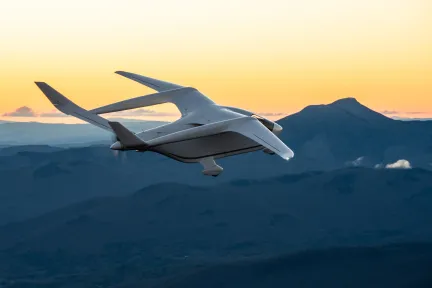
Discover why BETA Technologies chose the 3DEXPERIENCE platform to facilitate a more holistic approach to design and manufacturing.
Customer Story
Blue Spirit Aero uses the 3DEXPERIENCE platform to develop Dragonfly, a hydrogen-powered aircraft, with Virtual Twins for design, simulation, and certification.
Customer Story
Airbus has deployed Dassault Systèmes’ (3DS) applications to drive a global collaborative solution throughout the value chain from engineering to manufacturing..
Customer Story
Airbus Helicopters enhances innovation with the 3DEXPERIENCE platform, streamlining simulation process and data management from design to certification.
Customer Story
Supported by the Keep Them Operating industry solution experience on the 3DEXPERIENCE platform, NIAR will take the B-1 Lancer aircraft completely apart, scan every single structural element and digitally reassemble the aircraft to create virtual twins for future sustainment activities.
Customer Story