
Aerospace & Defense
Bridge the gap between the virtual and real world to accelerate from concept to operations.
Industry
Blue Spirit Aero turns hydrogen-powered light aircraft into reality by using the 3DEXPERIENCE platform to develop Dragonfly from concept to production.
Aviation stands at a critical crossroads. As nations and operators commit to net-zero targets, the demand for cleaner, more efficient flight has never been greater.
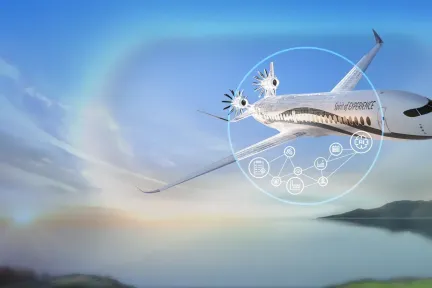
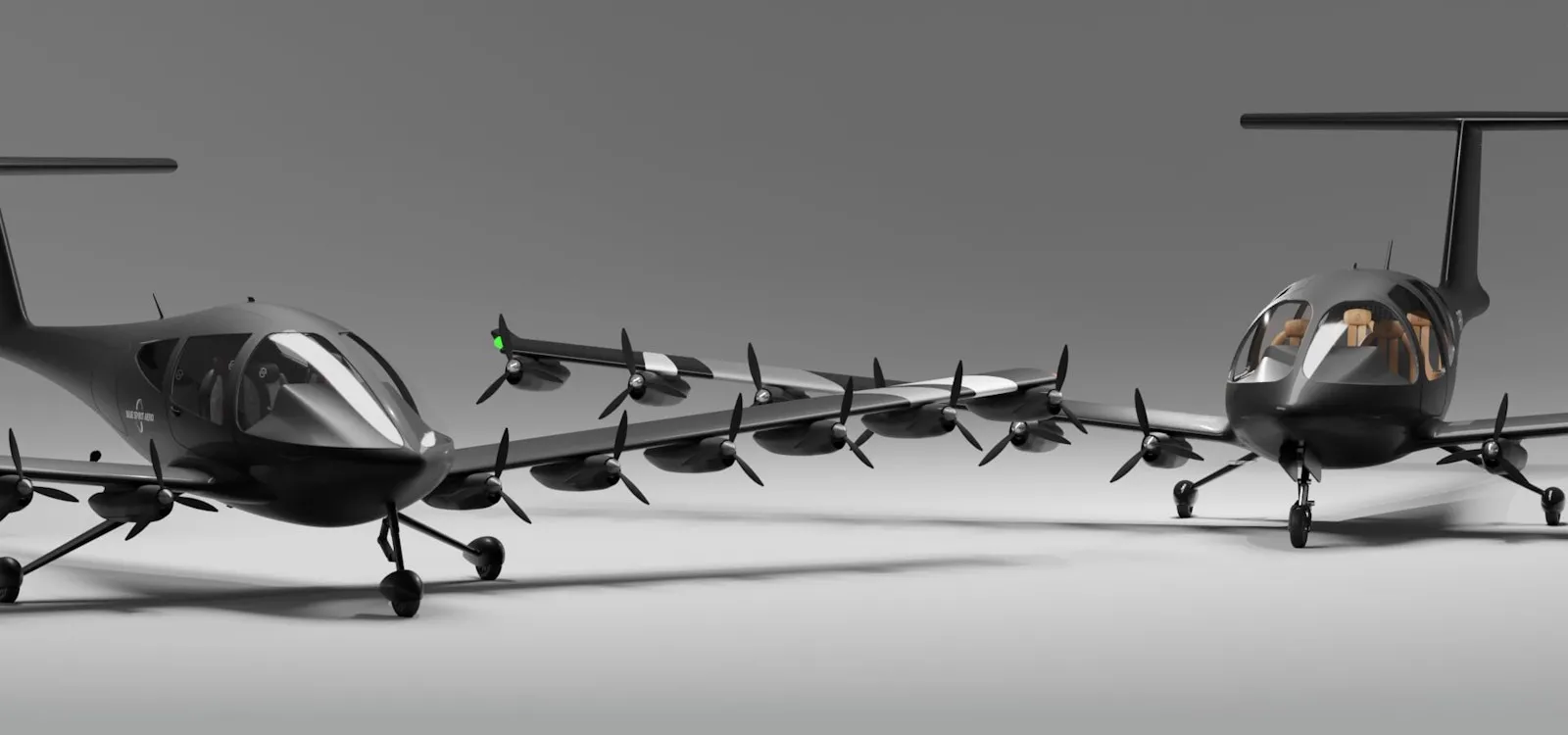
French company Blue Spirit Aero, which was founded in 2020, is responding to the industry’s urgent call for reinvention with Dragonfly, a next-generation four-to-six-seat aircraft that has been designed from the ground up to run on gaseous hydrogen and which the company hopes will be used by flight schools.
“As hydrogen power is new in aviation, it requires a new approach to aircraft design,” said Olivier Savin, founder and CEO of Blue Spirit Aero. “That’s why we started with a clean sheet – to ensure everything is properly managed, like the safety of hydrogen and the thermal aspects of the fuel cell systems, for example.”
To develop such a transformative aircraft, Blue Spirit Aero chose Dassault Systèmes’ 3DEXPERIENCE platform on the cloud, which maintains full traceability throughout product development, allowing the company to comply with regulations and achieve its ultimate goal of obtaining certification to fly and operate.
“The 3DEXPERIENCE platform is the technology of reference in the aviation industry,” Savin said. “By developing our aircraft from concept to certification on the platform, we can give credibility to each milestone achieved and show investors, regulators and customers that viable hydrogen solutions are not just conceptual – they are being built.”
Dragonfly has been developed from two corners of the globe, with one team based in France and another in Australia. Blue Spirit Aero engineers in both locations utilize CATIA on the 3DEXPERIENCE platform to design and virtually assemble Dragonfly’s various components optimized for aerodynamics, structural efficiency and energy consumption.
The design data from CATIA is also used to inform a 3D virtual twin of the aircraft that, combined with the simulation capabilities provided by SIMULIA, enables Blue Spirit Aero’s engineers to conduct structural analysis of the airframe, aerodynamic and thermal simulations as well as aero-propulsive coupling studies. This model-based simulation (MODSIM) approach means the company can quickly validate the aircraft’s design before physical prototyping.
“We completed the detailed 3D design of Dragonfly’s shapes, and then tested and validated its specifications, in just nine months,” Savin said. “Thanks to the virtual twin and its simulation capabilities, the impacts of design modifications are immediately visible, so we have proof of whether the aircraft is functioning correctly or not. We also consider maintainability and scalability of the product early on, to avoid pursuing unpromising avenues.”
Meanwhile, ENOVIA provides secure, cloud-based access to the design data, enabling structured workflows, real-time collaboration and traceability. By centralizing data and collaboration in the cloud, the multidisciplinary teams can iterate rapidly, leading to faster innovation cycles.
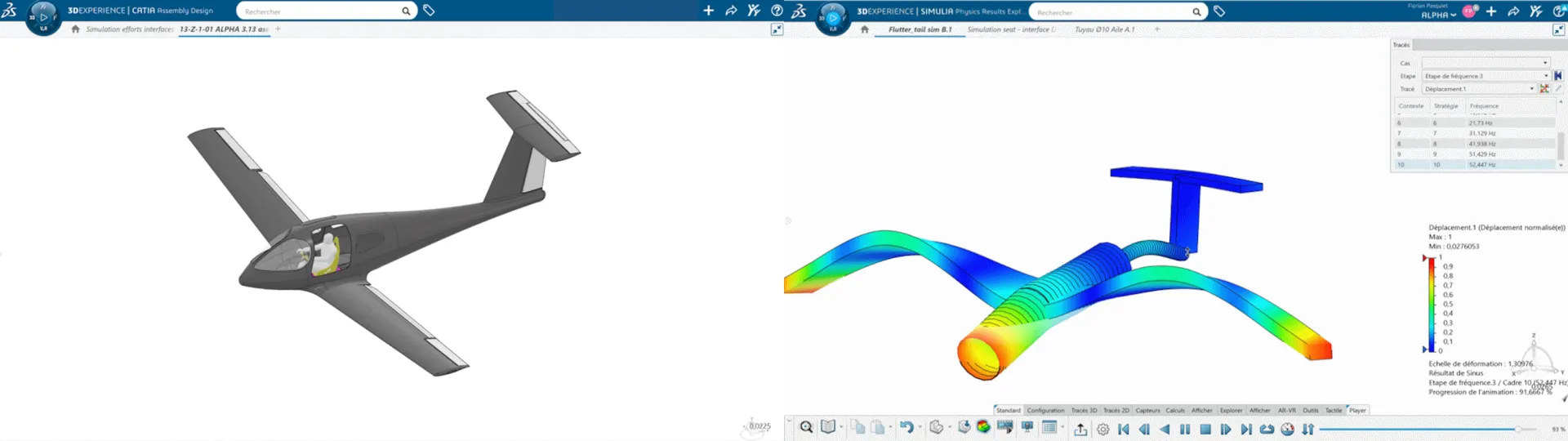
Acting as a digital testbed, the virtual twin has enabled technological leaps and breakthroughs that are not possible with incremental development. Dragonfly’s optimized propulsion is just one example.
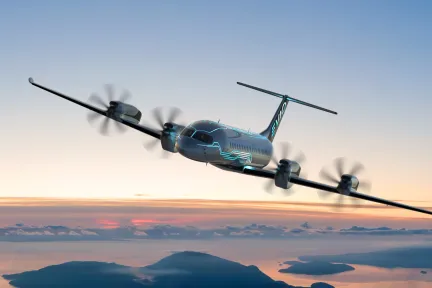
“We don’t rely on a single motor,” Savin said. “Instead, Dragonfly distributes power across 12 independent propulsion units, making the aircraft highly resilient to failure. Our hydrogen storage systems are integrated beneath the wings to minimize leakage risks while maximizing cabin space. Even if one engine fails, the aircraft remains fully operational.”
This architecture was conceived to fully leverage the advantages of hydrogen-powered aviation. Achieving it, however, required extensive and highly complex multi-physics engineering work.
“The 3DEXPERIENCE platform proved instrumental throughout the process, providing advanced design and simulation capabilities within a collaborative environment,” Savin said. “It was only through this that we could create a complete virtual twin of the aircraft.”
The 3DEXPERIENCE platform proved instrumental throughout the process, providing advanced design and simulation capabilities within a collaborative environment. It was only through this that we could create a complete virtual twin of the aircraft.
Dragonfly’s optimized weight enables a cruise speed of 230 kilometers per hour (125 knots) and a flight range of approximately 700 kilometers (378 nautical miles) – three times that of equivalent battery-powered solutions, which today are limited to two-seater aircraft. Refueling takes just five minutes, a big advantage for operators, such as flying schools or aero clubs, that need their planes back in the air quickly. Also, with the ability to perform discrete approaches and operate from short runways, Dragonfly opens the door to exciting new routes and passenger experiences.
Through the powerful design, collaborative engineering, advanced simulation and virtual experimentation capabilities enabled by the 3DEXPERIENCE platform, Blue Spirit Aero has also been able to tackle sustainability from multiple angles. While the aircraft is designed for environmentally-friendly operation thanks to its hydrogen-electric engine, the design process is also virtuous.
“We have an extremely efficient development process with minimal effort to achieve a viable and first-time-right prototype, which reduces costs and carbon footprint,” Savin said.
Blue Spirit Aero has begun proving its concept. It recently achieved a world first: carrying out hydrogen refueling of a light aircraft at an airfield, which took place at Le Mans airport, France. Shortly afterward, at the Paris Air Show, the company unveiled to the general public its 1:1 scale ground demonstrator that it developed using its virtual twin. The demonstrator has operational engines and cockpit and allows Blue Spirit Aero to perform all required on-the-ground tests.
The next step will be a fully functioning flying demonstrator. Data from the virtual twin, combined with real-world information garnered from physical demonstrators, will be key to success.
“The virtual twin is an extremely high-fidelity digital model, but its full value emerges when compared with real-world data,” Savin said. “That real-world counterpart is provided by a series of demonstrators, each designed to test and validate specific technologies independently. The flight-test demonstrator collects operational data that continuously updates and refines the virtual twin. The two, therefore, evolve in parallel.”
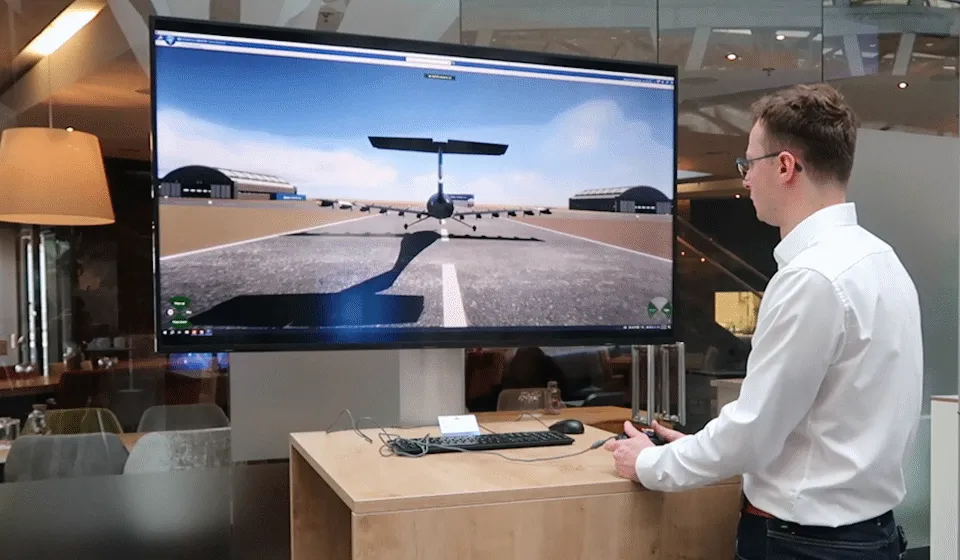
Blue Spirit Aero will also use the virtual twin to support its marketing efforts. Using 3DEXCITE, the 3D design data can be converted into a virtual reality (VR) model, providing an immersive experience for future pilots and customers. Using a VR headset, prospective clients are placed in conditions that closely mirror real-world operations. They can familiarize themselves with the aircraft, explore the cockpit and cabin, move around, rotate within the space and even change interior finishes, such as seat textures, with a simple gesture.
Regulatory approval is key to Dragonfly’s commercial future. But certification is a comprehensive endeavor that requires Blue Spirit Aero to demonstrate that its aircraft meets strict safety standards defined by regulatory bodies, including the European Union Aviation Safety Agency (EASA) and the US Federal Aviation Administration (FAA).
“Type certification from scratch is very challenging,” said Catherine Giudicelli, Blue Spirit Aero’s head of airworthiness. “We must meet a lot of requirements in a short time frame. We also need to align the aircraft design with proof of compliance. Designers continuously improve Dragonfly, but we must ensure these improvements don’t compromise the compliance we’ve already achieved. A priority was using a platform to streamline the process and provide the full traceability we needed.”
Managing this complexity required a consistent set of structured digital workflows that could track every design change, link engineering data directly to source documents and certification data, and alert the team when re-analysis was needed. Giudicelli was keen to leverage ENOVIA on the 3DEXPERIENCE platform on the cloud because she felt it perfectly met her needs.
“If a design element is modified, we receive an alert to reassess the compliance, ensuring traceability,” Giudicelli said. “This traceability is the platform’s primary advantage. Every action, update and verification step is logged in the system. This creates a digital record of compliance activities that can be used for audits and regulatory review.”
Working alongside Dassault Systèmes and its business partner DPS, who supported Blue Spirit Aero with implementation, onboarding and training, Giudicelli benefited from the platform’s easy access to dashboards and applications dedicated to Dragonfly’s certification workflows. Leveraging a comprehensive library of regulatory requirements, teams created a structured certification basis and plan applicable to Dragonfly. Everything is accessible in one location. The platform also enabled Blue Spirit Aero to create role-based permissions, allowing each contributor to only access or modify what’s relevant to their expertise.
The next certification milestone has been achieved through Prefab – a France 2030 funded partnership between Blue Spirit Aero, Dassault Systèmes and aerospace supplier Soben. Prefab has seen the creation of built-in processes supporting Blue Spirit Aero’s Design Organization Manual compliant with EASA’s requirements (Part 21 Subpart J) – all on the 3DEXPERIENCE platform. This included full engineering traceability and preparing certification data that will be submitted to EASA to achieve type certification. As a result, Blue Spirit Aero will become a pioneer in the air hydrogen certification process in Europe, paving the way for a new generation of OEMs looking to innovate with hydrogen power – allowing them to significantly reduce the time to certification.
In parallel with its prototype development, Blue Spirit Aero is also refining production processes for Dragonfly. The digital planning of the production facility will be carried out using DELMIA’s virtual twin capabilities, while local Dassault Systèmes business partner Faactopi will provide guidance on how the production floor should be set up to optimize aircraft assembly.
“The virtual twin will support Dragonfly throughout its entire lifecycle including operations and maintenance, which present a new layer of complexity involving supply chains across disparate airports,” Savin concluded. “We can design and test the aircraft optimally based on its future use. Thanks to the efficiency of our collaboration and the value of Dassault Systèmes’ solutions, we’re confident we’ll deliver and certify hydrogen aircraft to the market before the end of the decade.”

Blue Spirit Aero was founded in 2020 by Olivier Savin, a hydrogen expert who has worked on implementing hydrogen in different airborne applications for over 25 years. The company is turning the dream of hydrogen-powered light aircraft into reality by developing Dragonfly, its innovative zero-emission aircraft that enables quiet flight, provides unrivaled safety and features low operational costs. These benefits are achieved through a clean sheet design of a new aircraft architecture featuring distributed electric propulsion paired with multiple hydrogen electric powertrains.
For more information: https://bluespiritaero.com/
Founded in 1997, Digital Product Simulation (DPS) has acquired a reputation for excellence when it comes to integrating analysis and simulation in the design process of industrial products. DPS has three offices in France and employs approximately 150 engineers specialized in consulting, methodology, training and software development. Its range of services enables DPS to propose the digital solution best suited to each industry-related problem.

By combining the manufacturing industry’s most cutting-edge technology and proprietary tools, Faactopi provides Manufacturing-as-a-Service to companies that want to industrialize their innovations quickly, flexibly and cost-efficiently with no compromise on quality. Its mission is to transform the way innovations are brought to life by providing flexible, efficient and sustainable manufacturing solutions that bridge the gap between concept and industrial reality.
For more information: https://faactopi.com/
Bridge the gap between the virtual and real world to accelerate from concept to operations.
Industry
Commercial aviation connects people across continents and cultures. At Dassault Systèmes (3DS), we play a crucial role in shaping the industry by leveraging advanced technologies and collaborations across the market.
Market Segment
Sanitary product manufacturer Geberit leverages the 3DEXPERIENCE platform for handling mechanical engineering, design management and collaboration.
Customer Story
Discover how EVIO improved collaboration with a single connected environment for 3D design, product data management and virtual reality experiences.
Customer Story
UUDS Aero cut cabin interior processing from two weeks to two days with the 3DEXPERIENCE platform, improving design and aircraft cabin experience.
Customer Story
Discover how student engineering project Silesian Phoenix uses the 3DEXPERIENCE platform to improve collaboration and accelerate Mars rover development.
Customer Story
Airbus has deployed Dassault Systèmes’ (3DS) applications to drive a global collaborative solution throughout the value chain from engineering to manufacturing...
Customer Story
Connecting engineering and manufacturing to efficiently build complex assemblies for the aerospace industry.
Customer Story
Valserve utilizes Dassault Systèmes’ DELMIA Ortems across French sites to seamlessly manage contingencies, test various scenarios and minimize disruptions.
Customer Story
International industrial air-filtration manufacturer uses SOLIDWORKS and the 3DEXPERIENCE platform to connect design and production across continents.
Customer Story