







Saint-Louis Hospital AP-HP
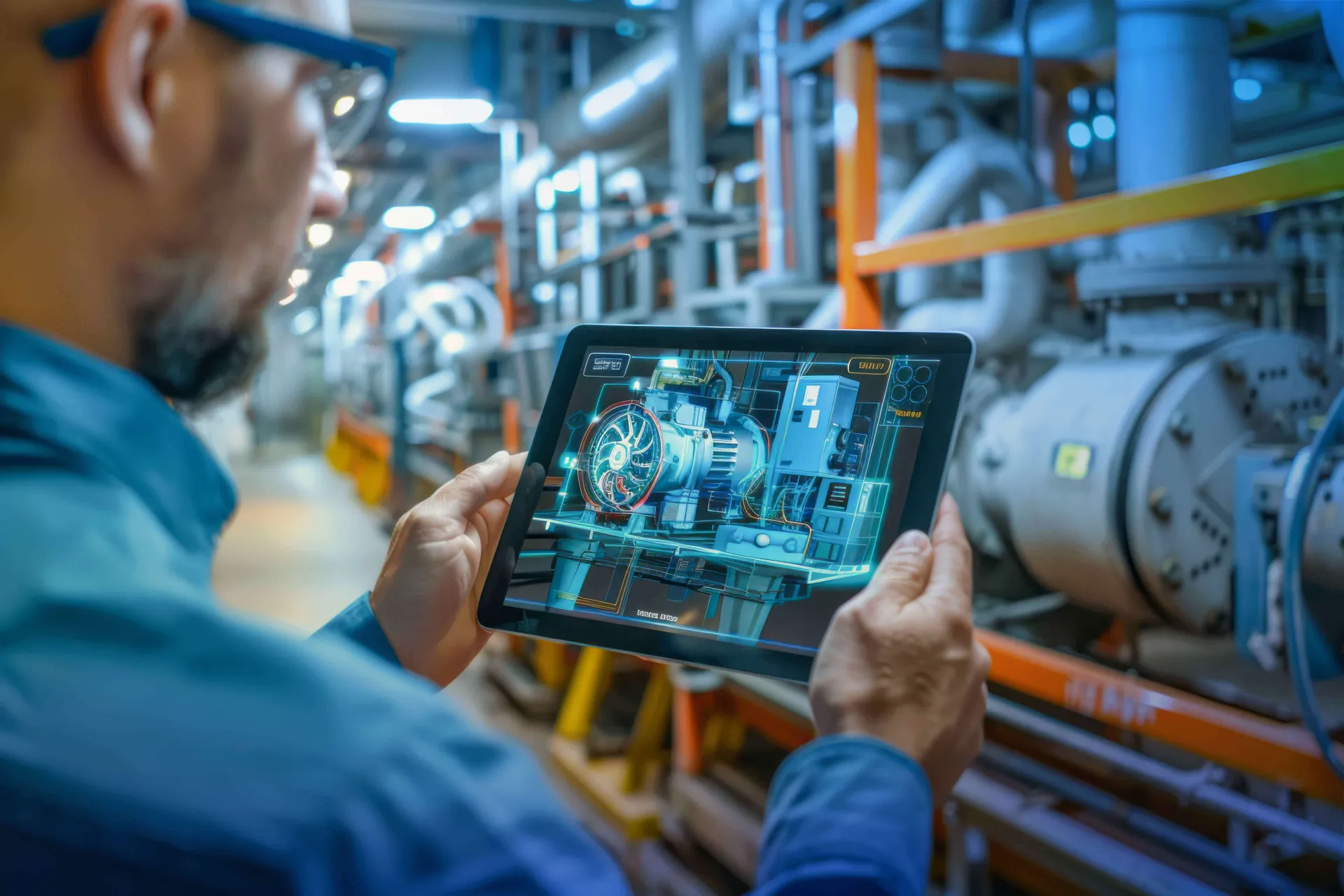
Innovative training powered by augmented reality and virtual twin technology transforms infection prevention at Saint-Louis Hospital AP-HP.
Customer Story
Augmented Reality (AR) revolutionizes how businesses operate by seamlessly blending digital content with real-world environments to enhance decision-making and improve productivity.
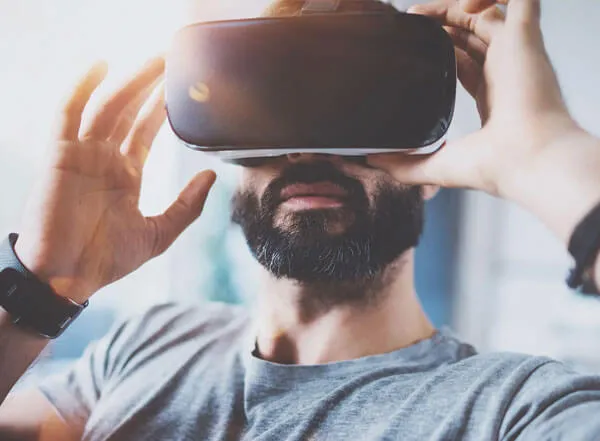
Augmented Reality (AR) is an interactive technology that overlays digital information onto real-world environments in real-time. Unlike Virtual Reality (VR) that immerses the user in a virtual World, AR enhances the physical world by adding contextual digital layers.
AR technology combines three essential elements: a combination of real and virtual worlds, real-time interaction and accurate 3D registration of virtual and real objects for seamless integration.
For augmented reality to work accurately, the system must constantly determine the relative position of the user and the physical objects in space. AR devices use a combination of sensors, cameras and computer vision algorithms to understand where the operator is and how digital information should be anchored in the real world.
This spatial awareness ensures that the digital content appears perfectly aligned with physical surfaces or objects, remaining stable even when the user or the object moves.
To achieve this, different localization technologies can be used — each with its own strengths depending on the use case. Two main approaches can be distinguished:
The system localizes the operator within an environment, often with centimeter-level accuracy. Depending on the device, it may use GPS, inertial sensors, camera images or a combination of these. Techniques like SLAM (Simultaneous Localization and Mapping) enable continuous tracking by mapping the surroundings while following the user’s position.
This approach focuses on specific elements in the environment. The system identifies and precisely follows objects either through marker-based tracking (using a visual reference such as a QR code or image) or model-based tracking (using the object’s 3D geometry). This allows digital instructions, annotations or 3D models to be precisely anchored to physical objects, even if it moves or the camera angle changes.
Both technologies can be combined, allowing organizations to benefit from precise object anchoring and robust environmental localization in the same AR application.
Displaying augmented reality content follows a three-step workflow that moves from capturing the real world to seamlessly blending it with digital information:
The device captures real-world data through cameras, LiDAR, depth sensors, GPS and motion detectors. This data is continuously analyzed to track the user’s position and the geometry of the environment.
Powerful onboard or cloud-based processors use computer vision and AI to identify surfaces, objects and markers. They interpret spatial data in real time to maintain accurate registration between virtual and physical elements.
Finally, the AR system renders the virtual content and overlays it onto the user’s view. This can be achieved in several ways:
Understanding the distinctions between Augmented Reality (AR) and Virtual Reality (VR) helps organizations select the optimal technology for their specific business requirements and use cases.
Augmented reality maintains connection to the physical world, allowing users to interact with both real and virtual objects simultaneously while preserving spatial awareness and environmental context.
Virtual Reality completely immerses users in digital environments, disconnecting them from physical surroundings to create controlled, distraction-free experiences for training and simulation applications.
Mixed Reality combines the best of both worlds, enabling virtual objects to interact with real-world elements. Users can manipulate digital content that responds to physical surfaces and environmental conditions
| Aspect | Augmented Reality (AR) / Mixed Reality (MR) | Virtual Reality (VR) |
| Environment | Enhances real world with digital overlays and interaction | Creates completely virtual environments |
| User Immersion Level | Partial immersion | Full immersion |
| Hardware & Support | Smartphones, tablets, AR glasses, projector | VR headsets, controllers, sensors |
| Real World Interaction | Maintains real world connection | Blocks real world completely |
| Setup Complexity | From simple device-based setup to more advanced vs work cell configuration | Room-scale setup often needed but can also work with only a headset and a controller |
Augmented Reality excels in production and maintenance contexts, training, design collaboration and customer engagement where real-world context is essential. AR provides contextual information without disrupting existing workflows. Mixed Reality further enhances these capabilities by bridging the gap between the physical and virtual worlds. It enables collaborative design sessions where teams can manipulate shared virtual objects in real spaces, making it ideal for complex product development and real-world simulation to validate designs.
Virtual Reality performs better for simulation, immersive training and entertainment applications requiring full environmental control. VR creates safe spaces for high-risk training scenarios.
Augmented reality dramatically improves workplace productivity by providing workers with instant access to relevant information without disrupting their workflow and reducing consultation time.
AR transforms traditional training by creating immersive, hands-on learning experiences. Employees practice complex procedures while receiving real-time guidance for faster skill development.
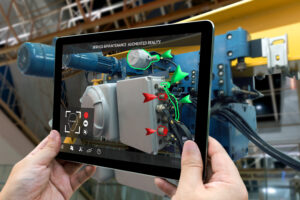
By providing step-by-step visual instructions displayed directly in the workcell and real-time quality checks, augmented reality significantly reduces human error in manufacturing, assembly and maintenance processes.
AR helps organizations optimize resource utilization by enabling virtual prototyping, reducing physical mockups and minimizing material waste throughout development cycles.
Augmented reality enables seamless collaboration between remote teams by allowing experts to provide real-time assistance and guidance regardless of their physical location.
Augmented reality plays a crucial role in advancing sustainable business practices by enabling virtual prototyping, reducing material waste and optimizing energy consumption throughout product lifecycles. Organizations leverage AR to support circular economy principles, extend product lifecycles through improved maintenance and enable better material recovery processes for environmental stewardship.
In addition, AR minimizes assembly errors through intuitive, real-time guidance for operators, which lowers the number of scrapped parts and further reduces waste.
Discover how CAD is transforming various industries and how our CAD solutions set new standards in design and innovation.
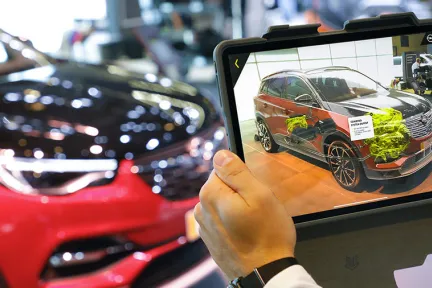
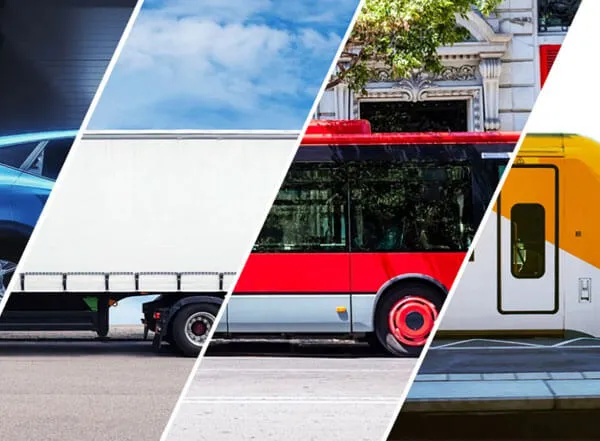
In the transportation and automotive sectors, AR supports the design and engineering of vehicles that contain thousands of configurable components. Engineers can overlay digital twins on physical prototypes to validate complex assemblies in real time, while production teams use AR work instructions to manage frequent design changes and ensure that each variant is built to specification. This reduces rework and accelerates the introduction of new vehicle models.
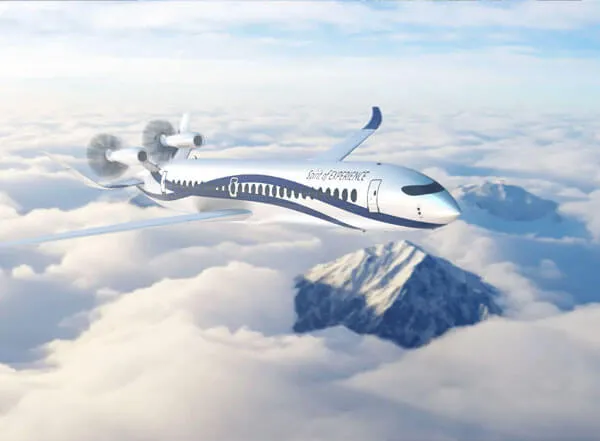
Aerospace programs demand precise engineering of highly complex structures such as fuselages, wings and avionics systems. AR allows design and manufacturing teams to visualize and validate product configurations directly on the shop floor, ensuring that every custom assembly—often unique to each aircraft—meets stringent safety and performance requirements. Real-time AR guidance reduces costly errors during the build of one-off or limited-run aircraft components.g compliance with industry regulations.
Aerospace programs demand precise engineering of highly complex structures such as fuselages, wings and avionics systems. AR allows design and manufacturing teams to visualize and validate product configurations directly on the shop floor, ensuring that every custom assembly—often unique to each aircraft—meets stringent safety and performance requirements. Real-time AR guidance reduces costly errors during the build of one-off or limited-run aircraft components.
Shipbuilding and offshore engineering involve massive structures and highly variable configurations, from custom hull designs to intricate onboard systems. AR brings the 3D design model onto the shop floor or dry dock, allowing engineers and technicians to verify complex layouts, guide installation of critical components and manage late design changes without disrupting schedules. This reduces rework and ensures compliance with strict marine regulations.
Retailers use augmented reality to create engaging shopping experiences and enable virtual product trials. AR helps customers visualize products in their own environments. It drives higher conversion rates by offering personalized, immersive try-before-you-buy experiences.
The technology sector employs augmented reality to accelerate product development cycles and enhance user experiences. AR supports collaborative design processes and virtual testing. It fosters faster prototyping and enables real-time global collaboration across engineering teams.
Healthcare organizations utilize augmented reality to improve patient outcomes and enhance medical training. AR enables surgeons to visualize patient anatomy in 3D. It supports remote consultations and enables more precise surgical planning, reducing risks during complex procedures.
Dassault Systèmes believes that virtual worlds extend and improve the real world. This is encapsulated in the Company’s tagline, “Virtual Worlds for Real Life”. We provide highly secure spaces for representing the world and support customers to fully leverage their extensive 3D design, virtual twin and PLM data assets.
By combining modeling, simulation, real-world data and AI-generated content, 3D UNIV+RSES enable organizations to tap into the vast capabilities of virtual-plus-real (V+R) experiences.
Our Augmented Reality (AR) and Mixed Reality (MR) capabilities are designed to meet the specific demands of complex industrial environments, from real-time manufacturing execution to collaborative design decision-making.
Through our 3DEXPERIENCE platform, we provide scalable, AI-enhanced solutions that bring operational clarity and measurable results. AR and MR experiences across our brands are compatible with leading spatial computing devices, including OpenXR headsets, HoloLens2 and Apple Vision Pro, ensuring a consistent, next-generation immersive experience.
Dassault Systèmes has partnered with Apple to bring spatial computing to the next level by integrating Apple Vision Pro into the 3DEXPERIENCE platform.
This engineering-level collaboration powers a new generation of immersive experiences through the 3DLive app, enabling virtual twins to interact with the real world in scientifically accurate environments.
By combining the strengths of the 3DEXPERIENCE platform with Apple’s advanced hardware and visionOS, the partnership redefines how designers and engineers visualize, collaborate and innovate across industries.
Leading organizations worldwide have successfully implemented augmented reality solutions to transform their operations and achieve measurable business results.
Innovative training powered by augmented reality and virtual twin technology transforms infection prevention at Saint-Louis Hospital AP-HP.
Customer Story
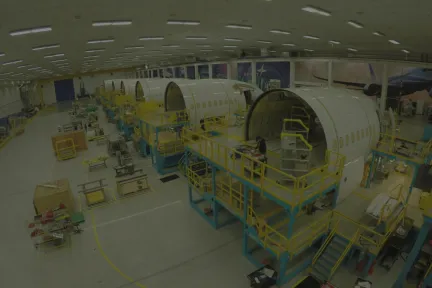
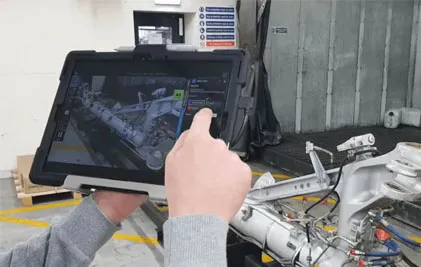
Discover how Spirit AeroSystems leverages augmented reality in manufacturing.
Customer Story
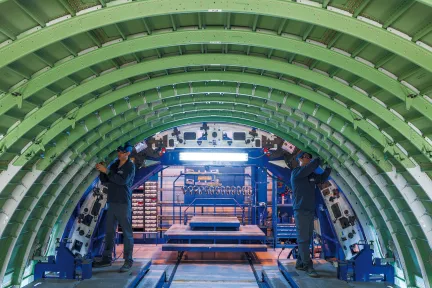
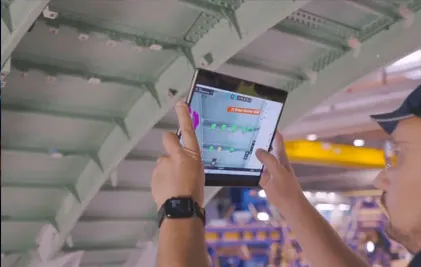
Discover how Latecoere leverages DELMIA Augmented Experience to enhance aerostructures' quality inspection and drive zero-defect manufacturing.
Customer Story
To help you quickly identify the right solution for your specific needs, the table below maps each Dassault Systèmes brand to its primary business use cases:
| Business Function/Use Case | Role of AR & MR | Dassault Systèmes Solutions |
| Product Design & Validation | Visualize and manipulate virtual twins in their real-world context to conduct immersive design reviews and validate concepts. | CATIA (Mixed Reality design reviews) & SIMULIA (immersive simulation and validation) |
| Advanced Simulation & Analysis | Recreate real-world conditions to test and validate product performance. | SIMULIA (complex scenarios in AR/VR) |
| Industrial Operations & Execution | Simulate and optimize manufacturing processes in 3D/VR, while delivering real-time work instructions to guide assembly and inspection tasks and reduce errors on the shop floor. | DELMIA Augmented Experience |
| Marketing & Customer Experience | Create immersive storytelling and interactive product showcases to drive engagement and accelerate buying decisions | 3DEXCITE XR Experiences |
| Multi-site Collaboration | Share the same digital model in real time across multiple locations to accelerate decision-making and align stakeholders | 3DEXPERIENCE platform (including Apple Vision Pro integration) |
The integration of augmented reality with virtual twin technology creates comprehensive digital representations of physical products and processes.
This combination enables organizations to simulate, analyze and optimize performance throughout the entire product lifecycle, reducing reliance on physical prototypes.
Augmented reality is evolving rapidly, moving from a promising technology to an essential driver of industrial transformation. In the coming years, several key developments will shape how organizations leverage AR for competitive advantage and operational excellence.
Dassault Systèmes prioritizes cutting-edge augmented reality technology to drive product innovation and enable breakthrough discoveries across industries.
Our AR solutions integrate environmental considerations throughout the product lifecycle, supporting circular economy principles and sustainable business practices.
Dassault Systèmes offers tailored augmented reality solutions designed to address unique industry challenges and specific regulatory requirements.
The platform provides seamless, real-time connectivity for all stakeholders across all augmented reality implementation stages and business processes.
Dassault Systèmes focuses on meeting unique client needs and fostering long-term partnerships through customized augmented reality solutions and dedicated support.
Break free from IT constraints and unify your business with real-time augmented reality collaboration on a cloud-based platform for global accessibility.
Explore the content below to learn more about Dassault Systèmes and Augmented Reality.
AR is a solution whose effectiveness and value to the industry are more proven than ever to increase industrial productivity.
Article
The main difference between virtual and augmented reality is how users interact with the environment. In virtual reality, the user is fully immersed in a virtual environment, while in augmented reality, the user remains in the real world but with virtual elements overlaid.
Article
At DELMIA, we’ve analyzed the evolving landscape and identified five key trends for AR in manufacturing in 2025. These trends promise to redefine how manufacturing professionals and organizations leverage AR for innovation and growth.
Article
Shipbuilding is undergoing a technological revolution, driven by robotics and the Industrial Internet of Things (IIoT). As global competition intensifies, skilled workers become harder to find, and sustainability takes center stage, shipyards have no choice but to evolve.
Article
Boost productivity & quality with DELMIA's AR software. Fill the form to talk to our experts & transform assembly, inspection & training.
Contact
Fill in the form to have a Dassault Systèmes expert contact you to answer your questions and discuss any of your needs.
Let’s transform your CAD journey together—contact us today!