Constructing modular buildings for sustainability
Discover how sustainable modular construction using virtual twins on the 3DEXPERIENCE platform cuts waste, lowers costs and accelerates large-scale infrastructure projects.
Future-built: Inside CSADI’s Sustainable Construction Story
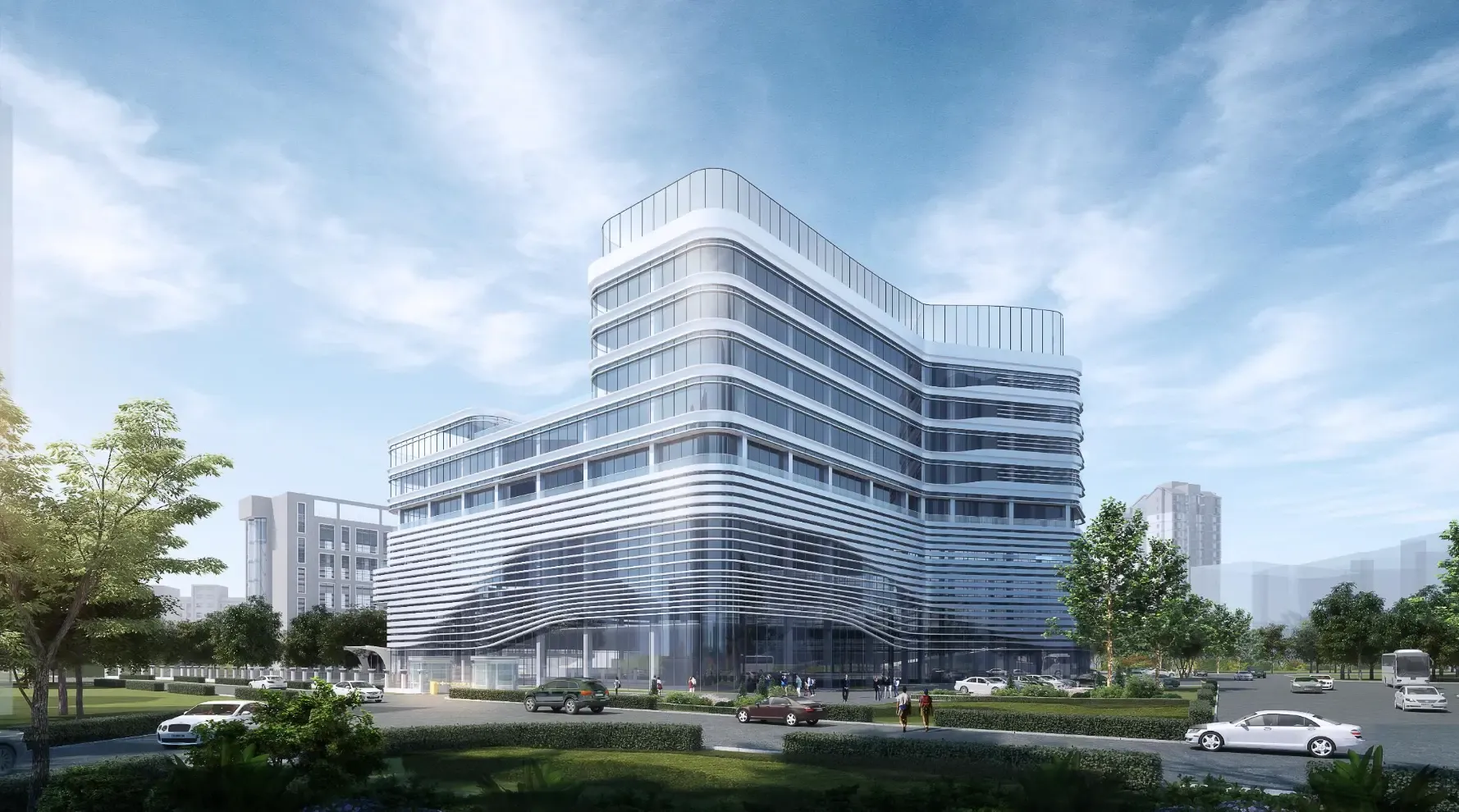
Can bigger structures leave smaller footprints? CSADI’s Hubei Center of Disease Control project, built using Dassault Systèmes’ modular design approach, proved that speed, scale and sustainability can thrive together.
The Visionary Builder
Central-South Architectural Design Institute (CSADI) is a leading architectural and engineering powerhouse based in Wuhan, China. It specializes in large-scale construction and infrastructure projects. CSADI delivers cutting-edge design and construction solutions that shape communities across sectors, such as healthcare, education and public infrastructure.
Designing Resilience Into Public Health
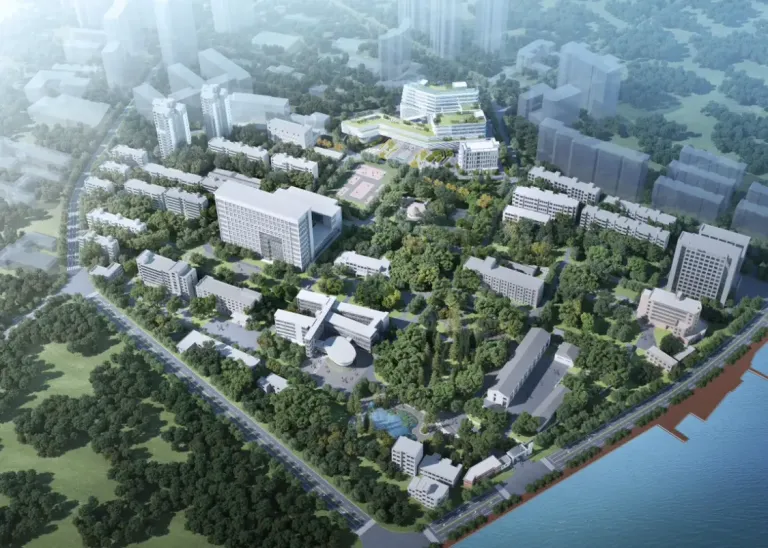
The Hubei Center for Disease Control and Prevention (CDC) Comprehensive Capacity Enhancement Project (Phase I), led by CSADI, is a flagship initiative in Hubei Province’s public health infrastructure. The project was conceived to strengthen the province’s response to infectious diseases and public health emergencies, providing a model for future facilities.
Minimizing environmental impact at this scale was not easy. Yet, the project demonstrated a clear commitment to sustainability by integrating energy efficiency and resource-conscious practices into its design and construction.
At a Glance
~40,000m2
Floor area
6%
Lower in construction cost
173t
Avoided steel production
The Challenge
The key to the success of a multifaceted project like this is the ability to bring all stakeholders from across the value chain within a single environment, ensuring that everyone’s requirements are taken into account and no information gets lost along the way.
From the get-go, CSADI had to mitigate:
Worker Safety
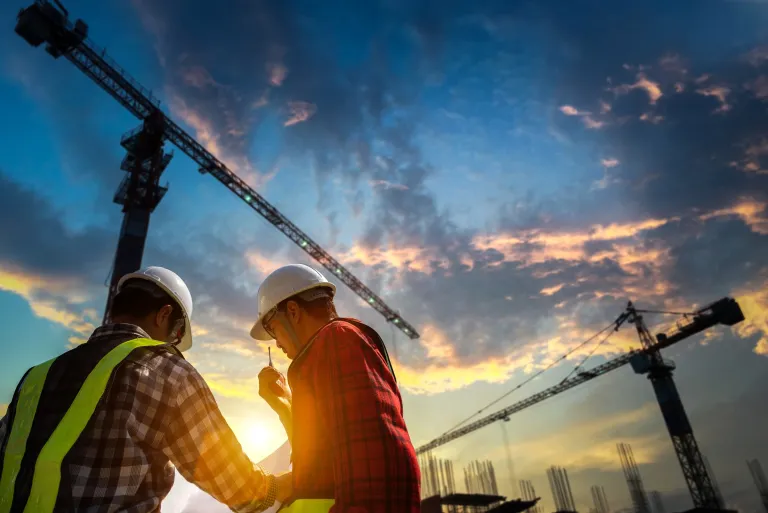
The construction industry in China is characterized by high safety risks, with unsafe worker behaviors among the leading causes of construction safety accidents. As such, designing effective mechanisms that motivate and encourage construction workers to adopt safer practices becomes key to addressing the construction safety problem.
Fragmented Systems
Many disciplines, such as architecture, structural engineering and electrical systems, require coordination, for which the 3DEXPERIENCE® platform excels, achieving greater design efficiency. All stakeholders collaborated on the same model across their respective disciplines, making it the first project where a single model was used throughout its entire lifecycle.
Complexities at Scale
Building such a complicated project required fast, efficient construction with minimal errors. This means reducing building complexity and cost, while managing the large amount of data generated by such projects.
Climate Goal Expectations
Large projects often carry the biggest carbon footprint. CSADI had to defy this norm by reducing material use — cutting carbon emissions during the construction period.
The Strategy
Building sustainably at this scale takes more than speed. It demands precision, innovation and a modular approach. CSADI adopted Dassault Systèmes’ virtual twin experience powered by the 3DEXPERIENCE platform to reimagine how large-scale infrastructure could be designed, manufactured and constructed with minimal waste and climate impact.
The Solution
Virtual twins + Modular design = Precision at speed
This strategy made it possible to:
Optimize material use
Upstream steel processors could customize and pre-cut materials for efficient on-site assembly, reducing material waste, simplifying recycling or reuse disassembly, and lowering the project’s overall environmental footprint. By integrating modeling and simulation with virtual twins into its process, CSADI achieved 173 tons of avoided steel production during construction and up to 19.2% in waste reduction.

Enhancing safety
The ability to refine the design of the building and simulate how it would be constructed in the virtual world has helped remove any unknowns from the construction stage. Additionally, all construction workers attended virtual reality sessions simulating dozens of hazardous scenarios, including falling objects from tower cranes and collapsing mobile scaffolding. This was critical for guiding workers in safe production practices and ensuring their safety during construction.
Accelerate project completion
A 77% modularity increase was achieved. Unlike the traditional build approach, the modular approach allowed factory production to run concurrently off-site with site preparation, reducing construction time, improving energy efficiency and eliminating site bottlenecks. The collaborative platform also replaced the conventional, slower document based approach to speed things up, while modular design facilitates disassembly and reuse, supporting circularity and waste reduction.

Collaborative design
The project broke down traditional silos by bringing together all disciplines (structure, water, heating, electricity and geotechnical engineering) within the virtual twin, enabling seamless remote collaboration, enhancing the comprehensiveness of design solutions and fostering true synergy across disciplines and enterprises.
The End Results
Circular Economy and Climate Change Wins.
Through this project, CSADI is advancing in smart construction, contributing to lower costs and a shorter project duration for the Hubei Center for Disease Control.
Our vision is to transform into a technology-based platform enterprise to manage all elements in urban construction.
Measuring the Sustainability Benefits of Our Solutions
Discover how we accurately quantify the sustainability benefits of our solutions for customers, using a certified methodology. Through real-world use cases, see how we support organizations in their sustainability transition, delivering tangible, measurable results.
Frequently Asked Questions
Sources
1Disclaimer:
a. The avoided emission estimation was calculated following the EU Taxonomy (Regulation Guideline), ISO 14067, 11044 and Guidance of WBCSD Net Zero Initiative Guidelines.
b. Methodology was based on the comparison of two scenarios for one given functional unit (ISO 14067:2018 and ISO 14064-2:2019).
c. The 3DS methodology has been certified by an independent third party and elaborated in compliance with the EU Taxonomy (Regulation Guideline), ISO 14067, 11044 and Guidance of WBCSD Net Zero Initiative Guidelines. The end result expressed in tCO2e remains an estimation.
Related Content
Regulatory Compliance
Drive profitability and meet consumer demands while ensuring regulatory compliance with the 3DEXPERIENCE® platform.
Green Building Construction
To achieve greener buildings, companies need technology that can enable decarbonization efforts quickly and keep costs under control.
HVAC System
Utilize simulation and virtual twin technology to create optimal HVAC systems and reduce building emissions from end to end.
Circularity in Action
It’s time for concerted action. Here’s how to make the circular economy achievable, scalable and profitable.