
What is Scilab ?

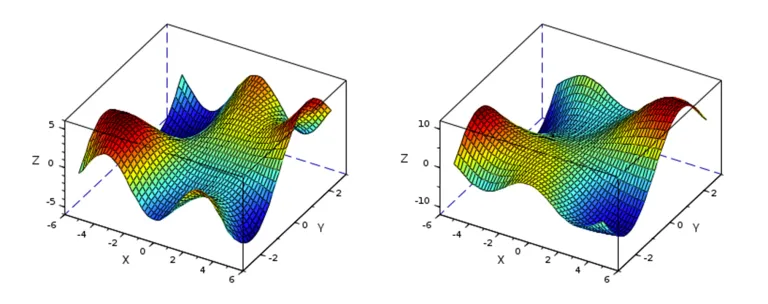
Scilab is a free, open-source and cross-platform numerical computation software. It includes a high-level, numerically oriented programming language, an efficient computation engine, an integrated development environment, as well as 2D and 3D visualization capabilities.

Scilab can be used for signal processing, statistical analysis, numerical optimization, and modeling, simulation of explicit and implicit dynamical systems. Scilab capabilities can be extended using a toolbox mechanism such as image processing, data analysis dynamic, fluid simulation.

Numerical Computation

Scilab provides about 1,700 mathematical functions for engineering and science applications. It includes mathematical operations and data analysis such as interpolation and regression, differentiation and integration, linear systems of equations, Fourier analysis, ordinary differential equations (ODEs), matrix computation (determination of eigenvalues and singular values, and many more.

Scilab also includes statistics capabilities such as descriptive statistics, probability distributions, linear and non-linear modeling, machine learning, and classification.

Scilab for Optimization

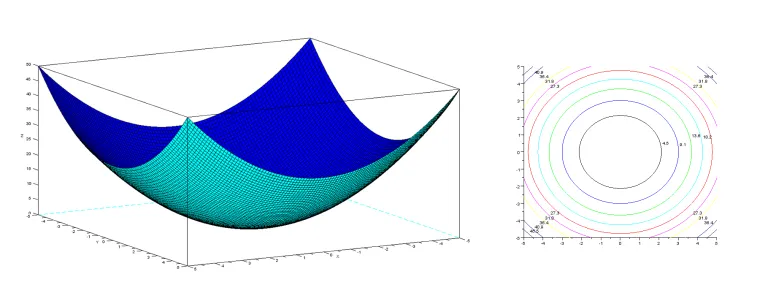
Scilab provides various functions for optimization and can solve many kinds of optimization problems, without or with constraints, needing derivatives or not. Capabilities include simulated annealing, cenetic algorithms, Neldermead, non-linear least squares, simplex, semi definite programming, linear quadratic programming.

If you want to know more about optimization in Scilab, please visit tutorials. Optimization capabilities can be enriched using ATOMS toolboxes.

ATOMS

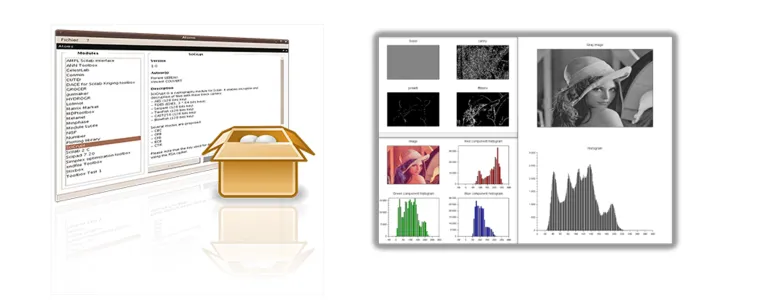
Automatic Toolbox Management for Scilab (ATOMS) is a Client/Server tool enabling Scilab users to enrich its capabilities. It supports public and private toolboxes and dependencies management. 

Private ATOMS servers can be deployed on your network, for instance to do image processing, optimization, machine learning, data analysis, and management of Xcos library.

3DEXPERIENCE Connector

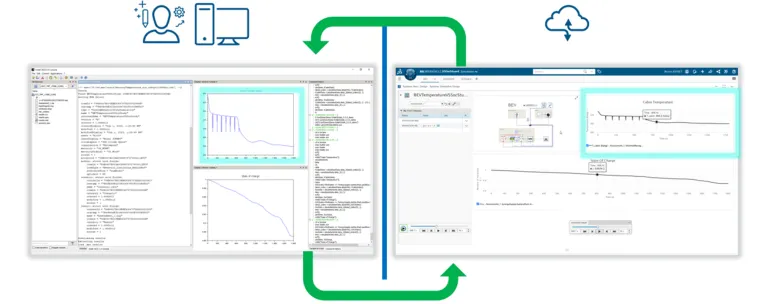
Data generated by simulations can be pulled from 3DEXPERIENCE platform within Scilab. Thanks to Scilab capabilities, users can now post-process those data:

  • Statistics analysis can be performed using standard mathematical functions
  • Data fitting based on linear and non-linear regression algorithms
  • Classification and Optimization

The data set can be returned to the 3DEXPERIENCE Platform.

Start Your Journey

Join the conversation in the CATIA MBSE Cyber System User Community!

FlexNet Plugin Licenses in Batch Mode

My team is trying to run Cameo in “batch mode”, and I have a question regarding the FlexNet license server configuration that is not answered in any of the documentation that I was able to find. In the Cameo documentation, I see Java arguments for specifying a FlexNet server and port (FL_SERVER_ADDRESS / FL_SERVER_PORT), and I also see that I can specify a tool edition (FL_EDITION). However, in th

CATIA MBSE CYBER SYSTEMS

Derivation Tables in SysML V2

Requirement derivation tables are easily one of the top requested topics from users across the industry. In my latest video, I walk through how to define a reusable view def and map it directly to your requirement structures.Watch the Video here: [Link to YouTube Video] Download / Copy the Source CodeGrab the SysML v2 code used in the video below to test and adapt for your own models:How are you

CATIA MBSE CYBER SYSTEMS

2026x Server side simulation

Hello,I was able to create a server side simulation using an instance table. There is one part of the simulation that is not working. I have a script that executes as part of a rollup pattern that performs a simple table lookup that fails.The rollup pattern uses a constraint block that has a Groovy script that performs the lookup. The simulation works just fine when executed within Cameo.Here is a

CATIA MBSE CYBER SYSTEMS

Custom Table Column to show indirect references

I have a table that shows the concerns in a specific part. In that table I want to add a column that shows the requirement(s) that satisfy each concern. The satisfy relations that provide this are contained within the associated requirements and target the specific concerns. The issue I am having is that I am unsure how to pull that information.SysML v2 SysMLv2

CATIA MBSE CYBER SYSTEMS

Also Discover

Learn What CATIA Can Do for You

Speak with a CATIA expert to learn how our solutions enable seamless collaboration and sustainable innovation at organizations of every size.

Get Started

Courses and classes are available for students, academia, professionals and companies. Find the right CATIA training for you. 

Get Help

Find information on software & hardware certification, software downloads, user documentation, support contact and services offering