1495개의 결과가 있습니다.
Improvement and Enhancement of Concrete Damage Plasticity Model

The purpose of this paper is to make an improved concrete damage plasticity model that focus on a post cracking behavior. First, we constitute the material model that simulates a process of closing the large tensile cracks and recovering the compression stiffness. Second, the model is enhanced by adding another feature that simulates a transition from compression to tension again. Finally, experimental simulation analyses are conducted for validation of efficiency.

Customer Papers

Improvement and Enhancement of Concrete Damage Plasticity Model
Ductile Fracture Criterion Comparisons & Development of a Numerical Material Damage Model

By using Abaqus finite element software, contributions to understanding and quantifying the ductile fracture behavior of metallic materials have been realized. The end result has enhanced product development by reducing unnecessary conservatism resulting in reduced failure rates, product weight, and costs. Unlike the methods of LEFM or EPFM which presume a preexisting flaw, the ductile fracture approach requires no initial flaw size, shape, or flaw orientation relative to the component geometry. In this paper, numerical examples using various damage approaches are used to highlight differences in their resulting failure modes. In addition, the use of a damage model on a practical example is used to emphasize the utility of the method.

Customer Papers

Ductile Fracture Criterion Comparisons & Development of a Numerical Material Damage Model
RESIDUAL STRENGTH OF THE CARBON FIBER PANEL WITH DELAMINATION

Carbon fiber reinforced materials are getting widely spread. But at present time method of the calculation of impact residual strength for carbon fiber parts is poorly developed. Especially this method is underdeveloped in case of the delaminated composite parts. Residual strength is very essential for any project where the composite material parts are used. The possibility to estimate the value of residual strength of the carbon fiber reinforced parts is highlighted in terms of safety for Aerospace structures. In this work we propose a method to calculate the carbon fiber panel residual strength of the civil plane wing prototype with respect to delamination progress simultaneously with degradation law of the material properties. This approach has been developed and realized based on ABAQUS software.

Customer Papers

RESIDUAL STRENGTH OF THE CARBON FIBER PANEL WITH DELAMINATION
Use of a Discrete Mesoscopic Finite Element Approach Implemented in Abaqus/Explicit to Investigate the Bending and Folding of Fiber-Reinforced Composite Materials during the Manufacturing Process

During the manufacturing of fabric-reinforced composite parts using a matched-die compression molding process or resin transfer molding, the fabric may experience local in-plane compressive loads that cause out-of-plane deformations. The waves that form from such out-ofplane motion can result in resin-rich pockets (during the infusion stage of a dry fabric) or the waves may be forced down into a fold by the tooling. Such defects can compromise the structural integrity of the formed composite part. A comparison of the simulation results to the experimental data shows the finite element model accurately captures this phenomenon. An additional model is presented to demonstrate the capability of the simulation tool to capture fabric folding.

Customer Papers

Use of a Discrete Mesoscopic Finite Element Approach Implemented in Abaqus/Explicit to Investigate the Bending and Folding of Fiber-Reinforced Composite Materials during the Manufacturing Process
Non-linear elastic models for composite materials

Modern composite materials exhibit nonlinear behavior even under the conditions of elastic deformation. Usually shear properties have essentially more non-linearity than the tensile longitudinal or transverse ones almost for all reinforced plastics. For dry textile composites, it is especially important to take into account the shear nonlinearity for the prediction of the deformation characteristics, shape and structure of composite structural members during the draping and the performance of a layup process. Two approaches to take into account composite elastic nonlinearity effect are developed.

Customer Papers

Non-linear elastic models for composite materials
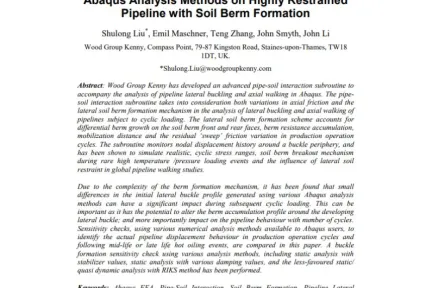
Abaqus Analysis Methods on Highly Restrained Pipeline with Soil Berm Formation

Wood Group Kenny has developed an advanced pipe-soil interaction subroutine to accompany the analysis of pipeline lateral buckling and axial walking in Abaqus. The pipesoil interaction subroutine takes into consideration both variations in axial friction and the lateral soil berm formation mechanism in the analysis of lateral buckling and axial walking of pipelines subject to cyclic loading. The lateral soil berm formation scheme accounts for differential berm growth on the soil berm front and rear faces, berm resistance accumulation, mobilization distance and the residual ‘sweep’ friction variation in production operation cycles.

Customer Papers

Abaqus Analysis Methods on Highly Restrained Pipeline with Soil Berm Formation
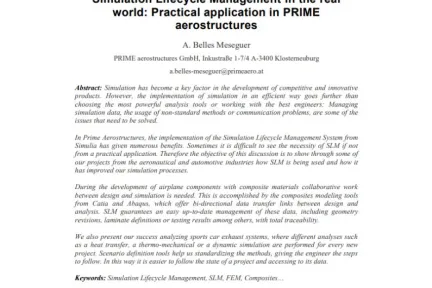
Simulation Lifecycle Management in the real world: Practical application in PRIME aerostructures

Simulation has become a key factor in the development of competitive and innovative products. However, the implementation of simulation in an efficient way goes further than choosing the most powerful analysis tools or working with the best engineers: Managing simulation data, the usage of non-standard methods or communication problems, are some of the issues that need to be solved. We also present our success analyzing sports car exhaust systems, where different analyses such as a heat transfer, a thermo-mechanical or a dynamic simulation are performed for every new project. Scenario definition tools help us standardizing the methods, giving the engineer the steps to follow. In this way it is easier to follow the state of a project and accessing to its data.

Customer Papers

Simulation Lifecycle Management in the real world: Practical application in PRIME aerostructures
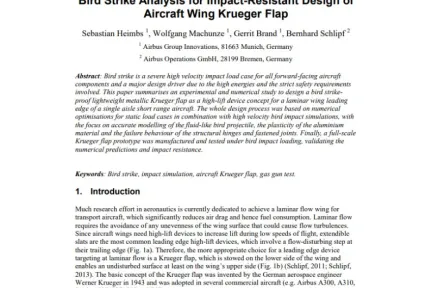
Bird Strike Analysis for Impact-Resistant Design of Aircraft Wing Krueger Flap

Bird strike is a severe high velocity impact load case for all forward-facing aircraft components and a major design driver due to the high energies and the strict safety requirements involved. This paper summarises an experimental and numerical study to design a bird strikeproof lightweight metallic Krueger flap as a high-lift device concept for a laminar wing leading edge of a single aisle short range aircraft. The whole design process was based on numerical optimisations for static load cases in combination with high velocity bird impact simulations, with the focus on accurate modelling of the fluid-like bird projectile, the plasticity of the aluminium material and the failure behaviour of the structural hinges and fastened joints.

Customer Papers

Bird Strike Analysis for Impact-Resistant Design of Aircraft Wing Krueger Flap
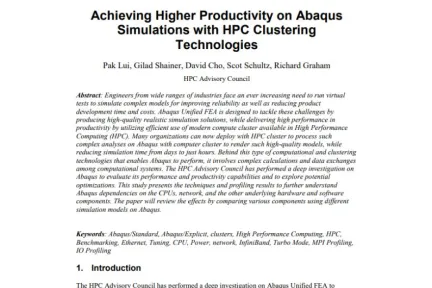
Achieving Higher Productivity on Abaqus Simulations with HPC Clustering Technologies

Engineers from wide ranges of industries face an ever increasing need to run virtual tests to simulate complex models for improving reliability as well as reducing product development time and costs. Abaqus Unified FEA is designed to tackle these challenges by producing high-quality realistic simulation solutions, while delivering high performance in productivity by utilizing efficient use of modern compute cluster available in High Performance Computing (HPC). This study presents the techniques and profiling results to further understand Abaqus dependencies on the CPUs, network, and the other underlying hardware and software components. The paper will review the effects by comparing various components using different simulation models on Abaqus.

Customer Papers

Achieving Higher Productivity on Abaqus Simulations with HPC Clustering Technologies
Advanced finite element analysis of deep excavations using Abaqus

Deep excavation, widely used for underground constructions, is a very complex soil-structure interaction problem in geotechnical engineering. Its performance is influenced by the sophisticated soil behavior, complex retaining structures, and variable construction sequences. As the excavation goes deeper and larger in scale, challenges arise for both practical applications and research. Finite element analysis is an effective tool to study its mechanism, which can consider both geotechnical and structural aspects. It provides necessary information on the performance of deep excavations for design purpose, and can also be used to predict the behavior of deep excavation and provide guidance for the construction. The main issues involved with the finite element analysis of deep excavations include selecting appropriate constitutive models for soils and structures, the simulation of the construction procedure, and the modelling of the soil/structure interface. These issues are addressed in detail based on the use of Abaqus. The application of this procedure is demonstrated through a detailed analysis of a deep excavation case history. Results showed that the finite element analysis can capture the performance of the deep excavation satisfactorily.

Customer Papers

Advanced finite element analysis of deep excavations using Abaqus
Evaluation of the Fatigue Strength of a SteelAluminum Tapped Thread Joint with Local Concepts

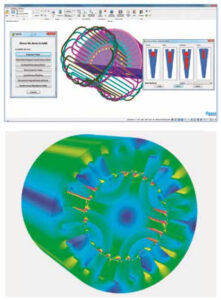
This paper deals with the design of a steel/aluminum tapped thread joint. The concept developed by Schneider (Schneider,2011) is used as the basis for assessment up to the occurrence of technical cracks. Crack propagation, up to component failure, is described with linear elastic fracture mechanics and using the finite element method (FEM). For the purpose of validating the concept, the calculated lives are compared with experimental tests.

Customer Papers
Evaluation of the Fatigue Strength of a SteelAluminum Tapped Thread Joint with Local Concepts
On the numerical implementation of a 3D fractional viscoelastic constitutive model

The aim of this paper is the implementation of a 3D fraction al viscoelastic constitutive law in a user material subroutine (UMAT) in the finite element software Abaqus. Essential to the implementation of the model is access to the strain history at each Gauss point of each element in a constructive manner. Details of the UMAT and comparison with some analytical results are presented in order to show that the fractional viscoelastic constitutive law has been successfully implemented.

Customer Papers
On the numerical implementation of a 3D fractional viscoelastic constitutive model
260개의 결과가 있습니다.

고객 사례

150개의 결과가 있습니다.
3개의 결과가 있습니다.

SIMULIA 자기 주도 학습

학습자가 편리하게 학습을 꾸준히 이어갈 수 있도록 수백 개의 자기 주도 학습 모듈을 제공합니다.

블로그

SIMULIA 블로그에서 당사 전문가들이 전하는 최신 뉴스와 혁신에 대해 알아보세요.

775개의 결과가 있습니다.
New Release – R2019X

End-to-end Support for Your Unique Industry Processes SIMULIA is excited to announce...

Article

New Release – R2019X
전기 차량, 항상 조용하지만은 않습니다!

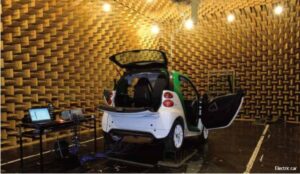
드라이브 트레인의 소음 및 진동 시뮬레이션 프로세스를 개발하기 위해 SIMULIA 솔루션을 사용하는 아헨 공과대학 팀걷는 도중 전기 차량이 당신 뒤에 접근하였을 때 놀랐던 적이 있었을 겁니다. 아마도 차량의 부드럽게 “윙”하는 소리와 도로 위의 가벼운 타이어 마찰음이 들리는

기사

전기 차량, 항상 조용하지만은 않습니다!

SIMULIA의 지원 서비스 알아보기

SIMULIA 전문가와 상담하여 당사의 솔루션이 모든 규모의 조직에서 원활한 협업과 지속 가능한 혁신을 실현하는 방법에 대해 알아보세요.

시작하기

학생, 교육, 전문가 및 회사를 위한 교육 과정과 강의가 제공됩니다. 당신에게 맞는 SIMULIA 교육을 찾아보세요. 

도움받기

소프트웨어 및 하드웨어 인증, 소프트웨어 다운로드, 사용자 설명서, 지원 연락처 및 서비스 제공에 대한 정보를 확인하세요.