
Fluid Dynamics Engineer - FMK - Datasheet
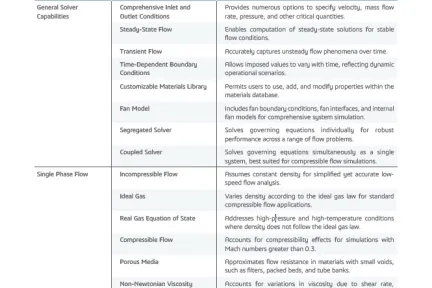
List of functionalities of the SIMULIA Fluid Dynamics Engineer (FMK) role
Brochures
SIMULIA に関する必要な情報すべてが見つかります
List of functionalities of the SIMULIA Fluid Dynamics Engineer (FMK) role
Brochures
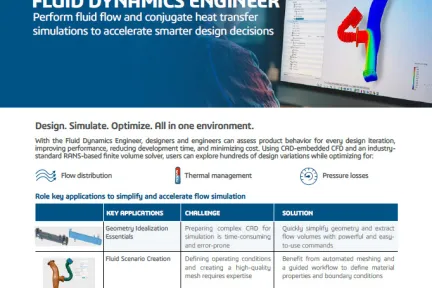
Brochure for the SIMULIA Fluid Dynamics Engineer (FMK) role
Brochures
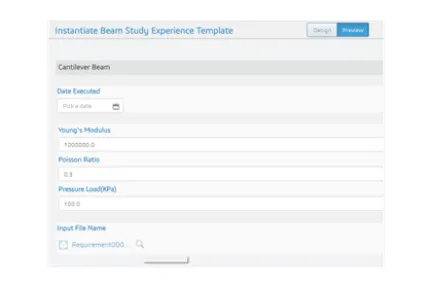
This course is an introduction to the Process Experience Studio widget on the 3DEXPERIENCE platform. Process Experience Studio allows engineers to create custom interfaces for distributing simulation processes and simulation templates throughout the organization. This widget is similar to a form builder which allows the engineer to develop a simple or complex interface of inputs and outputs to/from the process. Using the widget in a dashboard provides a way to collaborate in teams around process integration and automation.
Course Catalog
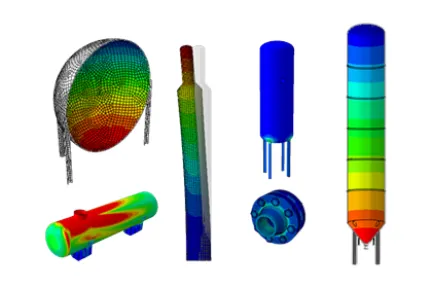
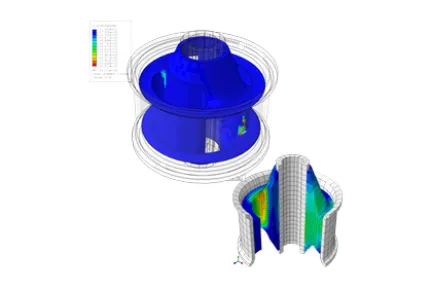
Pressure vessels and piping equipment are periodically assessed based on guidelines prescribed by documents such as ASME/API 579 Fitness for Service (FFS). Finite element based Level 3 assessments are often utilized for assessing equipment with complex geometries and loading conditions. This course discusses methods for modeling common pressure vessels such as distillation towers, storage vessels, etc. using Abaqus CAE. Methods for application and verification of loads such as weight of contents, internal pressure, etc. using Abaqus Standard, as required for Level 3 FFS assessments are also discussed. Procedures for analyzing metal loss using the finite element method by mapping thickness readings from scans are also considered. The following products are covered by this course: Abaqus CAE, Abaqus Standard. The course is divided into lectures and workshops. The course's workshops are integral to the training. They are designed to reinforce concepts presented during the lectures. They are intended to provide users with the experience of running and trouble shooting actual Abaqus analyses.
Course Catalog
Choosing an element is one of the most fundamental questions that users must answer as they build a finite element model. Many issues should be considered when selecting an element, including: Is there contact in the model? Is the material behavior fully or nearly incompressible? Will the element bend during the analysis? Is the structure thick or thin? Will the mesh become severely distorted? What results are needed from the analysis? Is the analysis a static or dynamic simulation? This course provides an overview of the different element types available in Abaqus for stress analyses. Differences between the Abaqus Standard and Abaqus Explicit element libraries are considered. Application specific recommendations for choosing an element type are provided. The pitfalls and symptoms of choosing incorrect element types are also discussed. Examples and workshops are used to illustrate element behavior and the consequences of choosing incorrect element types for a given problem.
Course Catalog
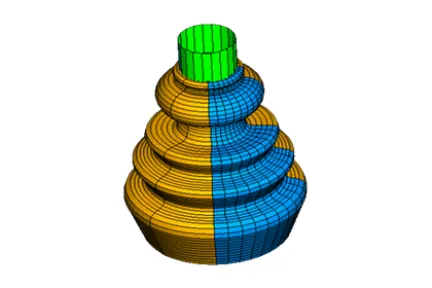
This 2 Day course provides background information and hands on experience for calculating fatigue of elastomers using Abaqus and fe safe/Rubber.
Course Catalog
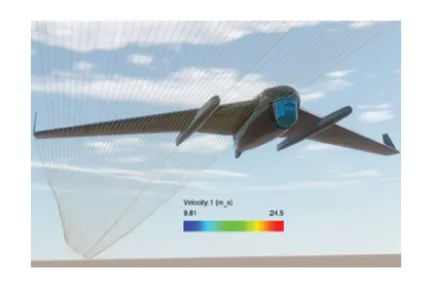
This course includes lessons and workshops covering advanced capabilities and techniques that can be included in a flow simulation using the Fluid Model Creation and Fluid Scenario Creation apps on the 3DEXPERIENCE platform.
Course Catalog
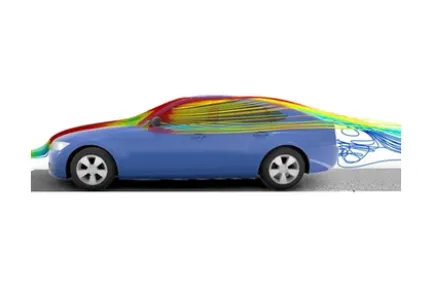
This course is an introduction to solving fluid flow and conjugate heat transfer problems in the 3DEXPERIENCE platform. In this course, you will learn workflows for steady state internal and external flow as well as Conjugate Heat Transfer (CHT) problems through the Fluid Model Creation and Fluid Scenario Creation apps.
Course Catalog
The combination of mechanisms, rigid bodies, and finite elements in Abaqus makes a powerful simulation tool. The mechanism capability expands the ability of Abaqus to model connections among individual bodies in a variety of ways. Connections can be as simple as pins and rigid links or as complicated as nonlinear frictional joints with elasticity and failure. In this course you will explore the variety of connection types available in Abaqus and learn how to define connections that suit your needs.
Course Catalog
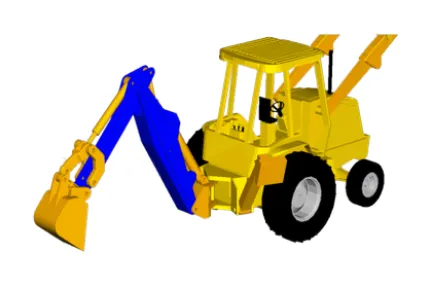
AbaqusDymola Co simulation is useful when logical modeling needs to be included in a physical system simulation; for example, it can be used to couple Anti lock Braking System (ABS) logic modeled in Dymola with an Abaqus rolling tire and brake simulation. In a typical workflow, sensor data computed in Abaqus (the physical system) are passed to Dymola (the controller), which in turn computes the needed actuation to drive the Abaqus model to a desired state. The powerful logical modeling features in Dymola cover a wide variety of engineering fields, such as electromechanics, control systems, hydraulics, penumatics, etc. This course illustrates coupling Dymola and Abaqus to develop a very versatile logical physical modeling capability.
Course Catalog
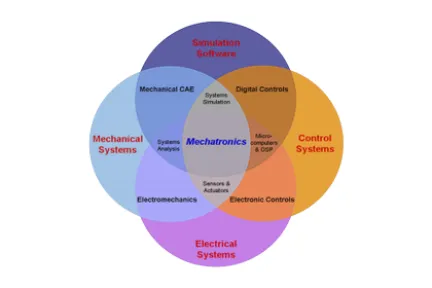
Abaqus provides computational electromagnetic capabilities for the simulation of problems involving steady state electrical conduction, piezoelectric phenomena and low frequency eddy currents. In this course, you will learn how to analyze low frequency eddy current problems in Abaqus Standard.
Course Catalog
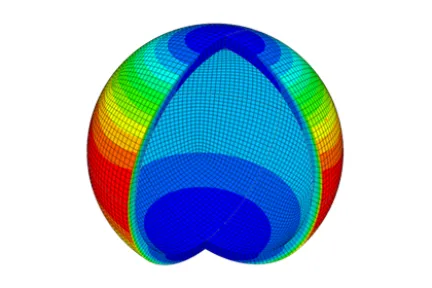
Fracture and failure modeling allows for product designs that maximize the safe operating life of structural components. Abaqus offers many capabilities that enable fracture and failure modeling. This course provides a detailed discussion of these capabilities.
Course Catalog
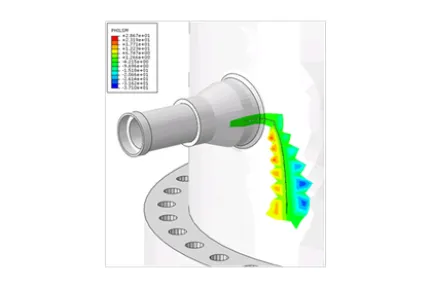
This three-part series will guide you through digital equipment continuity, virtual development with simulation, and accelerated manufacturing processes to help you achieve your business goals faster.
E-seminar

Discover how MODSIM is revolutionizing product design and simulation processes.
E-seminar
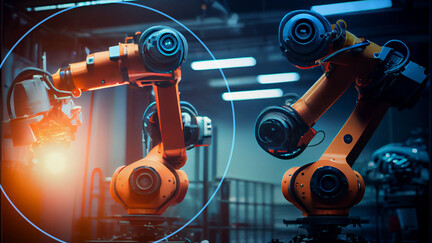
Discover how the 3DEXPERIENCE platform seamlessly integrates engineering and manufacturing to enhance efficiency and collaboration.
E-seminar

Discover how digital tools boost precision, productivity, and traceability while improving collaboration with the 3DEXPERIENCE platform.
E-seminar

Cut Costs, Accelerate Time-to-Market, and Improve Sustainability
E-seminar

Discover recent updates to our Fluid Dynamics Engineer role that simplify and accelerate the end-to-end workflow for fluid simulations.
E-seminar
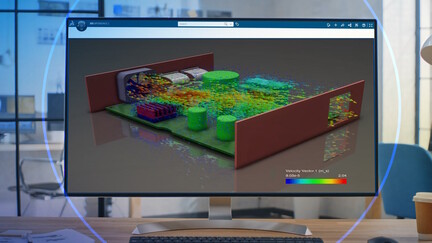
Watch the webinar replay to learn how to improve electro-mechanical performance of sensors, circuits and electric motors.
E-seminar

Watch the replay to learn how to reduce device development time and cost by decreasing the need for physical prototypes
E-seminar

Join this Tech Talk and learn how to measure transistor nonlinear response with different load impedances using IVCAD 4.0.
E-seminar

Learn more about Filter Designer 3D, focusing on its automated filter design capabilities through demonstrations of advanced examples such as asymmetric planar and dual-mode filters.
E-seminar
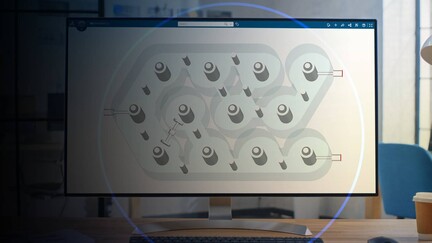
This Tech Talk has a series of 4 webinar replays focused on transistor measurement and modeling to showcase the features of SIMULIA IVCAD Suite 4.0.
E-seminar

Join this Tech Talk and learn more about main e-NVH risks in a typical electric powertrain driven by a 48-slot 8-pole IPMSM and more.
E-seminar

Airborne is a leading domestic provider of overall protection solutions for lightning and strong electromagnetic environments.
Customer Story

日本の自動車部品メーカーである武蔵精密工業は、電気自動車向けの次世代パワートレインを開発しています。製品開発期間の短縮に加えて、新たな複雑性に対応するシミュレーションを導入し、品質の高い製品を低コストで継続的に納入する必要がありました。
お客様活用事例
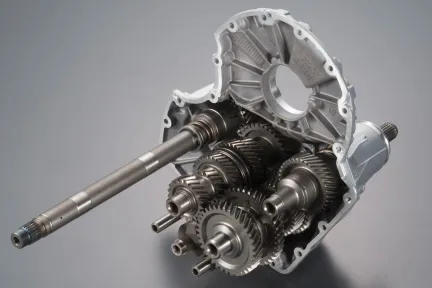
Japanese automotive parts manufacturer Musashi is developing the next generation of powertrains for electric vehicles. The company selected the 3DEXPERIENCE platform and its Bid to Win industry solution to speed up product development time, harness simulation to handle new complexities and continue to deliver high quality products.
Customer Story
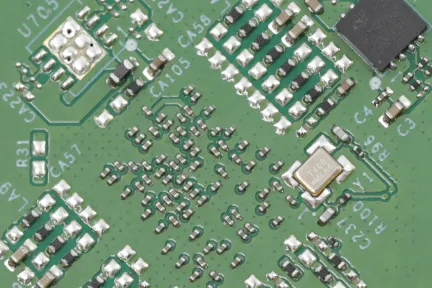
Vayyar develops safe, mobile, affordable and highly advanced 4D imaging sensors, enabling applications in a wide range of industries.
Customer Story
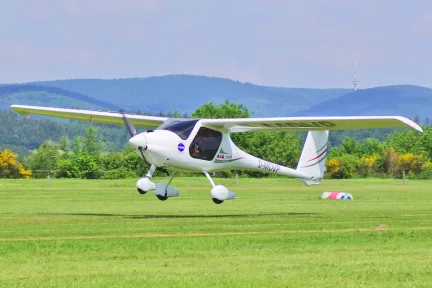
The company specializes in aircraft design, innovative electric and hybrid aircraft, propulsion batteries at the highest aviation standards
Customer Story
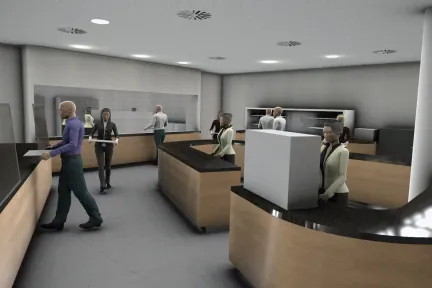
German-based GEA, one of the largest technology system suppliers in the food, beverage, pharmaceutical, and chemical sectors contracted Dassault Systèmes’ Engineering Services organization to simulate and visualize different scenarios for the re-opening of their cafeteria at its Oelde site using Computational Fluid Dynamics (CFD) simulation. The result: a comprehensive risk assessment for the re-opening after the lockdown in March due to COVID-19.
Customer Story
株式会社タダノは、クレーンや空間作業機械の国内最大手メーカーです。高い安全性を維持しつつ、開発プロセスを早期から検証できる環境を構築し、研究開発プロセスのスピードアップを図りたいと考えていました。同社では、マルチボディシミュレーションソフトウェア「Simpack」を使用して、大規模な3D車両モデルのシミュレーションを行うことで、試作品の製造コストと手直しの時間を大幅に削減することができました。
お客様活用事例
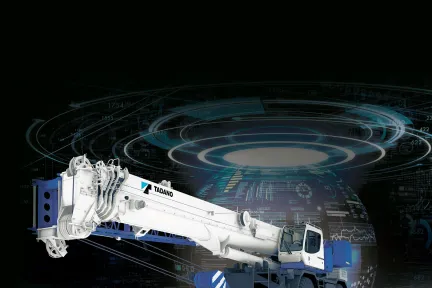
Tadano Ltd. is the largest Japan-based manufacturer of cranes and aerial work platforms. They wanted to speed up the R&D process by establishing an environment that made it possible to validate development processes from an early stage while maintaining a high level of safety. Using Simpack multibody simulation software, they were able to simulate large-scale 3D vehicle models to significantly reduce their manufacturing prototype costs and time for rework.
Customer Story
3DEXPERIENCE solutions on the cloud-enabled the TEN TECH team to access the full portfolio of SIMULIA simulation tools, collaborate effectively, and achieve results efficiently.
Customer Story
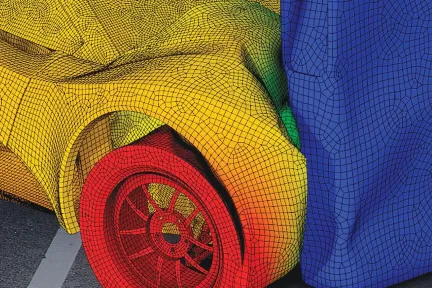
ダッソー・システムズが提供する3DEXPERIENCE プラットフォームをベースとした新しいシミュ レーション プロセスとデータ管理システムを開発 し、社内のすべてのタイヤ開発データを一元的に 管理できるようにしました。
お客様活用事例

The French start-up XSun wants to design the second generation of its autonomous solar-powered drone SolarXOne to improve its performance. Accelerated by the 3DEXPERIENCE Lab, XSun is using the 3DEXPERIENCE platform on the cloud to enable its teams to effectively design, simulate and test its drone, thanks to the Reinvent the Sky solution.
Customer Story

2026 is off to a great start on the SIMULIA Blog! We've had a month full of content covering topics such as champions, customer stories and technical deep dives. Let's get right into it! A Conversation with Niu Jing, SIMULIA ChampionWe interviewed SIMULIA Champion and Multibody Dynamics Simulation Expert at Envision Energy, NIU Jing, at SIMULIA’s Regional User Meeting in China. From a childhood f
SIMULIA COMMUNITY
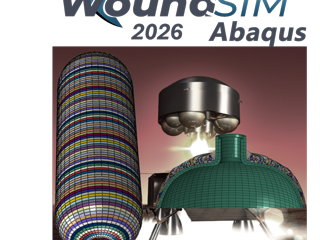
We are excited to announce the release of WoundSim Abaqus 2026-1, now available for download. This update delivers enhancements to streamline your simulation workflows and accelerate design analysis.New in WoundSim 2026-1:Output Request on user-defined Abaqus stepsWoundSim output request can now be applied to steps that were defined within Abaqus/CAE and not specified within the WoundSim Load
SIMULIA COMMUNITY
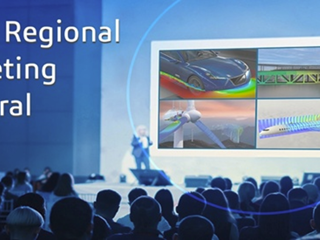
From June 16-18, we announce the EuroCentral SIMULIA Regional User Meeting 2026. Join our event in the Darmstadtium. It provides a forum for practicing engineers and researchers to exchange ideas and experiences in all aspects of simulation technology. On the three days of our regional user meeting, we offer you a broad range of different topics. Attendees can expect to hear customer presentations
SIMULIA COMMUNITY
Join us at the SIMULIA EURONORTH Regional User Meeting 2026!We're thrilled to announce that the SIMULIA EURONORTH Regional User Meeting 2025 is back in the Nordics!Join us for a fantastic opportunity to connect with industry experts, explore the latest simulation technologies, and learn from your peers. This in-person event is free to attend.Gothenburg, Sweden May 27-28, 2026 GE
SIMULIA COMMUNITY
ダッソー・システムズでは、それぞれのご都合に合わせて継続的に学習できるよう、さまざまな自己学習モジュールをご用意しています
ダッソー・システムズの技術者が最新ニュースやイノベーションについて書いている SIMULIA ブログをご覧ください。
新しいシリーズ「あなたの番です!」へようこそ。このシリーズでは、さまざまなシミュレーション体験を試してみることができます。最初の体験では、PowerFLOWを使って建物のエネルギー消費を改善する方法を学びます。ぜひ自分で体験してみてください!
新聞その他記事

Materials provider Celanese harnesses virtual testing, simulation and validation to support continuous business improvements and address ever-increasing customer requirements.
Article

Continental AG のゲスト ブロガー Yadhukrishnan MK 氏をお迎えし、先進運転支援システムにおけるレーダー シミュレーションについてお話しします。
新聞その他記事

Learn how a virtual twin can be integrated with multi-physics simulation technologies to help address the challenges inherent in electric drive system development.
Article

単一ツイストペア (STP) を介して送信機と受信機間で高帯域のデータを伝送するには、送信機側と受信機側に追加の ESD (静電気放電) 保護部品が必要です。これらの保護部品はプリント基板 (PCB) に実装されます。データレートが 6 Gbps の場合、PCB 伝送線路の設計では、信号品質の観点から ESD 保護部品を考慮する必要があります。本ブログ記事では、ESD 保護部品が信号品質に与える影響と、信号品質を維持するために必要なレイアウトの最適化について説明します。最後に、シミュレーション結果と測定結果の比較を示します。
新聞その他記事

このブログでは、3DS CFD PowerFLOW ソフトウェアから取得した空力データとデータ駆動型手法を組み合わせることで、自動車メーカーが車両の表面 X 方向空気力分布、関連する車両抗力積分などのきれいな 3D 等高線プロットを単一の GPUで数分以内に取得できるようにするための方法を説明します。
新聞その他記事

Take your first confident steps into SIMULIA simulation on the 3DEXPERIENCE platform with our Quickstart Modules!
Article

静電放電 (ESD) は、電子機器にとって大きなリスクです。ESD は、たとえば走行中の車両やユーザーの身体に電荷が蓄積され、デバイスを通じて放電されることで発生します。ESDの過渡電圧によって誤ったデータ信号が発生したり、コンポーネントが損傷したり破壊されたりすることがあります。ESD へ対応は、デバイスが安全かつ確実に動作し、電磁両立性 (EMC) 規制を満たすために重要です。
新聞その他記事

アメリカの多国籍自動車メーカーであるゼネラルモーターズは、リーフスプリング式サスペンションシステムの複雑なマルチボディダイナミクスをモデル化するために SIMULIA の製品を活用しています。
新聞その他記事

Simulate complex mechanical systems and optimize their dynamic behavior in a seamless way from conceptual to detailed design.
Article

この記事では、CST Studio Suiteを使用したシミュレーションが製品のエミッション特性の改善にどのように役立つかを示します。一般的に電磁両立性(EMC)測定の結果として重要となる、プリント基板(PCB)の信号トレースとリファレンスプレーン(基準面)間のカップリングについて分析します。ここで示された結果は伝導エミッションについて議論されていますが、放射エミッションにも適用可能です。
新聞その他記事

スタンフォード大学の Ellen Kuhl 博士とデルフト工科大学の Mathias Peirlinck 博士による、「万能材料サブルーチンを使ったエンジニアリング解析の大衆化」ウェビナーの録画動画がSIMULIA コミュニティでご覧いただけるようになりました。さまざまな材料構成則に対応したユニバーサルな材料サブルーチンを使ってエンジニアリング解析を大衆化した彼らの研究を学ぶことができます。
新聞その他記事

組織の規模の大小を問わず、シームレスなコラボレーションと持続可能なイノベーションに、当社のソリューションがどう役立つかについて、SIMULIA のエンジニアがご説明します。
学生、教育機関、専門家、企業向けに、さまざまなトレーニング・コースをご提供しています。お客様に最適な SIMULIA トレーニングを受講してください。
ソフトウェアおよびハードウェアの認証情報、ソフトウェアのダウンロード、ユーザー・ドキュメント、サポート窓口、ならびに提供サービスに関する情報はこちらから。