
Home & Lifestyle
Virtual Twin Experiences for Sustainable Innovation – Helping Manufacturers Improve Consumer Products
Industry
KIDO Sports uses Dassault Systèmes’ solutions to improve consistency and efficiency from design to validation across an expanding helmet portfolio.
In elite MotoGP, where bikes regularly exceed speeds of 360 kilometers per hour, a racing helmet design not only saves lives – it also impacts a rider’s aerodynamics, influencing stability, airflow, vibration and fatigue over the course of a race.
“A helmet is so important when it comes to the performance of a rider,” said Alex Rins, MotoGP rider for Monster Energy Yamaha, in an interview with Scorpion Sports. “It has to fit perfectly, and the rider has to feel comfortable in it.”
Rins’ helmet of choice is ScorpionEXO, one of only five helmet brands in the world to hold FIM2 certification, the highest motorcycle helmet safety standards required for MotoGP competitions. Designed and manufactured by South Korea-based company KIDO Sports, ScorpionEXO helmets have earned global recognition for their compact shell size and lightweight construction – attributes which minimize rider fatigue on long-distance rides.
Today, KIDO Sports sells more than 30 different models of the ScorpionEXO helmet across the globe, covering full-face, off-road and adventure categories and serving not only professional riders, but everyday commuters and touring enthusiasts. But designing products that are lighter, safer and more technically sophisticated than anything else in the motorcycle helmet market is no small feat. To ensure its engineering processes can keep pace with its appetite for innovation, KIDO Sports chose to adopt Dassault Systèmes solutions.
In developing this smart helmet-integrated communication system, CATIA was used for 3D modeling and SIMULIA for simulation.
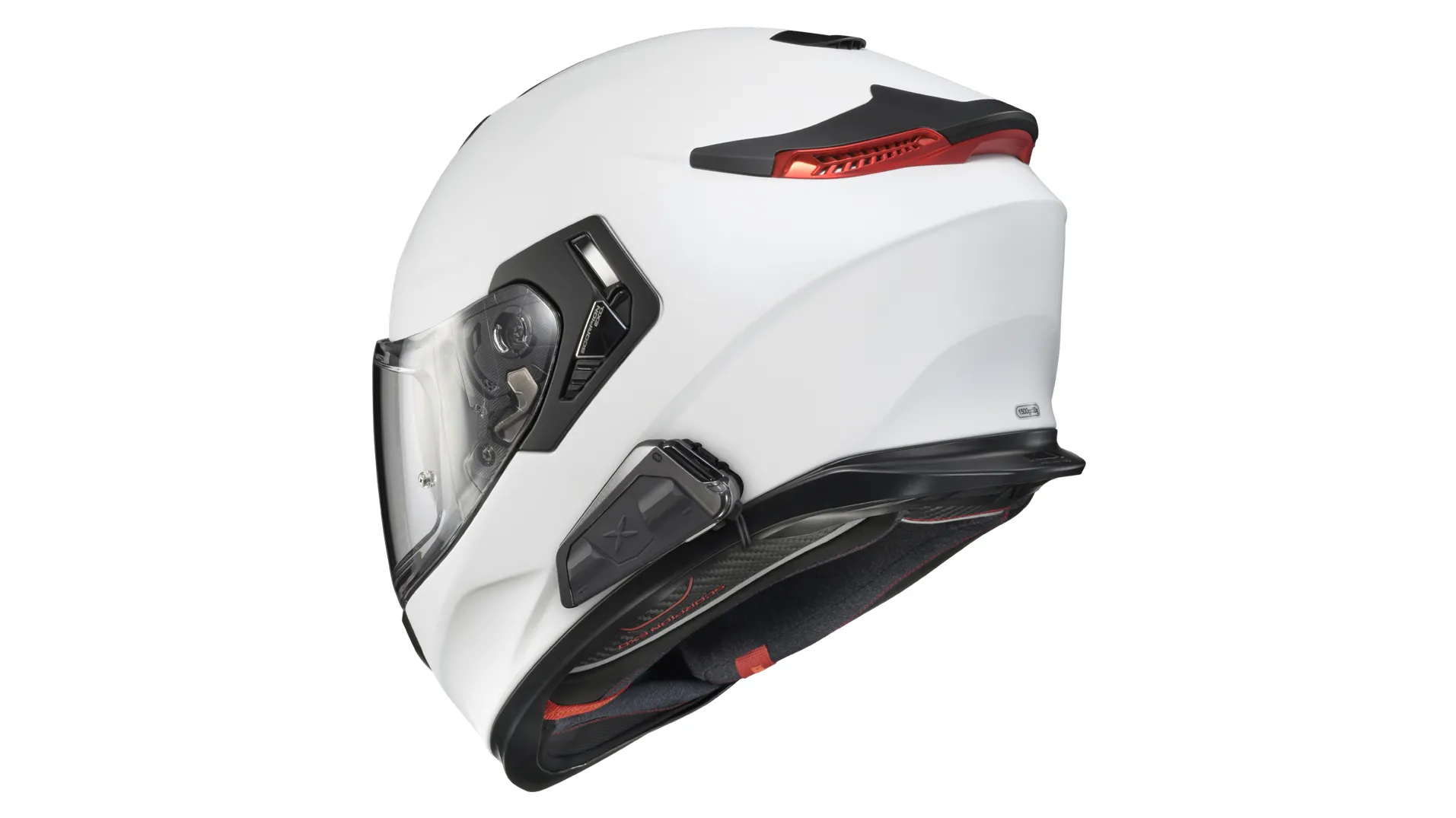
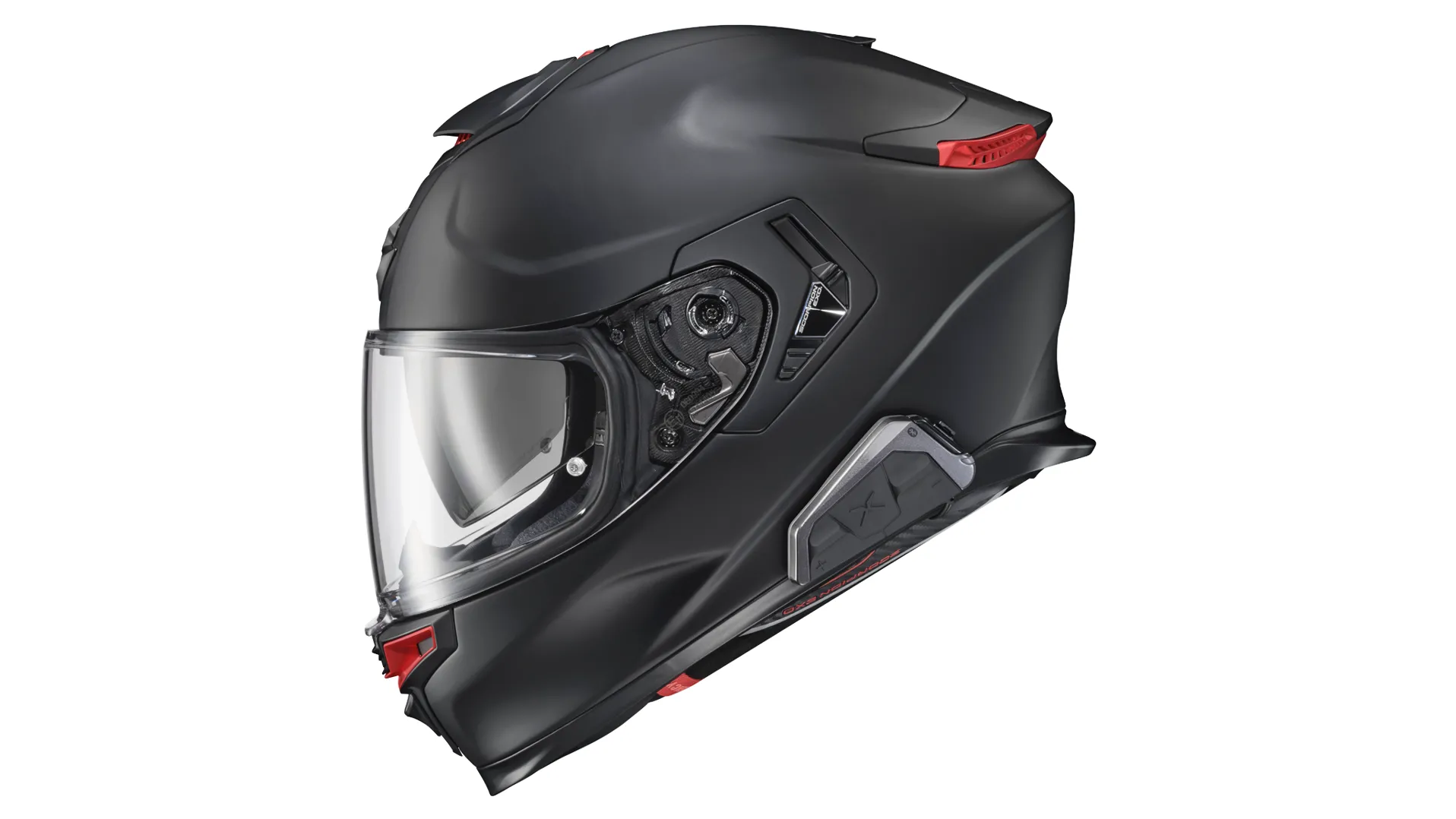
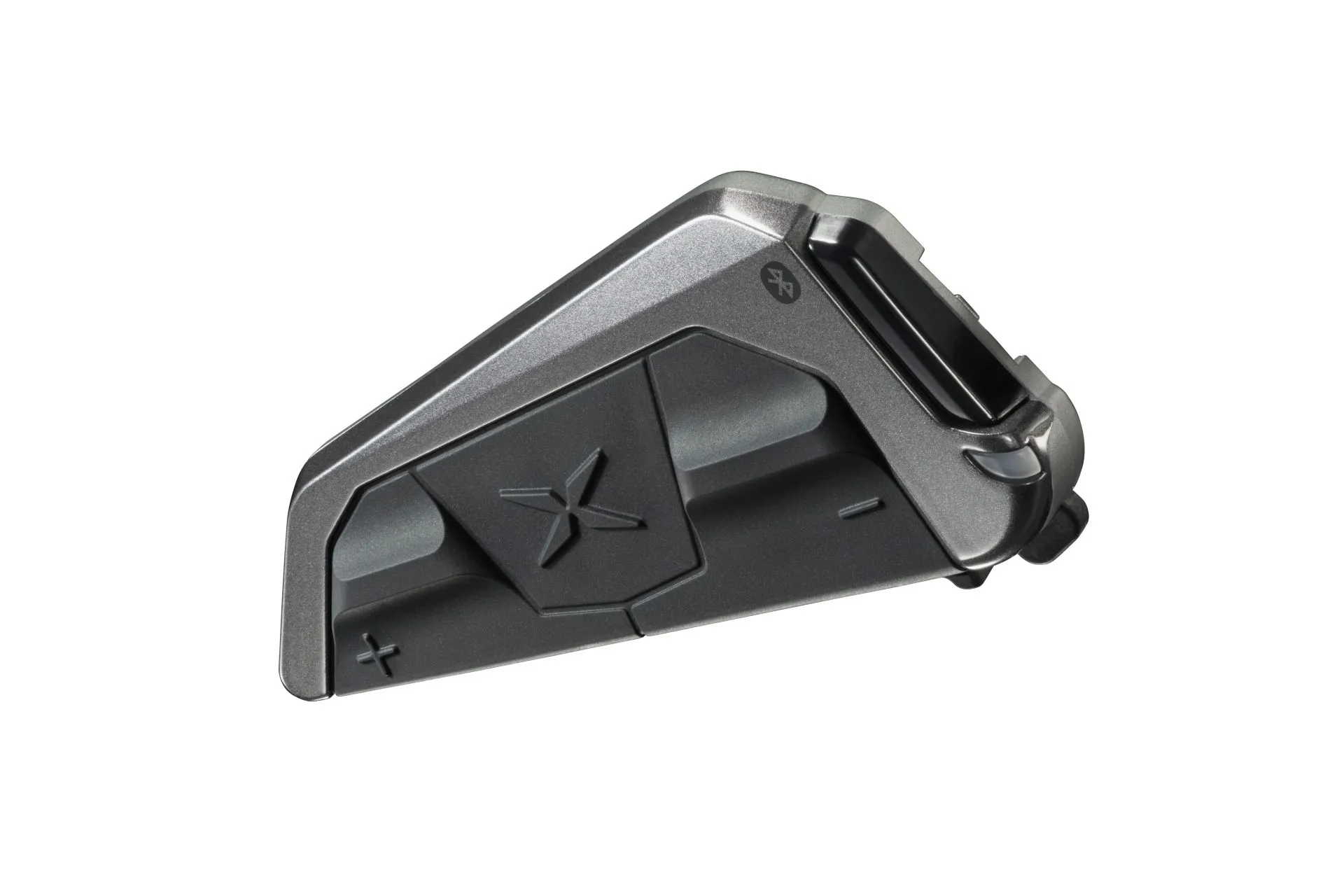
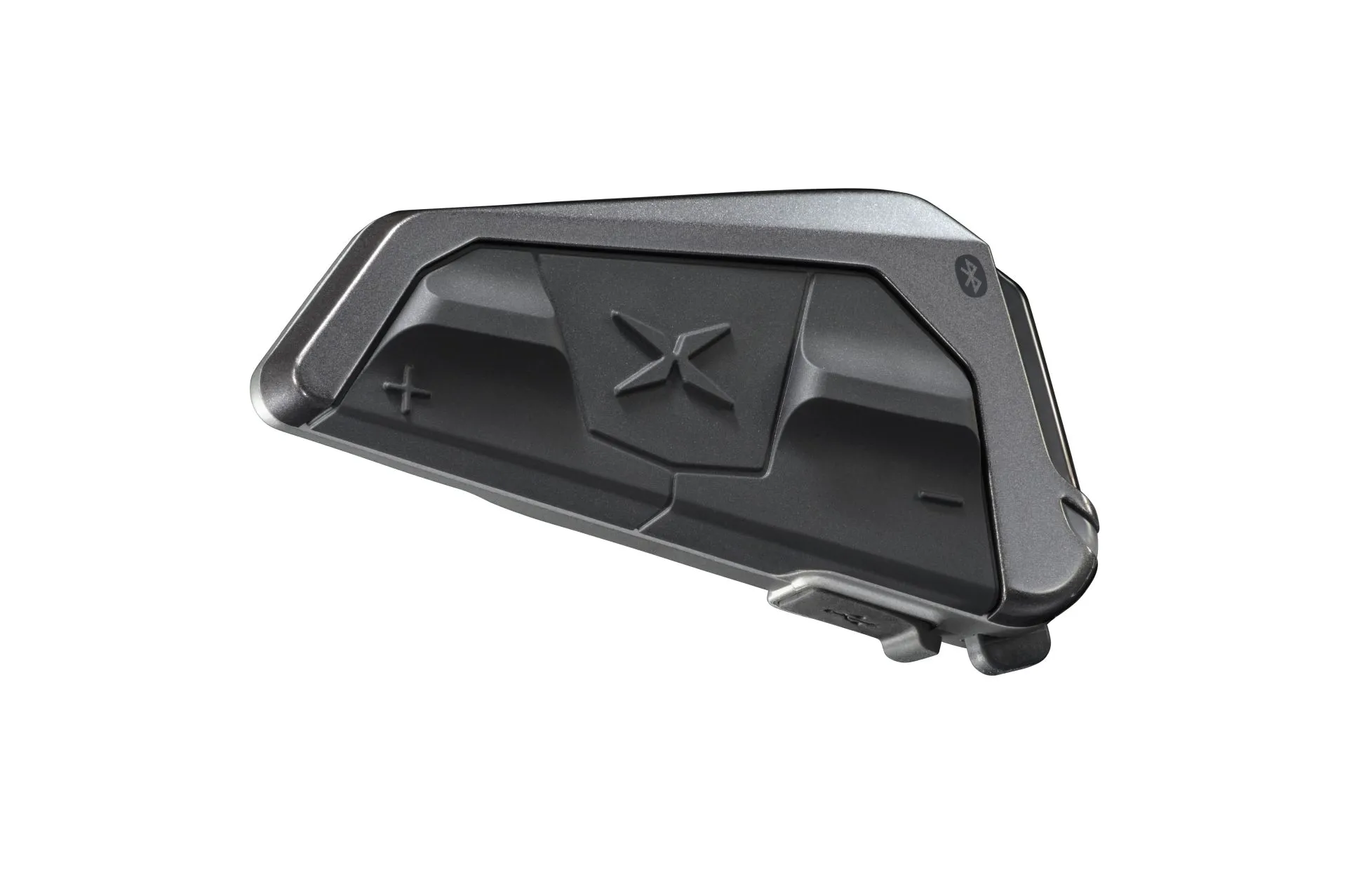
One of KIDO Sports’ most ambitious developments is EXO-COM, a smart helmet-integrated communication system featuring DynaMESH connectivity (using Bluetooth audio streaming and voice).
EXO-COM enables groups of recreational and touring riders to stay continuously connected with each other. But adding electronics into a helmet introduces a whole new level of engineering challenges.
“Antenna performance varies depending on position, orientation and the surrounding materials,” said Giyoung Kim hardware team director in KIDO Sports’ new business department. “Any electromagnetic interference (EMI) issues discovered late in the certification process can delay an entire product launch.”
EXO-COM became one of the first of KIDO Sports’ offerings to benefit from its broader investment in Dassault Systèmes solutions, including CATIA for 3D modeling and SIMULIA for simulation. CATIA provides the foundation for EXO-COM development, enabling engineers to integrate communication hardware into the helmet design. With SIMULIA, engineers can evaluate electromagnetic performance early in the development process, before committing to physical prototypes.
“By validating antenna radiation patterns through EMI simulation to determine multi-antenna interference at the design stage, we expect to reduce the number of physical prototype iterations required and also improve the speed of global certification compliance, based on our prior experience in developing these types of solutions without digital simulation-driven design capabilities,” Kim said.
This capability is particularly valuable for EXO-COM’s DynaMESH technology, where multiple antennas operate simultaneously. “Optimal antenna placement and interference issues can now be addressed before prototyping, enabling a level of communication quality assurance that was not previously achievable,” Kim said.
We can now manage our product lineup of over 30 models with a high degree of design consistency and efficiency.
Using SIMULIA to directly access the design data created in CATIA gives engineers a continuous path from design to structural validation and electromagnetic verification.
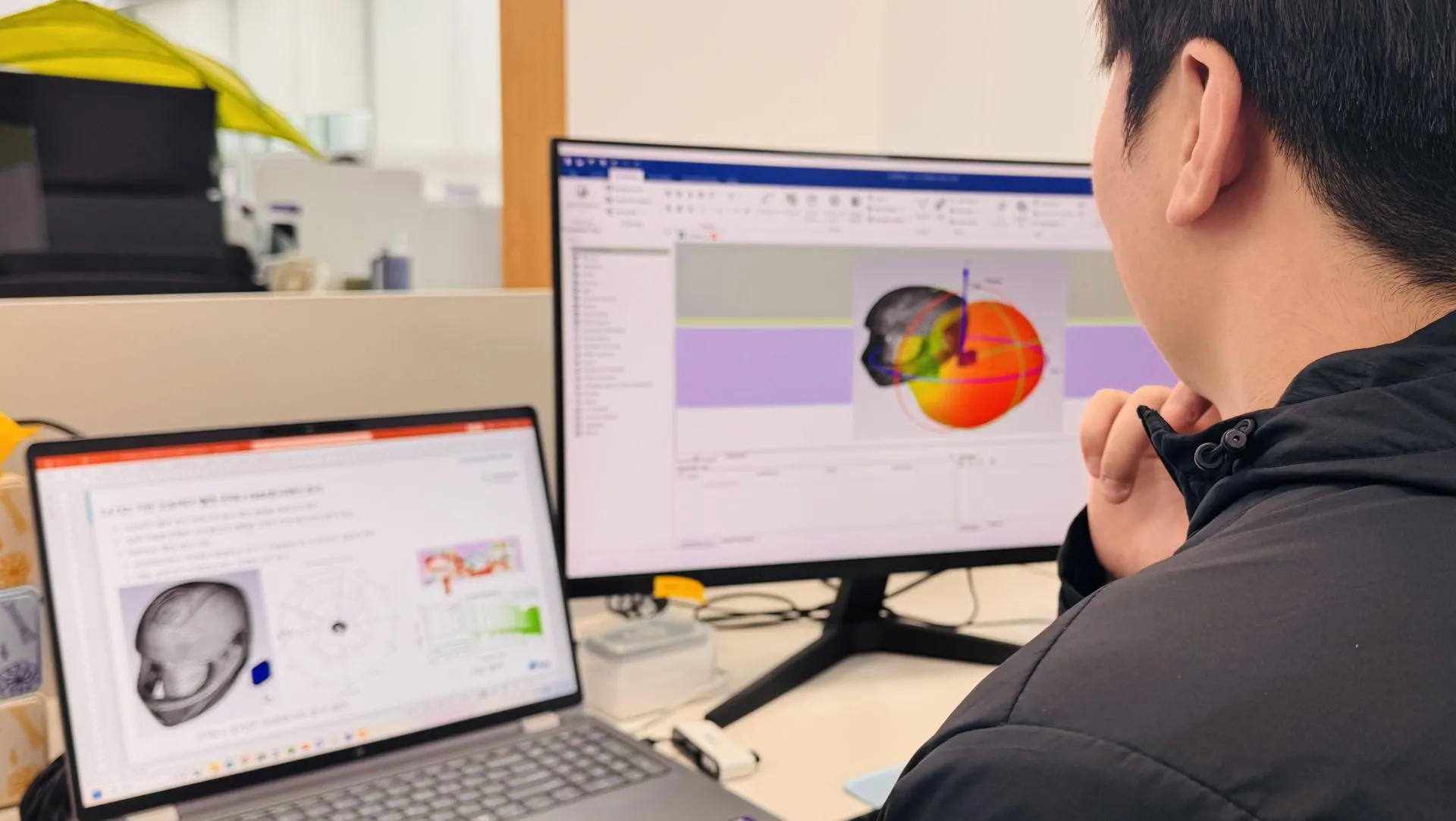
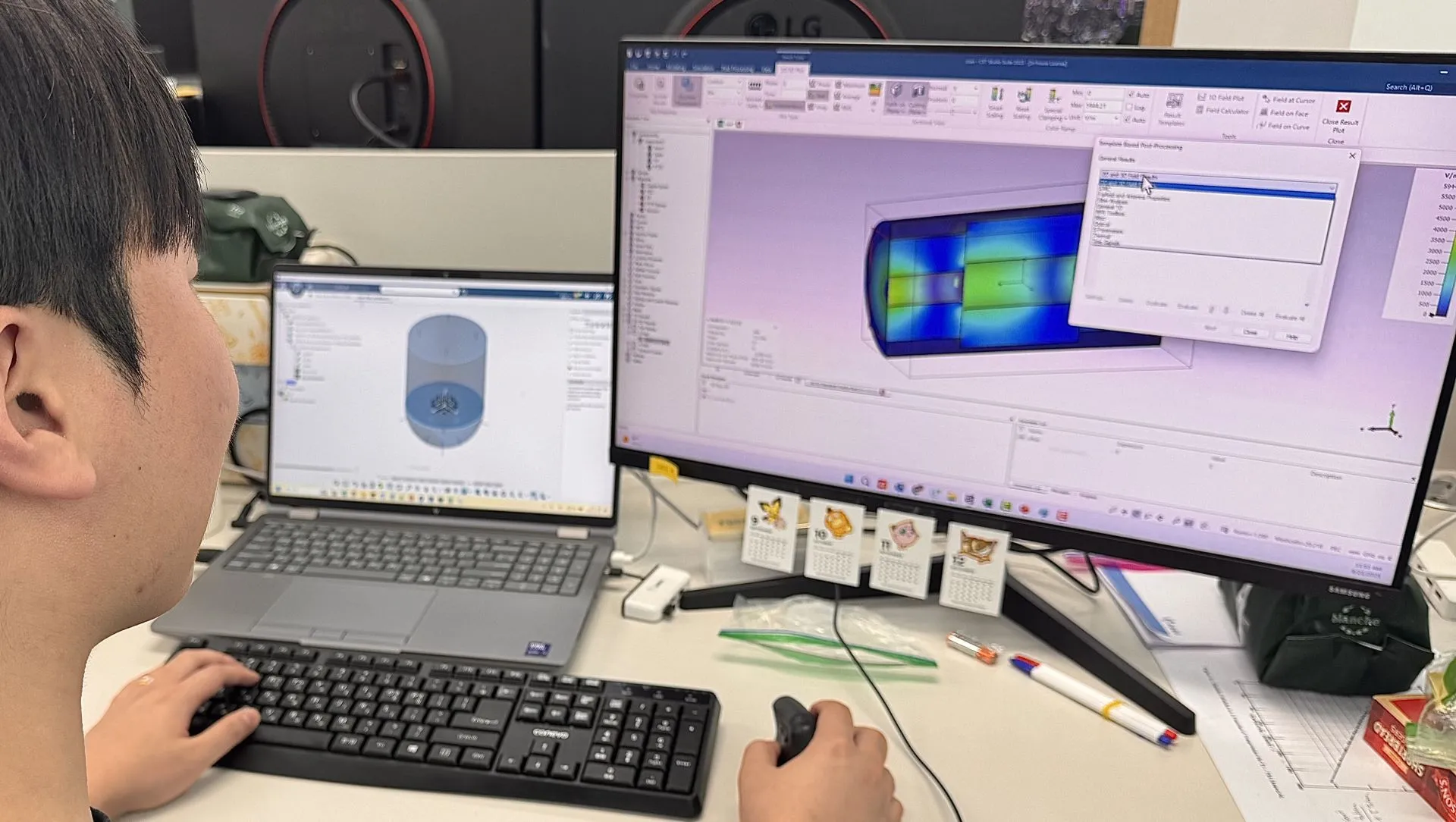
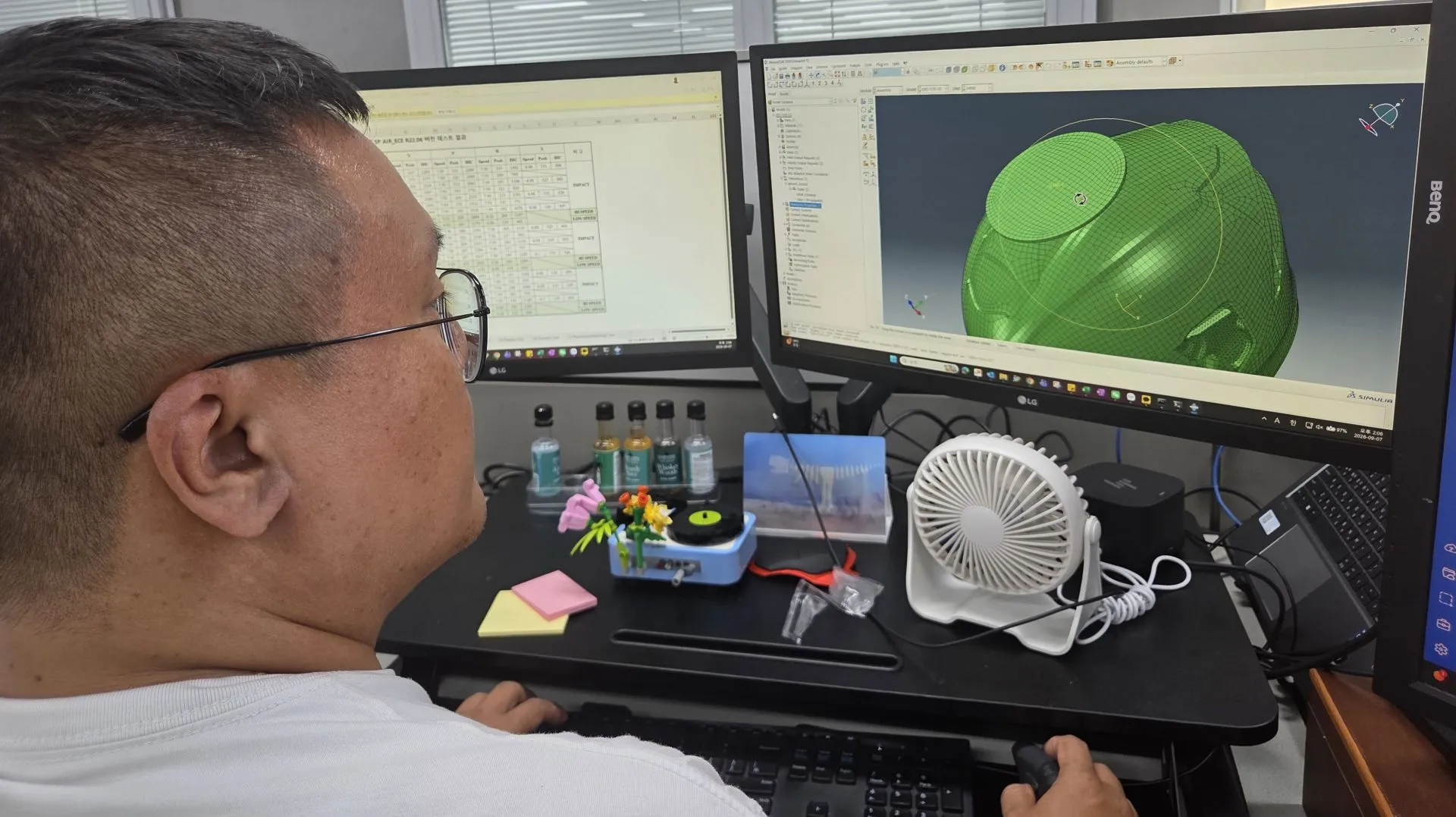
The same digital approach that supports EXO-COM also helps KIDO Sports transform the development of its entire helmet portfolio.
“Before implementing Dassault Systèmes software, developing a helmet at KIDO Sports demanded a lot of engineering effort,” said Chulho Hong, KIDO Sports’ head of research and development. “The design team worked primarily in 2D, making it difficult to visualize complex 3D helmet geometry across multiple parts, including the shell, foam liner, ventilation system and fit padding. Co-ordinating design intent across components was time-consuming and prone to error.”
Today, engineering uses CATIA for the 3D modeling of everything (from a helmet’s exterior shell geometry, internal foam structure, ventilation systems and fit optimization). The fit requires a design that accommodates different head shapes, including Asian-specific sizing. CATIA’s parametric design capabilities ensure that any updates are now automatically made across related components, eliminating much of the rework that previously accompanied design changes.
“We can now manage our product lineup of over 30 models with a high degree of design consistency and efficiency,” Hong said. “Using parametric modeling has reduced the time required to prepare new variants or updated versions of existing models by approximately 30% compared to previous workflows.”
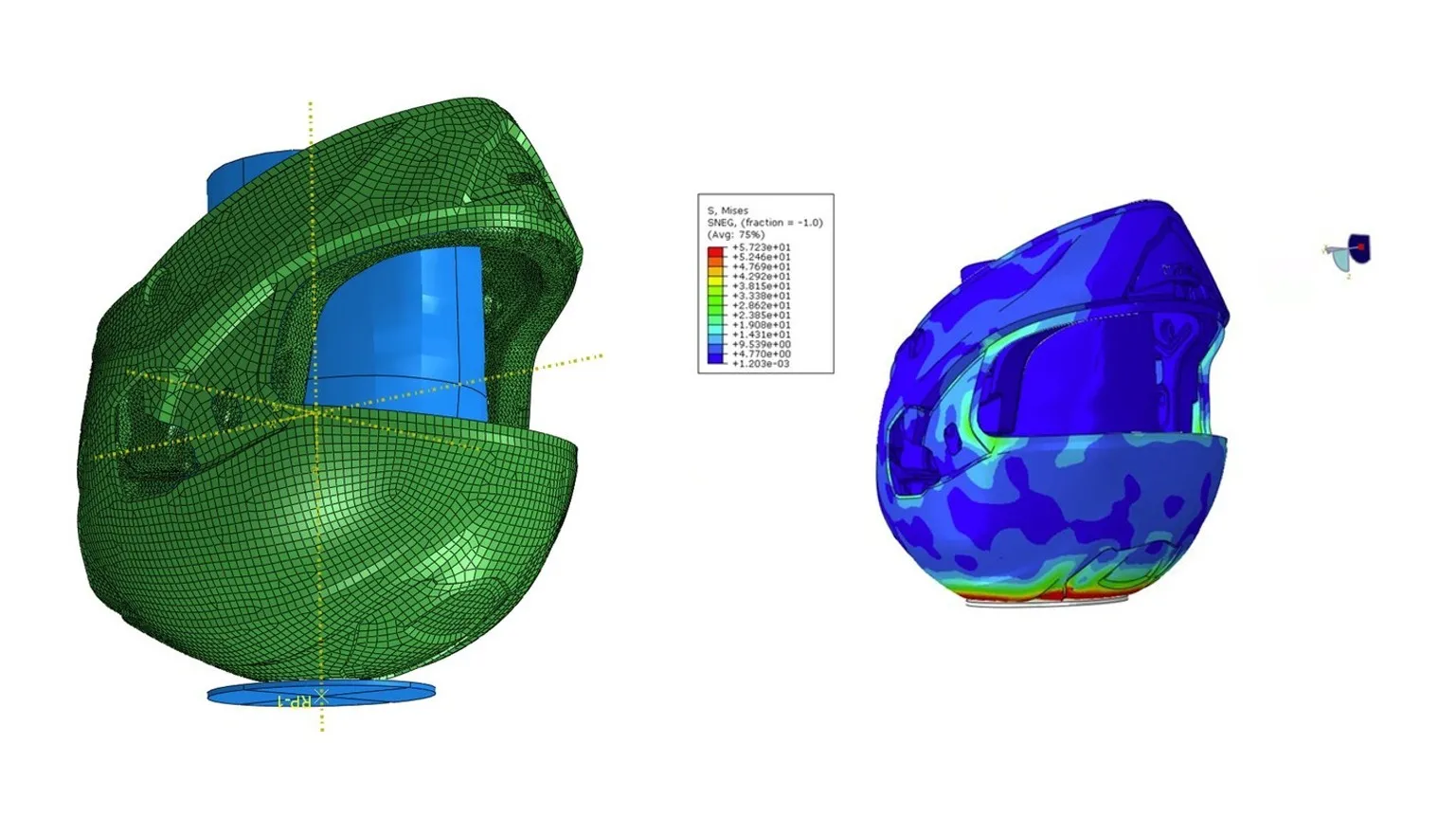
KIDO Sports’ approach to validation also improved with virtual testing. Historically, each new helmet design required hundreds of physical impact tests. Between 300-500 sample products had to be manufactured and fully tested before mass production.
“Physical motorcycle helmet testing and mold modification failures alone accounted for approximately 50% of total development costs,” Hong said. “Each time safety standards changed, accumulated engineering knowledge became obsolete, requiring more samples to be built and discarded. Even under controlled conditions, achieving consistent validation results through physical testing remained a constant challenge.”
The pressure on KIDO Sports intensified when European helmet safety standards were revised from ECE 22.05 to the more stringent ECE 22.06 – requiring design updates and re-certification across the company’s entire model range within a tight timeline. “Engineers and managers worked through the night to meet the deadline,” Hong said.
Hong, who had previously spent 18 years in the automotive industry, recognized that the company’s reliance on physical prototyping was unsustainable. “In my previous work at an automotive component supplier, I witnessed firsthand how major global automotive original equipment manufacturers (OEMs) shifted from physical crash testing to simulation,” he said. “I became convinced that the same transition was necessary at KIDO Sports.”
Working with local Dassault Systèmes partner ISPARK, KIDO Sports established a simulation-first development approach that leveraged SIMULIA’s capabilities for structural impact simulation and electromagnetic performance analysis.
To validate the approach, ISPark conducted a proof of concept (PoC) on the EXO-530 AIR helmet, replicating standard physical certification test conditions. This included simulating an impact at 7,590 millimeters per second and a flat anvil drop test, which measures how effectively a helmet absorbs impact energy and reduces the force transmitted to the wearer’s head. The tests used material properties for the expanded polystyrene (EPS) foam and polycarbonate shell supplied by KIDO Sports.
“The simulation results showed more than 85% correlation with physical test data – including the measured peak g-force of 238.7,” Hong said. “This accuracy was the key factor in KIDO Sports’ decision to adopt the solutions.”
With help from Dassault Systèmes, we will be able to establish a fully integrated simulation and artificial intelligence (AI) driven development framework.
Following the successful PoC, ISPark helped KIDO Sports scale simulation across its development process by defining workflows, establishing key parameters and enabling engineers to run analyses independently.
SIMULIA draws directly on the design data created in CATIA, giving engineers a continuous path from design to structural validation and electromagnetic verification.
“CATIA's role as the upstream data source for SIMULIA preserves the design intent throughout the entire development process – from concept to structural validation to electromagnetic verification – without data loss or manual re-entry,” Hong said.
KIDO Sports now plans to extend SIMULIA’s structural validation capabilities across the entire ScorpionEXO product lineup. Additionally, the company plans to expand the use of electromagnetic simulation to new products scheduled for release in Europe and North America. “The target is a 30% reduction in development costs once the simulation framework is fully in place,” Hong said. “This will come from a reduction in physical test failure costs and a reduction in production delays caused by late-stage helmet certification failures.”
This is only the beginning of what KIDO Sports will achieve with its technology. In the future, the company hopes to embrace Dassault Systèmes’ science-based vision for 3DUNIVERSES, combining modeling, simulation, and industrial AI. “Over time, simulation data will become valuable intellectual property,” Hong said. “In the longer term, with help from Dassault Systèmes, we will be able to establish a fully integrated simulation and artificial intelligence (AI) driven development framework that will enable us to continue to meet the growing needs of riders across the world.”

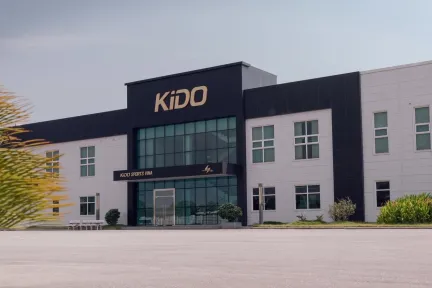
Headquartered in Seoul, Korea, KIDO Sports has over two decades of experience developing motorcycle helmets in collaboration with world-class designers and engineers. The company operates under a clear mission to place the customer at the center of every product it develops. Its core values – innovation, design and craftsmanship – are embedded throughout its global R&D and manufacturing operations, driving continuous advancement in helmet safety, comfort and functionality. As a result, its ScorpionEXO range now ranks among the top two motorcycle helmet brands by sales volume in Europe.
For more information: http://www.kidosports.com/new/

Headquartered in Korea and founded in 2009, ISPARK is a digital transformation specialist with extensive experience in designing, implementing and operating customer-focused ICT solutions. Its team comprises skilled professionals and engineers with expertise in artificial intelligence, extended reality, robotic process automation, product lifecycle management and cloud-based smart factory and digital twin services. The company continuously invests in R&D to provide high-value services optimized for customer needs.
For more information: https://www.ispark.kr/en/main
Virtual Twin Experiences for Sustainable Innovation – Helping Manufacturers Improve Consumer Products
Industry
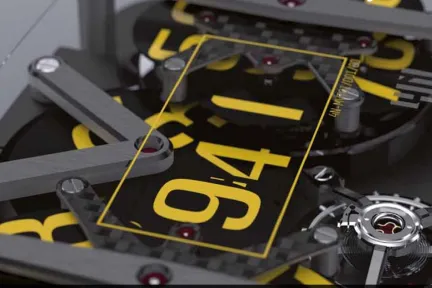
4N was founded by watchmaker François Quentin in 2009, and the 4N brand was born the same year. The 4N addresses the modern luxury watch market and appeals to collectors of exceptional timepieces.
Customer Story
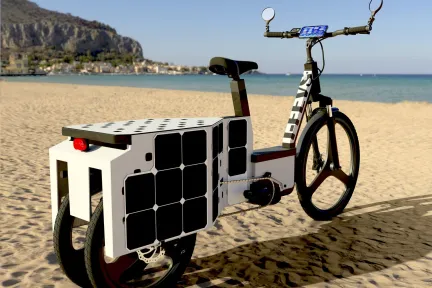
I-FEVS (Interactive Fully Electrical Vehicles) is on a mission to make electric mobility accessible and mainstream.
Customer Story
KIDO Sports uses Dassault Systèmes’ solutions to improve consistency and efficiency from design to validation across an expanding helmet portfolio.
Customer Story
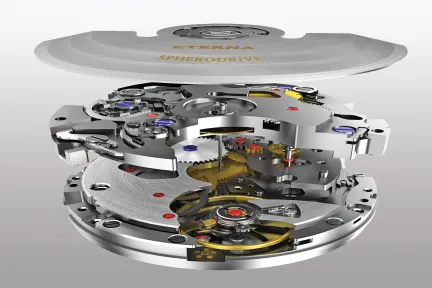
Eterna needed a powerful software solution to fully benefit from the capabilities on their new 3-axis CNC milling machines for watch manufacturing.
Customer Story
Sanitary product manufacturer Geberit leverages the 3DEXPERIENCE platform for handling mechanical engineering, design management and collaboration.
Customer Story
Reducing dramatically development lead time with CATIA specialized applications.
Customer Story
Arc International needed to establish local presence in new markets and to connect its global development organizations to share and collaborate on product design.
Customer Story