
Acoustic Analysis with Simpack and wave6 North American Multibody Simulation User Meeting
Acoustic Analysis with Simpack and wave6 North American Multibody Simulation User Meeting
E-seminars
Trouvez tout ce dont vous avez besoin sur SIMULIA
Acoustic Analysis with Simpack and wave6 North American Multibody Simulation User Meeting
E-seminars
This work presents a coupled fluid-structural interaction (FSI) capability wherein pressure and thermal loads predicted by the CRUNCH CFD and CRAFT CFD Navier-Stokes solvers are exchanged with Abaqus/Standard and Abaqus/Explicit using the Co-Simulation Engine (CSE). Multiple domains may be simulated concurrently, on separate groups of processors. Data exchange is handled through SIMULIA’s Co-Simulation Engine API. The boundary surface common to the fluid and solid domains is defined, along with the specific scalar and/or vector fields to be exchanged. Point forces or pressures, heat fluxes, displacements, and temperatures are passed between the codes, and simulations may be either one-way or two-way coupled. Applications of the FSI simulation capability to problems of interest are presented and discussed.
Customer Papers
Planetary Gear System Gear Whine (Transmission/Differential)
E-seminars
Simulation of railway track maintenance trains at MATISA
E-seminars
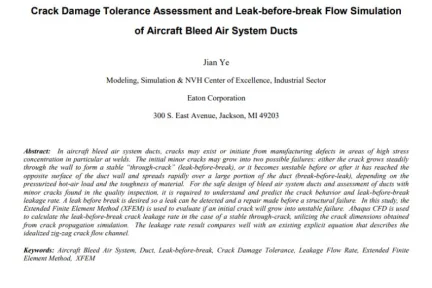
In aircraft bleed air system ducts, cracks may exist or initiate from manufacturing defects in areas of high stress concentration in particular at welds. The initial minor cracks may grow into two possible failures: either the crack grows steadily through the wall to form a stable “through-crack” (leak-before-break), or it becomes unstable before or after it has reached the opposite surface of the duct wall and spreads rapidly over a large portion of the duct (break-before-leak), depending on the pressurized hot-air load and the toughness of material. For the safe design of bleed air system ducts and assessment of ducts with minor cracks found in the quality inspection, it is required to understand and predict the crack behavior and leak-before-break leakage rate.
Customer Papers
Model -Aided Design of a Hydraulic Pitch Actuation System
E-seminars
Impact of Elasticity on the Transmission Behaviour of Thin Ring Gears
E-seminars
Strength and Endurance Predictions of Drivetrains and Rotor Blades using Abaqus
E-seminars
The firing process of ceramic products under a specific heat curve is generally divided into three different phases: thermal expansion, sintering, and thermal contraction phases. These non-mechanical deformations are assumed to be unrelated, and the mechanical ones are assumed to be represented by the viscoplastic constitutive model. The key issue is how to determine sintering strains by calibrating the employed function forms of the densification rate with the data obtained from the stairway thermal cycle (STC) test. In addition, the presentations of the dependencies of the elastic and creep properties on both temperature and density are of importance to accurately predict the overall deformation of ceramic products.
Customer Papers
Dynamic simulation of the inflation gas of a tire under operational conditions
E-seminars
4th Wind And Drivetrain Conference Wind and Drivetrain Update
E-seminars
Tagungsprogramm/Event Program European SIMULIA Multibody Simulation UGM Deutsches SIMULIA-Anwendertreffen/German RUM European SIMULIA Durability User Group Meeting
E-seminars
Nous proposons plusieurs centaines de modules d'auto-apprentissage pour que vous puissiez continuer à apprendre à votre rythme.
Lisez le blog SIMULIA pour connaître les dernières actualités et innovations de nos experts.
Below is an excerpt from a recent interview with Rachel Fu, an...
Article
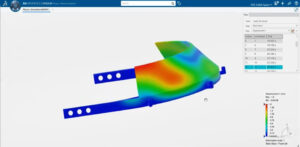
Recently, SIMULIA introduced the 2020 SIMULIA Champions, the inaugural team of brand...
Article
Meet, Halewijn Stikvoort! Recently, SIMULIA introduced the 2020 SIMULIA Champions, the inaugural...
Article
This article was originally published in July of 2019. June 5th marked...
Article
The COVID-19 pandemic has dramatically affected not just individuals but entire industries...
Article
Recently, SIMULIA introduced the 2020 SIMULIA Champions, the inaugural team of brand...
Article
The following is an excerpt of a blog post about a peristaltic...
Article
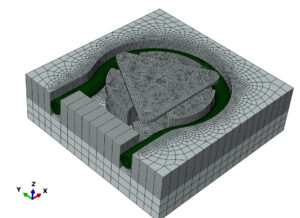
Below is an excerpt from a recent interview with Grace Lau, an...
Article
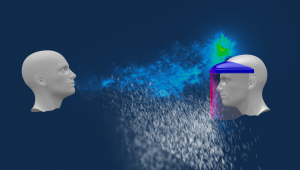
This is a forward looking post, featuring some of the new things...
Article
NAFEMS’ biannual Americas Conference CAASE20 should have been taking place in Indianapolis...
Article
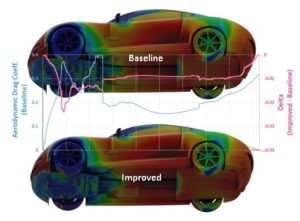
Reference IPE: Brake System Engineering A couple of years ago, I was...
Article
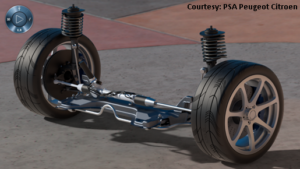
Reference IPE: Chassis and Suspension Strength and Durability Problem Statement: Model build...
Article
Contactez un expert SIMULIA pour découvrir comment nos solutions permettent une collaboration transparente et une innovation durable dans des entreprises de toutes tailles.
Des formations et des cours sont disponibles pour les étudiants, le monde académique, les professionnels et les sociétés. Trouvez la formation SIMULIA qui vous convient.
Obtenez des informations sur la certification des logiciels et du matériel, les téléchargements de logiciels, la documentation utilisateur, les coordonnées du support et l'offre de services.