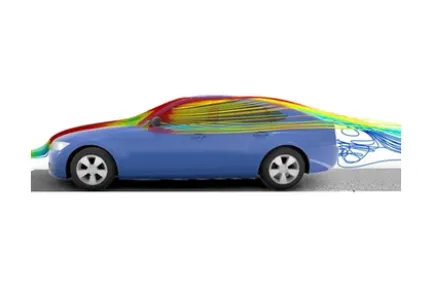
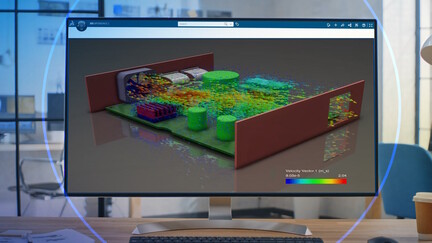
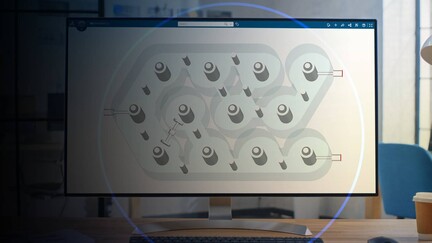
This course includes lessons and workshops covering advanced capabilities and techniques that can be included in a flow simulation using the Fluid Model Creation and Fluid Scenario Creation apps on the 3DEXPERIENCE platform.
Course Catalog

Trouvez tout ce dont vous avez besoin sur SIMULIA
This course includes lessons and workshops covering advanced capabilities and techniques that can be included in a flow simulation using the Fluid Model Creation and Fluid Scenario Creation apps on the 3DEXPERIENCE platform.
Course Catalog

This course is an introduction to solving fluid flow and conjugate heat transfer problems in the 3DEXPERIENCE platform. In this course, you will learn workflows for steady state internal and external flow as well as Conjugate Heat Transfer (CHT) problems through the Fluid Model Creation and Fluid Scenario Creation apps.
Course Catalog

The combination of mechanisms, rigid bodies, and finite elements in Abaqus makes a powerful simulation tool. The mechanism capability expands the ability of Abaqus to model connections among individual bodies in a variety of ways. Connections can be as simple as pins and rigid links or as complicated as nonlinear frictional joints with elasticity and failure. In this course you will explore the variety of connection types available in Abaqus and learn how to define connections that suit your needs.
Course Catalog

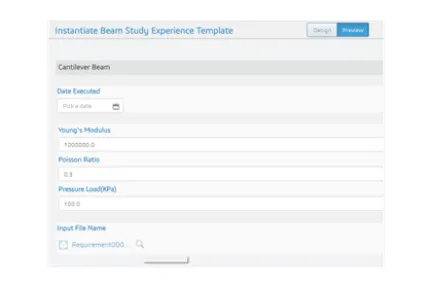
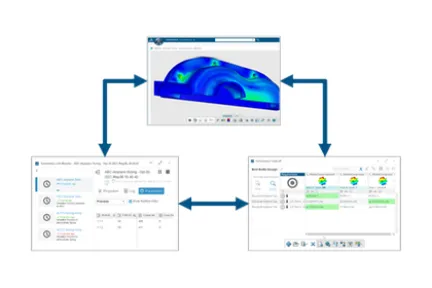
This course is an introduction to the Process Experience Studio widget on the 3DEXPERIENCE platform. Process Experience Studio allows engineers to create custom interfaces for distributing simulation processes and simulation templates throughout the organization. This widget is similar to a form builder which allows the engineer to develop a simple or complex interface of inputs and outputs to/from the process. Using the widget in a dashboard provides a way to collaborate in teams around process integration and automation.
Course Catalog

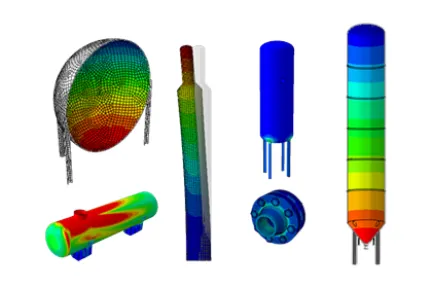
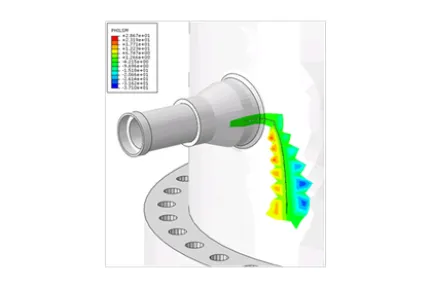
Pressure vessels and piping equipment are periodically assessed based on guidelines prescribed by documents such as ASME/API 579 Fitness for Service (FFS). Finite element based Level 3 assessments are often utilized for assessing equipment with complex geometries and loading conditions. This course discusses methods for modeling common pressure vessels such as distillation towers, storage vessels, etc. using Abaqus CAE. Methods for application and verification of loads such as weight of contents, internal pressure, etc. using Abaqus Standard, as required for Level 3 FFS assessments are also discussed. Procedures for analyzing metal loss using the finite element method by mapping thickness readings from scans are also considered. The following products are covered by this course: Abaqus CAE, Abaqus Standard. The course is divided into lectures and workshops. The course's workshops are integral to the training. They are designed to reinforce concepts presented during the lectures. They are intended to provide users with the experience of running and trouble shooting actual Abaqus analyses.
Course Catalog

Choosing an element is one of the most fundamental questions that users must answer as they build a finite element model. Many issues should be considered when selecting an element, including: Is there contact in the model? Is the material behavior fully or nearly incompressible? Will the element bend during the analysis? Is the structure thick or thin? Will the mesh become severely distorted? What results are needed from the analysis? Is the analysis a static or dynamic simulation? This course provides an overview of the different element types available in Abaqus for stress analyses. Differences between the Abaqus Standard and Abaqus Explicit element libraries are considered. Application specific recommendations for choosing an element type are provided. The pitfalls and symptoms of choosing incorrect element types are also discussed. Examples and workshops are used to illustrate element behavior and the consequences of choosing incorrect element types for a given problem.
Course Catalog

AbaqusDymola Co simulation is useful when logical modeling needs to be included in a physical system simulation; for example, it can be used to couple Anti lock Braking System (ABS) logic modeled in Dymola with an Abaqus rolling tire and brake simulation. In a typical workflow, sensor data computed in Abaqus (the physical system) are passed to Dymola (the controller), which in turn computes the needed actuation to drive the Abaqus model to a desired state. The powerful logical modeling features in Dymola cover a wide variety of engineering fields, such as electromechanics, control systems, hydraulics, penumatics, etc. This course illustrates coupling Dymola and Abaqus to develop a very versatile logical physical modeling capability.
Course Catalog

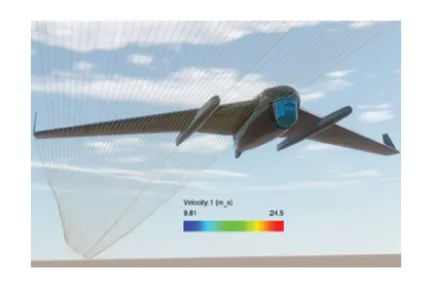
Abaqus provides computational electromagnetic capabilities for the simulation of problems involving steady state electrical conduction, piezoelectric phenomena and low frequency eddy currents. In this course, you will learn how to analyze low frequency eddy current problems in Abaqus Standard.
Course Catalog
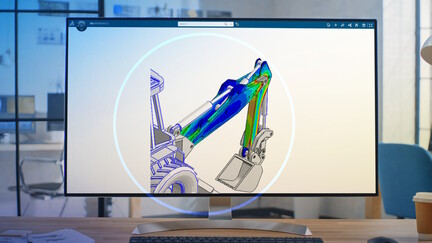
Fracture and failure modeling allows for product designs that maximize the safe operating life of structural components. Abaqus offers many capabilities that enable fracture and failure modeling. This course provides a detailed discussion of these capabilities.
Course Catalog
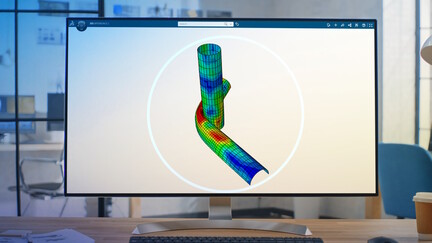
This course introduces Isight users to methods dealing with statistical behavior as a result of variability in the system. It motivates why uncertainty quantification (UQ) analysis is important, presents concepts and methods in Isight to do UQ analysis, and shows how to use Isight’s open architecture to integrate user developed algorithms into components as Plug ins.
Course Catalog
Abaqus makes extensive use of Python, a powerful, object oriented scripting language that is used widely by organizations throughout the world. Python has been embedded within the Abaqus software products. The language has been extended to include a rich set of commands that are well suited for the daily tasks of a finite element analyst. These extensions are referred to as the Abaqus Scripting Interface (ASI). The Abaqus Scripting Interface may be used by the finite element analyst at many different levels. Scripts can be written as stand alone utilities, or can be written to integrate the Abaqus products with other codes. At a basic level, scripts may be used to automate repetitive tasks such as the creation of results plots from a collection of output files. With some experience, users may actually extend the functionality of the Abaqus products. Advanced users may work with SIMULIA affiliates to customize the graphical user interface of the Abaqus interactive products (Abaqus CAE and Abaqus Viewer). This course covers basic usage of the Abaqus Scripting Interface and Python’s syntax. It includes numerous hands on exercises for the student to learn to automate tasks that are common to most analysts.
Course Catalog

This interactive course is intended for on demand learning and is the prerequisite for many process automation and design optimization courses (if you are new to using the 3DEXPERIENCE platform). Using automation apps requires a baseline knowledge of how to log in to the platform, use 3DSearch to find and filter data, manage maturity of the data for collaboration. The 3DEXPERIENCE native (desktop) apps and web interfaces (including dashboards) will be introduced in this course.
Course Catalog
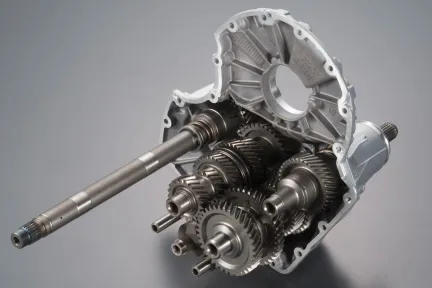
Discover how digital tools boost precision, productivity, and traceability while improving collaboration with the 3DEXPERIENCE platform.
E-seminar

Cut Costs, Accelerate Time-to-Market, and Improve Sustainability
E-seminar

Discover recent updates to our Fluid Dynamics Engineer role that simplify and accelerate the end-to-end workflow for fluid simulations.
E-seminar

Watch the webinar replay to learn how to improve electro-mechanical performance of sensors, circuits and electric motors.
E-seminar

Watch the replay to learn how to reduce device development time and cost by decreasing the need for physical prototypes
E-seminar

Join this Tech Talk and learn how to measure transistor nonlinear response with different load impedances using IVCAD 4.0.
E-seminar

Learn more about Filter Designer 3D, focusing on its automated filter design capabilities through demonstrations of advanced examples such as asymmetric planar and dual-mode filters.
E-seminar

This Tech Talk has a series of 4 webinar replays focused on transistor measurement and modeling to showcase the features of SIMULIA IVCAD Suite 4.0.
E-seminar

Join this Tech Talk and learn more about main e-NVH risks in a typical electric powertrain driven by a 48-slot 8-pole IPMSM and more.
E-seminar

Learn how to use the IdEM broadband macromodeling tool.
E-seminar

Join this Tech Talk and discover how to become a wizard.
E-seminar

Join this Tech Talk and discover convergence tips and tricks presented by an Abaqus expert.
E-seminar


Airborne is a leading domestic provider of overall protection solutions for lightning and strong electromagnetic environments.
Customer Story

Japanese automotive parts manufacturer Musashi is developing the next generation of powertrains for electric vehicles. The company selected the 3DEXPERIENCE platform and its Bid to Win industry solution to speed up product development time, harness simulation to handle new complexities and continue to deliver high quality products.
Customer Story

Vayyar develops safe, mobile, affordable and highly advanced 4D imaging sensors, enabling applications in a wide range of industries.
Customer Story

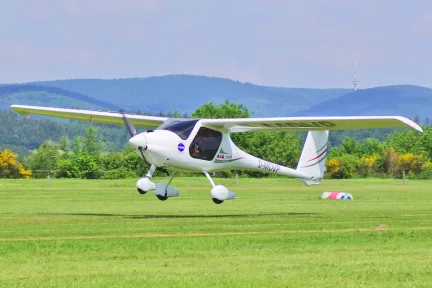
The company specializes in aircraft design, innovative electric and hybrid aircraft, propulsion batteries at the highest aviation standards
Customer Story

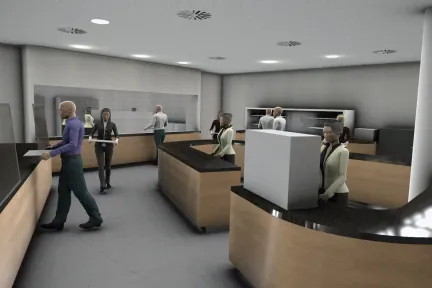
German-based GEA, one of the largest technology system suppliers in the food, beverage, pharmaceutical, and chemical sectors contracted Dassault Systèmes’ Engineering Services organization to simulate and visualize different scenarios for the re-opening of their cafeteria at its Oelde site using Computational Fluid Dynamics (CFD) simulation. The result: a comprehensive risk assessment for the re-opening after the lockdown in March due to COVID-19.
Customer Story

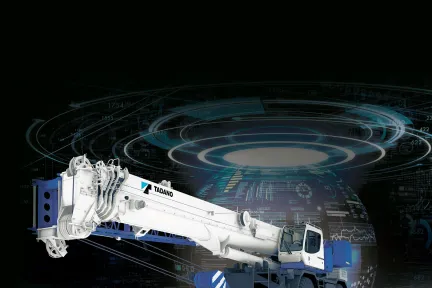
Tadano Ltd. is the largest Japan-based manufacturer of cranes and aerial work platforms. They wanted to speed up the R&D process by establishing an environment that made it possible to validate development processes from an early stage while maintaining a high level of safety. Using Simpack multibody simulation software, they were able to simulate large-scale 3D vehicle models to significantly reduce their manufacturing prototype costs and time for rework.
Customer Story

3DEXPERIENCE solutions on the cloud-enabled the TEN TECH team to access the full portfolio of SIMULIA simulation tools, collaborate effectively, and achieve results efficiently.
Customer Story

프랑스의 스타트업인 XSun은 성능 개선 모델인 2세대 자율주행 태양열 드론 SolarXOne을 설계하고자 합니다. XSun은3DEXPERIENCE Lab을 통해 Reinvent the Sky 솔루션을 도입, 3DEXPERIENCE 클라우드 플랫폼 상에서 드론을 효과적으로 설계, 시뮬레이션 및 테스트하고 있습니다.
고객 사례

The French start-up XSun wants to design the second generation of its autonomous solar-powered drone SolarXOne to improve its performance. Accelerated by the 3DEXPERIENCE Lab, XSun is using the 3DEXPERIENCE platform on the cloud to enable its teams to effectively design, simulate and test its drone, thanks to the Reinvent the Sky solution.
Customer Story

Toyo Tire는 다쏘시스템과의 협력으로 3DEXPERIENCE 플랫폼 및 산업 솔루션 익스피리언스인 SMARTYRE를 기반으로 하는 새로운 시뮬레이션 프로세스 및 데이터 관리 시스템을 구축하여 전사적 제품 개발 데이터를 통합했습니다.
고객 사례

Toyo Tire worked with Dassault Systèmes to build a new simulation process and data management system based on the 3DEXPERIENCE platform and its industry solution experience SMARTYRE to bring together company-wide product development data.
Customer Story

Nous proposons plusieurs centaines de modules d'auto-apprentissage pour que vous puissiez continuer à apprendre à votre rythme.
Lisez le blog SIMULIA pour connaître les dernières actualités et innovations de nos experts.
Electrostatic discharge (ESD) is a major risk to electronic devices. ESD occurs when a static charge accumulates, for example, on a moving vehicle or the body of the user and discharges through the device. The transient voltage can cause spurious data signals or even damage or destroy components. Managing ESD is critical to ensure that the device will work safely and reliably over its lifetime and meet electromagnetic compatibility (EMC) regulations.
Article

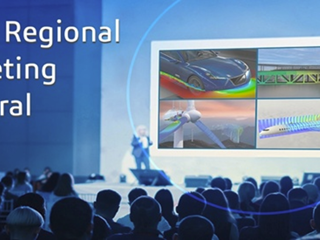
The annual SIMULIA Regional User Meetings (RUMs) provide a forum for practicing engineers and researchers to exchange ideas and experiences in all aspects of simulation technology. Last year, Ameya Apte, vehicle dynamics and load simulation engineer at General Motors spoke about how they use SIMULIA to model complex multibody dynamics for leaf spring suspension systems.
Article

Packaging OEM Magazine interviews Ray Wodar from Dassault Systèmes about how CPG brand manufacturers can accelerate sustainable packaging development.
Article

This blog post was originally published in October 2020. We’ve got a...
Article

Learn more about how you can directly influence the future of our products and applications with the SIMULIA User Experience Research Program.
Article

Modeling & Simulation (MODSIM) can lightweight packaging while optimizing for time, cost, quality and sustainability.
Article

In this blog post, we show how machine learning can be used in the design process of a centrifugal pump to optimize diffuser geometry. The AI model is trained on data from best-in-class simulation tools which produce reliable data that closely agrees with experimental validation results. Using a trained AI model based on simulation data, engineers can explore the impact of changes to diffuser parameters with instant feedback.
Article

This blog illustrates how aerodynamic data obtained from the 3DS CFD PowerFLOW software combined with data-driven methods can enable car manufacturers to obtain clean 3D contour plots of the vehicle’s surface X-force distribution, the associated integrated vehicle drag force and more within several minutes on a single GPU.
Article

This blog article presents the simulation workflow considering the partially saturated magnetic material of the inductor, which is used in the switching mode power supply (boost converter). The printed circuit board (PCB) and the 3D model of the power inductor are included in this workflow.
Article

Step-by-step instructions for a titanium dogbone example using the Calibration App.
Article

As a welded part cools down, residual stresses form within the part. The structural performance of a weld depends heavily on the parameters of the welding process, such as heat input, welding paths, and fixture designs. Simulation can model the weld process in order to calculate the residual stress distribution and deformation within welded submarine parts. This article explains how artificial intelligence (AI) and machine learning can be used to accelerate analysis and optimization of welds.
Article

Interested in learning more about SIMULIA’s Electromagnetic Simulation solutions? We’ve got all the resources you need right here to get started!
Article

Contactez un expert SIMULIA pour découvrir comment nos solutions permettent une collaboration transparente et une innovation durable dans des entreprises de toutes tailles.
Des formations et des cours sont disponibles pour les étudiants, le monde académique, les professionnels et les sociétés. Trouvez la formation SIMULIA qui vous convient.
Obtenez des informations sur la certification des logiciels et du matériel, les téléchargements de logiciels, la documentation utilisateur, les coordonnées du support et l'offre de services.