Model-based Approach to Safety and Reliability Analysis

This plugin provides risk analysis during the whole product modeling process and can be used together with the ISO 26262 Functional Safety Plugin.  It brings the value to demonstrate that risks are addressed by safety requirements/risk control measures; increased agility in between Risk/Hazard Analysis, Design, and FMEA; ensured traceability of risks to requirements, design elements, critical quality attributes (CQA) and other artifacts; performs safety analysis and impact analysis.

Cameo Safety and Reliability Analyzer Plugin enables a model-based approach to safety and reliability analysis. The plugin supports:

  • The failure mode, effects, and criticality analysis (FMECA) according to IEC 60812:2006 standard
  • ISO 26262 (Road vehicles – Functional safety)
  • Hazard analysis according to the following medical standards:
    • IEC 62304
    • ISO 14971:2007, Corrected version 2007-10-01 (Medical devices - Application of risk management to medical devices)

Integrating Safety and Reliability Analysis into MBSE Toolkit

The Cameo Safety and Reliability Analyzer plugin comes with the following predefined samples:

  • Medical FMEA and Hazard Analysis sample
  • Automotive FMEA sample
  • Electric Power Steering - ISO 26262 Functional Safety Analysis

Key Benefits

  • Being able to demonstrate that risks are addressed by safety requirements/risk control measures, design elements, critical quality attributes (CQA).
  • Automatically validate the model to ensure that the entire design went through safety and reliability analysis.
  • Increased agility between design, safety and reliability analysis phases:
    • A lot of frequent exchange of information between safety and reliability analysis cross-functional teams.
    • Shorter development cycles followed by shorter safety and reliability analysis cycles leading to a lot more precise detections of risks and faults and safer.
    • More reliable products.
  • Ensured traceability of risks to requirements, design elements, critical quality attributes (CQA) and other artifacts, traceability from design elements to FMEA, two-way traceability between FMEA and risks/hazard analysis.

Features

Cameo Safety and Reliability Analyzer plugin currently supports the following features

Safety analysis for medical devices and software according to IEC 62304 and ISO 14971:2007 medical standards

Certified for Automotive Functional Safety Compliance

No Magic (2024x Refresh 2) has successfully achieved Software Certification in accordance with internationally recognized automotive safety standards. Following a rigorous assessment process, our software solutions have been found to be in conformance with the requirements of ISO 26262-8:2018 (Section 11), achieving Tool Confidence Level 2 (TCL2). This certification confirms that No Magic meets the necessary criteria to support safety-critical design and development processes in the automotive industry. This certification ensures that the use of No Magic in safety-related development activities complies with ISO 26262, reinforcing Dassault Systèmes' commitment to ensuring safe, reliable and innovative engineering.

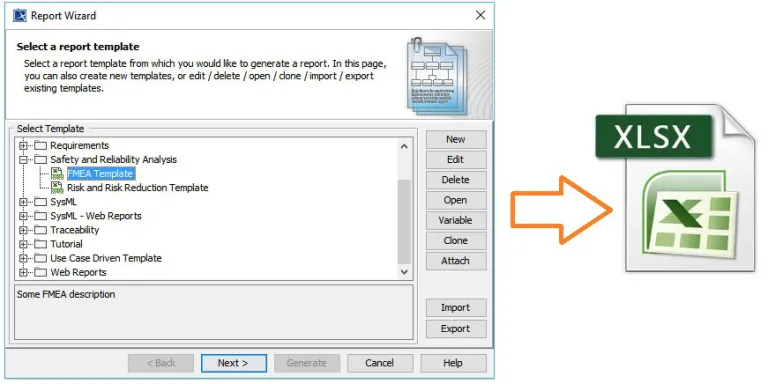
Reliability Analysis Screenshots

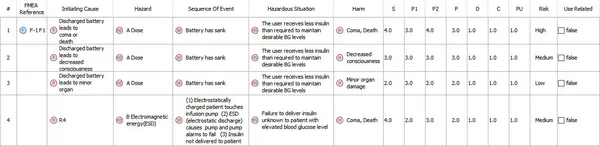
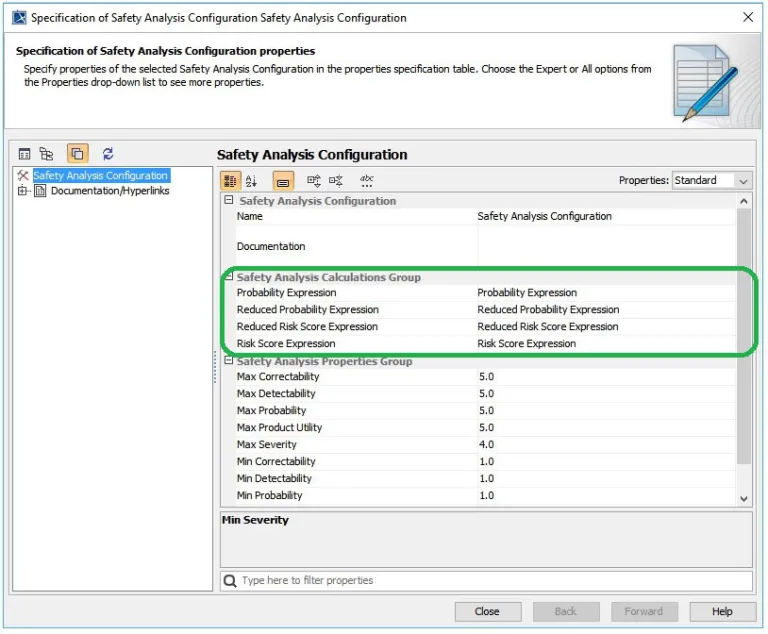
Safety Analysis Screenshots

Join the conversation in the CATIA MBSE Cyber System User Community!

2026x HF2 Unable to Apply ForceDesignation to Operational Performer

mission engineering UAF When I attempt to create a value for the OpposableElement tag I am not able to get a pull-down. Instead I just get a link to the enumeration. The tag definition in the stereotype uses the type DesignationKind for the tag, not ForceDesignation. DesignationKind is the base stereotype for ForceDesignation. This appears to be an issue in the UAF v1.3 profile.

CATIA MBSE CYBER SYSTEMS

[SAMPLE MODEL] EE&S Artifact Positioning on the Automotive SPICE Grid

What this isA practice model showing where EE&S plugin artifact types naturally land on the ASPICE process grid, using a Collision Avoidance System (ADAS) as the reference system. The point isn't the system — it's demonstrating that the tool's native constructs map directly to ASPICE work products, and that the chain doesn't stop at architecture.ASPICE Process → EE&S Artifact MappingSYS.1 — Requir

CATIA MBSE CYBER SYSTEMS

FlexNet Plugin Licenses in Batch Mode

My team is trying to run Cameo in “batch mode”, and I have a question regarding the FlexNet license server configuration that is not answered in any of the documentation that I was able to find. In the Cameo documentation, I see Java arguments for specifying a FlexNet server and port (FL_SERVER_ADDRESS / FL_SERVER_PORT), and I also see that I can specify a tool edition (FL_EDITION). However, in th

CATIA MBSE CYBER SYSTEMS

Derivation Tables in SysML V2

Requirement derivation tables are easily one of the top requested topics from users across the industry. In my latest video, I walk through how to define a reusable view def and map it directly to your requirement structures.Watch the Video here: [Link to YouTube Video] Download / Copy the Source CodeGrab the SysML v2 code used in the video below to test and adapt for your own models:How are you

CATIA MBSE CYBER SYSTEMS

NOTE: Existing users of No Magic products can access to the user portal at https://magicdraw.com/main.php, as well as Cameo Collaborator for Teamwork Cloud samples at https://ccexamples.nomagic.com.

Learn What CATIA Can Do for You

Speak with a CATIA expert to learn how our solutions enable seamless collaboration and sustainable innovation at organizations of every size.

Get Started

Courses and classes are available for students, academia, professionals and companies. Find the right CATIA training for you. 

Get Help

Find information on software & hardware certification, software downloads, user documentation, support contact and services offering