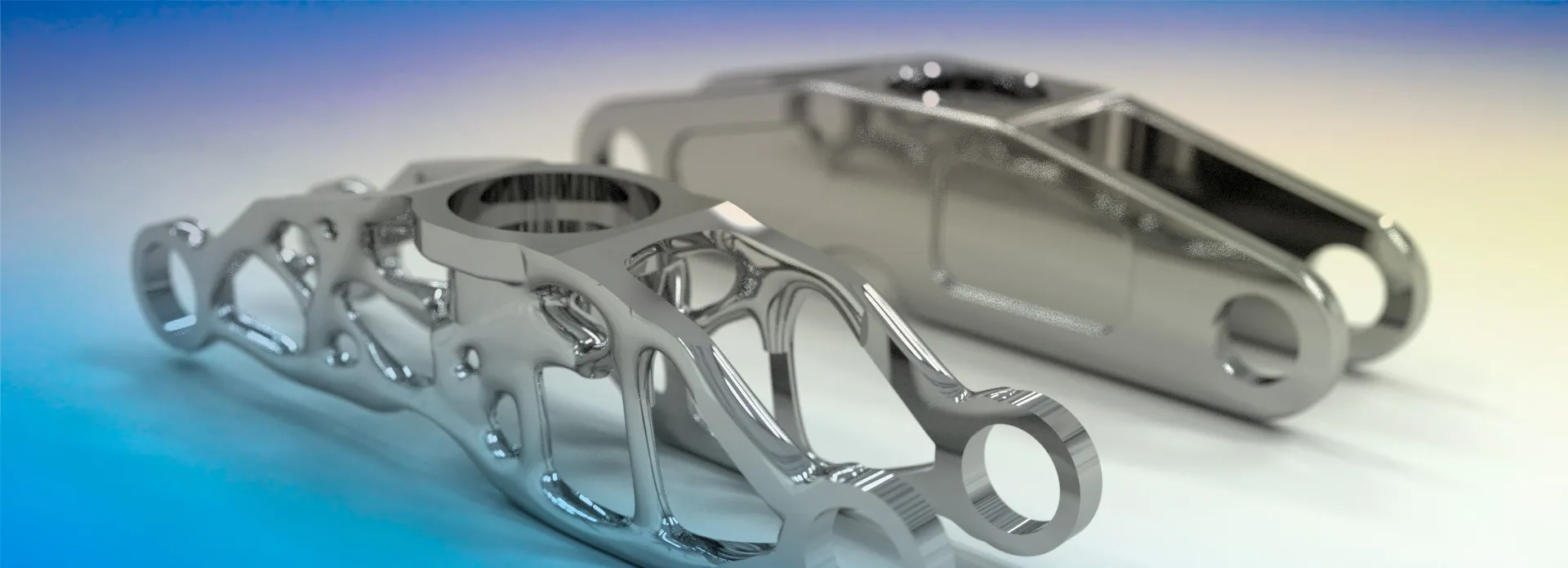
Additive Manufacturing Simulation
Explore the Future of Fabrication with SIMULIA's Advanced Digital Additive Manufacturing Solutions
What is Digital Additive Manufacturing Simulation?
Digital Additive Manufacturing (DAM) is an advanced fabrication process in which parts or objects are built layer by layer through material addition. Traditional subtractive manufacturing methods, such as turning, drilling, and milling, remove material to achieve a desired shape. In contrast, additive techniques utilize 3D printing technology to develop components directly from digital models.
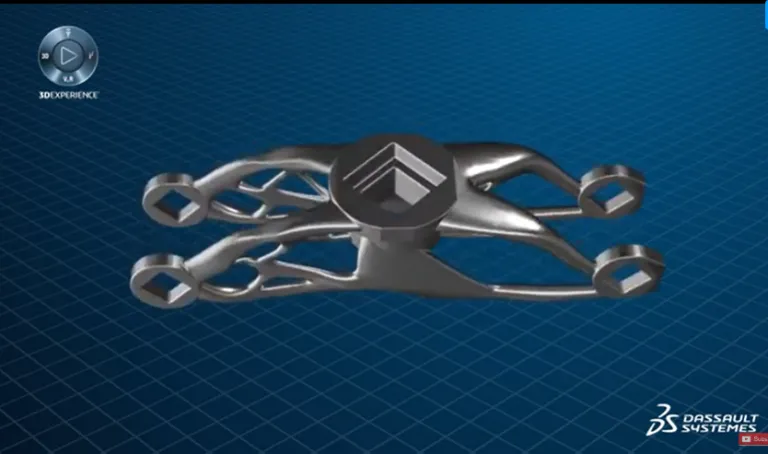
How does Digital Additive Manufacturing work?
In Digital Additive Manufacturing, a Digital Mock-Up (DMU) of the part or fabrication bed is created. This involves:
- Three-dimensional CAD representations: Geometric designs that depict the intended final product.
- Fabrication process representations: Detailed descriptions of methodologies, including material extrusion, recoating, scan paths, and energy deposition.
The entire process is managed digitally, and the resulting digital thread is converted into machine code, which gives specific commands for machines to follow during fabrication.
How does Simulation help in Digital Additive Manufacturing?
Additive Manufacturing (AM) presents unique challenges, but simulation transforms these obstacles into opportunities for innovation.
- Optimizing Design: AM's design freedom requires new paradigms. Simulation helps explore optimal forms while ensuring support structures are effectively integrated to prevent fabrication failures.
- Understanding Performance: Phase changes, driven by chemical reactions and thermal processes, significantly influence product performance. Simulation allows for predicting residual stresses and distortions that can arise during fabrication, enhancing overall reliability.
- Advanced Tools for Success: Simulation technologies, such as finite element analysis and computational fluid dynamics, enable virtual process testing and reverse product engineering. These tools provide valuable insights that refine design and production.
- Driving Efficiency: Using simulation capabilities, manufacturers can reduce development cycles, cut costs, and improve decision-making. The ability to anticipate and address potential issues before they arise mitigates program risks and ensures high-quality outcomes.
Key Benefits of Additive Manufacturing Simulation

Material Savings
Minimize waste and utilize advanced materials (e.g., TPU filaments, metal superalloys).
Design Flexibility
Use generative design techniques to create intricate geometries and lightweight structures.

Streamlined Processes
Consolidate multiple components into one part, cutting assembly time and costs.

Enhanced Sustainability
Promotes environmentally friendly manufacturing practices.
Elevate Collaboration with the 3DEXPERIENCE Platform
Digitalization minimizes time-to-market and costs by shifting design from linear to collaborative processes. Collaborative Engineering emphasizes efficient content sharing across the product lifecycle.
Design for Additive Manufacturing (DfAM) involves a multidisciplinary approach, utilizing generative design and topology optimization to reveal new opportunities. Virtual testing through simulations provides critical insights into build failure predictability and post-build product performance, which are closely tied to manufacturing processes and design specifications.
The 3DEXPERIENCE platform enables seamless data integration across disciplines, supports content lifecycle management, and cultivates a collaborative engineering environment. Effective content lifecycle management, maturity, and robust data organization enhance issue resolution, change management, routing, and testing, fostering a productive collaborative atmosphere.
Additive Manufacturing Digital Thread
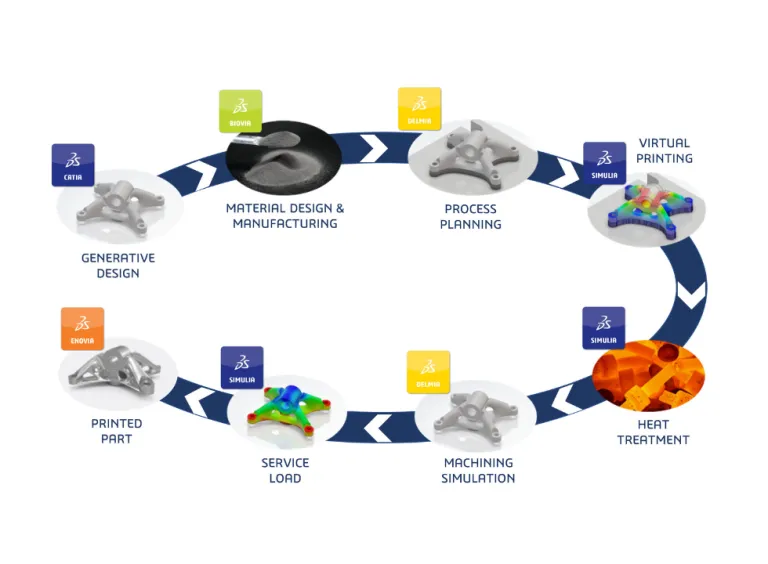
Dassault Systèmes offers a portfolio of integrated applications to maximize the capabilities of additive manufacturing techniques by connecting all disciplines for an authentic end-to-end development chain from product design to manufacturing and simulation. The 3DEXPERIENCE platform provides numerous advanced roles and a rich set of powerful applications to cover all aspects of digital product development. The digital thread provided by the 3DEXPERIENCE platform ensures a tight connection between these powerful and intuitive applications, as highlighted in the tabs below.
- 3DEXPERIENCE Marketplace
- Function-Driven Generative Design
- Part Selection
3DEXPERIENCE Marketplace
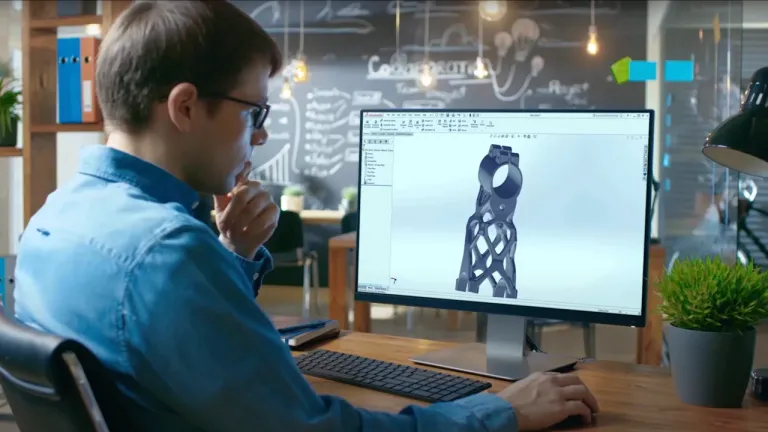
3DEXPERIENCE Make is an on-demand manufacturing platform that connects designers and engineers with industrial manufacturing service providers. It connects the industrial ecosystem of Designers, Engineers, Buyers, and Production planners with industrial manufacturing service providers such as Xometry, Sculpteo, American Additive, Get It Made, Any-Shape, and more.
With our robust algorithm, you can get quotes in seconds from our network of service providers for your 3D printing and CNC machining project.
Function-Driven Generative Design
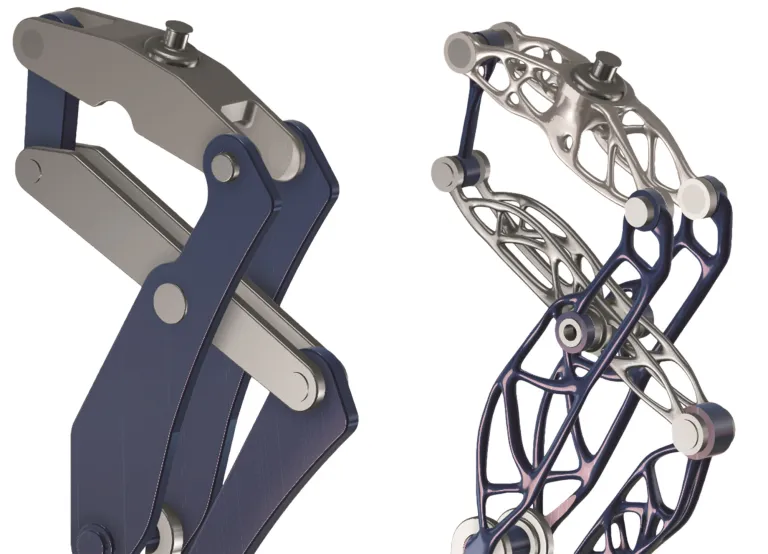
The emergence of additive manufacturing techniques enables the creation of efficient organic shapes and complex lattice structures that go beyond traditional engineering design. Unlike conventional methods that rely on best practices and an engineer's experience, Generative Design focuses on achieving optimal designs for specific functions based on defined constraints.
Additive manufacturing provides the flexibility to establish functional constraints that define design volumes, control mechanical interfaces, and target metrics like mass, stiffness, strength, and durability—all without restricting form. The Generative Approach within 3DEXPERIENCE integrates design, simulation, and optimization through guided workflows, delivering a streamlined solution for users within a single interface.
Part Selection
Powerful search tools in 3DEXPERIENCE can evaluate your part library and digital bill of materials to identify potential candidates for additive manufacturing.
Digital collaboration and intelligence on our platform ensure seamless real-time information sharing between all stakeholders so that product designers, engineers, and managers have a full view of the project at all times.
- Process Design & Production Planning
- Virtual Printing
- Materials Engineering and Development
Process Design & Production Planning
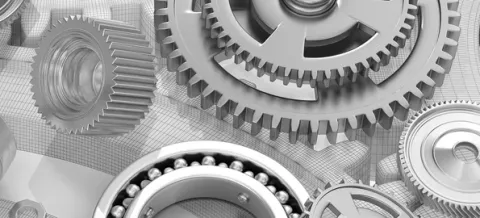
Fabrication applications on the 3DEXPERIENCE platform provide guided workflows to design and plan production and production processes associated with Additive solutions and machines. Commencing with creating or reusing build volumes and plates, automatically nest parts to maximize build volume usage, capture and reuse rules to assess optimal part orientation and compute minimal support structures. Specify custom rules for slicing, scan patterns and process parameters for the entire build or individual parts. Visualize the scan path for diagnostic checks and reuse process data in downstream Virtual Printing simulations and studies.
Virtual Printing
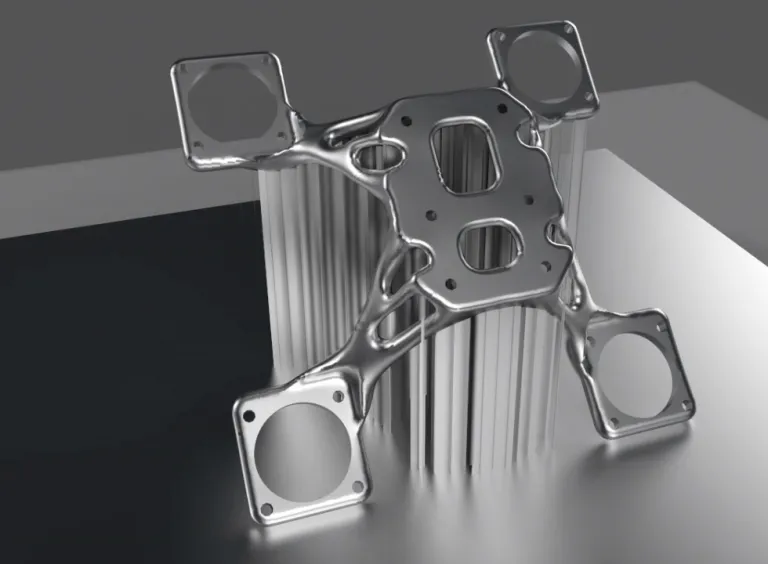
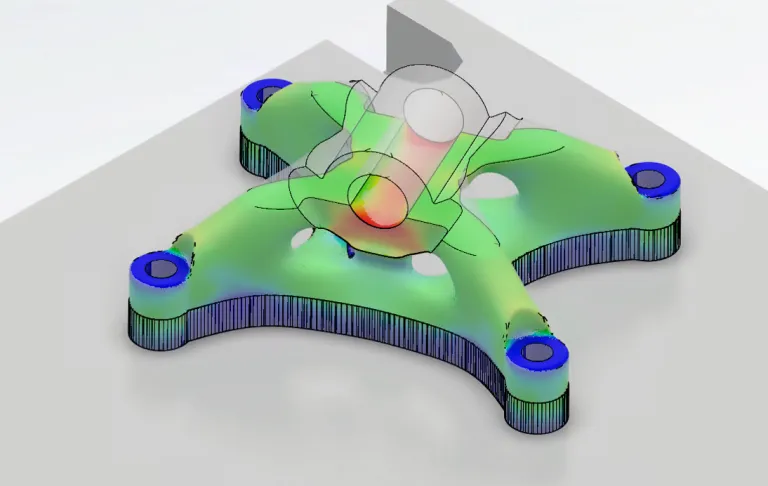
Use the 3DEXPERIENCE platform to lower time and material costs. Simulate part-build behavior and process sensitivities, including scan path and support structure performance. Accelerate simulations by integrating and reusing design data. Create user interfaces and workflows for manufacturing methods like Direct Energy Deposition, Select Laser Sintering, or Polymer Extrusion. Apply validated thermal-mechanical solutions to predict distortion and residual stress while identifying risks such as crack initiation and machine interference. Include assessments of fatigue life, account for post-build heat treatment, and ensure as-manufactured geometry matches as-designed geometry through digital compensation.
Materials Engineering and Development
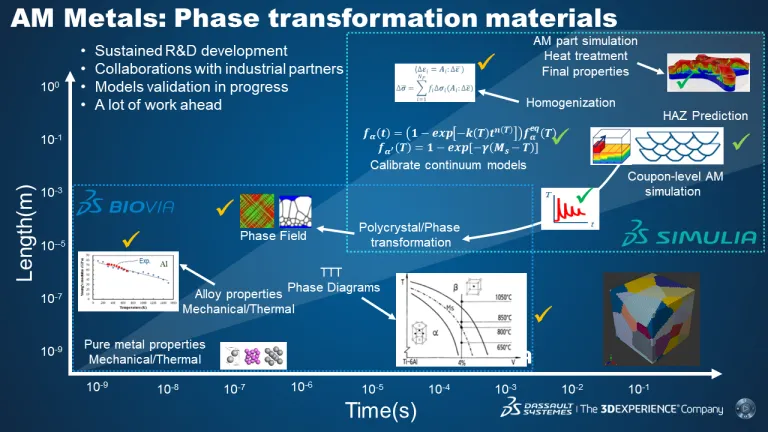
Create virtual printers with multiple lasers or heat sources to control material deposition and removal while optimizing cooling methods for advanced manufacturing. Design metal alloys for additive manufacturing by analyzing micro-mechanics simulations to understand grain orientation and phase properties. With user-defined material models and comprehensive process parameters in our thermal-mechanical simulations, you can precisely engineer manufacturing processes and material properties for demanding AM applications. Coupled with powerful optimization tools in 3DEXPERIENCE, you have complete control over advanced AM process workflows.
Customer Testimonials
Listen to our customers in their own words. Check out these videos.


Start Your Journey
The world of Digital Additive Manufacturing is changing. Discover how to stay a step ahead with SIMULIA
Achieving Repeatable, High-Quality Additive Manufacturing Builds with Simulation
Simulation for Additive Manufacturing
White Papers

Inherent Strain Methods for Additive Manufacturing Process Simulations | Dassault Systèmes
There are many simulation solutions addressing additive manufacturing. In this e-seminar we will discuss the eigenstrain method as it is used in the context of additive manufacturing process simulations.
E-seminar
On demand
Dassault Systèmes Team Wins Sandia’s Topology Optimization Challenge
Designing and building a car for a Formula One racing team is...
Article
Additive Manufacturing Resources
Distortion Prediction of Ti6Al4V Parts in Selective Laser Melting: An Industrial Case Study
Rapid heating and cooling in the Selective Laser Melting (SLM) additive manufacturing process generates large amounts of tensile residual stresses in the component. These stresses lead to part distortions and poor product performance. In most cases, distortions become more significant after cutting the part from the build tray and removing support structures. In this study, a complex topology optimized Gimbal Mount was considered for physical printing and finite element analysis of the print process. Th component was printed using Ti6Al4V material on an SLM machine and measurement points were taken on its outer profile. This data was compared with original geometry and simulation results. A good agreement was found between simulation and experimental results which was helpful in part development and establishing the technology.
Customer Papers
Additive Manufacturing Part Level Distortion Sensitivity Analysis within Abaqus on a Thinwalled, Tubular Structure
As additive manufacturing (AM) evolves to become a more viable production solution in terms of cost, quality, and time, the need for predictive simulation of the process grows as well. After testing several commercial offerings to see how well they could predict deformation of various parts, Abaqus was found to be the most promising option and chosen for a more in depth analysis. The scope of this particular project was to examine the effects of certain simulation choices – from basics (mesh, time stepping, element type) to unique AM convergence techniques (full/partial activation, expansion time constant, follow deformation, etc.). Hundreds of simulations were run in Abaqus with various permutations and the resulting response on the final deformation and stress state was tracked.
Customer Papers
Influence of Surrounding Powder Bed and Build Platform on Thermal Cooling Characteristics in 3D Printed Parts via Selective Laser Melting
Selective laser melting (SLM) leads to high cooling rates and correspondingly high residual stresses, which can distort the printed part on the printing platform and even lead to part cracking and consequent print failure. The temperature profile and cooling rates during the SLM process are influenced by the surrounding powder bed and building platform, which can act as a significant heat sink depending on part design and platform arrangement. The new functionality of the Abaqus additive manufacturing simulation framework allows for separate modelling of solid (laser exposed) material, powder bed (not exposed) and platform (not exposed), as well as evolving heat transfer surfaces for the AM part. In this paper we highlight the influence of the surrounding powder bed and platform on the thermal characteristics of the printed part.
Customer Papers
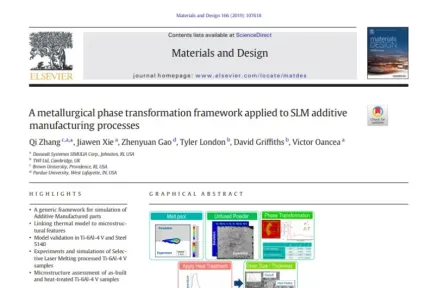
A metallurgical phase transformation framework applied to SLM additive manufacturing processes
While significant progress has been made in the last few years, the reliability of Additively Manufactured (AM) parts is often less than desirable as they suffer from manufacturing defects and hence subpar strength and fatigue life. To address this challenge, numerical methods are sought to provide insight into the process and help accelerate progress in raising the quality of AM parts. In metal AM applications, assessing the amount of unfused powder, melt pool volumes, and metallurgical phase transformations is often of interest. In this work, we introduce a generic framework for assessing metallurgical phase transformations, building on a previously-developed general simulation framework for predicting temperature evolution, distortions, and residual stresses.
Customer Papers
Phase Transformations in Metals during Additive Manufacturing Processes
The impetus of additive manufacturing (AM) technology in the last few years is significant. However, in many cases the reliability of the technology leads to parts that suffer from manufacturing defects and hence subpar strength and fatigue life when compared to parts manufactured with conventional technologies. Sustained experimentation is often required and computer simulations, like in many other fields before, are sought to provide significant insight into the process such that progress in raising the quality of AM parts can be achieved. This paper presents a sequential thermals-stress modelling approach of additive manufacturing processes of titanium alloy Ti-6Al-4V parts leveraging a new physics-based framework in a general-purpose finite element code (Abaqus).
Community News
Predicting the Properties of Additively Manufactured Parts
In this paper, thermo-mechanical-metallurgical simulations of Ti-6Al-4V parts produced by SLM are validated against experimental measurements. The work involves the simulation of the SLM process and the prediction of location-specific microstructural features (such as grain size, morphology characteristics and phase fractions). A framework for more generally predicting the mechanical properties of printed parts is then presented. This involves the implementation of a novel mapping between microstructural quantities and tensile properties at each material point. The results demonstrate the potential that the powerful new features of Abaqus2017 have for simulating AM processes.
Customer Papers
External Resources for Additive Manufacturing Simulation
FAQs about Additive Manufacturing Simulation
Also Discover
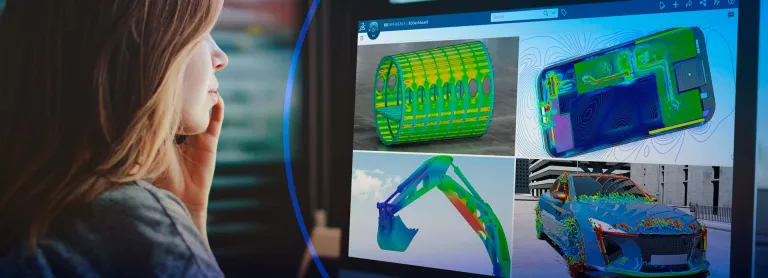
SIMULIA Portfolio
Engineering Software from SIMULIA
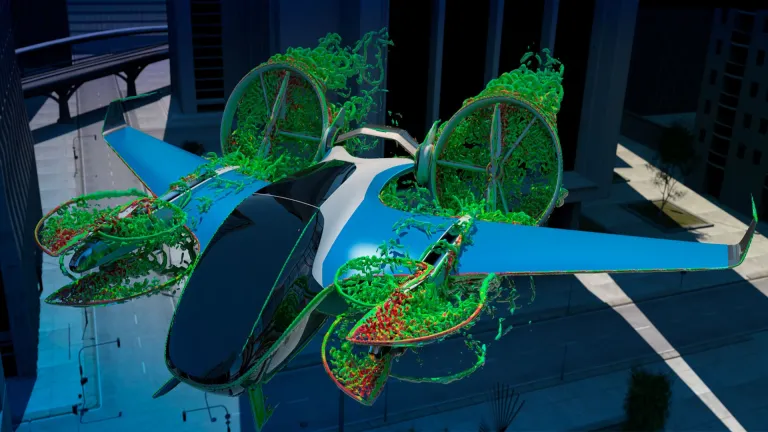
eVTOL Design and Simulation
Simulation for Urban Air Mobility (UAM)

Connected Systems Simulation
Simulation of Connected Systems and Devices Enables Efficient Product Design and Certification
Learn What SIMULIA Can Do for You
Speak with a SIMULIA expert to learn how our solutions enable seamless collaboration and sustainable innovation at organizations of every size.
Get Started
Courses and classes are available for students, academia, professionals and companies. Find the right SIMULIA training for you.
Get Help
Find information on software & hardware certification, software downloads, user documentation, support contact and services offering