
Horse Powertrain
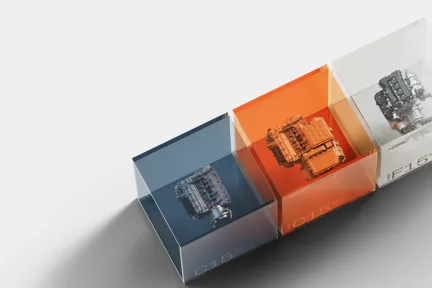
Horse Powertrain’s X-Range C15 extender embodies its sustainable mobility and virtual twin ambitions on the 3DEXPERIENCE platform.
Customer Story
Developed on Dassault Systèmes’ 3DEXPERIENCE platform, Horse Powertrain’s X-Range C15 extender embodies its sustainable mobility and virtual twin ambitions.
The transition to electric vehicles is well underway, although it is advancing at different speeds around the world. In some markets, range concerns, limited charging infrastructure and high costs continue to hold drivers back. Horse Powertrain, a joint venture between Renault, Geely Auto and Saudi Aramco, believes that equipping existing battery electric vehicles (BEVs) with hybrid and range-extending capabilities is one of the most efficient and practical routes to sustainable mobility in the years ahead.
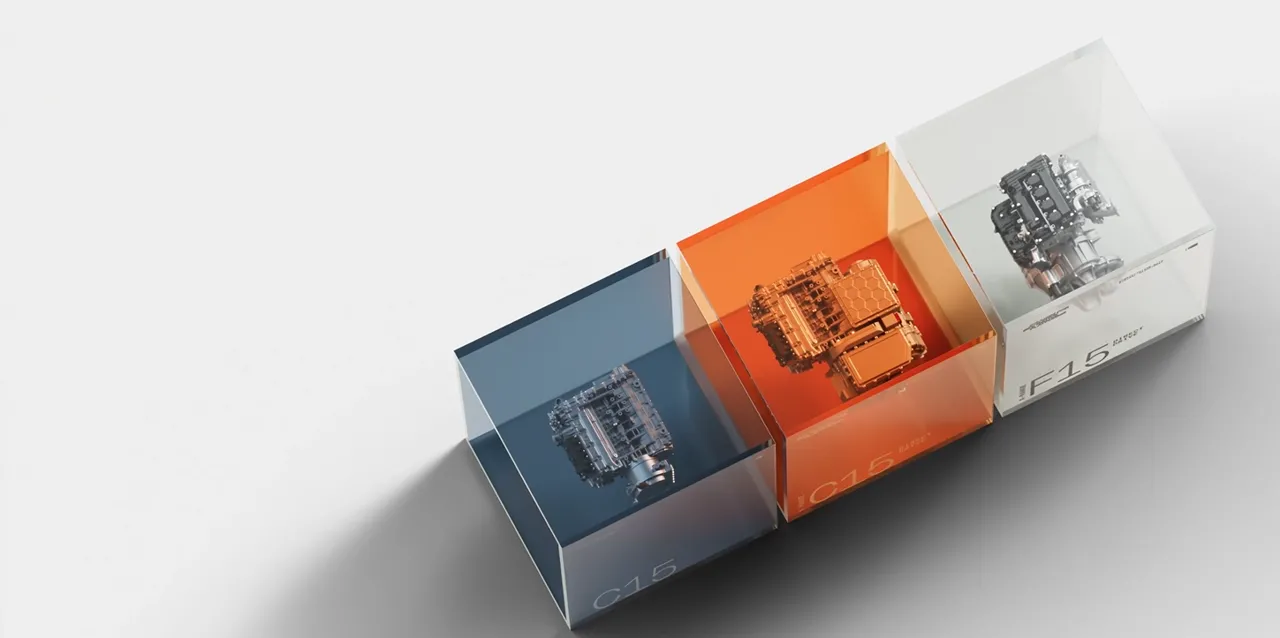
Rather than developing vehicles with larger batteries to boost range, car makers can install a range extender, a small engine that acts as a generator to recharge the battery when it runs low. Horse Powertrain’s latest model, the HORSE X-Range C15, is designed to make that switch as simple as possible. Measuring just 500 × 550 × 275mm, it pairs a 1.5-liter four-cylinder engine with an integrated generator and is small enough to fit into the front compartment or under the rear seats of an existing BEV. Carmakers can then add range-extended versions to their line-ups without the cost of developing separate architectures, allowing them to reach more markets and launch new variants faster.
The HORSE X-Range C15 is a clear signal of Horse Powertrain’s ambitions as a Tier 1 supplier. It is also the proof point of a new way of engineering, developed entirely on the 3DEXPERIENCE platform as part of Horse Virtual Twin (HVT), the company-wide digital transformation delivered in partnership with Dassault Systèmes. HVT brings design, engineering, lifecycle assessment, project management, quality management, testing, supplier collaboration and manufacturing process planning together in one unified virtual environment.
“Working within the virtual twin changes how quickly an idea becomes a product,” said Julien Faure, chief technology officer at Horse Technologies, the division of Horse Powertrain based in Madrid, Spain. “On the HORSE X-Range C15, our engineers could explore, test and refine every detail digitally. That’s what allowed us to package so much capability into such a compact unit, and it’s what will keep us delivering innovations our customers can adopt with confidence.”
Horse Powertrain already supplies Renault, carmakers including Mitsubishi Motors Corporation and Nissan, and customers in sectors such as electric buses and marine. Serving such a diverse market demands speed, flexibility and an agile approach to engineering.
As an independent company, Horse Powertrain had the freedom to build its IT environment around those specific requirements and opted for a centralized platform to get the most from its data at every stage of product development.
“Our aim is to reduce development time and cost while maintaining quality,” said Damián Moretti, global testing and customer performance director at Horse Powertrain. “To do that, we want to move from system management, through automation, to what matters most: becoming a smart organization.”
Deployed in a private cloud and operated by Dassault Systèmes, the 3DEXPERIENCE platform and its full solutions portfolio, including CATIA, SIMULIA, ENOVIA and DELMIA, are the foundation of HVT. Because every application works from the same data, teams across every function stay connected, giving Horse Powertrain full traceability and real-time visibility of its operations. And since all this software is delivered as a service, Horse Powertrain always has access to the latest capabilities and can adopt proven industry processes. Compared to its legacy IT setup, Horse Powertrain aims to roughly halve the number of applications it relies on.
“HVT represents a huge opportunity for Horse Powertrain because it allows us to define and drive our own PLM,” said Mario Porras, design and architecture team leader, Product Engineering at Horse Powertrain. “It is also a challenge. We must secure every functionality, adapting this new solution to powertrain-specific needs while merging applications into one all-round platform.”
With virtual twins of our engines and factories, our teams collaborate in real time and test virtually first, so every product we put on the road has already proven itself.
HVT combines two connected virtual twins: one of the product and one of the production environment.
The product virtual twin lets engineers concurrently build digital mock-ups in CATIA and use SIMULIA’s simulation capabilities to evaluate and refine designs before physical prototypes are built, helping teams make more informed engineering decisions earlier in development. Through MODSIM, which unites modeling and simulation in a single environment, Horse Powertrain has replaced its legacy, mesh-based workflows with a fully integrated process capable of supporting noise, vibration and harshness (NVH) studies.
Dassault Systèmes’ specialists rebuilt a full engine model on the 3DEXPERIENCE platform, incorporating millions of elements and thousands of connectors built up over more than a decade. They cleaned up, repaired and simplified the CAD data, assembled the complete engine, then automated meshing, couplings, connectors and bolt detection. Every step of the pre- and post-processing workflow now runs on the platform, and the first modal analysis matched Horse’s reference results to within 3%, confirming the MODSIM approach for powertrain NVH and structural studies. Horse Powertrain now has far fewer manual operations and data transfers to manage, along with a reusable virtual twin that can be extended to new engine variants and use cases, bringing digital continuity to future powertrain programs.
Horse Powertrain uses CATIA, SIMULIA, ENOVIA and DELMIA on the 3DEXPERIENCE platform to create connected virtual twins of its products and factories.
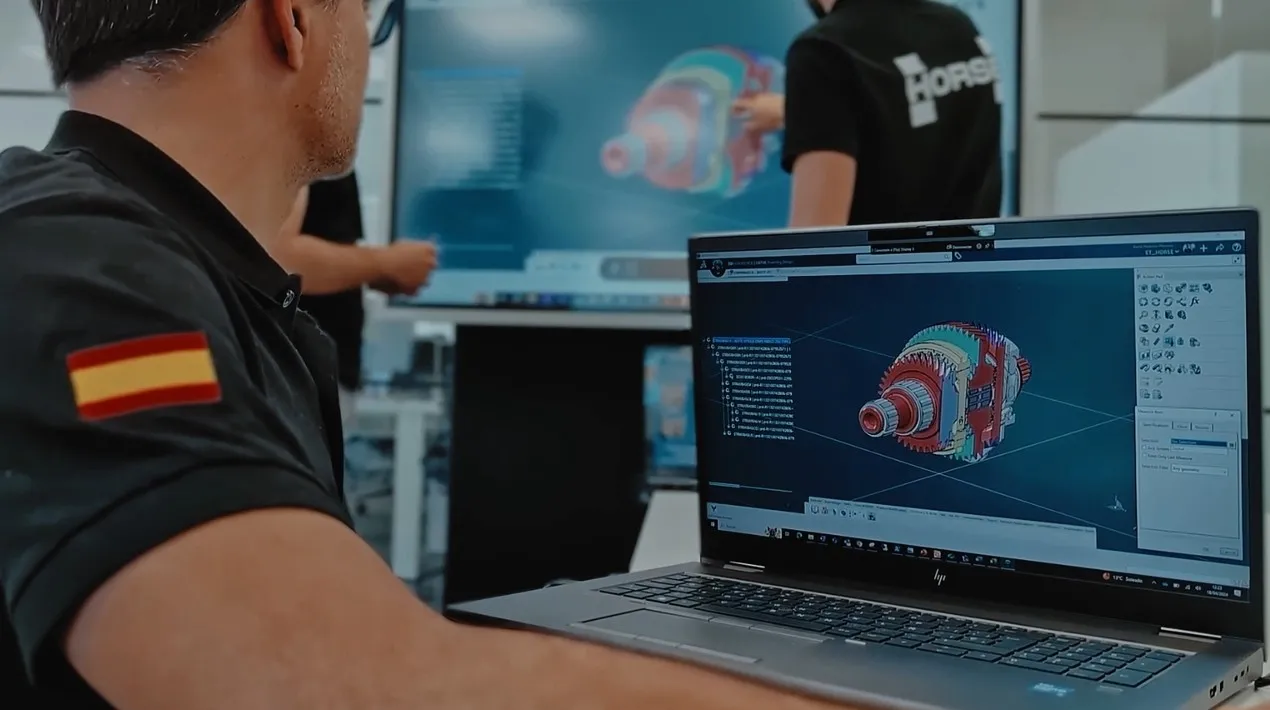
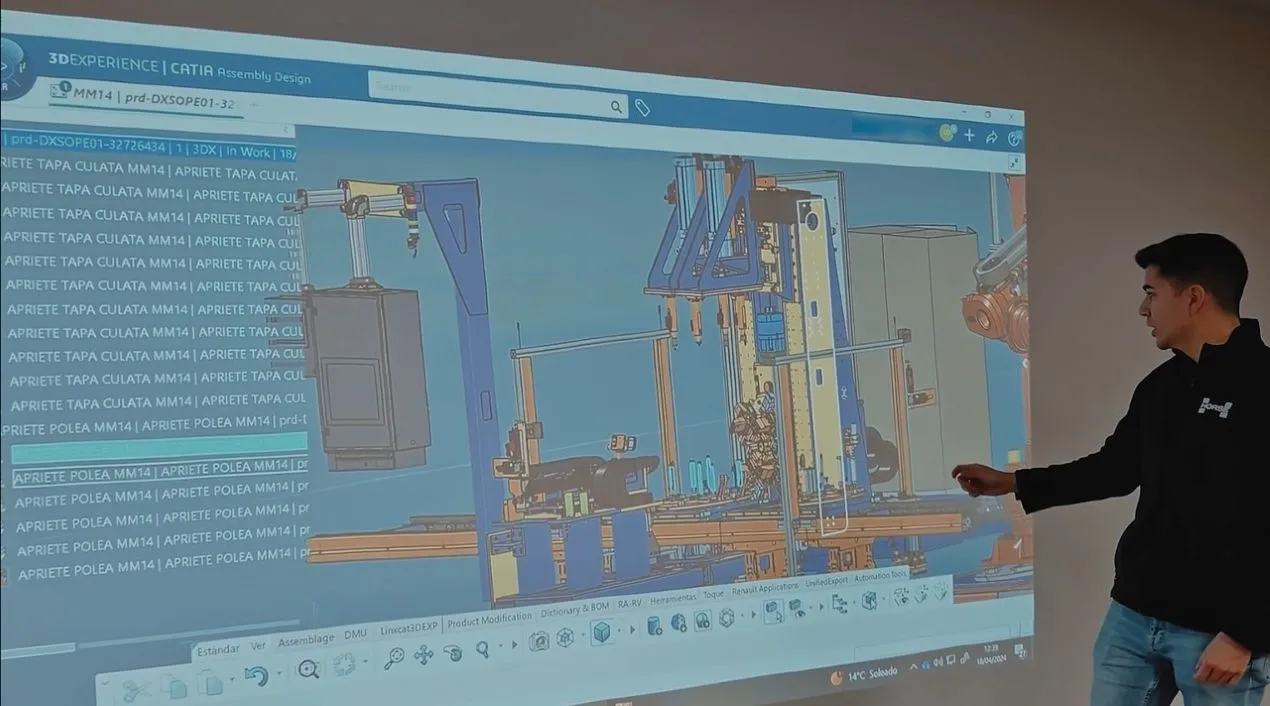
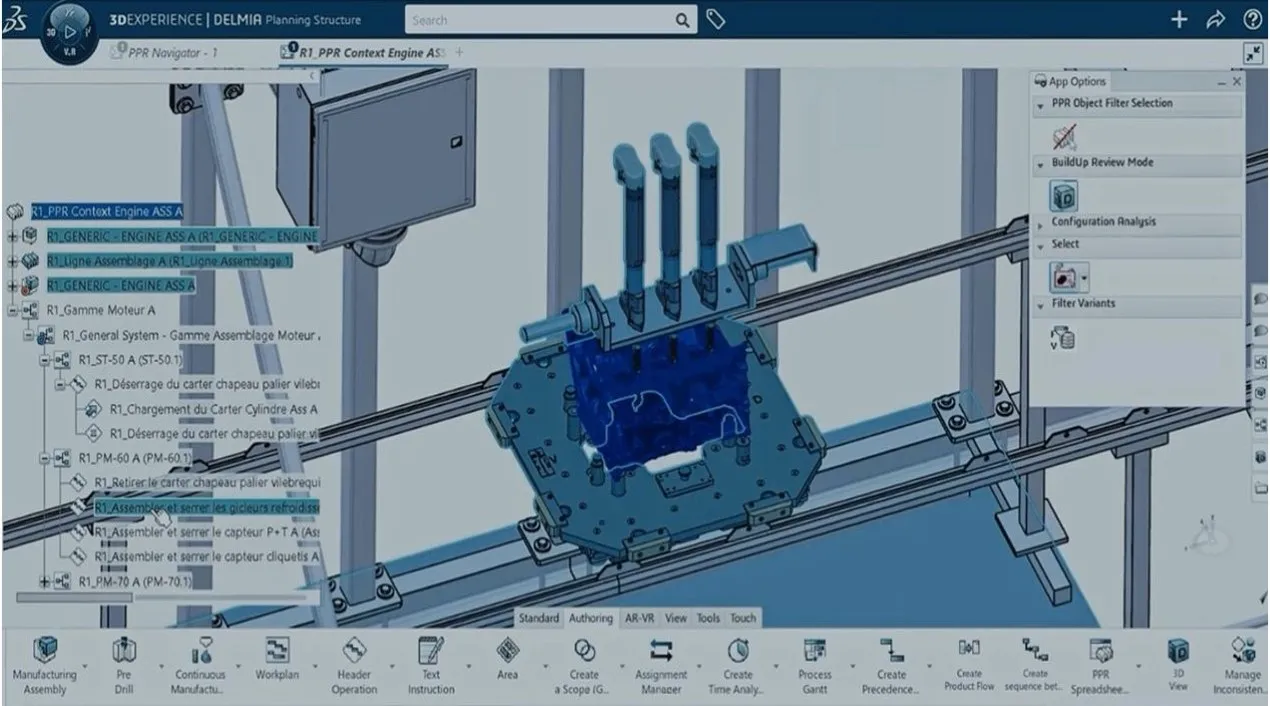
The production virtual twin brings the same thinking to the factory. Using DELMIA, production lines can be designed, simulated and explored in immersive 3D before a single machine is installed. Planning a new line once involved marking out its footprint with tape on the factory floor. Now it’s all handled on screen, allowing Horse Powertrain’s Process Engineering team to anticipate potential issues and optimize solutions before physical production begins.
“HVT allows different engineering departments to work together, making product and process activities easier and faster through a digital feasibility agreement, keeping work synchronized and up to date,” said Sergio Ordóñez, assembly global process designer, Process Engineering at Horse Powertrain. “It also merges the applications needed to build technical documentation into one, increasing team efficiency and minimizing the risk of duplicated or outdated information.”
Because design, simulation and product data now live on one platform, every team works from the same up-to-date model, and changes made in one discipline are immediately visible to the others.
“With ENOVIA, around 500 people across design and engineering now manage digital mock-ups, bills of materials and product lifecycle data on the platform,” said Tania Raposo, engine mechanical digital mock-up lead, Product Engineering at Horse Powertrain. “This intuitive collaboration system brings together all information on design and how each part is used.”
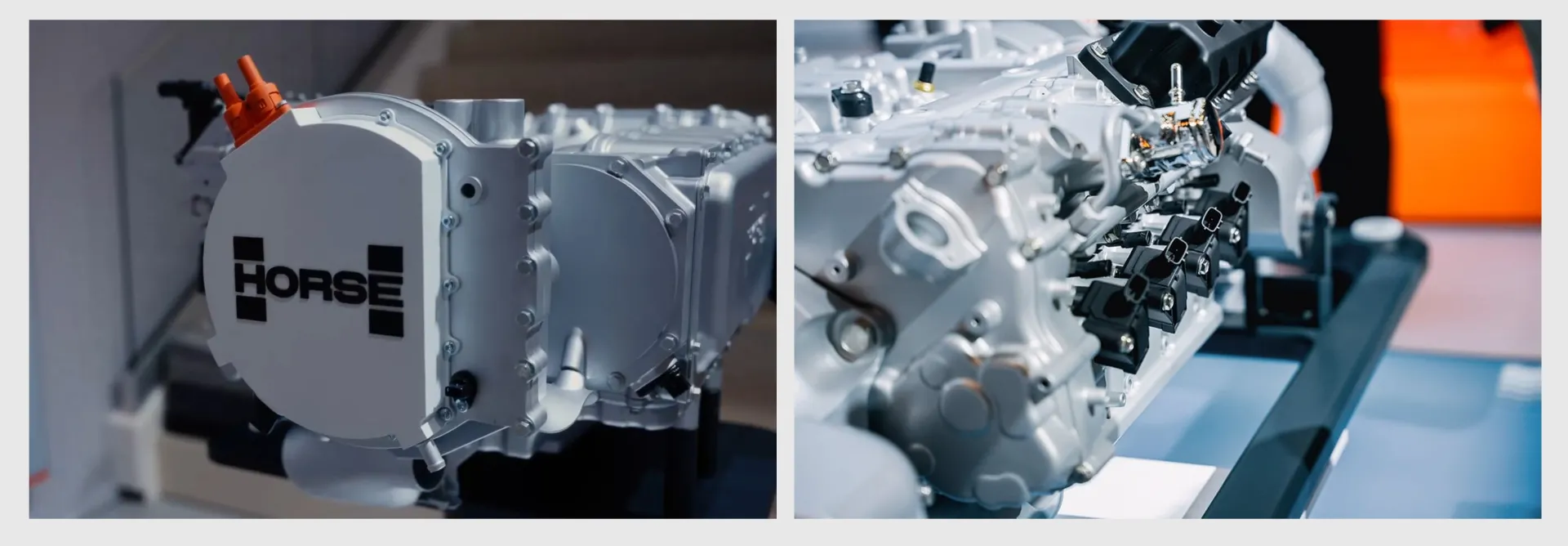
Horse Powertrain is a Tier 1 supplier of low-emission powertrains, including range extenders for electric vehicles.
New technology often calls for new ways of working. As both software provider and integrator, Dassault Systèmes led the rollout alongside Horse Powertrain’s teams to help everyone adapt to the platform. Dozens of Dassault Systèmes specialists worked on the deployment and continue to support Horse Powertrain on a daily basis.
Horse Powertrain kept existing processes where it made sense, yet many teams have changed how they work to align with the platform and industry best practices, and the benefits are already evident. Data is now managed in one place so engineers spend less time searching for information, and productivity and quality are improving. Testing designs and production processes virtually also leads to fewer physical prototype loops and less manufacturing scrap, saving valuable materials and energy.
Once all functions have migrated onto the 3DEXPERIENCE platform, the company will increasingly explore new capabilities and build on its connected data to advance AI-driven product engineering.
“We will build on three pillars,” Moretti said. “First, the HVT project, our virtual twin PLM, which is the foundation that allows the whole organization to collaborate. Second, moving from in-house applications to commercial solutions like the 3DEXPERIENCE platform portfolio to benefit from our suppliers’ knowledge. Third, implementing big data and AI to transform how we develop products. Our first generative and agentic AI pilots within HVT, on projects like the HORSE X-Range C15, explore how we can generate an initial 3D design directly from engineering input data. They already demonstrate how much faster we can design and validate parts.”
From now on, every engine Horse Powertrain develops will begin life in the virtual world first, tested, refined and proven well before it takes to the road.

Headquartered in London, UK, Horse Powertrain is a global leader in innovative, low-emission hybrid and combustion powertrain solutions, supporting automotive OEMs with a range of systems including engines, transmissions, power electronics, range extenders and integrated hybrid platforms. With operations in Europe, China, and South America, the company employs over 19,000 people across 18 plants and five R&D centers. Its 25 customers include Renault Group, Geely Auto, Volvo Cars, Proton, Nissan and Mitsubishi Motors Corporation.
For more information: https://horse-powertrain.com
Horse Powertrain’s X-Range C15 extender embodies its sustainable mobility and virtual twin ambitions on the 3DEXPERIENCE platform.
Customer Story
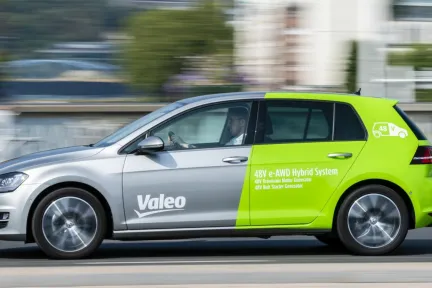
Valeo explores Dassault Systèmes’ platform potential to unlock AI-powered innovation for safer, more sustainable, smart mobility systems.
Customer Story
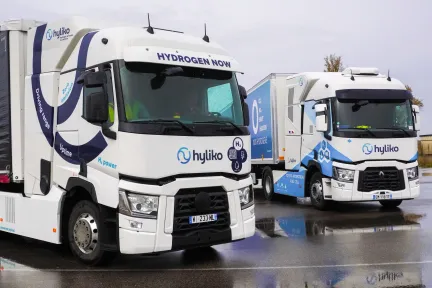
Discover how Hyliko uses the 3DEXPERIENCE platform to design, simulate and scale hydrogen trucks for zero-emission long-haul freight.
Customer Story
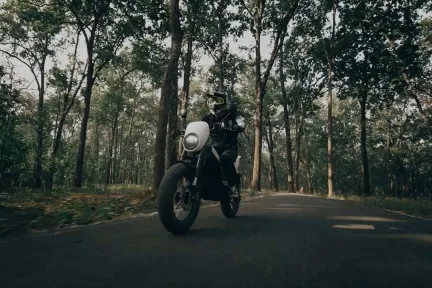
Discover how Yatri Design Studio uses the 3DEXPERIENCE platform to design nepalese electric motorcycles with cloud-based MODSIM and collaboration tools.
Customer Story
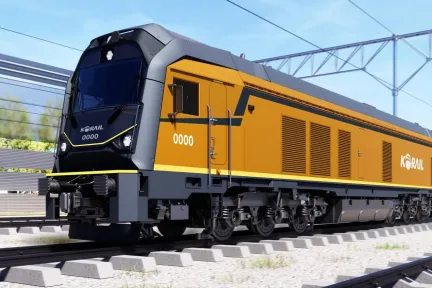
The South Korean railway OEM manages the design, engineering and delivery of complete vehicles on the 3DEXPERIENCE platform.
Customer Story
Canray Transportation boosts sustainability with the 3DEXPERIENCE platform, delivering right-first-time rail interiors using CATIA, ENOVIA, DELMIA and SIMULIA.
Customer Story
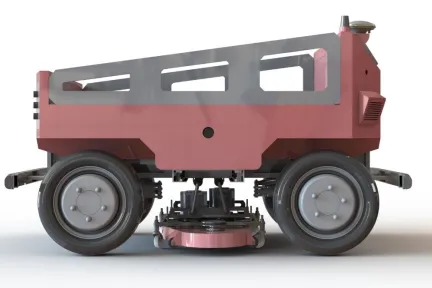
Kisui Tech is innovating self-driving AI robots equipped with interchangeable attachments for various agricultural tasks, such as grass cutting. The company uses advanced simulation and large-assembly tools from the SOLIDWORKS Extended portfolio to commercialize its technologies and bring actual products to market.
Customer Story
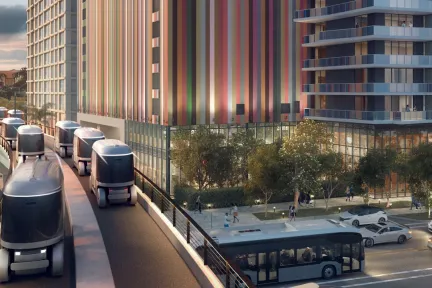
Glydways leverages CATIA on the 3DEXPERIENCE platform to develop scalable, autonomous transport for sustainable urban mobility.
Customer Story
Discover how Lucid uses the 3DEXPERIENCE platform to streamline EV development and deliver innovative electric vehicles focused on the human experience.
Customer Story
Discover how Sujan Contitech uses the 3DEXPERIENCE platform and MODSIM to innovate anti-vibration components and reduce product design cycles by 20%.
Customer Story