







Accelerated Battery Innovation
Tomorrow’s electric vehicles demand a revolution in battery innovation – lighter, more powerful, and more sustainable, delivered at unprecedented scale.
Article
Learn how integrating battery passports with virtual twins empowers your teams to create fully traceable and sustainable value chains.
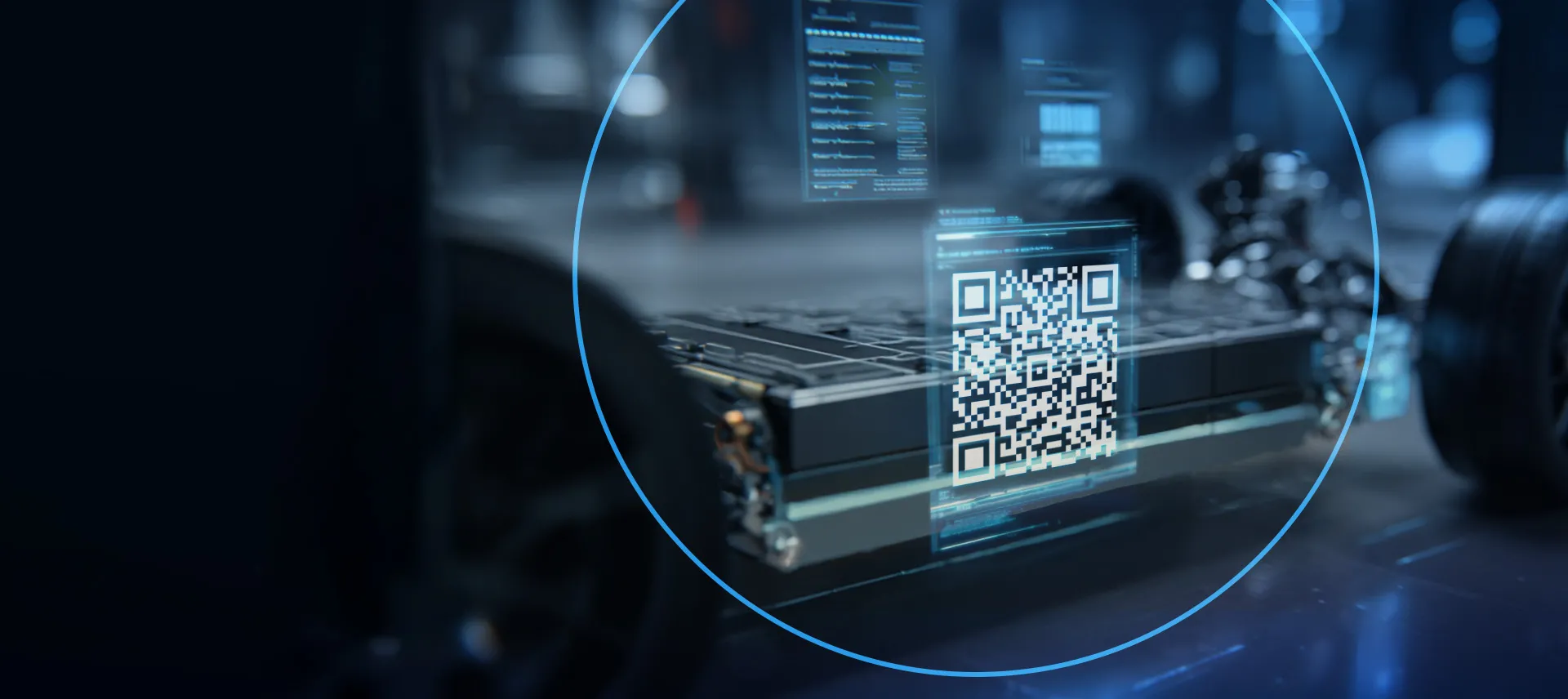
The battery passport is the EU’s new digital standard for tracking battery lifecycle data, now set to become mandatory for any manufacturer or company entering the EU market from 2027. It applies to electrical vehicle (EV) batteries, industrial batteries above 2kWh and light transport batteries typically found in e-bikes and scooters¹. For engineering and sustainability leaders, this digital battery passport provides a single source of truth on battery composition, carbon footprint, performance and end-to-end recyclability, helping companies fully comply with the EU battery regulations. In practice, this means delivering fully traceable, responsibly engineered batteries that power a cleaner tomorrow.
As the world embraces electric mobility, batteries have become the natural starting point for the EU’s digital product passport (DPP) framework — and for good reason. With over 17 million EVs sold in 2024 — more than 20% of all new car sales worldwide² — the demand for lithium, cobalt and nickel has never been higher, along with the pressure to reduce environmental impact. The battery passport, sometimes called the battery pass, puts data-driven transparency at the heart of every battery. From raw material sourcing to recycling, it empowers manufacturers to make smarter material choices, engineer more durable batteries and reclaim more value at end-of-life.
By connecting data across the entire battery lifecycle, manufacturers are directly supporting the Paris climate goals and advancing resource sovereignty. More than a record of what’s inside, the digital battery passport marks a shift from simply producing batteries to managing their full lifecycle, making every battery traceable and accountable. The EU battery passport is just the beginning. Soon, nearly every product in the EU market will carry its own digital identity, driving a truly connected, circular economy.
Download our white paper to unpack how digital product passports connect every product to its sustainability story — and the tools you need to lead the change.
Obtain full visibility into raw material sourcing, composition and lifecycle of every battery component.
Demonstrate compliance with ESG requirements and due diligence policies, strengthening brand reputation.
Measure, validate and reduce emissions across the battery value chain with verifiable data.
Identify batteries suitable for second-life applications, unlocking new revenue streams.
Gain a transparent view of emissions and resource use across the battery lifecycle to support informed sustainability decisions.
Share standardized sustainability data across the ecosystem, from suppliers to recyclers.
Digital product passports are a bridge between sustainability goals and real-world action. They promote greater accountability and collaboration across the supply chain, encouraging all stakeholders to share responsibility for how a product is handled at every stage. At the heart of this effort is a drive for greater transparency.
Ready to turn battery transparency into action? Here’s how virtual twins on the 3DEXPERIENCE® platform and the battery passport bring digital traceability to life, creating real-world impact for manufacturers, automakers and recyclers.
Implementing the EU digital battery directive can be complex, but manufacturers don’t have to navigate it alone. Dassault Systèmes' 3DEXPERIENCE platform, combined with its virtual twin technology, provides a single, connected ecosystem to manage every stage of a battery’s lifecycle.
By integrating the battery passport database with the platform, manufacturers gain a live, interactive digital replica of each battery. These virtual twins show how batteries perform, age and interact with their environment, transforming raw data into actionable insights. From material sourcing to end-of-life recycling, every detail becomes visible, traceable and analyzable. Why does this integration matter? It enables stakeholders across the value chain to collaborate, make data-driven decisions and simplify the complexity of battery passport implementation.
Here are the core domains where our solutions help drive effective battery passport adoption at scale.
To stay ahead, companies must weave battery passport readiness into their sustainability strategies — or risk losing access to one of the world’s largest markets. With the virtual twin technology and the 3DEXPERIENCE platform, compliance is embedded by design into engineering and manufacturing workflows, making battery passports an integral part of your system, not an add-on.
Imagine the possibilities when traceable product data makes every material, process and outcome visible — and when that transparency extends across industries. True lifecycle intelligence. New revenue models. Cleaner materials. Circular value at scale. Battery passports are just the first step toward a fully transparent, circular economy. The only question is, who will lead this green transition?
Tomorrow’s electric vehicles demand a revolution in battery innovation – lighter, more powerful, and more sustainable, delivered at unprecedented scale.
Article
Discover how circular economy practices can help businesses dare bold new business models that preserve environment for future generations.
Sustainability
The Digital Product Passport enables a system in which every product provides a comprehensive record of its journey, from origin to recycling, supporting the circular economy.
Sustainability
[1] “Digital Battery Passports: An Enabler for Sustainable and Circular Battery Management” by World Economic Forum (June 2023)
[2] “Trends in Electric Car Markets” by International Energy Agency (IEA) (2025)
How circular economy practices can help your business dare to be bold through new business models that preserve the environment for future generations.
Scale end-to-end traceability across your operations to achieve material sovereignty, verify sustainability claims and unlock circular value.
One platform to unlock the best of both worlds for complete value network clarity.
Tomorrow’s electric vehicles demand a revolution in battery innovation – lighter, more powerful, and more sustainable, delivered at unprecedented scale.