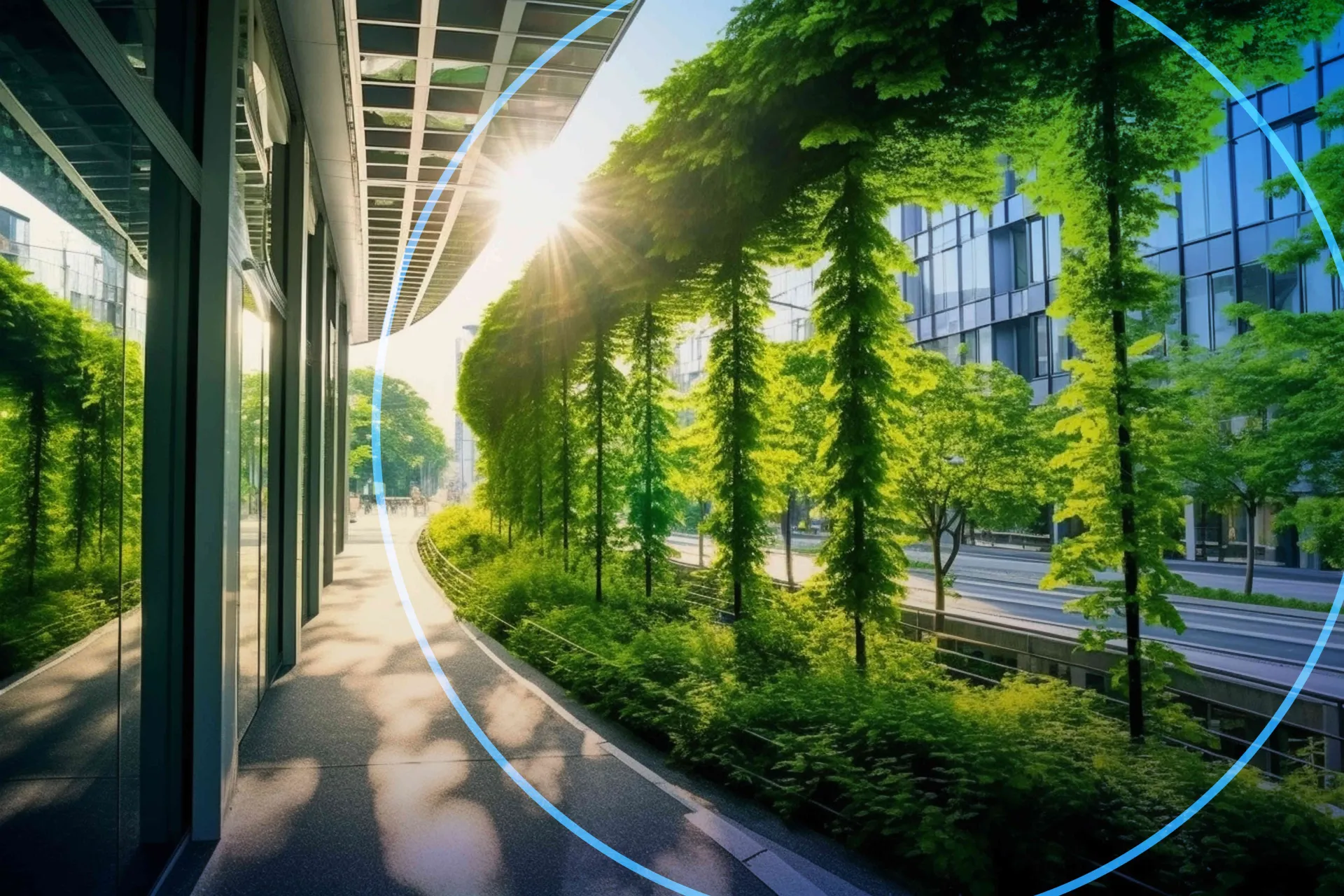
Reviving Urban Biodiversity: Exploring Nature-Based Solutions Through Virtual Twins
"Because cities bring together people, resources and innovations, they also hold the greatest responsibility and opportunity to lead the transition towards a resilient future”
EXPERT PERSPECTIVES
Let us dive deeper into how nature-based solutions can address urban challenges while supporting people and nature with Josephine Ong, Vice President of Cities and Public Services at Dassault Systèmes.
The exponential growth of urban areas is projected to alter almost 300,000 km2 of natural habitats by 2030. This not only places pressure on biodiversity, but also amplifies cities’ exposure to climate risks such as floods, heatwaves and pollution.
According to the UN Environment Programme (UNEP), Nature-based Solutions implemented in cities could deliver up to 37% of the climate change mitigation needed by 2030, while simultaneously restoring biodiversity. Investments are growing fast with approximately US$133 billion/year now flowing into Nature-based Solutions.
Nature-based Solutions (NbS) are practical science-driven actions that harness the power of ecosystem such as urban forests, green roofs and stormwater wetlands, to solve urban challenges that benefit both nature and people. They are proven strategies for climate adaptation and disaster risk reduction. NbS improves air and water quality, regulate urban heat and enhance well-being in cities.
Nature-Based Solutions: From Concept to Action With the Virtual Twin
In a report by the UNEP Finance Initiative, NbS can offset nearly 50% of a city’s emissions through carbon sequestration alone.
The potential of NbS is undeniable, but turning it into reality can be complex. Where would NbS deliver the greatest impact in a city? How can the city’s mobility systems reduce pollution while preserving natural spaces? How will future urban densification and expansion plans affect biodiversity?
These are not just planning-related questions, but urban challenges that demand visionary foresight, accurate data and holistic collaboration.
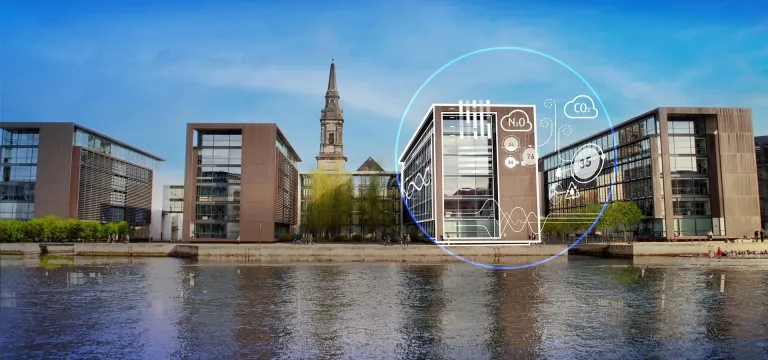
Technology such as virtual twin helps bridge data, policies and stakeholders – resulting in urban development plans that truly address urban challenges.

Virtual twin supports implementation of NbS by helping cities to harmonize economic vitality and ecological balance. With 3D models and simulations, city leaders have the technology in hand to plan urban development in harmony with nature.
For instance, virtual twin can be used to simulate countless possibilities to green a city’s environment such as connecting parks through green corridors, adding green roofs to a dense district, changing sections of the cement pavement to natural soil. With the virtual twin, city planners can transform calculated assumptions into evidence-based decision making.
City planners can overlay multiple data sources such as heat maps, pollution data and biodiversity information in the virtual twin. They can simulate permutations of data points and analyze changes to temperature, air quality and biodiversity – based on what-if scenarios and hypotheses – to identify the most impactful locations for city greening projects.
Urban resilience cannot be built in silo and requires that city stakeholders have a unified view of data, analyses and outcomes. The virtual twin provides a shared decision space where city leaders, ecologists, engineers and citizens can explore and refine what-if scenarios together.
This transparency builds accountability and trust, where decisions are unanimously made and supported through holistic collaboration amongst city stakeholders, with timely updates and reports to city leaders.
Apart from avoiding costly mistakes and accelerating implementation, the virtual twin allows city leaders to scale successful planning of NbS from pilot to city-wide projects, and even replicate across territories.
City leaders embarking on innovative projects need a virtual twin. It is the platform to communicate clear objectives, analyze trade-offs and track accountability. It is the management tool to expedite success.
Final Thoughts
Thriving biodiversity is the foundation of climate resilient cities. Nature-based Solutions offer a way to mitigate climate risks while addressing urban development challenges.
With virtual twin, urban development no longer competes with nature. City leaders have the ability to design and scale Nature-based Solutions with precision, efficiency and confidence.
Source: IUCN Urban Alliance https://iucnurbanalliance.org/cities-and-biodiversity-the-issues/
CONTRIBUTOR

Josephine ONG
Vice President, Cities & Public Services
Josephine is committed to helping cities achieve resiliency and inclusivity. As Vice President for Cities & Public Services at Dassault Systèmes, she works closely with governments worldwide to design and implement strategies that address climate adaptation, economic progress and citizen engagement.
With a deep passion for equitable citizen liveability, Josephine is often at the intersection of public sector and their ecosystems, bridging the gap between project requirements and technology, helping cities to capitalize on the right technology that will enable them to thrive under pressure and adapt with purpose.