CATIA
CATIA is the Leading Solution Spanning the Complete Innovation and Development Processes to Imagine, Design, Simulate New Products and Systems for Impactful Customer Experiences toward a more Sustainable World.
BRANDS
Use simulation to evaluate product behavior under realistic operating conditions, enabling better design, engineering and production decisions.
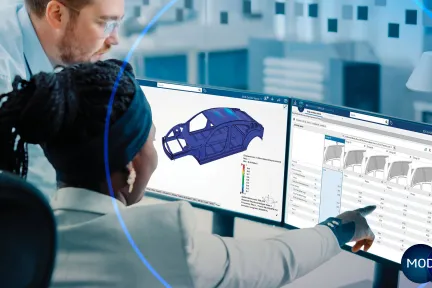
Engineering simulation uses computational models to predict how a product, material or system will perform under defined operating conditions. Engineers can vary materials, loads and boundary conditions to compare design alternatives and identify potential issues before physical testing begins.
Dassault Systèmes' modeling and simulation (MODSIM) approach connects design changes with associated analyses, reducing the need for repeated data preparation. Multidisciplinary teams can then evaluate current configurations using simulation software to make better-informed decisions.
Predict how machine components and assemblies respond to forces, constraints and operating loads.
Engineers can assess stress, strain, displacement, vibration, fatigue and impact simulation scenarios to identify weak points and refine designs.
Evaluate heat transfer within or around a product.
This helps teams determine whether components may overheat, deform under thermal loads or require changes to materials, cooling strategies or operating limits.
Examine interacting physical behaviors within the same product or system.
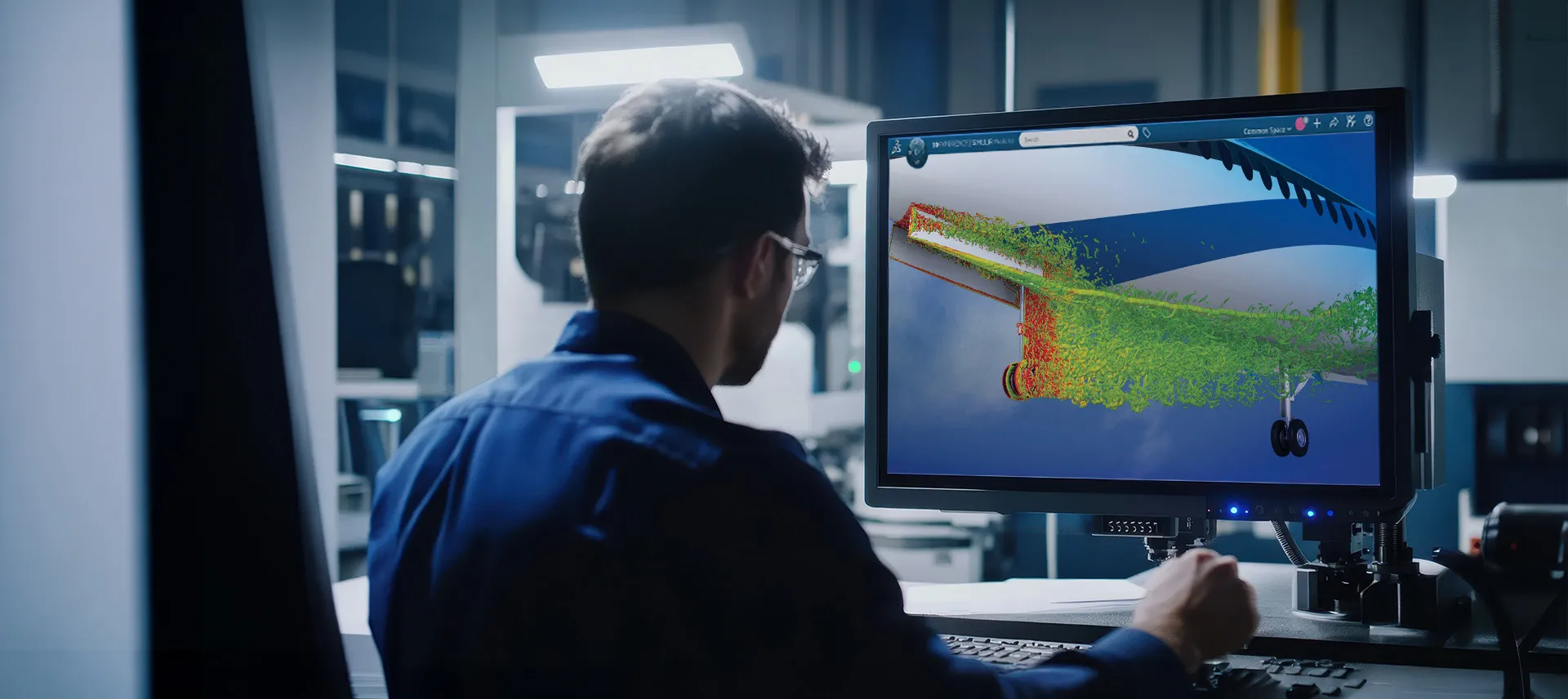
Multiphysics simulation combines structural, fluid, thermal and motion analyses to reveal how changes in one domain affect wider product performance.
Assess interactions across loads, environments and configurations in a virtual environment.
Teams can compare alternatives, investigate potential failure modes and validate designs that progress to testing.
Simulation credibility determines whether results can move beyond directional insight and support formal engineering decisions. When models are verified and validated and data such as material specifications, assumptions, loads, boundary conditions and acceptance criteria can be controlled. As a result, structural analysis, thermal simulation and multiphysics simulation can quantify performance margins against defined requirements.
This turns virtual testing into credible evidence for design validation, helping teams compare performance margins and plan physical verification with greater confidence.
Add advanced simulation tools to your workflows to streamline validation, eliminate bottlenecks and make better-informed engineering decisions.
A unified modeling and simulation environment supports concurrent engineering, allowing design and analysis to progress in parallel.
Teams can resolve issues earlier and validate performance sooner.
Virtual testing lets teams compare alternatives before committing to physical builds.
Reduced reliance on external services helps shorten development cycles and control costs.
A unified and advanced simulation approach keeps design and analysis aligned as geometry, materials or operating conditions change, helping teams move through design-simulate-refine loops faster.
Early simulation gives clearer insight into real-world product behavior.
Teams can identify failures sooner, expedite validation and enter certification with more robust designs.
Sujan Contitech unifies design and nonlinear simulation to predict stiffness and stress in bespoke rubber and metal components — reducing design cycles by around 20% and advancing the integration of sustainable materials.
Hyundai Everdigm connects design and structural analysis through MODSIM to test fire-truck components under different loads — helping teams iterate faster and reduce overall development time by up more than 30%.
CATIA is the Leading Solution Spanning the Complete Innovation and Development Processes to Imagine, Design, Simulate New Products and Systems for Impactful Customer Experiences toward a more Sustainable World.
BRANDS