Multi-Discipline Engineering
Holistic, Comprehensive Solutions for Multidiscipline Engineering
Subdiscipline
Solve engineering pain points with technical solutions that optimize the product design process from start to finish.
The product design process is an engineering workflow that turns product requirements into a validated, production-ready definition. It moves from ideation and 3D modeling through validation, design iteration and the prototyping process toward manufacturing handoff.
As complexity grows, decisions made throughout these processes become more interdependent. Mechanical, electrical, systems teams must evaluate alternatives, manage system-level changes and resolve production constraints without losing design intent.
Starting from defined requirements, concept design explores and compares engineering alternatives.
Integrated 3D ideation and surface modeling help teams assess options in context and carry selected geometry into engineering.
Once a direction is selected, the focus shifts to interfaces, tolerances, assemblies and multidisciplinary dependencies.
Associative models and system definitions maintain changes across components and disciplines throughout detailed design.
As the product matures, performance and integration issues need to surface before becoming physical rework.
Embedded design checks and virtual validation help identify integration and performance issues earlier in the cycle, enabling faster design iteration.
The prototyping process helps verify performance and exposes any remaining issues before manufacturing.
Aligning validated data with drawings, BOMs and manufacturing deliverables supports a controlled handoff to manufacturing.
A geometry change can affect interfaces, BOMs and manufacturing outputs. Maintaining continuity makes these dependencies visible and keeps engineering decisions traceable across product development stages.
For smaller engineering teams, the design process is particularly important as there is less capacity to absorb duplicated work, fragmented design files and costly errors.
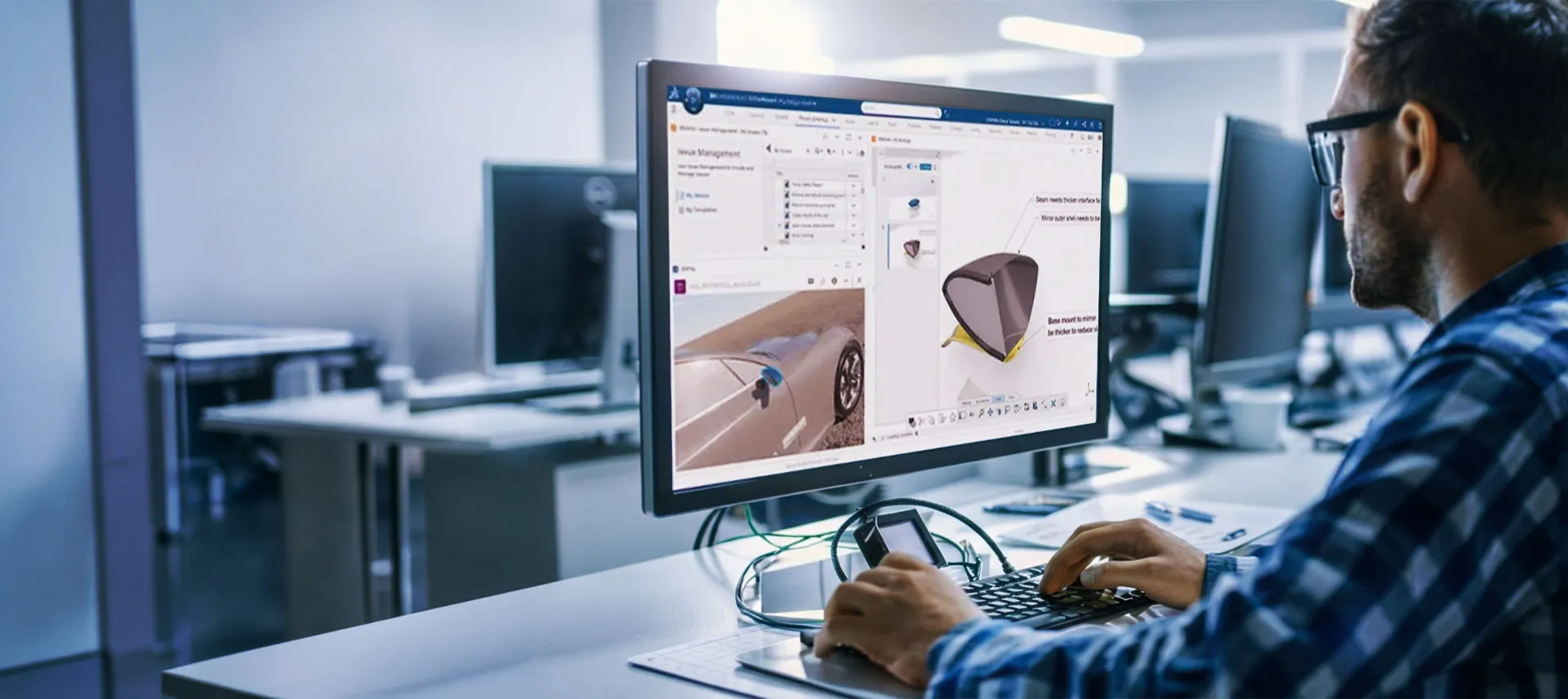
Streamline your workflows with AI-driven design engineering, which unites 3D modeling, static simulation and multidisciplinary collaboration in a single cloud environment.
Identify design, integration and manufacturability issues before changes become costly.
Maintain a consistent definition as concepts mature across models, drawings and product structures.
Keep mechanical, electrical and manufacturing teams aligned on current data.
Shorten review cycles through virtual validation and controlled iteration across disciplines.
Moonrider is transforming the conventional fuel-guzzling tractor with advanced battery packs — moving electric tractor development from concept to prototype in under 40 days.
Hirth Engines uses advanced design engineering to develop lighter, more powerful and highly adaptable engines for unmanned aerial vehicles (UAVs), light sport aircraft, snowmobiles and more.
Holistic, Comprehensive Solutions for Multidiscipline Engineering
Subdiscipline
Driving Innovation in Various Industries, Leading to the Development of New Technologies and Products
Subdiscipline